
Shiitake mushrooms are native to the Far East. They grow wild in Japan and China. They are now widely cultivated in Asia, and the product is exported. Shiitake mushrooms have a distinctive yet pleasant flavor and are beneficial for health. They can be used in medicinal preparations.
General characteristics
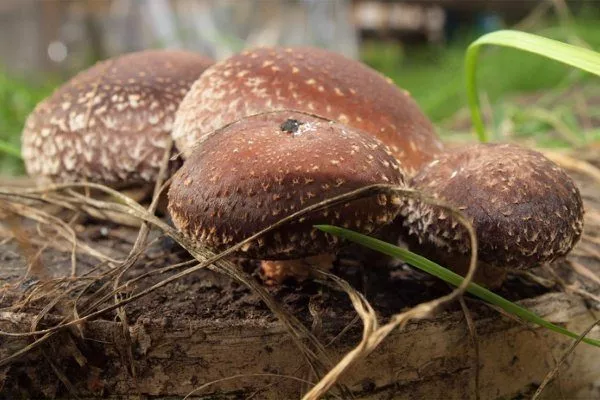
The cap of this mushroom can vary in diameter, from 3 to 15 cm. It is initially convex, but flattens as the shiitake matures. Shiitakes are initially dark brown, but gradually change to a lighter shade. The stem is light brown and fibrous, and the flesh is creamy, fleshy, and has a distinct flavor and aroma.
The Latin name for shiitake is Lentinula edulis.
| Parameter | Characteristic |
|---|---|
| Cap diameter | 3-15 cm |
| Hat shape | From convex to flat |
| Cap color | From dark brown to light |
| Leg | Fibrous, light brown |
| Pulp | Creamy, meaty |
| Aroma | Pronounced, woody |
Mushrooms of this type contain many valuable elements:
- dietary fiber;
- amino acids;
- calcium;
- potassium;
- iron;
- zinc;
- magnesium;
- proteins;
- unsaturated fats.
Due to its flavor and rich nutritional value, shiitake mushrooms are now also grown artificially—cultivated on logs or sawdust. This practice is practiced in various countries, including Russia.
Places of growth
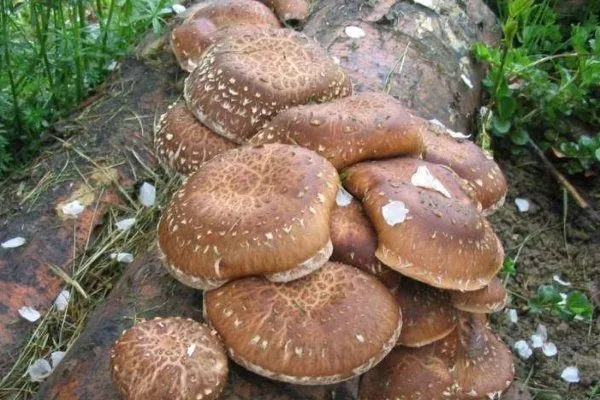
In the wild, shiitake mushrooms grow in southeastern Asia and Primorye, as well as in the Russian Far East, in mixed oak and beech forests. There, they can be found growing on tree stumps or trunks. The growing season is from spring to autumn, after heavy rainfall.
The benefits and harms of shiitake
Thanks to their rich composition, shiitake mushrooms possess a number of beneficial properties. These include the following:
- strengthening the immune system and suppressing viral activity;
- Lowering blood cholesterol levels: Japanese scientists have proven that daily consumption of shiitake mushrooms for a week can reduce blood cholesterol levels by 12%;
- increasing the body's resistance to tumors and infections;
- slowing down the growth and development of cancer cells;
- preventing the formation of blood clots;
- reducing the risk of developing heart attack and stroke;
- stimulation of metabolic processes in the body, which allows you to lose weight;
- normalization of the cardiovascular system;
- protecting the body from the effects of free radicals;
- improving skin condition: shiitake mushrooms make wrinkles less deep, normalize sebum production, and increase skin elasticity;
- beneficial effect on the gastrointestinal tract;
- stimulation of skin regeneration;
- improves a person’s condition in autoimmune processes, which include systemic lupus erythematosus and scleroderma;
- removing toxins from the body;
- improvement of psycho-emotional state in depression and prolonged stress;
- normalization of general condition after increased physical exertion;
- strengthening the nervous system.
Thanks to these properties, shiitake pulp is actively used to treat and prevent diseases of the kidneys, liver, bladder, stomach, and pancreas. The mushroom also improves conditions such as high blood pressure, neurological diseases, atherosclerosis, and epilepsy.
Despite the beneficial properties of shiitake, it should be consumed with caution: it contains a large amount of chitin, which is not digested in the stomach. Furthermore, it may cause an allergic reaction.
There are a number of contraindications to the use of the mushroom:
- age up to 12 years;
- pregnancy;
- concomitant use of drugs that reduce blood clotting ability;
- bronchial asthma;
- tendency to develop allergic reactions.
Avoid eating too many shiitake mushrooms at once as this may cause diarrhea.
Methods for growing shiitake mushrooms
Shiitake mushrooms can be successfully grown at home. There are two main methods:
- The intensive method involves the use of a substrate to which seed mycelium is added.
- The extensive method involves growing mushrooms on wood. In this case, conditions are created that mimic the natural growth habits of shiitake mushrooms: the mycelium is embedded in prepared tree trunks.
Features of intensive shiitake cultivation
| Component | Proportion in substrate | Function |
|---|---|---|
| Hardwood sawdust | 60-90% | Basic nutrient medium |
| Straw | 10-20% | Structure-forming agent |
| Cereal bran | 5-10% | Source of nitrogen |
| Gypsum | 1-2% | pH regulator |
| Sunflower husks | 5-15% | Humectant component |
Intensive cultivation technology enables year-round mushroom production. Cultivation must be carried out in specially equipped facilities.
When preparing a room for intensive shiitake cultivation, the following requirements must be taken into account:
- availability of good ventilation;
- availability of lighting;
- high level of air humidity – 70-80%;
- the ability to maintain an optimal temperature, for shiitake it is +15-18 degrees during the day and +10 degrees at night;
- the presence of a drip irrigation system.
The room in which shiitake will be grown must be clean and disinfected.
For intensive mushroom cultivation, it's necessary to prepare a substrate primarily made up of maple, beech, or oak sawdust. Coniferous sawdust is not suitable. Sawdust makes up 60-90% of the total substrate weight. Additional additives include straw, grain bran, gypsum, and husks.
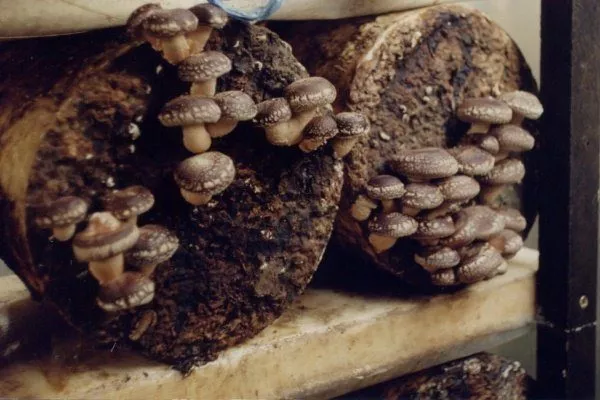
The prepared substrate must be sterilized to suppress the growth of competitive organisms that could destroy the mycelium. 1-6 liter bags made of thick polyethylene are used as containers for storing the substrate.
After heat treatment, the mixture is cooled and the mycelium is inoculated. This mycelium should be purchased from specialized seed stores.
For every 100 kg of substrate, 2-5 kg of mycelium is needed. It should grow in a warm place for 1.5-2.5 months. During this time, the spores are almost completely dispersed and mature for further growth. After this, the mycelium is transferred to cooler rooms with higher humidity for fruiting.
To ensure a good mushroom harvest, it's recommended to water the plants daily. This should be done especially carefully during the period when the mushrooms begin to sprout and gain weight.
The mushroom yield accounts for 20-30% of the total mass of the prepared substrate. Each mycelium can bear fruit for 5-7 years. It's important to remember that the myceliums need to be given a rest periodically.
Shiitate plants grow and mature in waves, so after the first harvest, the substrate block should be soaked in cold water to stimulate the second flush of growth. The block should be left to soak for a week to restore its original volume and moisture level.
Extensive method of mushroom cultivation
Shiitake can be grown in garden plots, on stumps or logs. Any deciduous tree is suitable, but beech and oak are best.
Each square meter of wood used for mycelium application and mushroom cultivation yields up to 250 kg of shiitake mushrooms per year.
To grow mushrooms in your garden using an extensive method, you need to do the following:
- select long tree trunks with a diameter of 7-15 cm and a length of 1 m;
- make sure that the wood has enough moisture (about 40%), and if the trunks are dry, they need to be watered a few days before adding the mycelium;
- drill holes in the trunks in a checkerboard pattern, keeping a distance of 10 cm from each other along the length of the trunk, between rows of holes you need to step back 7 cm;
- mycelium is introduced into the prepared holes and the trunks are laid horizontally, forming high woodpiles;
- The holes are closed with plugs or sealed with garden pitch and covered with film on top.
Mycelium germination takes from 6 months to one and a half years.
Work schedule for extensive cultivation
- Timber harvesting (November-February)
- Mycelium inoculation (March-April)
- Incubation in woodpiles (until September)
- Transfer to fruiting (September-October)
- Harvesting (spring-autumn of the following year)
When a white coating forms on the surface of the logs and they produce a dull sound when tapped, the logs containing the mycelium are moved outdoors to a moist area. The area should be protected from drafts and direct ultraviolet rays.
When growing shiitake using the extensive method, the highest level of fruiting is observed in the second year after the introduction of mycelium.
Watch the video to see how to grow shiitake mushrooms on logs:
Methods of using mushrooms in cooking and medicine
Shiitake mushrooms are widely used in the preparation of various dishes, as well as in the treatment of diseases of internal organs and skin.
Shiitake in cooking
Shiitake mushrooms are fried and eaten on their own, or fried pieces are added to rice, various types of noodles, fish, and chicken. They are also added to seafood soups, vegetable stews, and broths.
In Russia, dried shiitake mushrooms are more commonly eaten. Before eating, they must be soaked in water for 8-10 hours.
When preparing these mushrooms, use minimal, gentle heat treatment, as their flavor and medicinal properties are reduced by high temperatures. Boil the mushrooms for no more than 3-4 minutes, and simmer for longer – about half an hour.
- ✓ Store fresh mushrooms at +1…+4°C for no more than 5 days
- ✓ Dry at 40-50°C to a humidity of 12-14%
- ✓ Do not soak before frying – just rinse
- ✓ For soups, use pre-soaked dried mushrooms
- ✓ Combine with ginger, garlic, soy sauce
Use of shiitake for medicinal purposes
Shiitake mushrooms are used to make various medicinal products. They are used to make products such as:
- Dried mushroom powder that boosts immunity and reduces nervous tension. To prepare, grind the dried mushrooms. It is recommended to take one teaspoon of the powder three times daily, 40 minutes before meals.
- A mushroom tincture that effectively combats gastritis, stomach ulcers, hypertension, and malignant tumors. To prepare it, take 20 grams of the prepared powder and add 500 ml of high-quality vodka. Let the mixture steep for two weeks in a cool, dark place. Consume the tincture without straining. It is recommended to take 2 teaspoons of the prepared mixture 30 minutes before meals.
- An oil extract made from the mushroom. This remedy helps with diabetes, kidney disease, hypertension, and joint pain. To prepare the extract, take 20 grams of dried shiitake mushrooms and pour 500 ml of flaxseed or olive oil over them, warming them to 37 degrees Celsius in a double boiler. Seal the container tightly and let it steep for 5 days in a warm place, then refrigerate for 5 days. Take one teaspoon twice daily.
Various medications containing shiitake extract are sold in pharmacies. These should be taken with caution, only after consulting a doctor and in the recommended dosage.
Shiitake mushrooms grow naturally in Asia and the Primorsky region. They have a distinct flavor and are known for their medicinal properties. Shiitake can be grown on a home farm, either in open fields or in greenhouses or sheds.