
Growing champignons at home is not difficult if you know the right space and the right ingredients to ensure consistent, high-quality fruiting. Several popular methods for growing mushrooms at home are currently used.
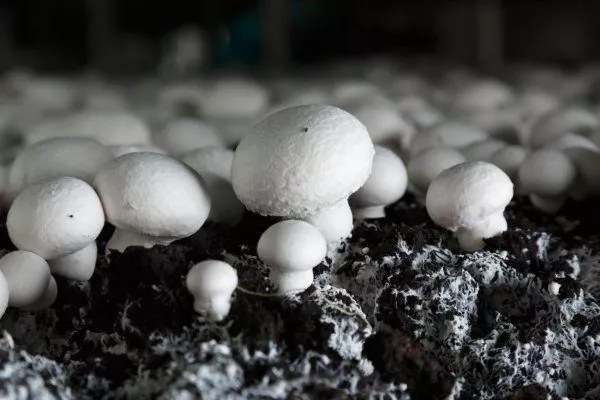
Selection and preparation of premises
Growing mushrooms doesn't require any special knowledge or skills. The best place for this business is a basement or cellar in a private home. Mushrooms don't thrive in warm temperatures and don't require constant light. If a basement isn't available, a greenhouse or shed can be used.
- ✓ The CO2 level in the room should be no more than 600-800 ppm for optimal mushroom growth.
- ✓ The temperature of the substrate when planting mycelium should be 24-27°C, and not just the air.
The room must have concrete walls, cement floors, and good ventilation. Covering ventilation openings with mesh will help prevent pest attacks. The walls and ceiling must be coated with lime.
What kind of mycelium is needed?
Mycelium, also known as mycelium, is the vegetative body of fungi—a system of fine, branching threads or hyphae.
Mycelium performs important functions, so without it, the mushroom growing process would not take place:
- participates in sporulation and is responsible for preserving the resulting spores;
- helps organisms attach to nutrient substrates;
- adapts well to the environment;
- With the help of enzymes, it processes cellulose, obtaining from it substances that are available for growth and development.
Mycelium is an important organ responsible for vegetative reproduction of organisms.
| Name | Mycelium type | Ripening period | Productivity |
|---|---|---|---|
| Grain mycelium | Cereal | 3-4 months | High |
| Compost mycelium | Compost | 4-5 months | Average |
Purchasing a finished product
For growing champignons at home it is recommended to use grain mycelium, as it's not only easy to sow but also requires no additional processing. When purchasing mycelium, pay attention to its appearance: the grains should be yellow with a slight orange tint.
It's not recommended to purchase mycelium with dark spots, as this indicates mold. The quality of the mushrooms can also be determined by their smell: they should have a distinct aroma of fresh mushrooms. If an ammonia smell is detected, the product has been improperly stored and is spoiled.
Be sure to pay attention to the manufacturer. It's best to choose mycelium from a reputable and large supplier. Don't buy a large amount of mycelium at once; it's best to sample it first. If germination is successful and mycelium formation is good, then purchase a larger batch.
Growing mycelium yourself
Before planting mushrooms, many gardeners grow their own mycelium, believing this will ensure a high-quality product. Home-grown mycelium can be either compost or grain-based.
Preparation grain mycelium happens according to the following scheme:
- Pour 10 kg of grains into a container and add 15 liters of water.
- Place over low heat, bring to a boil, and simmer for half an hour to an hour. The grains shouldn't be overcooked, but they should be soft.
- Drain the water, dry the grain, and then pour the finished product into liter-sized jars. Poke holes in the lids and grains.
- Seal the holes in the lids with cotton swabs. Place the jars in an autoclave at 1.5 atm pressure for 30 minutes.
- Place the mycelium into the cooled grain, or more precisely into its holes.
- Place the jars in a thermostat with a temperature of 24 degrees, do not take them out until the mycelium has completely occupied the entire nutrient medium.
To receive compost mycelium perform the following procedures:
- Take 3-liter jars and fill them 2/3 full with mushroom substrate. Press firmly.
- Roll up the jars with lids, making 3-centimeter holes in them, and covering them with cotton swabs.
- Heat the compost to 24 degrees and place the mycelium in it.
- Tightly sealing the holes in the lids will help prevent mycelium contamination.
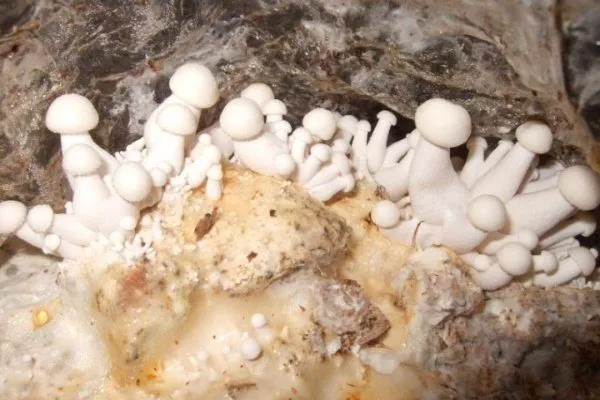
Preparing the substrate (compost): DIY
Mushrooms require conditions close to natural, so specially prepared compost is needed, the composition of which should be loose and nutritious.
To maximize yield, prepare the substrate according to the instructions. Since mushroom strains and varieties vary, the preparation method and substrate composition may vary slightly. However, there are general principles for preparing compost for mushroom cultivation.
To prepare compost, combine the ingredients in the following proportions:
| First option | Second option |
|
|
It is permissible to replace horse manure with poultry or cow manure, but in this case the yield will be lower.
Then follow this scheme:
- Soak the straw in warm water for 24 hours in a suitable container. Then, stack it, mixing it with layers of manure (there should be 6-8 layers). Moisten each layer with warm water.
- After 3-4 days, mix the compost well and add urea and superphosphate.
- After another 3-4 days, stir the compost again, gradually adding the remaining minerals. Add gypsum during the final stirring.
On average, composting takes 24-28 days. The substrate is ready when the ammonia smell disappears and the manure turns a light brown color. The finished substrate is moved to the basement and placed in the containers where the mushrooms will be grown.
Experienced mushroom growers recommend using a less demanding compost for initial planting, one that's more resilient to changes in growing conditions. The yield with compost mycelium isn't as high, but it makes the initial experience much easier. Before planting, carefully inspect the substrate: it should be slightly springy, not hard, and not crumbly.
Step-by-step instructions for beginners
There are several basic step-by-step rules to follow when planting and growing mushrooms at home. If followed correctly, you'll be able to reap regular, abundant harvests.
Landing
After preparing the substrate and placing it in boxes or bags, it is planted with mycelium, which is buried 5 cm deep. Maintain a distance of 20 cm between each depression. A staggered planting pattern is recommended. After planting, the mycelium is sprinkled with soil.
If planting mushroom spores, they are sown on the soil surface. After sowing, there is no need to cover them with soil or moisten them. The soil is covered with a cloth and regularly moistened. The mycelium grows for five days. During this time, the room humidity is maintained at 80-95% and the temperature is 22-27 degrees Celsius. After 12 days, the surface is covered with a mixture of 1 part limestone, 4 parts soil, and 5 parts peat. The layer should be at least 3 cm thick. After this, another 5 days should pass, with the soil periodically moistened. After another 5 days, the temperature is lowered to 13-16 degrees Celsius.
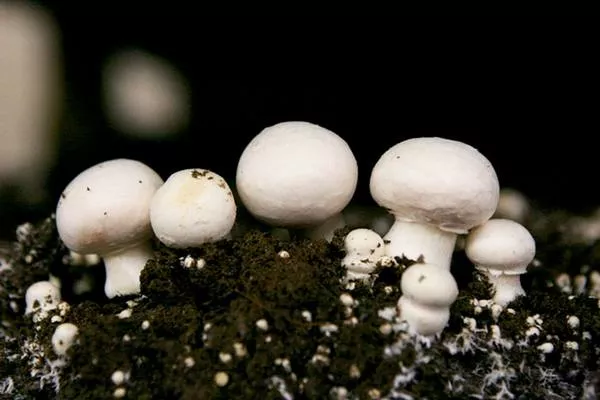
Growing and care
Although there is no need for constant care of mushrooms, it is necessary to prepare the room in advance and create special conditions in it:
- Equipment for growing. It depends on the method used to grow mushrooms. Growing in bags is considered the best method. For this, special supports with hangers are used to hang the bags filled with the substrate. Plastic equipment is recommended—it doesn't warp, doesn't corrode, and is much less expensive.
- Optimal temperature. Mushrooms don't require high temperatures, so greenhouse conditions aren't created. The only requirement is to insulate the room and install thermal insulation, which helps retain moisture. Heating devices are also essential – the temperature shouldn't fall below 13 degrees Celsius. Higher temperatures are only used initially. Infrared lamps are permitted for additional heating.
- Humidity level. Mushrooms thrive in moisture, so the air in the room should be constantly humidified. This is easy: use misters or special electronic humidifiers. Humidity levels should be no lower than 70-90%.
- Ventilation and lighting. Be sure to ventilate the room regularly. It's best to use exhaust hoods to provide fresh air. However, if you don't plan to grow large quantities, manual ventilation is acceptable. Install several garden lamps for lighting.
- ✓ Air humidity should be maintained at 85-90% during the fruiting period.
- ✓ The room temperature should be reduced to 15-17°C after the first mushrooms appear.
Fertilization is equally important. As the mycelium grows, it gradually emerges to the surface, and within a couple of weeks it will be completely above the soil. To prevent the still-fertile mycelium from drying out and deteriorating, a fertile substrate sprinkled on top will help. A fertilizer consisting of 9 parts peat and 1 part chalk is also added to the soil. 40-50 g of the mixture is evenly distributed per square meter.
Harvesting Rules
Three to four months pass from sowing to harvesting the first crop. Young, medium-sized mushrooms are harvested, those with an intact membrane connecting the stem and cap. It is recommended to harvest mushrooms with caps that have opened wide, as these lose their beneficial properties.
It is prohibited to pick mushrooms with darkened light-brown caps, as they can cause intoxication and lead to severe poisoning.
Mushrooms are not cut like wild mushrooms, but twisted. The hole left after harvesting is lightly covered with compost. More mushrooms will grow in this spot. Active fruiting of mushrooms lasts 8-14 weeks. During this time, the harvest can be up to seven times. After this point, the yield declines, so the mycelium is removed and the substrate is discarded.
After fruiting ceases, the mycelium is removed and used as a source of nourishment for the next generation. The remaining substrate is not reused, as it loses its fertile properties. Up to 60 kg of mushrooms can be harvested from 1 square meter.
Types of mushroom cultivation
Mushrooms can be grown in several ways: indoors or outdoors. Each method has its own specific requirements, which, if followed, will ensure a large, high-quality harvest.
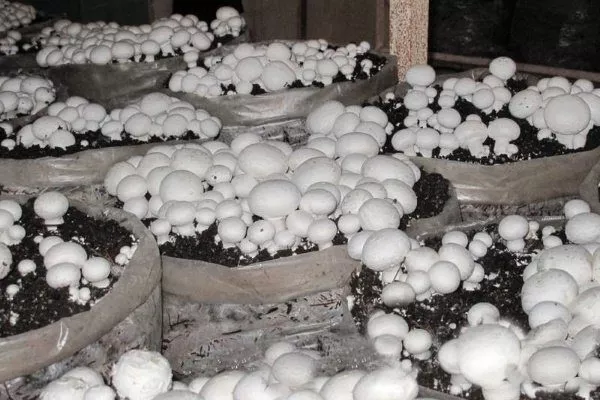
In the basement (in bags)
Experienced mushroom growers recommend using large plastic bags for growing mushrooms. This method is initially appealing because it allows the bags to be moved anywhere.
How is the growing procedure carried out:
- A nutrient substrate is prepared, which consists of 70% horse manure and 25% compost mixture.
- The substrate is disinfected by heating to 25 degrees.
- The mixture is placed in bags 25-30 cm thick and the mycelium is planted.
- Leave it on the rack for three days, after which make 5-6 cuts in the bag and leave it in the dark at a temperature of 18-20 degrees.
- After 2-3 weeks, mushrooms will begin to appear in the slits. The bags are moved to a well-ventilated and constantly lit room.
- Mushrooms reach marketable weight in approximately 3-4 weeks.
- After harvesting, the bags are moved back, after which the mushroom begins to grow again.
During fruiting, it's important to monitor humidity levels—it should be around 70-95%. Also, keep an eye on the substrate temperature—20-27 degrees.
In the garden bed
To plant mushrooms, prepare the plot in the fall: remove the top layer of soil—about 30 cm. The bed should be at least 1 meter wide. Maintain a distance of 55 cm between rows. A layer of expanded clay, 9 cm thick, is poured onto the bottom to serve as a drainage layer. Weeds are scattered over this layer, watered with a mullein solution, and covered with soil.
Before laying the substrate in the beds, disinfect the soil with a carbation solution. Holes at least 5 cm deep are made in the substrate. The mycelium is placed a few centimeters deep into the holes and covered with substrate. When using grain spawn, it is scattered over the soil surface and compacted. Drainage channels are created along the edges of the beds to allow excess moisture to drain.
At a soil temperature of 25°C (77°F), mycelium growth occurs within 14 days. At temperatures below 30°C (86°F), the mycelium may die. For ease of planting, the mycelium is planted in a staggered pattern, spaced 25 cm apart. After planting, the beds are mulched with straw to promote moisture evaporation. After the mycelium has established itself, the straw is removed and a covering layer is applied using peat and chalk in a ratio of 9:1.
On the balcony (at home on the shelves)
Growing on a balcony is one of the most convenient methods, suitable for those living in an apartment. It doesn't require much physical effort or money. The procedure is quite simple:
- Glaze and insulate the balcony.
- Build a small cabinet with shelves, as well as drawers 20 cm high.
- Install a ventilation pipe with a damper in the cabinet, and place a humidifier underneath to maintain the required humidity level.
- To prepare the substrate, mix 10 kg of straw, 15 kg of bird droppings, and 8 kg of alabaster. Adding 200 g of superphosphate and urea will increase yield. Mix everything in warm water. Line the boxes with moss.
- The substrate is left to mature for three weeks. After this, mycelium, preferably grain mycelium, is added. It is evenly scattered over the substrate surface and then a similar layer, 4-5 cm thick, is added on top. 350 g of mycelium is added per square meter of substrate area.
- Ten days after the mycelium has sprouted, cover it with a mixture of chalk and peat in a 1:10 ratio. The layer thickness should not exceed 4-5 cm.
- Five days after adding the casing soil, the air temperature is lowered to 17 degrees Celsius. The soil is regularly moistened on the surface with water.
Fruiting begins after 50-60 days, and harvesting continues all year round.
Container method
A simple way to grow mushrooms both indoors and outdoors. Containers with the substrate can be placed anywhere convenient. Here's how to do it:
- Prepare the container, making sure to take not only the container, but also the lid and tray.
- The container is disinfected and the substrate is loaded.
- Sow the mycelium, planting it 4-5 cm deep.
- Moisten the soil with mycelium.
Particular attention is paid to watering. Temperature is a secondary factor, but it's important to ensure it doesn't exceed 30 degrees Celsius. This method is advantageous because 3-4 containers are sufficient for personal consumption, requiring minimal investment.
Watch a video about growing mushrooms in a container at home:
Block method
Many mushroom growers today prefer to buy ready-made mushroom growing blocks made from pressed substrate. Large-scale production facilities compress manure, peat, sawdust, and sunflower seed husks into briquettes. Mushroom production doesn't require large spaces. Because the blocks are fully prepared, there's no need to plant mushroom mycelium in them, as it's already there. One block weighs between 2.5 and 20 kg.
The blocks are placed horizontally on shelves and trays, with holes punched into their surfaces. Covering the blocks with burlap, film, or paper will prevent them from drying out. After the block is coated with mycelium, it is covered with casing soil, and ventilation is stopped. It is advisable to moisten the blocks by spraying. The first mushroom harvest takes 60-75 days.
What diseases and pests can we expect to cause harm?
Basic disinfection of the premises using smoke bombs, spraying, and liming will help combat pests and diseases. However, occasionally, mushrooms are susceptible to various diseases and pests. The most common include:
| Name | Reasons | Methods of control |
| Mushroom mite | A small yellow parasite that eats the stems of mushrooms. | The problem is eliminated by spraying mushrooms and compost with a 0.1% metaphos solution. |
| Mummies | A disease caused by a lack of light. The mushroom caps turn dark gray, and the flesh turns brown. | The infected mycelium is removed along with the substrate. |
| Fungus gnat | Fly larvae, which end up in compost along with manure, eventually attack the mycelium, leading to the cessation of fruiting and death. | The compost is treated with 0.5% chlorophos. |
| Mushroom rot | The disease develops when moisture directly penetrates the already formed mycelium. This leads to immediate infection of other mushrooms. | Spoiled myceliums are removed, those that remain are treated with a formalin solution with a concentration of 0.2%. |
| Mold | Wet brown spots appear on the surface of the mushrooms and increase in size. | Diseased mushrooms are removed, the substrate is sprinkled with superphosphate and table salt. |
Home Business Profitability
To determine the profitability of growing mushrooms at home, you need to clearly define what is needed for full development:
- renting premises or building a new one;
- purchase of mycelium and necessary equipment (racks, containers, etc.);
- purchase of means for treating premises;
- purchase of equipment for ventilation and air purification;
- Conducting sanitary examination of finished products.
Calculating expenses is easy. Purchasing 5 tons of compost will cost 5,000 rubles, mycelium – 2,500 rubles. Heating the premises will cost about 25,500 rubles. Employee expenses are also mandatory – salaries for two people can cost up to 30,000 rubles. Total costs will be about 63,000 rubles.
Calculating profit is just as simple. Five tons of compost yield up to one ton of finished product. The average price of mushrooms is 200 rubles. Selling one ton yields 200,000 rubles. Net profit is 137,000 rubles.
However, such calculations don't include investments in equipment, premises, and any expenses that may arise during the cultivation process. Therefore, a mushroom grower can expect to break even and receive their first profit no earlier than a year after meeting all requirements.
The following video will explain the nuances of growing mushrooms for business purposes:
Growing mushrooms in your own home or apartment is quite simple if you know all the intricacies. Adhering to all requirements and conditions will help you obtain a high-quality harvest in large quantities. Using certain methods, you can harvest not only for personal consumption but also for retail.