
The forest agaric is considered a variety of meadow and field mushroom. Common names include wolf mushroom, cap mushroom, and blaguska. The Latin name is Agaricus sylvaticus. It belongs to the Agaricaceae family, genus Agaricus. It is characterized by excellent taste and an attractive aroma, as well as a wide range of uses.
A Brief History of the Forest Agaricus
The original origin of the wild champignon remains unknown, but it is believed to have originated in France or Italy. In French, champignon simply means mushroom. Over time, it migrated to other countries and is now cultivated everywhere.
This mushroom has long been considered a delicacy, available only to high society in the Middle Ages. It received its modern name in 1762 thanks to the German mycologist Jacob Christian Schäffer.
Description of the species
Wild champignons have a good marketable appearance, excellent flavor and aroma, and are easy to transport when stored properly. They are harvested in forests, grown in large industrial facilities, and in private gardens.
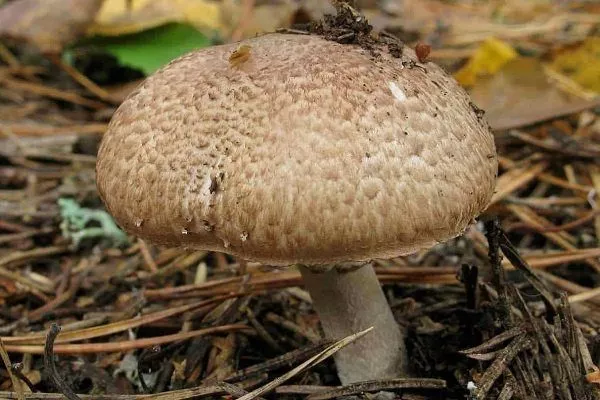
hat
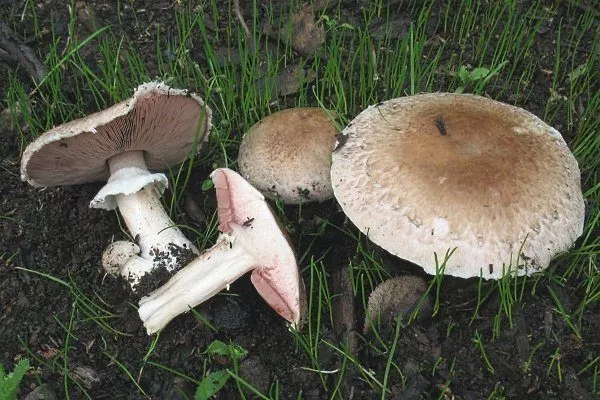
At the very beginning of growth, the mushroom cap is ovoid. As it grows, it transforms into a dome-shaped form, and only at full maturity does it take on a saucer-like appearance.
Peculiarities:
- diameter – varies from 6 to 15 cm;
- edge - slightly sinuous, but only in adulthood;
- color – from light red to brown, with the central part being more ocher and the edges being lighter;
- surface - with small fibrous scales of a reddish-brown hue (the flakes are pressed tightly in the middle part, and at the edges they lag behind the surface).
In dry weather, the wild button mushroom develops cracks. The scales impart a darker tint, causing the mushroom to sometimes appear purple or lilac.
Leg
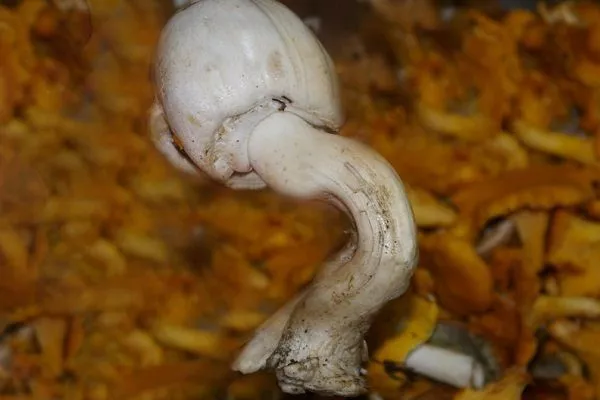
The stem of the wild button mushroom is straight or slightly curved, with a slight thickening at the base. Like the cap, it is covered with small brown scales, which are more pronounced on the underside.
Other characteristics:
- diameter – 1-1.5 cm;
- length – from 8 to 10 cm;
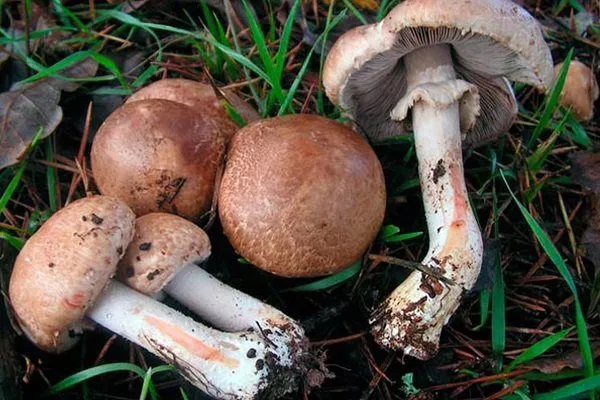
- pulp on the stem – compacted, with fibers, also turns red when pressed;
- ring - there is one, but it is thin and unstable, often hanging down (it has a whitish tint on the underside, and a reddish-brown tint on the top);
- structure - at first dense, then hollow.
Pulp
The cap's interior is white, turning red when cut or broken. Its structure is dense and thin, so it doesn't release juice. If you smell the flesh, you'll detect a slight mushroom aroma.
Spore layer
The gills of the wild mushroom are loose and closely spaced. Their color deserves special attention:
- at the initial stages of vegetation they are light cream;
- After breaking, the covers darken, becoming pink, red and brown.
The spores are ovoid and smooth, with the spore powder having a chocolate-brown or dark-brown hue. Their size ranges from 4.5 x 3.2 to 6.5 x 4.2 microns.
Characteristics
The wild button mushroom is considered an edible mushroom with a firm structure when young, which allows it to retain its shape well both fresh and cooked. As it matures, its structure becomes delicate and brittle, making it easily broken during cooking (frying, boiling).
Taste assessment
This variety of champignon lacks a pronounced mushroom flavor or aroma. Some chefs consider this its main advantage, as it can be safely added to absolutely any dish.
Other chefs argue that this is a major drawback, as people ordering a mushroom dish expect to taste the product.
Medicinal and beneficial properties
Wild champignons are widely used in modern and traditional medicine, pharmaceuticals, and cosmetology, as they contain numerous beneficial substances. Specifically:
- vitamins D, PP, C, group B;
- amino acids – more than 20 types;
- microelements – phosphorus, sodium, calcium, potassium, iron, magnesium, copper.
The product is considered dietary, as 100 g contains only 40-45 kcal.
Medicines are made from champignons; boiled or baked, they are prescribed as part of a therapeutic diet. When is this useful?
- jaundice;
- tuberculosis;
- diabetes mellitus;
- eczema, skin ulcers;
- headache;
- bronchitis;
- typhus;
- obesity;
- infection;
- diseases of the cardiovascular system, kidneys;
- anemia;
- allergy;
- psycho-emotional instability;
- predisposition to neoplasms, osteoporosis.
The beneficial properties are as follows:
- acceleration of blood circulation and metabolism;
- saturation with useful elements, due to which the immune system is strengthened;
- strengthening bones and joints;
- suppression of hunger;
- strengthening the heart muscle;
- removing harmful cholesterol from the body;
- suppression of the action of allergens;
- decreased irritability;
- improving memory and concentration;
- normalization of visual acuity;
- increasing performance;
- increased brain activity.
In cosmetology, wild champignon is used to make products applied to the face, body and hair.
Possible harm and contraindications
Mushrooms, if cooked properly and eaten in moderation, are harmless. However, in other cases, they can exacerbate chronic conditions or lead to the development of other illnesses (pancreatitis, gastritis), especially if the following contraindications are present:
- gastrointestinal diseases;
- individual intolerance to the product;
- age up to 5-7 years (due to chitin, which is not absorbed by the child’s body).
Wild mushrooms are most harmful when they are collected along roadsides, in city parks, near landfills, or near factories.
Distribution, places and time of collection
It's generally accepted that wild mushrooms grow most often in coniferous forests, but in fact, they can also be found where birch, beech, oak, and other trees grow. They are collected among trees and at the edges of forests, in parks and recreation areas. They are easiest to find near anthills.
The mushroom prefers a nutrient-rich environment, so humus, manure, and organic soil are the best growing conditions. The wild mushroom is found throughout Europe, the Americas, England, Asia, the CIS, and Ireland. Harvesting lasts from July-August (depending on weather conditions) to October-November.
Recognition: how to distinguish the wild champignon from its false counterparts?
This variety has only two types of false champignons with which it is often confused. These are the following poisonous mushrooms:
- Dark scaly champignon. Another name is the Variegated Mushroom. It's identical in shape and size to the wild mushroom, so it's tested by breaking it open. The flesh of an edible mushroom turns red, while the flesh of a poisonous mushroom turns yellow or orange. Be sure to smell it—the Variegated Mushroom has an unpleasant odor.

- Death cap. It's considered the most dangerous mushroom, leading to death. Externally, it closely resembles the wild champignon. They can be distinguished by three characteristics:
- break it - the double has colorless flesh;
- plates - in poisonous ones they are white;
- base of the stem - the toadstool has a sac-like thickening.
- ✓ Reddening of the flesh when broken or pressed.
- ✓ Presence of small brown scales on the cap and stem.
- ✓ Loosely spaced plates that change color with age.
Interesting facts about the wild mushroom
It turns out that ants actively exploit the wild mushroom. Sure, they ruin it by nibbling on it, but they feed on it. And not on the mushroom itself, but on the protein tubers that grow on the hyphae.
There are other facts about the wild champignon that are of interest to mushroom pickers and consumers:
- There are leaf-cutting ants, thanks to which compost is created for the mycelium - the insects cut leaves from bushes and trees and transfer them to the mushroom beds;
- If the fungus is found directly on the anthill, and not near it, this means that the insect family has become greatly weakened or has died out;
- It was the forest champignons that became the first cultivated mushrooms;
- their popularity has grown so much that these mushrooms are now consumed and sold at exorbitant prices in countries where they were previously rejected;
- Champignons are used for weight loss as the main ingredient;
- If you put a cut mushroom in a sandwich, a person will feel full faster.
Similar species
| Name | Hat size (cm) | Cap color | Presence of scales |
|---|---|---|---|
| Forest champignon | 6-15 | from light red to brown | Yes |
| Dark red champignon | 10-15 | brownish-red | Yes |
| Crooked Mushroom | 8-11 | cream | No |
| Two-spore species | 3-8 | from white to brown | Yes |
Among champignons, there are varieties that are related to these mushrooms. They have identical flavors and are equally edible, but have minor differences. Mushroom pickers distinguish three main varieties common in Russia:
- Dark red champignon. The cap is 10-15 cm in diameter, and the stem is 10 cm high. It is a direct relative of wild mushrooms, with a bell-shaped cap when young and a spreading one when old. The color is brownish-red, but as it matures, it acquires a dark brown hue.
The flesh is white, red when cut. The gills range from pink to black, and the spore powder is brownish-purple. The stem is cylindrical and off-white.
- Mushroom Crooked. The cylindrical stem is up to 12 cm long, and the cap diameter ranges from 8 to 11 cm. When young, the cap is ovoid, but with age it becomes completely erect. The skin and stem are creamy, the flesh is white, and the gills range from white to black.
If you press on it, bright yellow spots appear.
- Two-spore species. It is extremely rare and is distinguished by its small size: the cap is 3-8 cm in diameter, and the stem is 3 to 10 cm high. The cap edge is folded, causing the cap to hang slightly, resembling flakes.
The color changes from white to brown as it grows. The gills are pink or dark brown, sometimes with a purple tint. A distinctive feature is that it grows in areas where there is no grass.
Methods of harvesting at home
Since wild mushrooms grow for only 3-4 months a year, they are traditionally preserved for long-term storage. For this purpose, mushrooms are pickled, canned, dried, and frozen. However, it's important to properly boil them first (except dried ones). Cook for 5-6 minutes after boiling.
Primary processing
If mushrooms aren't pre-treated, they can cause poisoning. For example, if you don't remove any spoiled areas, the champignon will begin to release toxic substances. Here's how to do this correctly:
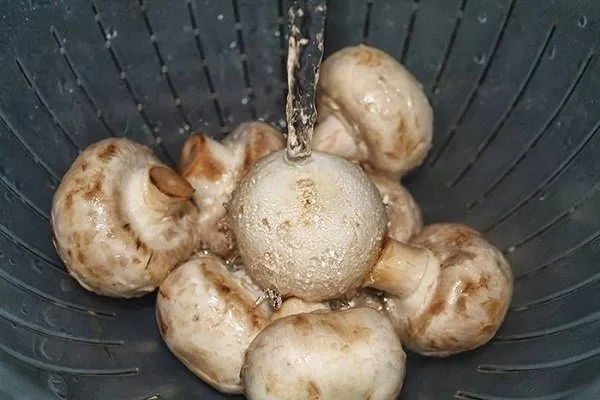
- Before storing or canning, be sure to rinse the mushrooms under running water. However, avoid doing this too early, as this will cause the mushrooms to spoil. Avoid keeping the mushrooms in water for too long—their spore plates are loose, which means they will absorb too much moisture.
- After washing, cut off all damaged and spoiled areas with a sharp knife.
- Remove the stems so that their length from the cap is 1.2-1.5 cm.
- If desired, or if the mushroom is old, remove the surface film.
- Rinse again.
- Place on a paper or cloth towel to dry completely.
Pickling caps
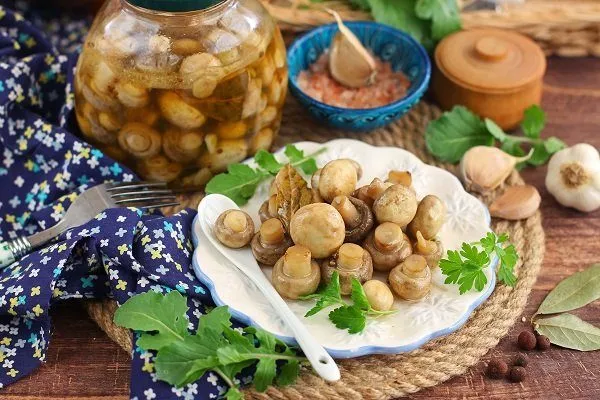
This dish is used as a standalone appetizer, salad, or served with side dishes (it can easily replace meat).
What you will need:
- mushrooms – 1 kg;
- water – 400 ml;
- acetic acid (30%) – 50-60 ml;
- sugar and salt - 1 tsp each;
- allspice/black pepper – 5/10 peas;
- cloves – 3 pcs.;
- bay leaf – 2 pcs.;
- ground cinnamon - on the tip of a knife.
Preparation procedure:
- Boil the mushrooms (5 minutes) and rinse.
- Add water and cook for another 10 minutes.
- Add all ingredients and cook until the mushrooms settle to the bottom (time depends on their size). Cool.
- Place the caps in sterilized jars and pour in the cooled marinade.
- Cover with plastic lids, put in the refrigerator for infusion (1-2 days is enough) and further storage (no more than 25-30 days).
Freezing
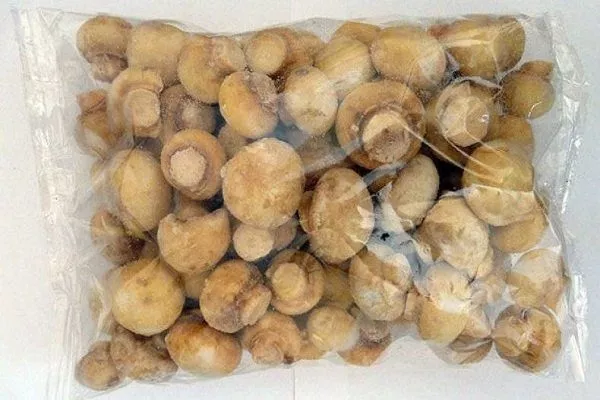
This method allows you to preserve the product for 12-18 months. Freezing is acceptable both in boiled and fresh form. In the latter case, initial processing is sufficient, but freezing can be done in two ways:
- First. Place the mushrooms in a vacuum-sealed or regular plastic bag. Remove all air, seal (or tie a knot). Place in the freezer.
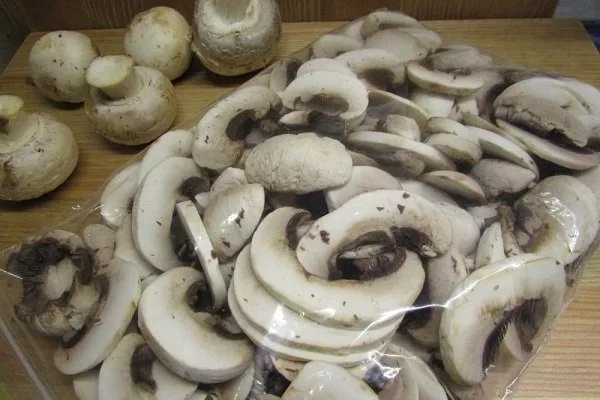
- Second. Slice or dice the mushrooms. Arrange them in a single layer on any surface (baking sheet, tray, plate). Freeze. Once completely frozen, remove and transfer to a plastic bag or plastic/disposable container.
Hot salting
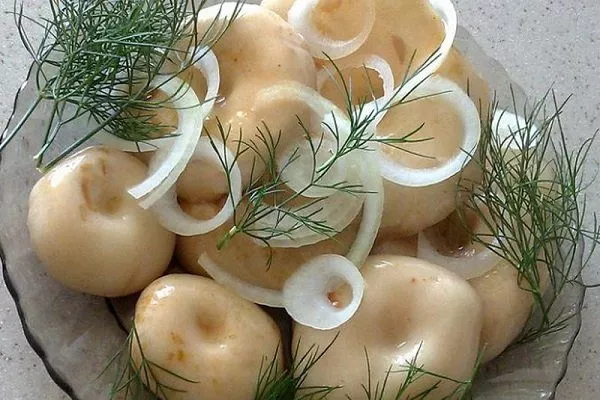
This method involves storing the dish in the refrigerator for up to 1 month. The mushrooms are salty, so they are often added to salads.
Ingredients:
- water – 500 ml;
- mushrooms – 2 kg;
- coarse salt – 100 g;
- spices – 2 blackcurrant leaves, 2 bay leaves, 2 cloves and dill umbrellas, 3-4 black and allspice peas.
Cooking instructions:
- Pour water into a saucepan and bring to a boil.
- Add all the mushrooms.
- Cook until the mushrooms sink to the bottom of the pan.
- Take them out and add all the spices except salt to the water. Bring to a boil.
- Place the caps in a colander and pour over with ice-cold (boiled) water.
- Quickly arrange the mushrooms in sterilized jars, sprinkling each layer with salt (spread 100 g over all the mushrooms).
- Fill with brine and cover with plastic lids.
- When the jars have cooled, transfer them to the refrigerator.
Drying
Dried champignons make excellent soups, sauces, gravies, and other dishes if they are boiled first. To dry, don't wash the mushrooms; instead, wipe them with a soft cloth or brush. Since wild champignons are large, they are usually dried by cutting them into 1-1.5 cm thick slices.
Methods:
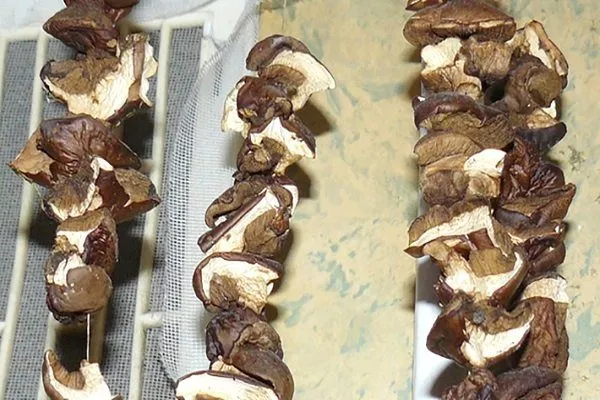
- Hanging. String all the elements onto a strong thread threaded through a needle. Hang in a dry room or outdoors under a canopy, covering with gauze or mosquito netting (to protect from insects). Keep out of direct sunlight. Drying time is about 7 days.
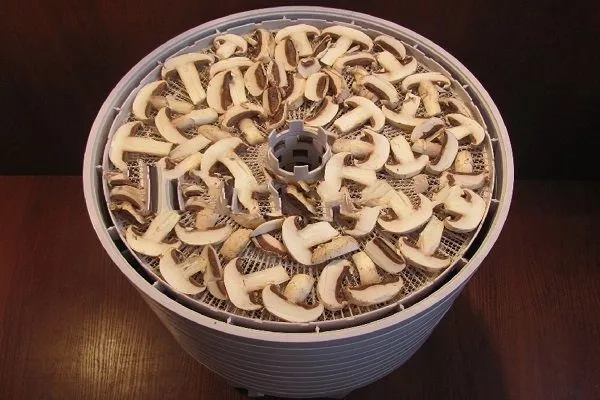
- Electric dryer. Place the slices on the tray, set the program and mode (this depends on the type of appliance).
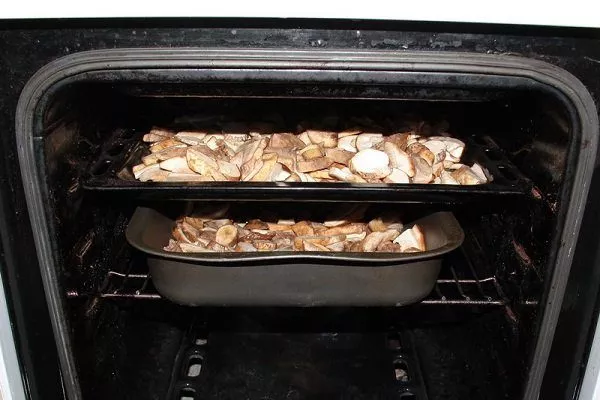
- Oven. The fastest, easiest, and most energy-efficient option. You'll need a shallow rack to place the mushroom slices on. Preheat the oven to 50°C for the first 6 hours and 80°C for the next 16-20 hours.
The main requirement is that the oven door should be slightly open – this will allow the moisture to evaporate.
Store dried mushrooms in an airtight glass jar or canvas bag. The shelf life is 6-7 months.
Canning in jars
This method allows you to preserve wild mushrooms for up to 6-8 months (store-bought varieties have a shelf life of 12 months due to the added preservatives). There are many variations, but there's one unusual yet versatile recipe.
Components:
- mushrooms – 3 kg;
- salt – 150 g;
- sugar – 1-2 tsp (to taste);
- garlic – 3-4 cloves;
- capsicum – 0.5 pcs.;
- dill seeds – 1.5-2 tbsp;
- vegetable oil (preferably refined sunflower oil) – 10 ml;
- onions – 3 heads.
How to preserve:
- Place the prepared mushrooms in a plastic bowl (do not use metal - oxidation will occur).
- Sprinkle with all the salt and stir. Let sit for 90-120 minutes, stirring occasionally to release the mushroom juices.
- Meanwhile, chop the onion and garlic and place all the spices in sterile jars.
- Drain the brine from the mushrooms into a saucepan and bring to a boil, adding a little water.
- Add mushrooms and cook until done (when they sink to the bottom).
- Remove into a colander and let all the liquid drain.
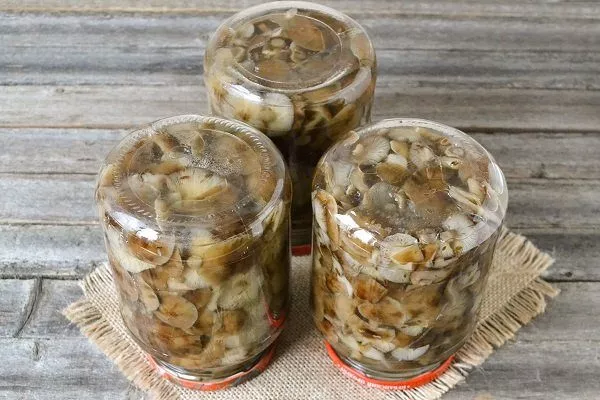
- Place in jars with the caps facing down.
- Bring vegetable oil and sugar to a boil.
- Fill the containers and seal with lids for canning.
- Turn the jars over and cover with a blanket.
- Leave it like this for 2 days, shaking the containers 5-6 times a day and turning them over. This will distribute the oil and the aroma/flavor of the spices throughout the mushrooms.
Is it possible to grow this type of champignon yourself?
Any wild mushroom can be domesticated, as they reproduce through spores. Simply pull the mushrooms out of the forest floor and quickly bring them home. However, you'll need to prepare a growing medium for the mycelium beforehand. Choose one of the following options:
- Oatmeal agar. Mix 1 liter of water with 1.5 tablespoons of oat flour, add 7 teaspoons of agar-agar, and bring to a boil. When all the ingredients are dissolved, strain.
- Carrot base. For 600 ml of water, add 400 g of carrot extract and 15 g of agar-agar. Boil for 30 minutes, then strain.
What to do next:
- Treat tweezers with hydrogen peroxide.
- Break the champignon into 2 parts.
- Using a tool, pinch off a small piece of the mushroom and dip it in the peroxide for 1 second.
- Quickly transfer into a glass container (it is better to use test tubes) and close with a lid.
- Leave in a room at 25°C for 10-13 days or place in a thermostat.
- When white fibers appear, transplant them into a substrate made from oat, wheat, or barley grain. It's easy to make: soak in water at a ratio of 2:3, place in a jar, add 2 teaspoons of hydrogen peroxide, and simmer for 20-30 minutes. Then let it dry naturally.
- After introducing the sprouted mycelium, cover the container with gauze and a lid.
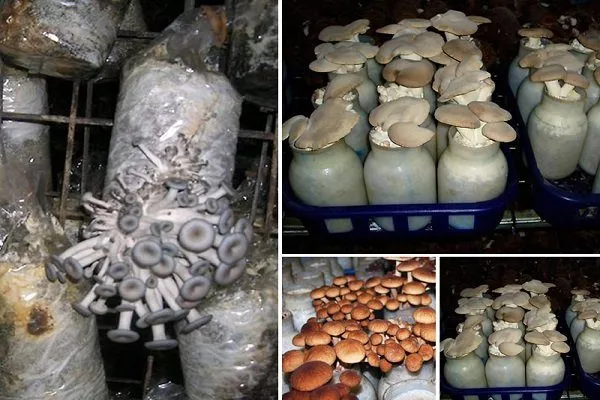
There are many ways to grow them – in a cellar, compost, in a garden bed, in a box, etc.
The wild mushroom is a natural and healthy product that's easy to grow at home. It has a wide range of uses and boasts excellent flavor. The key is to be careful when picking mushrooms and avoid picking poisonous lookalikes.