
The woodland button mushroom belongs to the Agaricaceae (gill-shaped) family, the phylum Basidiomycetes. Its Latin name is Agaricus sylvicola. It is conditionally edible. It can only be eaten raw when young. If the mushroom is old, it must be cooked.
What does the woodland champignon look like?
The common name for the woodland champignon is "slender" due to its graceful silhouette. This same factor also contributes to novice mushroom pickers often confusing it with its dangerous, poisonous relatives. Therefore, it's important to understand all the subtleties of its appearance.
hat
| Name | Hat shape | Cap color | Smell |
|---|---|---|---|
| Champignon coppice | Hemispherical, then spread out | White/white-gray, cream | Anisic |
| Champignon crooked | Blunt bell-shaped, then spreading | White | Anisic |
| Field view | Outstretched | Ocher | Aniseed-almond |
| Yellowing | Outstretched | Yellowish-brown | Phenolic |
| Death cap | Smooth | Greenish | Stench |
| White fly agaric | Smooth | White | Chlorine |
The cap is white/white-gray or cream-colored and perfectly round. Its diameter varies from 5 to 10 cm (depending on age).
Main characteristics of the hat:
- at a young age - hemispherical and spherical shape with edges curved inward;
- in the middle and at the end of the growing season - spreading, convex;
- the surface is slightly rough, as it contains a small number of grey scales;
- The cap appears dry in appearance (even during rain).
If you press the cap with your finger or break the mushroom, a yellow tint will begin to appear, which is usually characteristic of poisonous champignons. The difference is that in edible mushrooms, the yellowing develops within a few minutes, while in false mushrooms, it occurs instantly.
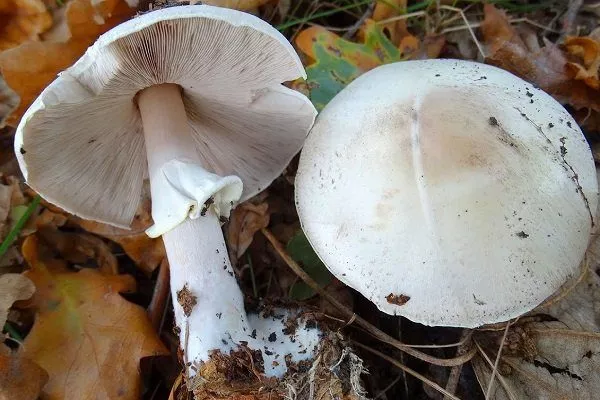
Spore-bearing layer and powder
The hymenophore is characterized by frequent and loose gills that are quite thin in structure. Initially, they are light pink, but as they grow, they transform into dark brown.
Specimens with purple and even black tints on the plates are found. The spore powder is brown.
Pulp
Unlike other edible relatives, the flesh of the woodland mushroom is considered thin and not fleshy. However, this rule only applies to specimens grown in the shade (which is typical for these mushrooms). If planted in a sunny spot, the flesh will become fleshy.
The color is white, the aroma is aniseed, especially pronounced when broken. The taste is reminiscent of nuts.
Leg
The woodland champignon is considered medium-sized, as the stem reaches only 6–10 cm in height and 1–1.5 cm in diameter. Stem characteristics:
- the structure is hollow;
- the ring is single, but double, leathery and very prominent, white in color (in adulthood it hangs almost to the ground and resembles the skirt of a white toadstool, which is formed after the veil breaks);
- color - light at first (may have a grayish or yellowish tint), then chocolate-brown;
- The surface is silky on top, scaly on the bottom.
- ✓ Presence of aniseed smell when broken.
- ✓ Slow yellowing of the pulp when damaged.
- ✓ Absence of vulva at the base of the leg.
The stem is fairly straight, located in the center of the cap. It's cylindrical in shape, widening downwards, like a toadstool, but the difference is that the stem never extends beyond the vulva.
Place of growth and fruiting period
Woodland mushrooms thrive in fertile soil with plenty of organic fertilizer. They are often found on private farmland.
In nature, the mushroom grows in deciduous and coniferous forests, including spruce groves. It particularly favors trees such as beech and spruce. If a mushroom picker sees a single champignon, they'll often find a large family nearby, as the woodland champignon grows in numerous clusters, creating a "fairy circle."
Benefits and harms
The woodland champignon contains many useful substances - amino acids, vitamins (mostly from groups B, E, PP), minerals and microelements (zinc, phosphorus, potassium, iron, etc.).
Thanks to its rich composition, the forest mushroom is used for the following purposes:
- relief of headaches;
- relieving fatigue;
- strengthening the immune system;
- improving the condition of skin, nails and hair;
- neutralization of pathogenic microorganisms in infectious diseases, including typhus;
- suppression of cancer cells, which stops the development of cancer;
- lowering blood sugar levels;
- removal of harmful cholesterol, which promotes faster blood circulation throughout the body;
- acceleration of metabolism.
Mushrooms help the body absorb nutrients more easily. The product is considered dietary (100 g contains approximately 26–28 kcal).
Mushrooms aren't particularly harmful, but only if consumed in optimal doses. Two to three meals a week, servings up to 200 g, are sufficient.
There are individual contraindications:
- allergic reaction to mushrooms;
- should not be given to children under 6 years of age;
- some diseases of the gastrointestinal tract.
Rules for collection and use
When harvesting, it's advisable to take a sharp knife with you, as pulling mushrooms out of the ground is not recommended. This will damage the mycelium, which will lead to a lack of subsequent harvest. Alternatively, gently twist the mushrooms while holding them in your hand.
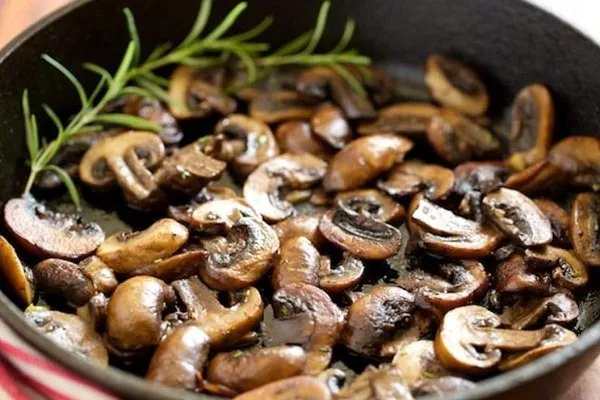
The woodland champignon imparts an aniseed-nutty aroma and flavor to the dish. It's prepared as follows:
- fried and stewed;
- boiled and baked;
- make sauces and gravies.
Growing at home
To consume fresh forest mushrooms all year round or to use them as a business, experts recommend creating a cultivation Favorable conditions. For mushrooms of this family, it is important to follow the rules for planting spores and prepared mycelium.
Breeding conditions
The Pereloskovye variety prefers humus. It's also advisable to use straw and manure. Horse manure is ideal, but cow manure will also do. Under proper growing conditions, you can harvest up to 14–17 kg of mushrooms per square meter.
You should also pay attention to the following indicators:
- the temperature regime during mycelium germination is + 15°C, later - + 19–21°C;
- humidity level - 85–90%;
- The lighting should be dim (champignons do not tolerate bright and long daylight hours).
Planting process and care
Mushrooms can be planted in various containers - prepared beds in the ground with wooden sides, bags, boxes, etc. The premises can be a cellar, basement, or darkened greenhouse.
The first thing you need to do is collect the planting material. To do this, bring the mushrooms home, pinch off small pieces with tweezers, and place them in a growing medium. There are many substrate options, but two are the most optimal:
- Ingredients: agar-agar (0.7 tbsp), oat flour (3 tbsp), warm water (2 l). Preparation: combine ingredients, pour in liquid, bring to a boil, cool, and strain.
- Ingredients: agar-agar (40 g), carrot extract (1 kg), water (2 l). Preparation: Place ingredients in a container, fill with water, and simmer for 30 minutes.
After placing the spores in the nutrient medium, maintain the room temperature at around 25°C. Mycelium will appear within 10–13 days. Transplant it to its permanent location.
Planting substrate:
- Soak the straw in warm water and leave for 3 days.
- Prepare manure in the same ratio.
- Place a layer of straw on top of the manure, about 10–15 cm thick, into the pile. There should be about 4 layers of each component.
- Sprinkle the top with mineral fertilizer, following the instructions. Superphosphate (single or double, depending on the dosage) works well.
- Keep the substrate moist by watering and digging it with a pitchfork every day for a week.
- On the last day, add chalk in the amount of 20% of the total mass.
Planting process:
- Lay out the substrate in a layer up to 50 cm thick.
- Compact lightly and water (be sure to use warm water).
- On the 4th day, make holes 3 cm deep and 15–20 cm apart.
- Place the mushroom spawn with mycelium in them.
- Cover the top with substrate.
Caring for mushrooms is easy:
- water as the surface of the substrate dries;
- remove weeds if they appear;
- Maintain temperature and humidity conditions.
Related species and dangerous similarities
The woodland champignon is very similar to other edible and poisonous mushrooms. However, they do have some differences:
- Crooked champignon (Agaricus abruptibulbus). The edible mushroom is slightly thinner and taller than the wood porcini mushroom. The cap is blunt and bell-shaped when first growing and later spreads out. Otherwise, the mushrooms are completely identical—the aniseed scent, the drooping ring, the color, etc.

- Field view (Agaricus arvensis). It's much larger, but very similar in appearance, especially when young. The only differences are its ochre color when mature and its aniseed-almond aroma.
- Yellowing (Agaricus xanthodermus). A poisonous relative, distinguished from the edible one by its pungent phenolic odor. Larger in size, the cap is yellowish-brown.
- Death cap (Amanita phalloides). These mushrooms are very similar, but the poisonous variety has a smooth surface, a greenish tint, and the stem grows from the vulva.
- White fly agaric. This is also a deadly poisonous species, like the death cap. The main difference is the stench emanating from the fly agaric (it smells like chlorine). The second difference is the color of the gills under the cap. The false counterpart is exclusively white.
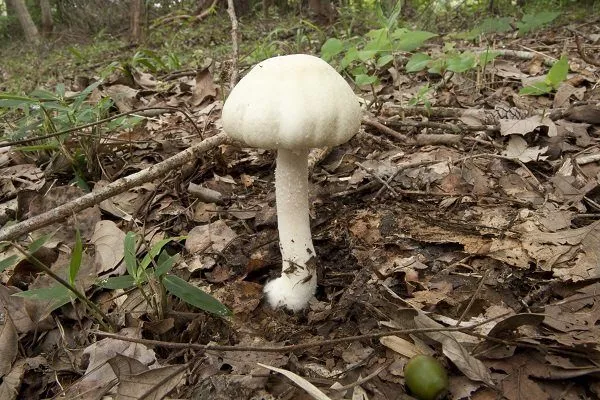
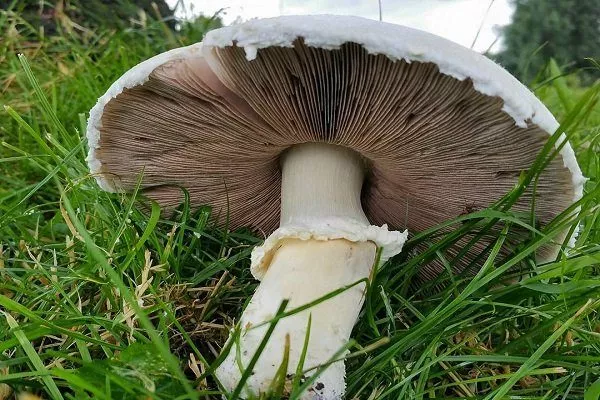
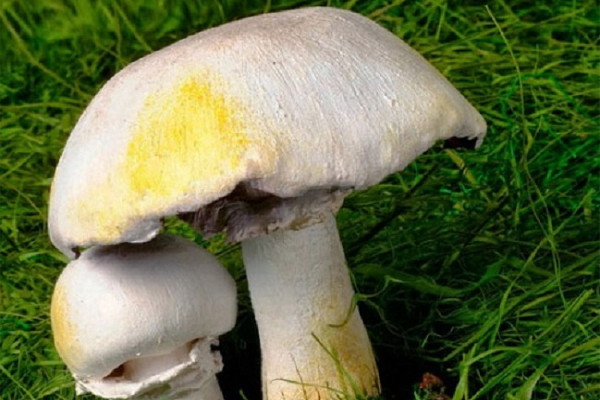
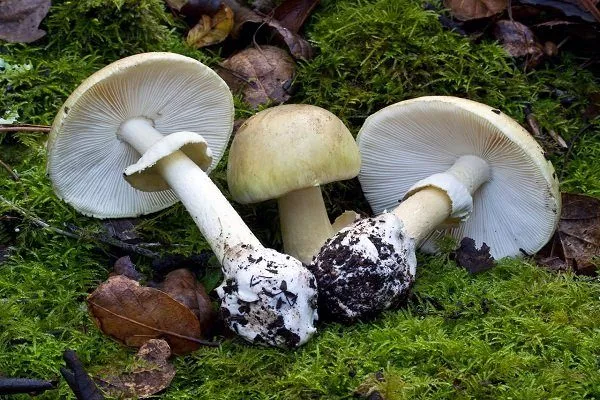
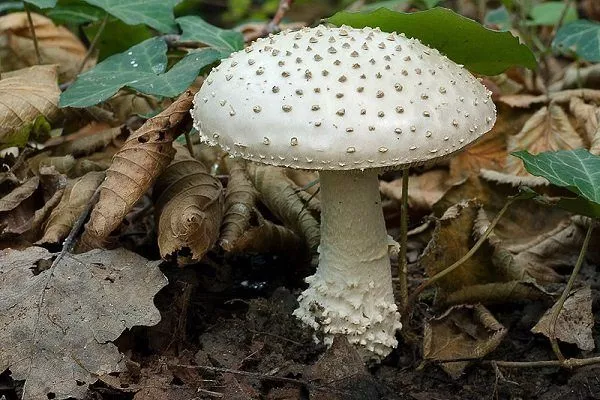
The woodland champignon is a clear example of how mushrooms may not be related species, but have a very similar appearance and some similar characteristics (a yellowing of the flesh and surface). It's common to pick poisonous relatives of the agaric family or other toxic mushrooms instead of edible ones. Researching the information will help you avoid trouble.