
While there are no issues with mushrooms picked in the forest—they need to be washed and cleaned of needles, blades of grass, small insects, and soil—the question remains with store-bought mushrooms. They look so clean and fresh that it's reasonable to ask: do they need to be washed and cleaned?
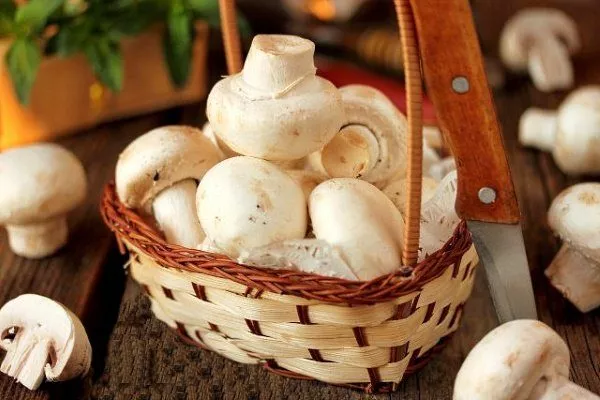
Why clean and wash champignons?
Regardless of where a mushroom was found—in the forest or on store shelves—it's essential to wash it under running water. Why? In addition to natural debris, forest mushrooms can harbor insects and pests. Mushrooms grown in artificial conditions differ from their wild counterparts in the cleanliness of their caps and stems, but they also grow in a substrate that's far from sterile. Various microscopic organisms can live on them. Dust shouldn't be forgotten either; it's everywhere. Furthermore, as the mushrooms make their way from the garden to the shelves, they pass through numerous hands.
Young mushrooms bought in stores should be rinsed thoroughly under water. Mushrooms picked in the wild aren't just rinsed; they must be additionally cleaned of soil, insects, and other debris, and the outer layer, which may contain harmful or toxic substances, must be removed. Mushrooms absorb these substances from the environment.
Do you need to soak mushrooms?
These mushrooms not only contain a large amount of water, but also, due to their structure, absorb it very quickly, which reduces the shelf life of the product and negatively affects the taste. Therefore There is no need to keep them in water for a long time, and especially not to soak them before heat treatmentThe younger and stronger the mushroom, the longer it can be subjected to "water treatments" without losing quality. This applies to store-bought products.
After washing, experts recommend patting them dry with paper towels and drying them for an additional 15 minutes on a regular dry towel. This will help quickly remove excess moisture and prevent them from softening.
Wild mushrooms are soaked briefly in a concentrated cold salt solution—15 minutes is enough to release any insects or pests hiding inside the mushroom body. This procedure also makes it easier to remove any dirt.
- Place mushrooms in a cold salt solution for 15 minutes to remove insects.
- Carefully rinse each mushroom under running water, paying special attention to the gills under the cap.
- Dry the mushrooms with paper towels before further processing.
How to wash mushrooms properly?
To wash champignons, take a bowl or basin. Fill it with warm water and drop the mushrooms in. Let them sit for 15 minutes, then remove and place in a colander to allow the water to drain faster. Then, wipe each mushroom with a damp cloth and re-cut the mushrooms. For larger mushrooms, scrape off any film with a knife. Rinse them again.
Mushrooms brought from the forest are always cooked. After washing, they are placed in a pan of salted water and boiled for 5 minutes. Then, the water is drained, and the mushrooms are processed further.
Preparing champignons before harvesting
Mushroom preparation varies depending on the cooking method chosen.
The following video shows how to properly clean champignons:
Frying
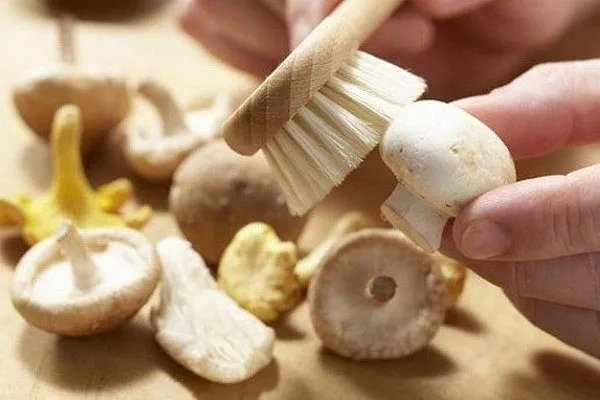
Don't wash the mushrooms before frying, as this will cause them to absorb excess water. Instead, clean them with a brush, wipe them with a damp cloth, and remove any damaged or discolored areas. Mushrooms prepared this way will have a beautiful golden crust and crispy texture.
Cooking
Wash the mushrooms thoroughly under running water and trim the stems. Any blemishes are not removed, as they won't be noticeable in the dish.
Baking
Large mushroom caps are typically used for baking, with all the gills removed. They are then given a brief water bath, adding 1-2 tablespoons of wheat flour to the water. It acts as an abrasive, helping to mechanically remove the skins from the caps.
Freezing
For this treatment, use fresh mushrooms, trimming off any discolored parts. They are then washed and dried. It's best to slice the mushrooms immediately, sprinkle them with lemon juice, and wrap them in plastic wrap. Freeze them in this form. If you're using the frozen product in soup or stews, there's no need to defrost it. Complete defrosting negatively affects the mushrooms' appearance. They lose their texture and darken.
Drying
Mushrooms should never be washed before drying, as this will cause them to darken and significantly increase the drying time, which can lead to the development of various molds on the surface. Before cooking, dried mushrooms are soaked in water. This is sufficient to remove any dust. Therefore, only high-quality, undamaged specimens are selected for drying.
Fresh mushrooms
True connoisseurs prefer to eat raw champignons. High-quality mushrooms are safe for human health. Before eating, they are washed thoroughly, dried well, and any damaged or discolored areas are trimmed off. To kill all pathogens, the mushrooms are placed in a preheated oven or broiler for a few seconds.
In addition to washing, some mushrooms require cleaning. The easiest way to do this is with a knife with a sharp, thin blade, which is easy to use to clean the inside of the caps. You'll also need a brush and damp wipes.
Important rules
To properly prepare mushrooms, follow these rules:
- Cleaning mushrooms always begins with sorting them. During this process, all spoiled specimens, as well as mushrooms with rotten spots, are discarded.
- The stems are always trimmed, regardless of where they were grown. When harvested in greenhouses, they are cut off and placed directly in a bucket. This causes dirt to get inside the stem. When harvesting champignons in the forest, experienced mushroom pickers remove them from the mycelium, leaving behind traces of mycelium and soil. When trimming the stems, there are several rules: the longer the mushroom has been stored, the more of the stem is trimmed.
- Damaged parts are cut off. Darkened areas on the stem are carefully scraped off with a knife. Only healthy parts of the mushroom are eaten.
Wild mushrooms are quite fragile and pre-processing can damage their integrity. To increase their density, place them in warm water for 20 minutes before cleaning, then remove and process them accordingly.
Methods for cleaning champignons
The process of cleaning champignons depends on the age of the mushroom and where it grows.
| Name | Hat size | Cap color | Pulp density |
|---|---|---|---|
| Button | up to 2 cm | white | high |
| Old or large champignon | more than 5 cm | brown | average |
| Cleaning champignons in the forest | different | different | different |
| Store-bought mushroom | different | white | high |
Button
The cap of these mushrooms is no more than 2 cm in diameter. It is covered with a very thin skin and does not require peeling. Preparing young mushrooms doesn't take much time. Simply brush off any remaining soil or substrate and rinse thoroughly under running water. Their stems are so small that they are barely visible from under the cap; they are trimmed.
Old or large champignon
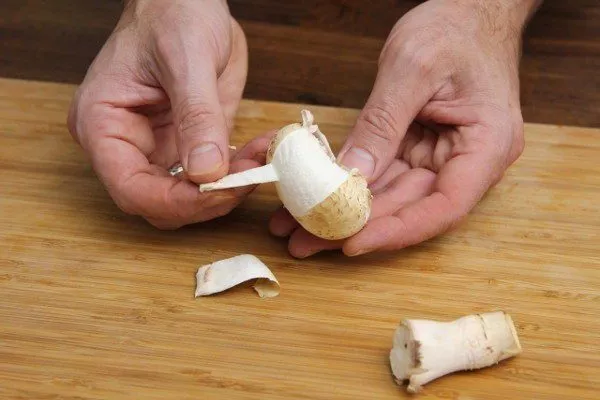
These champignons differ from their younger counterparts in the size of their caps, which are typically over 5 cm in diameter and covered with a thick skin. This skin doesn't soften during cooking, so to avoid its presence in the dish, it's removed first. This is done as follows:
- First, brush off any stuck-on dirt.
- Then, using a sharp knife, remove the “skin” by carefully lifting the edge of the cap and pulling it towards its middle.
- Freshen the stem cut. If the mushroom has been refrigerated for several days, trim off the entire dried portion, as it will be noticeable in the dish. Chefs remove the stems with the roughened "skin" completely.
- Mature mushrooms open up, and "skirts" form on their stems. These don't affect the taste in any way, but some people find them unsightly and remove them.
- The gills under the cap—the older the mushroom, the deeper the brown—can also be cleaned. But remember, they're what impart the mushroom aroma and flavor to the dish.
Cleaning champignons in the forest
Those who prefer "silent hunting" clean their mushrooms directly in the forest. After picking, they remove any natural debris and soil using a soft food-grade brush. Using gentle, gentle brushing motions, they remove any impurities and sort them. Wild mushrooms are refrigerated for up to 5 days.
Store-bought mushroom
These mushrooms are usually hassle-free. They've already been cleaned and sorted. They're washed, their stems trimmed, and any rotten parts trimmed off. Depending on their age, the skin is removed from the caps and stems. Purchased mushrooms aren't stored; they're immediately used within the first 24 hours.
A quick way to clear out experts
Professional chefs have secrets that allow you to quickly clean mushrooms:
- To ensure all dirt is removed from the mushrooms immediately, experts recommend soaking them in hot water for 20 minutes;
- Large caps can be easily cleaned of their “skin” using coarse-grained sandpaper, but it will have to be frequently washed in water, since it quickly “clogs up”;
- If you scald the mushroom with boiling water, the skin can be easily removed by hand.
Reviews
Every homemaker has their own opinion on how to clean and wash champignons. Some absolutely eschew rinsing, while others, on the contrary, wash them thoroughly.
So, although champignons are considered the safest mushrooms, washing them is recommended. Although they may appear clean, they may contain microorganisms and chemicals. Therefore, it's important to follow the basic rules for washing and cleaning champignons, and only after thorough prep work begin cooking.