
Many people try growing champignons as a valuable nutritious product for personal consumption and sale. To do this, it's important to have a good understanding of mushroom cultivation techniques and avoid mistakes that lead to slow growth and diseases common to champignons.
Main reasons
There are many reasons why mushrooms fail to thrive. All factors affecting mushroom growth are related either to proper growing conditions or to disease prevention and treatment. It's also important to initially acquire high-quality planting material—mycelium.
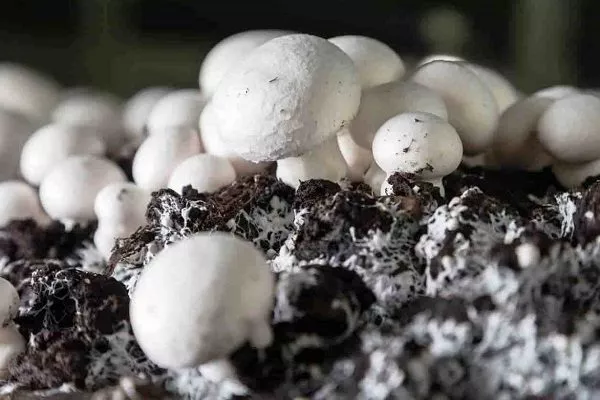
Failure to comply with the planting pattern
For good mushroom growth, it's important to ensure proper placement of the mycelium in the compost. Crowding can impact yield. Empty spaces not occupied by mycelium will also reduce yield.
Inappropriate substrate and degenerating mushroom strain
Poor mushroom growth is often caused by improper preparation of the base substrate and soil cover mixture. Typical preparation errors include:
- substrate with ammonia residues;
- too thick and heavy or uneven top layer;
- the presence of carbon dioxide in high concentrations;
- the huge magnesium content in limestone;
- the soil mixture is poorly mixed.
Such compost will leave empty areas uncovered by mycelium. Ovarian formation will be disrupted.
Poor growth is also caused by purchasing poor-quality mycelium (sick, degenerating, non-viable, or overheated during storage and transportation). Poor growth is accompanied by a failure to form mushroom ovaries.
Wrong choice of location
Successful cultivation depends on the quality of the prepared cultivation chambers. They must strictly meet the required requirements. Outdoor cultivation requires even more careful site selection.
Incorrect growing conditions
The mycelium will grow weakly, be unevenly distributed over the covering layer, and the formation of ovaries will be slow if the mushrooms are watered incorrectly.
Excessively wet or too dry soil, damage to the surface layer by strong water pressure during watering, or uneven moistening are harmful.
Microclimate imbalances (too high or too low compost temperature, uneven air distribution in the growing room) are dangerous for mushroom growth. Ovaries will form unevenly and in small numbers.
Diseases and pests
Success in mushroom cultivation depends on disease control. Diseases can slow growth or even prevent fruiting bodies from forming at all. It's important to identify the disease in order to treat it appropriately.
Let's look at the main diseases of champignons and methods for eliminating problems:
| Disease and its causes | Signs of infection | Treatment and prevention |
| White rot (mycogonia) Cause: mold-infested casing soil. Rot spores are spread by insects, people's clothing, shoes, and tools. | Ten to 14 days after infection, reddish-brown liquid stains appear on the mushrooms, and an unpleasant odor develops. The mushroom stems swell, small caps form, or the caps fail to form at all. The mushroom darkens, turning into a rotting, shapeless mass. | Ventilate the rooms, maintain optimal humidity and temperature. Disinfect the casing soil. Destroy insects and old substrate. Use mushroom varieties resistant to white rot. |
| Dry rot Cause: small spores that are easily spread through the air, by insects, people, and through contaminated soil. | At the onset of the disease, the stem thickens and becomes misshapen. In later stages, the stem becomes thin, and the cap becomes uneven. A gray-white coating or brown spots appear on the surface of the mushroom. Cells stop growing, and the skin of the stem cracks and curls outward. | Strict hygiene practices (spores can remain on hands even after washing in hot water). Use filters to prevent spore dispersal. Thoroughly treat soil and tools. Remove contaminated mushrooms. |
| False truffles on substrate Cause: the presence of spores in the soil, which under certain conditions become active and lead to disease. | Mushrooms are completely absent from the plot. The compost becomes damp and black, smelling of chlorine. | Optimal room temperature, compost processing, compliance with hygiene requirements, installation of fine filters on the exhaust hood to prevent the transfer of spores. |
| Yellow mold Causes: Spread by spores. Yellow mold mycelium will not grow in compost, and contaminated equipment will contaminate the entire system. | Light brown on the caps. The soil is covered with white fluff, which later turns yellow. It grows rapidly with rising temperatures, but without light, the mold grows poorly. | Avoid spreading spores with equipment, air, or water. Control rodents, flies, and ticks. |
| Rust spot Causes: bacterial disease actively develops with increased humidity and poor ventilation of the room. | Rusty spots with smooth edges appear on the mushroom caps. | Remove infected fruiting bodies. Steam the substrate before seeding with mycelium, and adjust ventilation in the room. |
| Floating mycelium Reasons: the casing soil and compost have different moisture levels, and the room is poorly ventilated. | If the compost is too dry, the mycelium grows upward, toward a moister area. As a result, fruiting bodies fail to form or grow small and weak. | Immediately improve ventilation and equalize humidity levels in the mushroom blocks. |
| Mummies on champignons Cause: viral infection. | Ripe mushrooms turn gray, and the flesh turns brown when cut. The stem thickens and becomes curved, and the mushroom itself first slows down and then stops growing altogether. | Since the causes of the disease have not been established, all infected mushrooms are removed along with the compost layer and destroyed. |
Here is a description of mushroom pests and methods for controlling them:
| Pest | Symptoms of damage | Prevention and treatment |
| Springtails | Small insects, white, black, or brown in color, appear. Under favorable conditions, their population grows rapidly. | The substrate and casing soil must be pasteurized and sprayed with a metaphos solution. |
| Ticks | The presence of mites on champignons can be indicated by the brown color of the stem and small holes on the caps. | Avoid spraying with chemicals, as they will contaminate the mushrooms. Prevention is an effective control method: pasteurize the substrate and spray it with metaphos before sowing the mycelium. |
| Woodlice
| They damage the mycelium and fruiting tissue of mature mushrooms. They are more common when mushrooms are grown underground (if the room has poor ventilation). | The premises need to be well ventilated, and if woodlice have already appeared, the soil should be sprayed with a lime-sulfur solution (before fruiting begins). |
| Rodents | They cause great damage to crops, destroying them. | The main methods of combating them are poison and ordinary mousetraps. |
| Nematodes (roundworms) | Parasites penetrate the fruiting bodies of mushrooms and multiply in them, since the protein environment of champignons is favorable for their life. | To prevent this, compost and soil should be pasteurized with steam. Chemicals have proven ineffective against nematodes. |
| Female dung fly | Larvae and adults damage fruiting bodies and mycelium, reducing or completely destroying the harvest. | Flies can be destroyed by fumigating the room with sulfur gas or hydrocyanic acid vapors, but it is much better to prevent their appearance and steam the manure and prepared substrate. |
What should I do to make champignons grow?
Particular attention should be paid to creating favorable conditions for mushroom growth and to promptly identifying the first signs of diseases and pests of champignons in order to take measures to combat them as quickly as possible.
- ✓ The groundwater level must be at least 1.5 m from the surface to prevent waterlogging.
- ✓ Availability of natural or artificial shade to protect from direct sunlight.
Which place to choose?
There are several options for choosing a location for growing mushrooms:
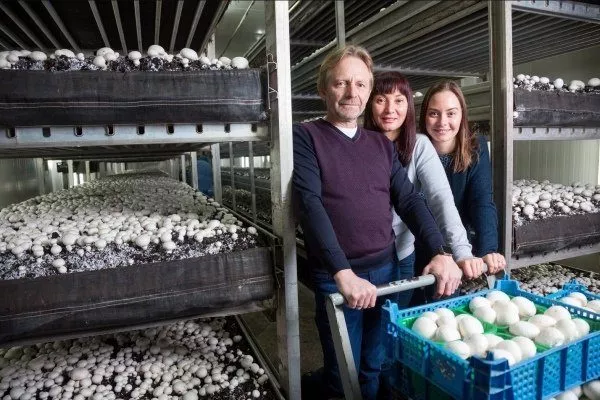
- In the cellar, storage room. Advantages: no bright light, no sudden temperature changes, high humidity. It's easy to create the right microclimate. Growing is practiced in boxes on shelves.
It's important to have a concrete floor, not dirt, and a suitable work area (at least 3 square meters). Ensure temperature, humidity, and ventilation are controlled and regulated. Disinfection should be easy. - At a summer cottage, in a hothouse or greenhouse. The advantage is that you can create the desired microclimate, but you must shade the growing mushrooms from the bright sun. Maintaining the temperature is more difficult than indoors.
- Growing in open ground. Choose a shady spot for the bed. Dig a hole 40-50 cm deep, line it with plastic, and add compost. Choose the size of the bed at your discretion.
The disadvantage of this method is that it is difficult to maintain temperature and humidity levels.
It is recommended to make a canopy from polycarbonate or greenhouse film.
How to organize a soil mixture?
For growing mushrooms indoors, the best substrate is made from straw and horse (cow) manure (or, in extreme cases, bird manure). Let's assume your growing space is 3 square meters. You'll need to prepare 200-250 kg of substrate. The ingredients should be mixed in the following proportions:
- 100 kg of straw (it must be clean and dry, without mold);
- 40-80 kg of manure;
- 2 kg urea (do not add if bird droppings were used);
- 2 kg Superphosphate;
- 8 kg of plaster;
- 5 kg of chalk.
How to make:
- Pre-soak the straw for 2-3 days.
- Then lay all the ingredients in layers. You should have 3-4 layers of straw and manure.
- Water daily and stir the layers every 3-4 days.
- Add plaster and chalk on the 18-20th day.
- After 20-25 days, the substrate will become uniform, dark brown in color, and free of ammonia odor. The substrate is ready.
After white web-like fungal threads appear on the substrate (after 1-2 weeks), evenly cover it with a casing mixture consisting of peat, soil, and limestone (in a 5:4:1 ratio). Apply the mixture to a thickness of 4-5.5 cm. The mycelium will break through the casing mixture layer.
What is the best method for planting mycelium?
When growing mushrooms, follow the mycelium placement pattern on the rack. Plant the finished mycelium in a staggered pattern, spaced 25-30 cm apart. Use 500 g of mycelium per 1 square meter of substrate.
Growing and care requirements
It is important to observe the following planting and growing conditions:
- Temperature conditions. The mycelium develops in a warm environment, at a temperature of 23-25°C. Wait until white, web-like mushroom threads appear on the substrate. Cover them with casing mixture and lower the temperature to 12-17°C, maintaining it until harvest. Avoid temperature fluctuations.
- Ventilation. Ensure adequate air circulation and ventilation, but avoid drafts. Remember that the soil releases carbon dioxide, which will inhibit mushroom growth.
- Air humidity. Provide sufficient humidity for mushroom growth. It should be between 75-90%. If necessary, cover the plantings with paper or a damp cloth and mist the paper, floor, and shelves with a spray bottle.
- Watering. Do not allow the compost to dry out. Water it at a rate of 0.5-1 l/m². The following day, water twice at a rate of 0.5-1 l/m², morning and evening. Continue this watering for three days. The water temperature for watering the casing layer should be 20-22 C.
- Lighting. This is not a necessary condition for growing mushrooms. A small amount of light, sufficient for caring for the plants, is sufficient.
Invest in automated ventilation, air purification, and heating systems. For a larger harvest, it's helpful to use steam and irrigation systems. - Fertilizing plantings. Fertilizing will help accelerate mushroom growth, reduce disease risk, and improve yield and quality. Treat the mycelium compost at the beginning of cultivation with the following solutions: Epin-Extra (4 ml per 20 liters of water), Ecofus (10 ml per 20 liters of water), and Zircon (2 ml per 20 liters of water).
- First watering: 0.5 l/m² immediately after applying the covering mixture.
- Second watering: 1 l/m² 2 days after the first.
- Subsequent watering: 0.5 l/m² every 3 days, depending on the moisture content of the substrate.
How to prevent disease?
Begin disease prevention by treating the mushroom growing area. Before adding new substrate, wash the area, disinfect it with a 2% bleach solution, dry it thoroughly, and ventilate. Whitewash the walls with 20-30% copper sulfate.
Other requirements:
- Don't grow mushrooms in used substrate. It's contaminated with fungal pathogens; remove it promptly.
- Disinfect the casing soil. To do this, prepare a formalin solution. To treat 100 square meters of soil, mix 2 liters of formalin (40%) with 100 liters of water.
- During the growing process, treat any infected areas with formalin solution. If a large area is affected, use fungicides.
- Wash clothes you use when caring for mushrooms with hot water or steam them to avoid spreading spores.
There are different approaches to applying pesticides and insect repellents. Here's an example of a proven method for treating casing soil with irrigation for a 100-square-meter chamber:
- First day of watering. Dissolve 200 g of Dimilin in 100 liters of water, and 200 g of Derosal in 100 liters of water. This will kill insect larvae and mycophilic fungi.
- Third day of watering. Vivando 100-200 g dissolved in 100 l of water for mold treatment.
- The last watering or before/after loosening. Dilute Sporogon in the amount of 200 g per 100 l of water to combat Verticillium or Mycogon.
Which mycelium should I choose for good growth?
Mushroom mycelium (spawn) must be high-quality and healthy. Purchase it from a reputable producer. This guarantees a future harvest. When choosing mushroom mycelium, keep in mind that cultivated mushrooms are divided into three main types:
- white;
- creamy;
- brown.
White and cream-colored mushrooms produce more fruit than brown ones. Brown mushrooms are more tolerant of temperature and humidity fluctuations.
Types of mycelium purchased:
- Cereal. It can be stored for up to six months at a temperature of 0-4°C. It is sold packaged in a plastic bag.
- Compost. It can be stored for up to a year at 0-4°C. It is typically packaged in glass containers. Its yield is lower than that of grain, but it is more resistant to temperature and humidity fluctuations.
You can collect ready-made mycelium from the wild. Wild mushrooms are easy to find. They grow in various locations, forests, near landfills, and barnyards. Take a piece of soil with a bluish mycelium, without a thick yellow layer (this is old mycelium).
You can grow your own mycelium. The mushroom contains pores that can be isolated and placed in a nutrient medium. The easiest way to make oatmeal agar is by mixing and boiling the following ingredients in a ratio of 30 ml/950 ml/15 ml for 1 hour:
- Oat flour.
- Water.
- Agar.
Stir the mixture and then filter it. The nutrient medium for spore germination is ready.
So, to ensure successful mushroom growth, pay attention to the quality of the mycelium you purchase and the compost you use. Maintain proper growing conditions, implement timely preventative measures, and use modern disease and pest control techniques.