
Growing champignons at home involves several stages. But the core of this technique is creating a nutrient-rich environment for mycelial growth. Simply put, compost is required. Its preparation is a multi-stage process with precise dosing of natural ingredients.
Why do champignons need compost?
This living organism lacks chlorophyll. Without chlorophyll, plants cannot synthesize nutrients. For this reason grow champignons It's impossible to grow them in regular garden soil (even with added fertilizer). They require a special substrate mixture for the proliferation of beneficial microorganisms.
- ✓ The optimal pH level for mushroom compost should be between 7.0-7.5.
- ✓ The compost temperature during fermentation should not exceed 70°C to avoid the death of beneficial microorganisms.
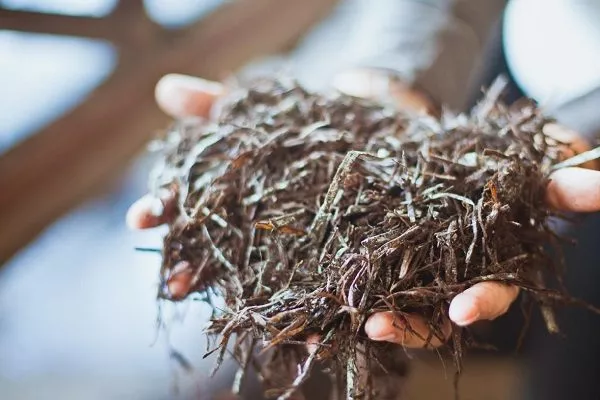
Compost provides mushrooms with the right moisture level, enriches them with nutrients, and creates a loose environment for the root system. All this contributes to accelerated plant development, larger fruiting bodies, and a bountiful harvest.
Organic mushroom growing mix is available in specialty stores, but farmers prefer to make their own compost at home. The benefits of making your own compost include:
- saving money - the cost of the product in the store is high;
- confidence in quality indicators, absence of chemical additives;
- knowledge of expiration dates (if stored in a warm place for more than 30 days, compost loses its usefulness).
Types of compost for growing mushrooms
When growing mushrooms, a variety of nutrient mixtures are used, making it difficult for the average gardener to choose the right one. There are three common types of compost.
| Name | Ripening period (days) | Growing temperature (°C) | Humidity (%) |
|---|---|---|---|
| With natural ingredients | 23 | 10-12 | 70 |
| Semi-synthetic | 25-27 | 10-12 | 70 |
| Synthetic | 25-27 | 10-12 | 70 |
With natural ingredients
Compost necessarily contains natural components. They are rich in chemical elements:
- nitrogen - contained in livestock waste;
- carbohydrates - found in dry plant stems;
- carbohydrates - found in gypsum and chalk, soy, pea and bone meal, malt.
In the wild, mushrooms thrive where horses graze. Horse manure is considered the most suitable source of nitrogen for composting. It contains a significant amount of micronutrients.
Straw, corn cobs, and hay act as a carbon source, providing aeration. Poor air flow into the compost significantly reduces the mixture's effectiveness.
Gypsum materials are used in minimal quantities. They improve the structure of the substrate, saturating it with natural minerals.
Basic composition of natural compost for mushrooms:
- 100 kg of horse manure;
- 15 kg of dry bird droppings;
- 50 kg of straw;
- 3 kg of loose alabaster;
- 100 liters of warm water.
The approximate curing period is 23 days. The finished product will be loose and smooth in consistency, dark brown in color. Note: when squeezed in the palm of your hand, the mixture should not stick together or release liquid.
Semi-synthetic
Horse breeding is not a large-scale industry. Consequently, horse manure is impossible to find in sufficient quantities. The solution was to produce semi-synthetic composts for mushroom cultivation.
An alternative method includes several composition options (part of the horse waste product is replaced by another material):
- horse manure - 50 kg, chicken manure - 15 kg, straw - 50 kg, gypsum - 3 kg, water - 200 l;
- horse waste - 50 kg, droppings - 75 kg, cereal stalks - 250 kg, building gypsum - 15 kg, water - 250 l;
- straw-type manure - 250 kg, dry chicken excrement - 75 kg, straw - 250 kg, gypsum - 15 kg, water - 1000 l.
Synthetic
This type of compost does not contain horse manure, reducing material costs. The synthetic substrate contains straw, chicken manure, and minerals (urea, ammonium sulfate, superphosphate, etc.).
Standard step-by-step recipe:
- Pour any liquid manure over 500 kg of straw to make a paste;
- after 3 days add 250 kg of bird droppings and another 500 kg of straw;
- add urea (25 kg);
- add Superphosphate (3.17 kg);
- at the first and third mixing add chalk (8 kg) and gypsum (12 kg).
Technology
The technological process of preparing a nutrient mixture involves many steps. Equally important is the proper preparation of equipment, materials, tools, and components. The outcome depends on this.
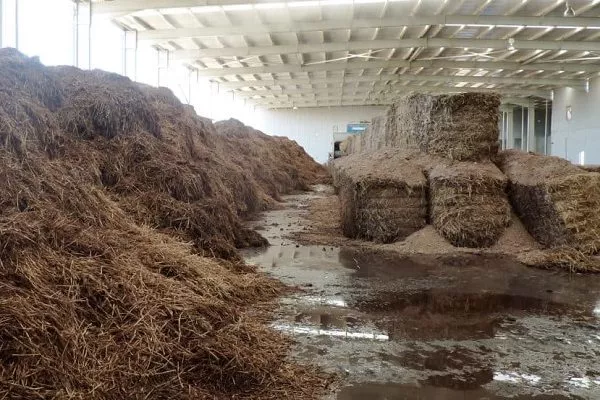
Necessary materials and equipment
To create optimal conditions, compost should not come into contact with the soil. Choose appropriate surfaces:
- concreted area;
- barrel;
- container, polyethylene bag;
- only.
Auxiliary tools:
- watering can or hose;
- polyethylene film;
- pitchfork.
The technology involves a re-stamping process. You will need:
- plenty of free space - at least 2 x 2 m (if you don't have a square area, try to keep the width at 2 m, make the length whatever you like, but more than 2 m.
- a canopy over the composting area, which will protect from direct sunlight and rain;
- free air flow from all sides - wooden or alabaster sides 40–50 cm high are created;
- minimum air temperature is 10–12°C.
- a container for soaking dry vegetation - cobs, hay, straw.
Preparing the components
Compost materials must be of high quality. This means the following:
- straw, hay - no signs of rot or mold;
- manure - exclusively fresh.
The dry material is first soaked in water in a separate container and left to soak for three days. It is then ground using a feed grinder.
- Soak straw for 72 hours before use to achieve optimal moisture content.
- Pasteurize the straw at 65-70°C for 60-70 minutes to kill pathogens.
- Chop the straw to a size of 5-10 cm to improve aeration of the compost.
The straw then undergoes a disinfection process, as it contains fungi and other pathogens. The pasteurization process:
- After crushing the material, direct steam at a temperature of 65–70°C onto it (use a steam generator).
- Steam for 60–70 minutes.
Cooking steps
The composting period depends on the rate of fermentation (the hotter it is outside, the faster the process). The average time is 22–24 days. Organic fertilizer is formed in three stages:
- Decomposition. Heat causes the breakdown of substances, which promotes the formation of nutrient compounds that provide a favorable environment for the growth of essential bacteria. Earthworms are also bred here (they accelerate the fermentation process). This process takes five days.
- Rubberizing. The humus formation period requires strong aeration. Without oxygen, the necessary bacteria die. It's essential to mix the soil and ensure a supply of fresh air under the canopy.
- Mineralization. The final phase, when all the compost's components have decomposed, allows the mycelium to be planted.
Standard cooking technology process:
- Lay the straw in a layer of 30–35 cm.
- Spread horse manure.
- Add bird droppings (dry only).
- Wet the pile with a watering can or a hose with a spray nozzle.
- Tamp it down.
- Repeat the procedure 4-6 times.
After adding the raw materials, warm the stack to 45°C by covering it with plastic. When the internal temperature reaches 65–70°C, open the cover, but ensure the air temperature is no cooler than 10°C.
Then proceed as follows:
- After a week, use a pitchfork to break up the substrate and add gypsum/alabaster.
- On the 14th day, water the plants (again using a spray bottle), but make sure the water doesn't stagnate. Stir.
- After 20 days, moisten again and turn over with a pitchfork.
- On the last day, mix the mixture and transfer it to the place where the mushrooms will be grown.
Fermentation accelerators
Composting involves chemical processes that release steam, ammonia compounds, and carbon dioxide. Fermentation speed is affected by weather conditions. If they are unfavorable, mushroom growers accelerate the processing of organic matter using biopreparations.
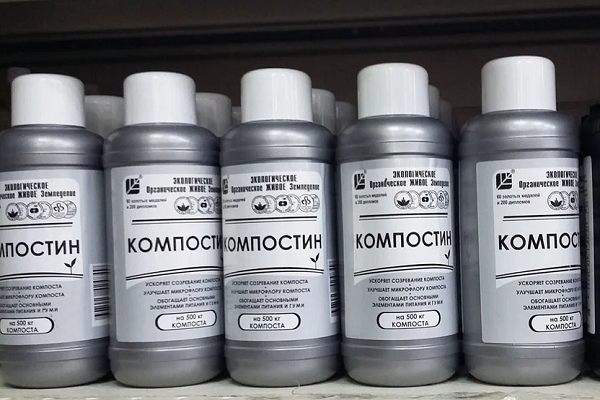
There are a huge number of them: Baikal, Ecomic, Embiko, Vozrozhdenie, Compostin, Siyanie, etc. Destructors are used in accordance with specific instructions.
If you don't have the opportunity or desire to buy a biological product, gardeners recommend using folk remedies:
- Herbal tincture. Take 5 parts of any grass (weeds will do too), 2 parts chicken manure, and 20 parts water. Let it steep for 6–8 days.
- Urine. Mix human or animal urine with water in the following proportion: 1 part biological waste to 4 parts water.
- Yeast. Add 3 tablespoons of dry yeast and 600 g of sugar to 3 liters of warm water. Leave in a warm place to ferment for several hours.
Recipes
There are numerous options for creating mushroom compost around the world. There are basic recipes that are used most often, including in temperate climates.
| Name | Main ingredient | Additional ingredients | Delivery time (days) |
|---|---|---|---|
| With horse manure | Horse manure | Straw, gypsum, chalk | 23 |
| With chicken droppings | Chicken manure | Straw, alabaster | 25-27 |
| With corn on the cob | Corn on the cob | Straw, manure or bird droppings, gypsum or chalk | 25-27 |
| With sheep manure | Sheep manure | Chicken manure, alabaster, straw | 25-27 |
| With sawdust | Wood sawdust | Straw, calcium carbonate, urea, malt | 15-17 |
| Based on blood meal | Blood meal | Straw, superphosphate, potassium sulfate, alabaster, chalk | 30 |
| With peat | Peat | Straw, ammonium sulfate, sodium nitrate, potassium phosphate | 25-27 |
| Asian recipe | Rice straw | Chalk, urea, superphosphate, ammonium sulfate | 25-27 |
With horse manure
Classic composition without the use of waste from other animals.
Preparation:
- straw - 50 kg;
- horse manure - 50 kg;
- gypsum - 4 kg;
- chalk - 5 kg.
With chicken droppings
If you only have bird waste, use the following ingredients for compost:
- straw - 100 kg;
- litter - 100 kg;
- alabaster - 12 kg.
With corn on the cob
This recipe is suitable for regions where corn is predominantly grown. Ingredients:
- 50 kg of straw and corn cobs;
- 60 kg of any manure or bird droppings;
- 3 kg of plaster or chalk.
It's permissible to replace straw with alfalfa grass. Then use 4–5 kg of gypsum.
With sheep manure
This component is usually mixed with bird waste. Recipe:
- sheep manure - 40 kg;
- chicken manure - 60 kg;
- alabaster - 6 kg;
- straw - 100 kg.
Sheep droppings are quite dry. Add enough water to ensure the mixture is a liquid consistency when poured in.
With sawdust
The composition does not include animal waste products. Recipe:
- 100 kg of sawdust and straw;
- 10 kg of calcium carbonate;
- 5 kg urea;
- 15 kg of malt.
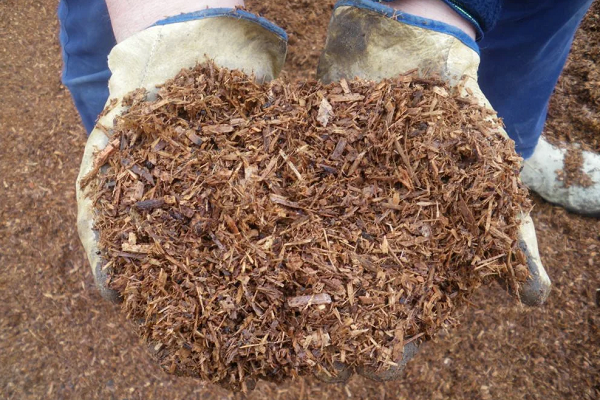
Based on blood meal
An expensive and highly effective recipe. Blood meal is made from the dried blood of birds and livestock. The compost consists of:
- straw - 50 kg;
- blood flour - 8 kg;
- Superphosphate - 315 g;
- potassium sulfate - 315 g;
- alabaster - 8 kg;
- chalk - 1.1 kg.
With peat
The recipe contains many chemical components. Preparation involves two stages:
- Prepare a saline solution of 7 kg of ammonium sulfate, 1.5 kg of sodium nitrate and 1.5 kg of potassium phosphate.
- Combine the mixture with 800 kg of peat flour and 200 kg of straw.
Asian recipe
A recipe from Eastern mushroom growers. For mushroom compost, use:
- rice straw in the amount of 200 kg;
- chalk - 25-30 kg);
- urea - 5 kg;
- 20 kg of superphosphate and the same amount of ammonium sulfate.
How to use compost?
Experienced mushroom growers build special compost heaps. To create one, simply dig a hole (any depth, from 10 cm), fill it with concrete, and install wooden plank edges. The height of the enclosure depends on the amount of materials used—the more materials, the higher the structure.
Compost is transferred to this structure, but the substrate can be made directly in the stacks. Their size depends on the volume of produce being grown.
After harvesting, gardeners don't throw away the compost, even if they use it three times. The composted material produces mushroom blocks, which are rich in nitrogen and other minerals. They are used:
- as fertilizer for various crops;
- for mulching plants - it will saturate them with useful substances, retain moisture, and protect against diseases and pests;
- as a way to insulate the soil when planting young trees.
Useful tricks
Mushrooms aren't considered particularly demanding crops. However, the yield and flavor of the resulting product depend on the quality of the compost. For this reason, it's important to strictly adhere to the rules for creating a mushroom growing mixture.
Experienced mushroom growers recommend following these tips:
- Do not allow the content of minerals and other microelements in the compost to exceed the norm - this will exceed the temperature of the substrate, which will lead to the death of the mushrooms;
- compost moisture content should not exceed 70%;
- a good product does not have an ammonia smell;
- normal structure - loose;
- Do not plant mushrooms in fertilizer if water is leaking from it;
- Monitor the temperature in the stacks.
Mushrooms have become an affordable product in stores. However, mushrooms grown in mass production lack a distinct flavor and aroma. "Homegrown" mushrooms are grown in compost made from natural ingredients. A rich diet allows for a bountiful harvest of genuine mushrooms.