
Black button mushrooms aren't a special variety, but rather the same mushrooms that have changed color due to various reactions that occur when the spores interact with various substances, such as oxygen. The color changes in fresh, dried, and even canned products. The question arises: what to do with these mushrooms?
Why do mushrooms turn black?
It's quite possible to independently determine the cause of naturally darkened white mushrooms. This can be done based on key characteristics: the location of the darkening and the presence or absence of other symptoms. The situation surrounding the color change (cooking, frying, defrosting) also plays a role.
Black plates under the cap
If the area under the mushroom cap darkens, don't worry. This is a sign that the mushroom is fully ripe.
But not in all cases. If the blackness has spread throughout the entire spore-bearing layer, leaving no light patches, the mushroom is poisonous. This statement applies more to forest champignons.
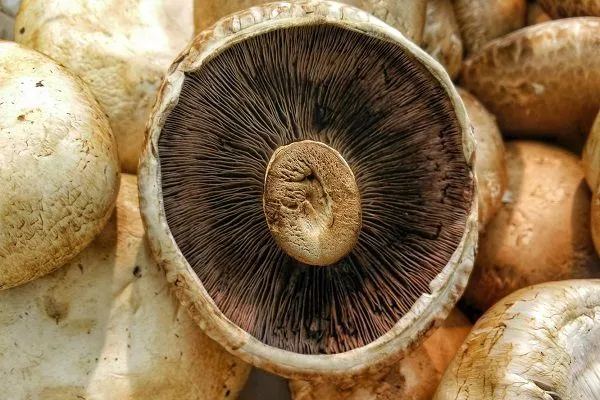
Mushrooms picked when unripe will darken over time (if they sit on store shelves or in your own refrigerator for a long time).
Black inside
The reason for the mushroom's darkening from the inside is oxidation due to exposure to air (oxygen). The mushroom is safe to eat only if the following signs are present (the mushroom must be cut with a knife):
- body elasticity;
- Among the black mass there are many white areas.
If the fruiting body is completely black when cut, it has already accumulated toxic substances and should not be eaten.
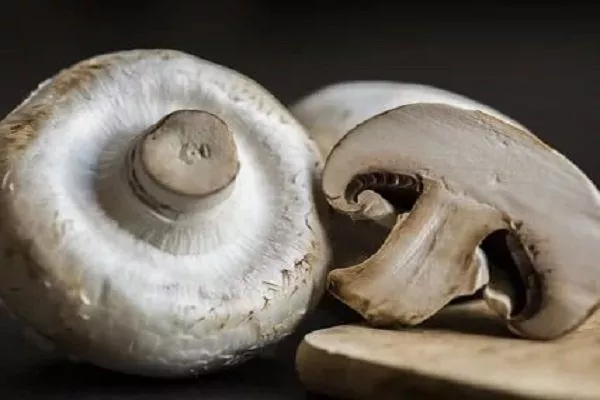
Additional manifestations of inedibility:
- unpleasant odor;
- mold;
- high humidity.
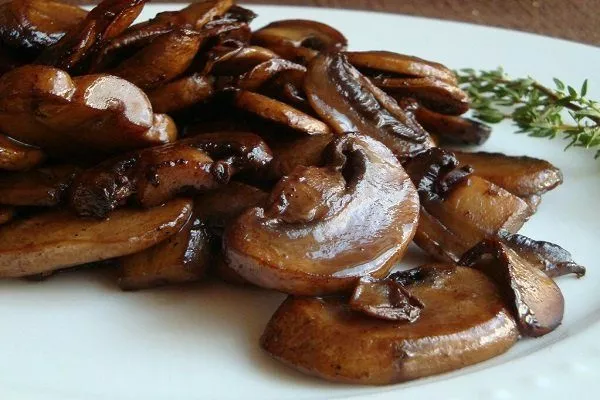
They turn black when fried.
Fruiting bodies contain carbon. When exposed to high temperatures, this carbon causes the product to darken, which is considered a normal and even desirable reaction. The key is to keep them white before frying.
Dark after defrosting
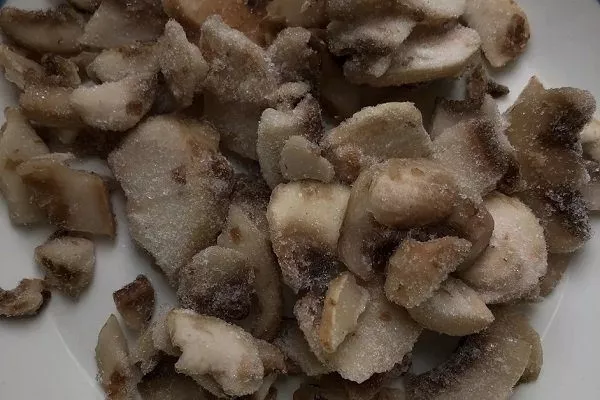
For long-term storage, home cooks use freezing—the mushrooms retain their flavor and nutritional properties. However, sometimes it turns out that after defrosting, a champignon unexpectedly turns black.
This occurs when products are stored in plastic containers or polyethylene bags without sealing. Vacuum packaging prevents physiological damage to the spores because it lacks oxygen.
Eating blackened, defrosted mushrooms is not contraindicated unless the following symptoms are present:
- mushrooms secrete sticky mucus;
- a smell that is not typical for champignons appeared;
- the spore-bearing lamellar layer has darkened significantly;
- signs of decay are visible;
- The cap was covered with large black spots.
Can you eat darkened mushrooms?
Since the color change of champignons during storage Since blackening is considered a natural process, consuming such foods is permitted. However, it's important to consider the various factors that led to the blackening.
Rules for different situations:
- Black plates. Analyze the degree of darkening of the lamellar layer. If it is completely black, with mucus present, there is a risk of poisoning.
A slight color change (only if the caps have fully opened) indicates the mushrooms are safe to eat. Be sure to boil them for 40–45 minutes, then fry. - Dark flesh and skin. If the lamina, flesh, and skin have turned black, assess the extent of the blackening visually. If it's minor, carefully examine the fractured area—smell it, touch it with your fingers.
There should be no off-flavors, strong phlegm, or mucus. These mushrooms are edible, but they must be cooked thoroughly. - Raw darkened mushrooms. Raw champignons are considered the healthiest. They contain a large amount of fiber.
However, eating blackened mushrooms raw is not recommended, as they have already undergone pathological processes associated with the development of pathogenic microorganisms. Boiling or frying destroys the bacteria, making the product no longer dangerous.
If poisoning does occur, it is necessary to provide first aid immediately:
- Rinse your stomach - drink 1.5-2 liters of clean water (preferably boiled), press on the root of your tongue with your finger, which will induce a gag reflex (repeat up to 3 times);
- drink an absorbent - activated carbon (1 tablet for every 10 kg of body weight);
- After all manipulations, drink 200–300 ml of weakly brewed black tea, dried fruit compote, or rosehip infusion (without sugar) in small sips.
Such procedures are carried out in the presence of the following symptoms:
- nausea and headache;
- severe weakness and cold sweat;
- diarrhea and pain in the gastrointestinal tract;
- breathing disorder.
If blood pressure changes, hallucinations, or squinting are observed, the level of intoxication is considered severe. Call an ambulance immediately.
Terms, conditions and storage periods
| Name | Shelf life at room temperature | Shelf life in the refrigerator | Shelf life in the freezer |
|---|---|---|---|
| Fresh champignons | 12-18 hours | 3-6 days | 6-9 months |
| Frozen boiled champignons | Not recommended | Not recommended | Up to 6 months |
| Dried champignons | 12-18 months | 12-18 months | Not recommended |
| Home-canned champignons | Not recommended | Maximum 6 months | Not recommended |
| Marinated factory-made champignons | Not recommended | Up to 12 months | Not recommended |
The main requirement for preserving champignons: freshly picked or purchased mushrooms should not be washed. The lamellar spore-bearing layer has a loose structure. It instantly absorbs water and distributes the moisture throughout the entire body of the mushroom.
The shelf life of mushrooms depends on the processing method and condition:
- fresh at room temperature - from 12 to 18 hours;
- in the refrigerator (on the vegetable shelf) - from 3 to 6 days;
- in the freezer, raw - 6-9 months;
- frozen boiled - up to 6 months;
- dry - from 12 to 18 months;
- home-canned - maximum 6 months;
- marinated factory-made - up to 12 months (due to the content of preservatives).
There are rules regarding the conditions and methods for storing mushrooms:
- do not buy a product if it has been on the shelf for more than 72 hours;
- keep in a tightly closed container or vacuum bag to ensure minimal oxygen access (additionally, manipulation prevents the mushrooms from drying out);
- the optimal temperature in the refrigerator is + 5–7°C, but better from 0 to + 2°C;
- Change the packaging once every 2-3 days (condensation will form in the bag when kept in a cold place), first let the mushrooms dry a little;
- mushrooms stored without containers dry out quickly;
- It is permissible to keep fresh, boiled, fried champignons in the freezer (fresh ones are not washed, but only cleaned of dirt, fried ones are placed on a paper towel to remove fat);
- Monitor the temperature in the freezer – it should not be higher than -18°C.
Dried mushrooms are a great storage option. There are two ways:
- Cut the mushrooms into thin slices/cubes, place on a baking sheet, and bake in the oven at +45–50°C until all moisture has evaporated.
- Thread sliced or whole mushrooms onto a string and hang in direct sunlight. Bring them indoors overnight. When the mushrooms begin to break easily, they're ready.
Experienced mushroom pickers explain the storage requirements for champignons in this video:
How to extend the freshness of a product?
In some cases, when people consume raw mushrooms (as a source of nutrients, or as part of a diet), it may be necessary to prolong their freshness. There are several options:
- Make a salt solution in a saucepan (2-3 tablespoons of salt per 1 liter of water), place the mushrooms in the container, boil for 2-3 minutes after boiling (the nutrients do not have time to evaporate), squeeze out the water and freeze.
- When storing in the refrigerator, place dry (unwashed) mushrooms in a plastic container and cover with a natural fabric towel on top.
- Place the product in portions into canvas bags and place the pieces in a container with a closed lid.
Before carrying out any freshness prolongation procedures, you need to properly prepare the mushrooms for storage:
- cut off the edge of the leg with a sharp knife (try to avoid torn pieces);
- sweep away dirt (residual soil) with a soft brush;
- If there are any breaks or damaged areas, remove them;
- Wipe with a dry soft cloth on all sides - do it carefully so as not to damage the body.
How to choose fresh mushrooms?
A perfectly fresh champignon has a presentable appearance: smooth, without damage or breaks. Other signs of a truly high-quality product:
- hat shade - matte;
- body color - white or white-pink;
- the surface is slightly velvety or smooth (depending on the variety of champignon);
- integrity of the film on the cap and between it and the stem;
- darkening of the cut of the stem, but not blackening;
- mushroom aroma;
- When pressed, elasticity and hardness are felt.
- ✓ Check the mushrooms for an unpleasant odor, which is not typical for fresh champignons.
- ✓ Make sure the mushrooms do not show any signs of mold or slime on the surface.
To find out if a mushroom is spoiled, watch the video:
Signs of spoiled mushrooms
| Name | Signs of corruption | Recommendations for use | Storage Features |
|---|---|---|---|
| Canned champignons | Cloudiness of the marinade, fermentation, swelling of the lid | Do not use | Maximum 6 months in the refrigerator |
| Dried champignons | Mold, rotten smell, presence of fly larvae | Do not use | 12-18 months in a dry place |
| Frozen champignons | Ice lumps in the bag, black spots after defrosting | Do not use if there are signs of spoilage. | Up to 9 months at -18°C |
While it's easy to determine whether fresh mushrooms are fresh or spoiled, it's more difficult with other storage methods. It's important to study all the characteristics of a spoiled product.
Canned
Pickled mushrooms have a long shelf life, but if the preservation process isn't followed correctly, pathogenic microorganisms can penetrate, causing the product to spoil quickly. How can you identify spoiled canned mushrooms? Key signs:
- there is turbidity in the marinade;
- a fermentation process that manifests itself in the formation of bubbles at the bottom (rising upwards);
- the lid swells.
Dry
Dried mushrooms also need to be stored properly: avoid high humidity, isolate them from other foods, and keep them away from insects. Failure to do so will result in spoilage. This can manifest itself as:
- moldy coating;
- the smell of rot;
- presence of fly larvae;
- transformation of the mushroom body into a rotten state.
Frozen
The main rule for storing frozen products is to avoid defrosting or refreezing them. It's almost impossible to tell if frozen mushrooms are spoiled by their appearance.
However, when purchasing at the store, you can still check the product for suitability for consumption. Feel the package. If there are lumps of ice inside, the mushrooms have been refrozen or the pre-cooked product was not prepared correctly at the factory.
Forest champignons
Forests abound with mushrooms that look identical to champignons. Inexperienced mushroom pickers mistakenly believe these are edible varieties. In reality, these "copies" may be poisonous. The following dangerous species are found in Russia:
- Agaricus xanthodermus or Yellow-skinned. It grows in grass and open areas, and is distinguished by its white cap, but with grayish-brown spots. When cut, the cut surface immediately turns yellow.

- Agaricus Placomyces or Scaly. Found in coniferous and mixed forests. The cap is similar to that of the Yellow-skinned False Champignon, but with a single dark spot in the center. A distinctive feature is the presence of barely noticeable scales.
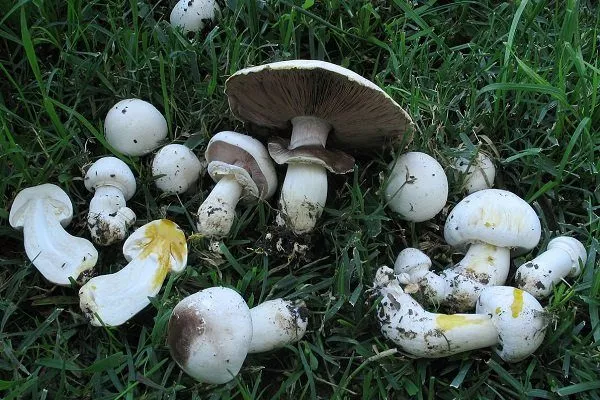
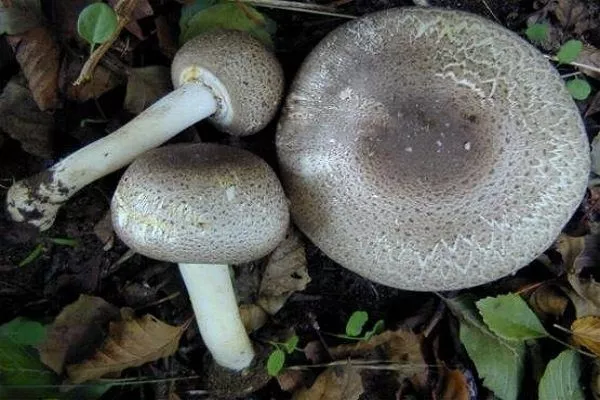
Sometimes mushroom pickers harvest old champignons. This isn't safe. The reason: over the growing season, past the recommended harvest time, old mushrooms accumulate toxins from other vegetation (particularly poisonous mushrooms growing nearby).
Not all black mushrooms are inedible. It's important to learn to distinguish mushrooms that have simply darkened due to natural causes from spoiled mushrooms. However, even if you're absolutely certain the mushrooms are edible, it's not recommended to eat them without first cooking them.