
The August mushroom is considered an edible mushroom, belonging to the group of agaric mushrooms, the genus Agaricaceae. Its Latin name is Agaricus augustus, and its common name is "spike mushroom." Based on its appearance, it is confused with only two false lookalikes, but they are quite easy to distinguish. It is considered nutritious and high in protein.
Description
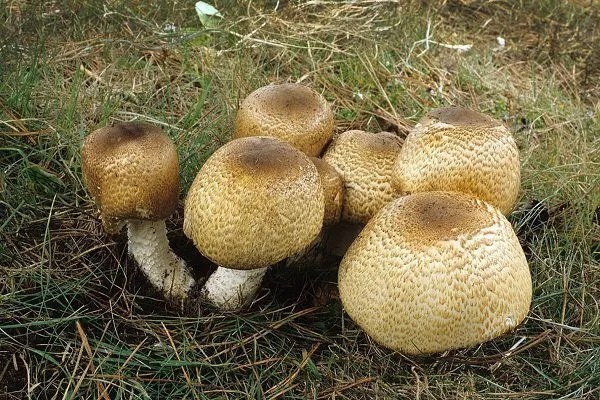
The August champignon is an attractive mushroom and is used not only in cooking but also in folk medicine. In the latter case, only the cap is used. Among edible mushrooms, it resembles Forest, since there are brown scales on the surface.
The difference lies in the shade of the base of the cap - in Lesnoy it is brownish-brown.
hat
The mushroom is distinguished by its massive cap—its diameter varies from 5 to 20 cm. It is considered thin. When young, it is closed and hemispherical; when mature, it becomes spreading.
Other characteristics:
- base shade - golden;
- surface color - from golden and light yellow;
- scales - orange-brown or brown;
- coloring in the central part - more intense than at the edges.
There are specimens with a tubercle.
Spore-bearing layer
The gills are often creamy or light pink when young (with a whitish film), and light brown to very dark when older. As the plant matures, the gill layer breaks and hangs off in a tattered pattern, resulting in a large ring of white with yellow flakes on the stem.
Leg
The stem of the August mushroom is quite strong, but hollow. Brief description:
- length – from 5 to 10 cm;
- thickness – 1.5-2.5 cm;
- color – from white to yellow;
- surface - rough.
The base of the stem is pinkish-brown in color and tuberous in shape.
Pulp
The mushroom's interior is firm and fleshy, with a white hue. If you press on the flesh, it turns pinkish due to oxidation upon exposure to oxygen.
Taste and composition
The August champignon is considered a healthy mushroom because it contains a huge amount of nutrients. It primarily contains vitamins PP, C, A, potassium, and phosphorus. It is classified as a Category 3 nutritional value.
Characteristics of taste and aroma:
- smell – pronounced mushroom with notes of anise or almond;
- taste - sharp and pleasant.
The spikelet is allowed to be eaten raw.
Possible harm
August button mushrooms, like any other edible mushrooms, should not be consumed in large quantities, as they absorb hazardous elements, such as cadmium (a heavy metal that can cause toxicity and other consequences).
It's especially important to pay attention to harvesting locations—avoid harvesting near large manufacturing plants, highways, landfills, etc. Harmful harvesting can cause harm. It's not recommended to eat mushrooms if you have an allergic reaction to them.
Prevalence and timing of collection
The August champignon is harvested from early August to early October. The mushroom prefers to grow in coniferous forests, but can also be found in mixed plantings with organic and clay soil. It can also be found within city limits, in parks and forest plantations.
- ✓ Ensure that the collection point is at least 500 metres away from roads and industrial areas.
- ✓ Check that the soil at the collection site shows no signs of chemical contamination.
Since ants feed on the tubers on the mushroom hyphae, the August mushroom grows near anthills or even directly on them. A distinctive feature is that it grows in large groups, so if you see one mushroom, you need to look for the entire family nearby.
False doubles
| Name | Hat size (cm) | Cap color | Color of the plates |
|---|---|---|---|
| August champignon | 5-20 | golden, light yellow | cream, light pink, light brown, dark |
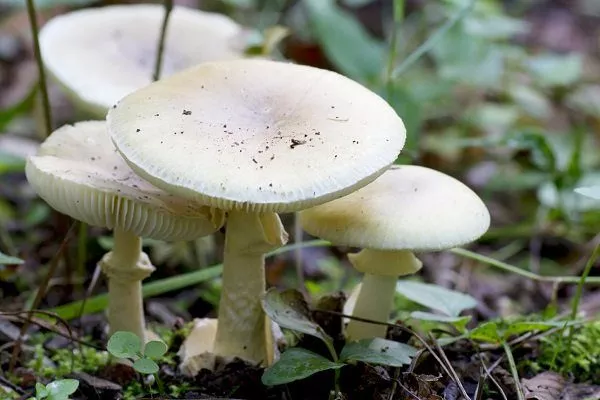
| Death cap | 5-15 | white, greenish | white |
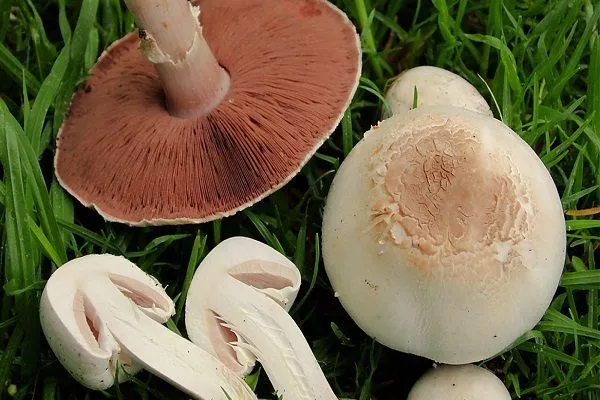
| Reddish champignon | 3-10 | white, yellowing | pink, brown |
There are lookalikes that are prohibited for consumption due to their toxicity. Inexperienced mushroom pickers often confuse the August champignon with the following false mushrooms:
- Death cap. This mushroom is classified as a deadly poison. They are similar in appearance, but unlike the Augustow's toadstool, the toadstool has a volva at the base, rather than an attached "sac" at the root. Other differences:
- the poisonous mushroom has no scales;
- the double's plates do not change color - they are always white;
- If you press on the toadstool, the color does not change.

- Reddening champignon. Despite its name, it's considered poisonous. It's very similar to the Augustus's scaly-headed ...
- when cut, the color of the pulp and stem changes to an intense yellow;
- smell – unpleasant (resembles iodine, ink or carbolic acid).
Rules for collection and use
The August champignon must be harvested correctly. The first step is to avoid confusing it with its poisonous relatives. Then, proceed as follows:
- Do not pick mushrooms that show signs of spoilage or old age, are too soft, or have holes (maybe insects have eaten them);
- To preserve the mycelium, cut it with a knife rather than tearing it off;
- If you don’t have a sharp object with you, twist the mushrooms by holding them by the stem;
- After cutting, sprinkle the area with soil - this will help a new crop appear faster;
- use baskets for collecting mushrooms to allow air to pass through (otherwise, some of the mushrooms will rot while you are looking for them);
- Place them in the container so that the caps are on top.
The August champignon is used in fried and stewed dishes, soups and borscht, juliennes, and salads. It is also canned, pickled, and eaten raw.
A special feature: this variety should not be stewed or fried for long periods of time, as this reduces the flavor and aroma. Therefore, the following cooking methods are recommended:
- Cook for no more than 6-10 minutes in lightly salted water, then drain in a colander;
- fry for 5-7 minutes, even if you haven’t boiled them before.
How to store – methods
August champignons are preserved for long-term storage. There are many ways to do this, but it's important to prepare the mushrooms properly. Here's how:
- Clean the surface from any remaining dirt and dust.
- Cut off all damaged areas.
- Rinse under running water, place on a paper towel and begin cooking immediately.
If the mushrooms are intended for storage in the refrigerator, they are not washed beforehand, but are stored immediately after cleaning them from dirt.
How to store August mushrooms – methods:
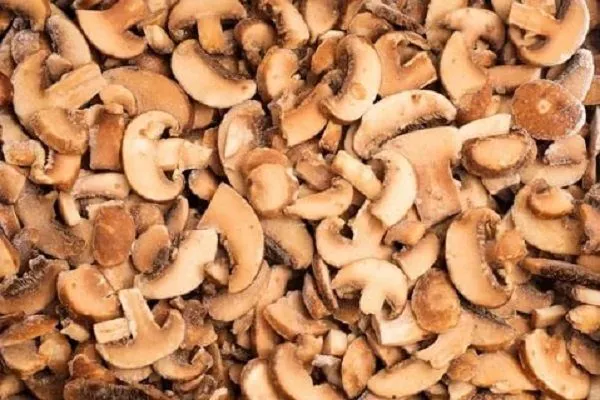
- Freezing. A freezer is used to store cooked or raw mushrooms. They are cut into any shape or stored whole. The shelf life is 12 to 18 months.
For packaging, a plastic container, vacuum bags or regular polyethylene bags are used.
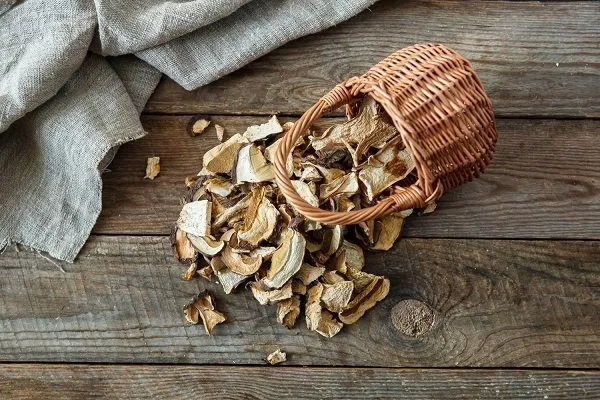
- Drying. Drying is done in a variety of ways. The shelf life is up to 6-7 months. Dried mushrooms are placed in cloth bags or dry jars with lids. Here are the methods for drying:
- in the oven - first 6 hours at a temperature of 50°C, then at 80°C for another 16-20 hours (mandatory requirement - the oven must be slightly open);
- in an electric dryer, the mode corresponding to drying mushrooms is set;
- Outside, mushrooms are strung on a thread and dried in a hanging position for 8-15 days.
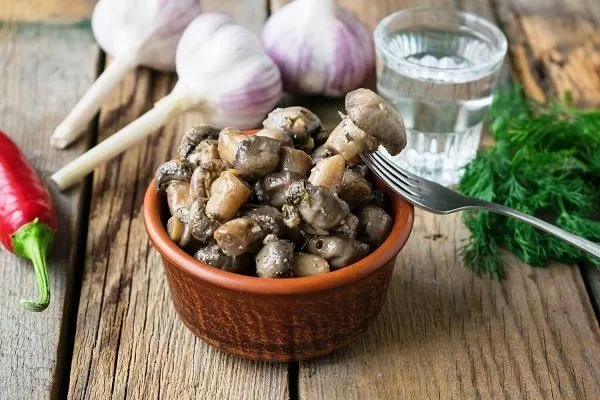
- Fermentation, salting, pickling. Mushrooms are prepared according to a wide variety of recipes. They can be stored for up to two weeks.
- Conservation. The shelf life is up to 18 months. It is important to sterilize the jars and lids.
Is it possible to grow the August mushroom yourself?
August champignons are easy grow at homeFor this, it's important to use fertile soil. Boxes, bags, jars, and other containers are used, and the mushrooms are stored in a basement with the following conditions:
- temperature regime – before germination – +14-16°С, then +20-21°С;
- humidity – from 85 to 95%.
How to plant:
- Find the champignons.
- Pinch off a piece from them.
- Place in a pre-prepared mixture of oat flour (1.5 tbsp), agar-agar (3.5 tbsp) and water (1 l).
It takes about 10 days for the mycelium to germinate, after which the mushrooms should be transplanted to their permanent location. For this, use a soil mixture consisting of equal parts soil and manure. Be sure to provide vegetation and spruce branches in the area where the mushrooms will grow.
August mushrooms are a valuable product that grows both in the wild and at home. They have excellent flavor and aroma and are versatile. The key is to eat them in moderation and harvest them in safe places.