
Most people believe that mushroom picking isn't recommended until midsummer. In fact, they can be picked as early as May. There are several types of edible mushrooms; the key is knowing where they grow and how to use them.
| Name of the mushroom | Harvest season | Place of growth | Pre-treatment | Disease resistance |
|---|---|---|---|---|
| May mushroom | Late April – July | The European part of Russia, fields, meadows, parks | Boil for 20-30 minutes | High |
| Sulphur-yellow tinder fungus | May - June | On tree stumps or trunks | Only young mushrooms, boiled | Average |
| Scaly tinder | May - June | Deciduous trees | Only young mushrooms, boiled | Average |
| Pluteus cervus | Late May – mid-autumn | Deciduous forests, gardens, parks | Heat treatment | High |
| Spring honey fungus | Late May – late autumn | Rotten wood, leaf litter | Boil for 15 minutes | High |
| Meadow honey fungus | Late May – mid-autumn | Open grassy areas | Any processing | High |
| Common garlic | May - June | Coniferous and deciduous forests | Drying, frying | High |
| Birch boletus | Late May – June | Deciduous or mixed forests with birch trees | Any processing | High |
| Butter dish | May - June | Sunny forest glades | Boil for 10 minutes | High |
| White dung beetle | Late May – June | Parks, gardens, vegetable gardens | Boiling | Average |
- ✓ Pick mushrooms during the recommended period
- ✓ Consider the growing location of each species
- ✓ Pre-treat mushrooms before consumption
- ✓ Avoid picking mushrooms near roads and industrial areas
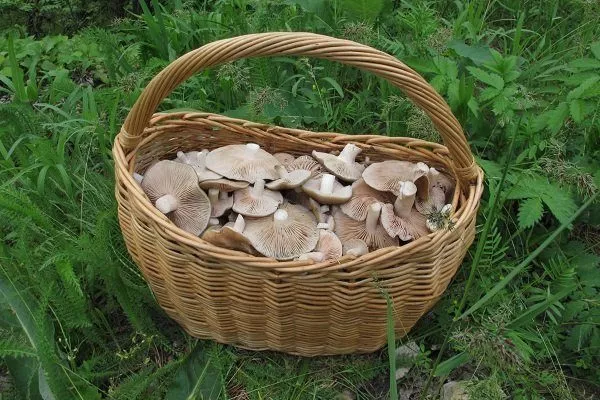
May mushroom
In Russia, it is also known as the St. George's mushroom, the May rowan, and the May calocybe. The May mushroom season begins in late April and ends in July.
They grow primarily in the European part of the country and can be found not only in forests but also in fields, meadows, and sometimes even parks. The mushrooms gather in small groups, sometimes forming a ring or a row. They prefer open areas, so there's no need to venture deep into the forest—just walk along the edge.
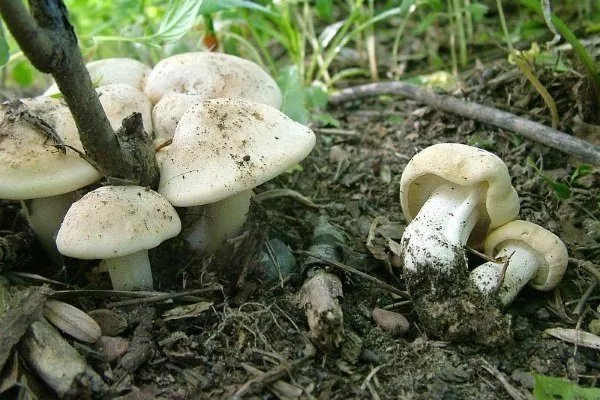
The cap of the May mushroom is approximately 5 cm in diameter. It has a flat-convex, hump-like shape, but flattens out as it matures. The color is initially creamy, then white. Older mushrooms may have an ochre hue.
The gills near the stem are usually fused. They are narrow and closely spaced, initially whitish in color, later turning light ochre or cream.
The white flesh of the May mushroom is thick and dense. Its taste and color resemble fresh flour.
The stems of May mushrooms are cylindrical. They can reach 9 cm in length and 3 cm in thickness. The stems can taper or widen toward the bottom and are white, but often have an ocher or rusty-ocher tint at the base.
Many consider the floury odor of May mushrooms a drawback, but it disappears with heat treatment. The mushrooms must be cleaned of any dirt or debris and pre-boiled for 20-30 minutes. May mushrooms can be fried, salted, and marinated.
May mushrooms are suitable for home cultivation. If harvested correctly, the harvest can last for several months.
Sulphur-yellow tinder fungus
This mushroom is considered conditionally edible. It can be found on a tree stump or trunk, usually growing low.
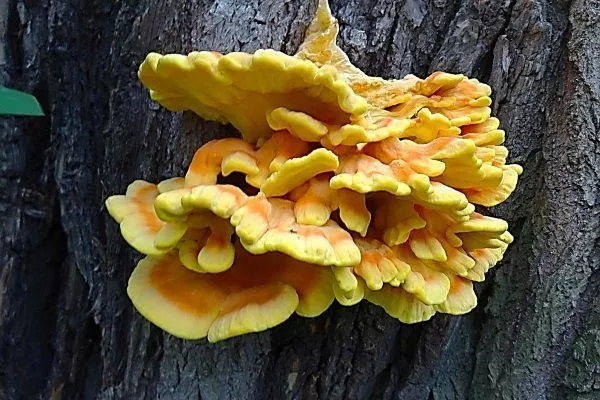
The young mushroom is a teardrop-shaped, fleshy mass of varying shades of yellow. When the fruiting body hardens, the tinder fungus resembles an ear. The fan-shaped pseudocaps grow together, usually sitting on a common base.
The caps of sulfur-yellow polypores can reach 40 cm in diameter. They can weigh over 10 kg. They are always covered with a light, creamy-yellow fuzz.
Sulfur-yellow polypores have soft, juicy flesh, are white in color, and have a slightly sour taste. Initially, the mushrooms have a mild lemony scent, but it eventually becomes unpleasant, reminiscent of mouse.
As the mushroom ages, it becomes paler, its color becoming a dull grayish-yellow. The more distinct the fruiting bodies, the older the mushroom.
Avoid picking sulfur-yellow polypores from coniferous trees, especially if they have already turned dark or have an unpleasant odor. These mushrooms can cause mild poisoning. This risk is increased in children.
Only the young, sulfur-yellow polypores are edible. They can be fried, pickled, or salted. The flesh has a chicken-like flavor, making it prized by vegetarians and considered a delicacy in some European countries.
Scaly tinder
This mushroom is commonly known as the variegated polypore, the variegated polypore, the elm fungus, and the hare fungus. It can be found on tree trunks, usually at a low altitude.
The fungus prefers deciduous trees and can grow on both living and dead trunks. This species is found in the central part of Russia and the Far East.
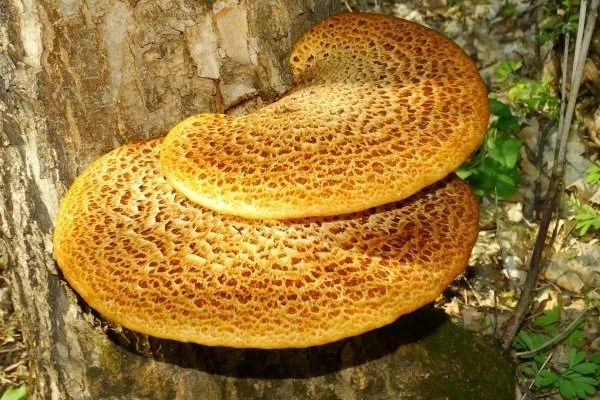
The scaly polypore is distinguished by its asymmetrical, fleshy cap, which can reach 30 cm in diameter. Initially, the cap is kidney-shaped, then becomes spreading, and may be slightly depressed at the base.
The spongy, corky flesh crumbles; it's soft at first, then becomes firmer. It has a starchy but pleasant aroma. Many people say the mushroom's flavor is reminiscent of fresh cucumbers.
The cap of the scaly polypore is light yellowish or grayish. The entire surface is covered with wavy, dark brown scales.
The stem of the mushroom can reach 10 cm in length and 4 cm in thickness. The upper part of the stem is mesh-porous and whitish, becoming brownish-black towards the base.
Only young scaly polypores are edible. You can tell if a mushroom is edible by pinching off a piece of the cap—it should crumble.
In terms of taste and nutritional value, the caps of scaly polypores are most valuable. They can be fried, made into soup, or made into cutlets. It is recommended to chop the flesh and boil it first.
Pluteus cervus
It's also known as the deer mushroom. It prefers the northern temperate zone and deciduous forests, gardens, and parks. It can grow on tree trunks, stumps, and branches, and prefers sawdust, wood chips, and cleared areas. The mushroom can be harvested from late May to mid-autumn.
The cap can reach 15 cm in diameter, reaching 20-24 cm in some species. It has a broadly bell-shaped form, which later becomes convex or flattened. A small tubercle is visible in the center. The cap surface is attractively smooth and silky. It is usually dry, but can become slightly slimy in wet weather. The cap is usually gray or grayish-brown. The color is darker in the center, and the edges are striped and slightly ribbed.
The flesh is crisp and soft, white in color and remains unchanged when cut. The flesh from the stem is firmer and more fibrous. It has virtually no aroma or flavor, but a faint radish-like aroma is sometimes present.
The mushroom's stem can reach 5-15 cm in length and 1-2 cm in thickness. It is easily separated from the cap. The stem is dense, cylindrical, and white or whitish-gray in color. It has longitudinal brown fibers, which usually become lighter toward the cap.
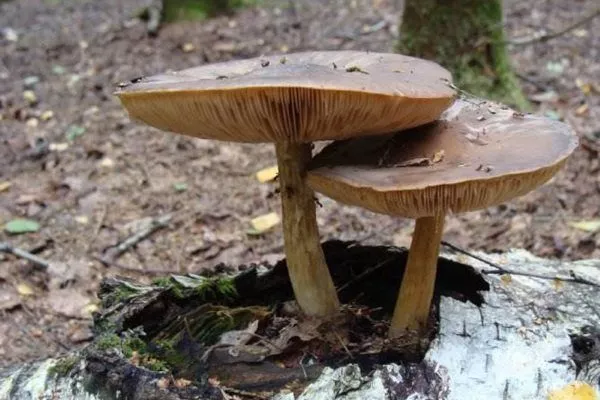
Deer pluteus mushrooms are always cooked. They can be boiled, stewed, or fried. They don't have a distinctive flavor, so they're usually used in complex dishes.
Spring honey fungus
It's also known as the forest-loving, oak-grove, or oak-loving collybia, or the common money mushroom. It can usually be found from late May until late autumn. These mushrooms grow in small groups, preferring rotten wood or leaf litter.
The cap of the spring honey fungus can reach 7 cm in diameter. In young mushrooms, it is convex, later becoming broadly convex and flattened. The color is initially reddish-brown, then fades to orange-brown or yellow-brown.
The flesh is white or yellowish, with no distinct flavor or aroma. The stem can reach 9 cm in length and is less than 1 cm thick. It is flexible, and can be smooth or slightly wider at the base.
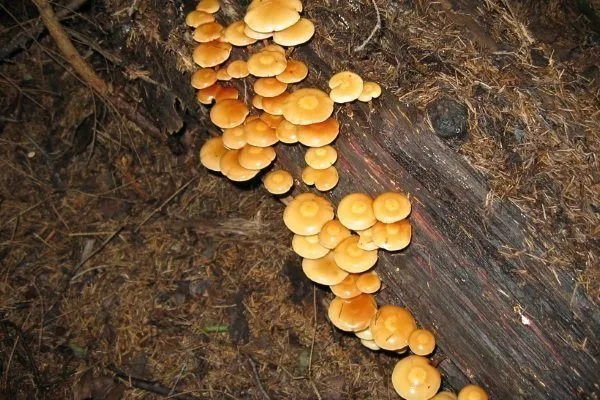
The mushroom is conditionally edible. It must be boiled for 15 minutes before eating. Without this preparation, it has an unpleasant aftertaste and can cause mild stomach upset. Spring honey fungus can also be dried.
Meadow honey fungus
This mushroom is also known as the meadow mushroom, meadow rot-proof mushroom, clove mushroom, and meadow marasmius. It can be found from late May to mid-autumn. It prefers open grassy areas—meadows, pastures, pastures, vegetable gardens, orchards, forest edges, and roadsides. It grows on the soil.
The cap of the meadow honey fungus can reach 5 cm in diameter. It is smooth and hemispherical, then becomes convex, and at maturity, flattened and spreading. In dry weather, the cap is pale cream; in damp weather, it becomes sticky and takes on a yellowish-brown or reddish-ocher color. Regardless of the weather, the edges of the cap are lighter than the center.
The meadow honey fungus sits on a thin, tall stalk. It can reach 6 cm in height and is no more than half a centimeter thick. The stalk is cylindrical and can be slightly curved. It is dense and slightly thicker toward the base.
The flesh is thin, pale yellow or off-white in color, and remains unchanged when cut. It has a slightly sweet flavor and a strong, distinctive aroma reminiscent of bitter almonds or cloves.
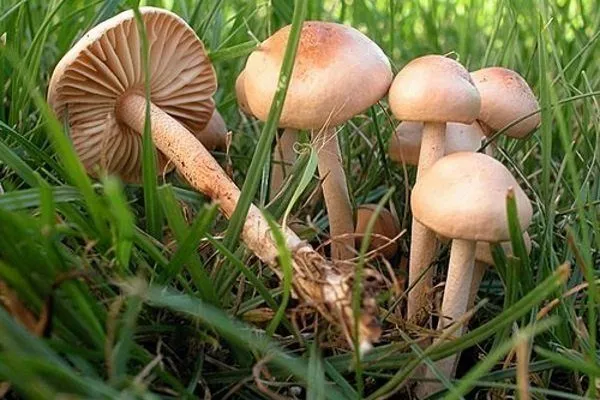
Only the caps of the meadow honey fungus are edible. They can be processed in any way.
Common garlic
This mushroom gets its name from its characteristic garlicky aroma. The garlic mushroom is distinguished by its small size. Its cap rarely exceeds 2.5 cm in diameter. Initially, it is convex-conical or hemispherical in shape with an inverted edge, then convex and flattened with an irregularly wavy edge.
The cap is usually bare and smooth. Coloration varies—in wet weather, it can range from pinkish-brown to ochre-red. In dry weather, the cap is creamy or ochre.
The mushrooms are distinguished by very thin flesh, the same color as the surface. Not only the smell, but also the taste is garlicky.
The stem of the garlic mushroom is typically no more than 5 cm tall and 2 mm thick. It is cylindrical in shape and has a rigid structure. The stem is glabrous and shiny, orange on top and reddish-brown on the bottom.
The garlic clove prefers coniferous and deciduous forests, choosing needles, twigs, rotting bark, and sometimes grass.
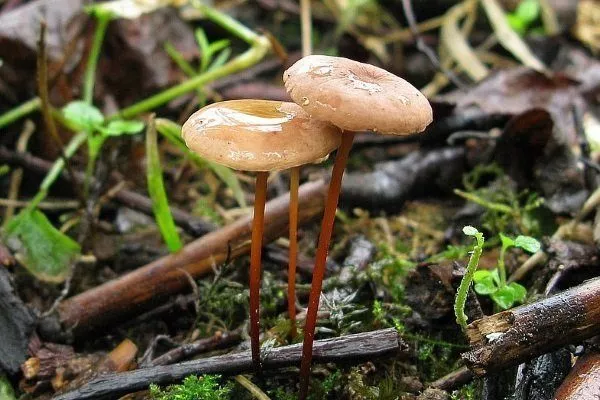
This mushroom is often dried for use as a seasoning in various dishes. The appeal of this method is that after a few minutes in water, the mushrooms regain their freshness. Garlic mushrooms can be fried, including with other mushrooms. Boiling them is not recommended, as this process loses their attractive aroma.
Birch boletus
This mushroom can be found in May under favorable weather conditions. It is commonly known as the birch mushroom or the blackhead mushroom. It can be found in light deciduous or mixed forests where birch trees are present.
You can pick birch boletes from the end of May. The blooming of bird cherry trees signals the mushroom's appearance.
The mushroom is spongy. Its cap can reach 15 cm in diameter. Depending on the variety, its color can range from white to dark gray, almost black. The color darkens as it matures. If the air is humid, a slimy film appears on the cap, making it sticky to the touch.
The stem is white, slightly thicker at the base. It has longitudinal scales of white or black color. The stem is cylindrical, can reach 15 cm in height, and up to 3 cm in thickness. As mushrooms age, the flesh of the stem becomes tough and fibrous.
The flesh is white and remains unchanged when cut. If the area is marshy, the flesh may turn pink when cut. This type of boletus is called a pinking boletus. Mature mushrooms have a watery, crumbly flesh.
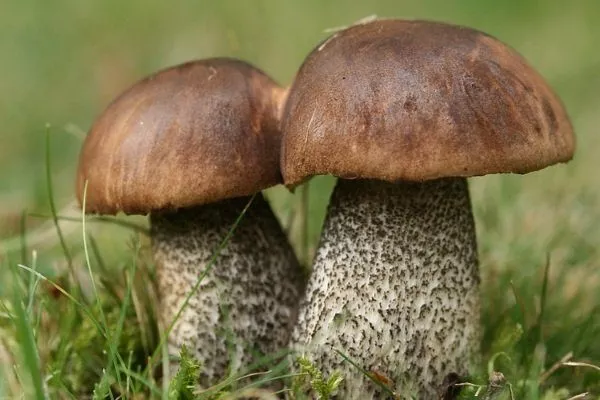
Boletus mushrooms can be prepared in a variety of ways. They are suitable for drying, frying, boiling, and pickling.
Butter dish
The butter mushroom is often called the yellow, late, autumn, or true mushroom. It's usually harvested in the summer, but in May it can be found in sunny forest clearings.
The buttercup cap can reach 14 cm in diameter. Its shape is hemispherical, then becomes rounded or flat-convex, or cushion-shaped, and less commonly flat or tuberculate. The surface is smooth and slimy to the touch. The cap color can be various shades of brown, reddish-brown, gray-brown, brownish-olive, or yellow-brown.
The skin can be easily separated from the flesh, which is attractive for its softness and juiciness, and has a whitish or yellowish color. The flesh of the stem is slightly fibrous, and at its base it has a rusty-brown color.
The stem of the buttercup can reach 11 cm in height and 2-2.5 cm in thickness. It is cylindrical, whitish or yellowish in color, and has a membranous ring. Initially white, it later turns brownish, blackish-brown, or dirty purple.
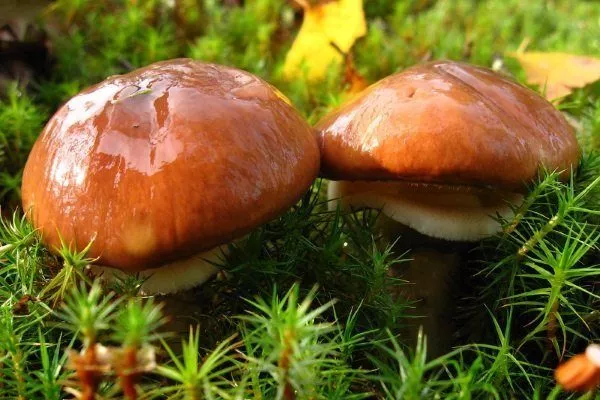
The butter mushroom is a very popular edible mushroom. It's fried, salted, pickled, and added to soups, side dishes, and marinades after boiling for 10 minutes. Young mushrooms are best for pickling and marinating, as they have a superior flavor.
White dung beetle
This mushroom can be found in late May. It prefers loose, organically rich soil and the northern temperate zone. It is usually found not in the forest, but in pastures, parks, gardens, or vegetable plots.
The white dung beetle's cap can reach 10 cm in diameter and 15 cm in height. It has an elongated ovoid shape that later becomes narrowly bell-shaped. The mushroom can be white, gray, or brownish in color, with a brown tubercle at the top. The surface is densely covered with fibrous scales.
The flesh is white, soft, and has no distinctive flavor or aroma. The stem can reach 20-30 cm in height and 2 cm in diameter. It is cylindrical, white, silky, and hollow inside.
Due to its appearance, this mushroom was long classified in Russia as a toadstool and considered poisonous, although in some European countries it is considered a delicacy. It should only be eaten young, while the gills are white and have not yet begun to turn pink. Processing should begin within the first two hours after picking.
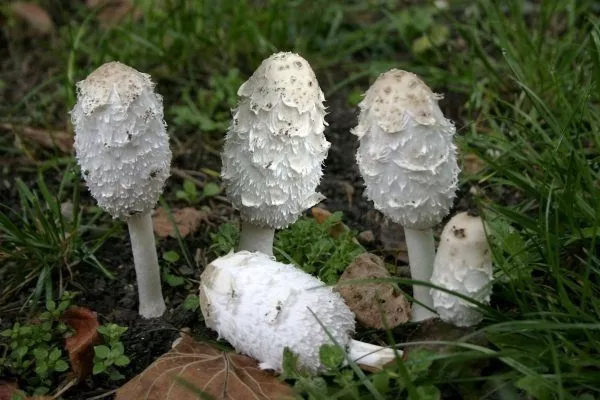
The white dung beetle is considered conditionally edible, so it is recommended to boil it beforehand. It should not be consumed with other mushrooms or alcohol.
Certain types of mushrooms can be harvested in May. It's important to consider their characteristics and harvest them during the recommended season. Cooking methods vary by type, and some mushrooms require pre-boiling.