
Growing mushrooms from mycelium yourself requires specialized equipment. When choosing the appropriate machines and equipment, consider the capacity of the facility, which is determined by the volume of substrate, the area of the cultivation and adjacent areas, and the quantity of finished product to be stored.
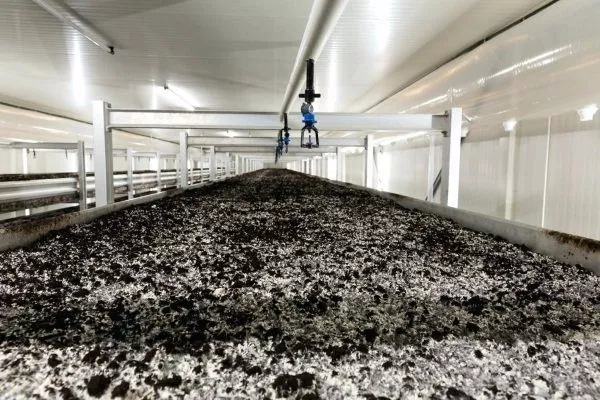
Organization of the cultivation chamber
To determine what equipment to purchase for mushroom cultivation, you should first prepare the appropriate premises, the area of which will determine the production volume.
- ✓ The noise level of the equipment should not exceed 45 dB for comfortable operation.
- ✓ Energy consumption of the climate control system, which is critical for calculating operating costs.
Mushrooms can be grown in a basement, a polycarbonate greenhouse, a heated garage, or any other structure converted into a cultivation chamber. Read on to learn how to build a greenhouse for growing mushrooms. this article.
Regardless of the type of premises, it must have the following equipment:
- separate climate control system;
- rapid cooling chamber;
- refrigerator for storing finished products;
- racks for mushroom cultivation and means for their transportation;
- steam generator;
- climate control system;
- lighting system.
To simplify the mushroom growing process, you can use additional equipment such as a lift with a winch, soil handling equipment, a conveyor, and sprayers. Standard household systems can be used to provide electricity and water.
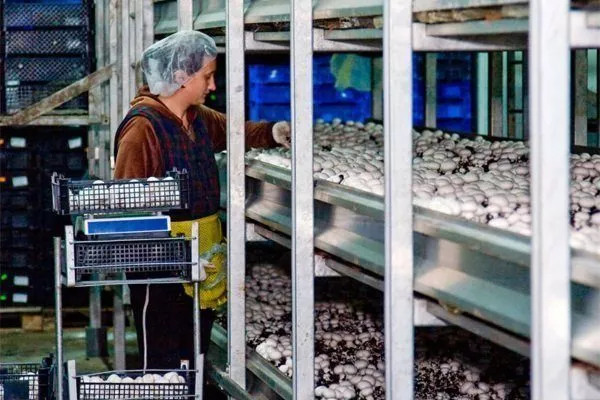
Regardless of production volume, the bulk of the chamber will be occupied by multi-tiered shelving, arranged in rows. The shelves are filled with compost, in which the mushrooms germinate. The remaining space is equipped with a refrigerator and climate control systems to maintain the necessary conditions for mushroom germination.
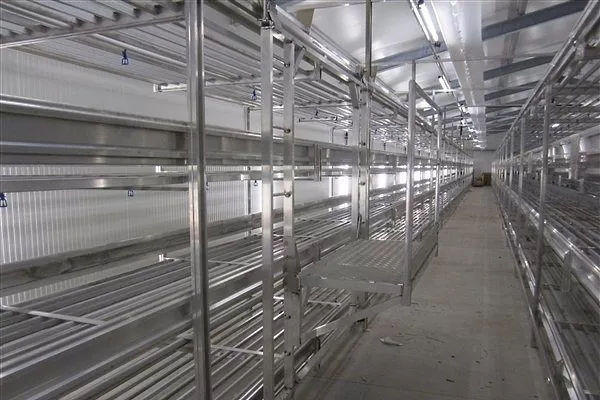
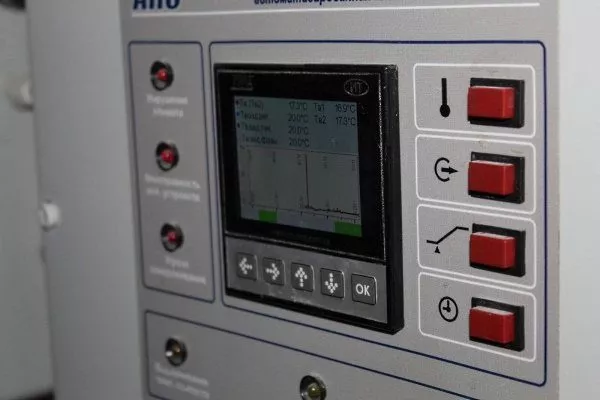
Automatic microclimate control systems
To achieve consistent mushroom yields, it's important to create optimal conditions in the cultivation chamber. This requires paying particular attention to the following parameters:
- humidity;
- ventilation;
- illumination;
- irrigation;
- temperature.
- ✓ The CO2 concentration in the air should be maintained at 800-1500 ppm for optimal mushroom growth.
- ✓ The air flow speed should not exceed 0.2 m/s to avoid damaging the mushrooms.
To recreate a suitable microclimate in large-scale production facilities, it's advisable to install a dedicated climate control system. The components of the automation system are presented in the table:
| Installation components | Description |
| Mixing chamber | This equipment is necessary for introducing carbon dioxide into the room, which promotes mushroom growth. The mixing chamber regulates the CO2 volume. It works as follows: air is drawn in from outside, then passes through special valves and begins to mix with the air in the cultivation chamber. The air ratio is regulated by sensors, ensuring that the amount of carbon dioxide required for mushroom cultivation is supplied. This chamber is mounted on the wall after drilling special holes. |
| Air purification system | To purify the air, special filters are used, performing two types of purification: coarse and fine. The first filter removes dust particles, and the second removes microspores. |
| Supply ventilation with dampers | A special air duct is installed to supply fresh air. Additionally, there are dampers that control the air flow. |
| Heaters | These devices help maintain the optimal temperature for mushroom cultivation. They heat the room in winter and dry the air during rainy summer weather. The number of such heaters depends on the chamber's volume. They operate using various heating systems, including electricity and gas.
It's also important to provide the ability to regulate the temperature, as it needs to be adjusted as the mycelium develops. For example, during the incubation period of oyster mushrooms, they require a temperature of up to +25°C, but once they begin to grow, this temperature should be lowered to +20°C. Champignons require an even lower temperature during maturation—up to +15°C. |
| Heat exchangers | When the temperature in the mushroom cultivation chamber rises in summer, it needs to be reduced. Heat exchangers also remove excess moisture. The resulting condensate is collected in a separate container. |
| Air flow distribution system | It has several polypropylene air ducts. Nozzles are mounted to them. Air is directed through the ducts into the chamber, and built-in nozzles direct it downward. The air hits the floor and is evenly distributed throughout the room. This is important, as direct air flow onto the mushrooms can stunt their growth or cause them to become diseased. |
Lighting system
Different mushroom species require different levels of lighting. While oyster mushrooms require light, button mushrooms can grow in the dark. However, even in this case, a lighting system is required to allow the grower to perform the necessary tasks in the mycelium.
Therefore, regardless of the type of mushrooms being grown, energy-saving lamps should be used to illuminate the growing chamber. They are typically installed in the aisle and near the refrigerators. If the room is small—about 17 square meters—two to three lamps are sufficient. Their daily operating time is between eight and 12 hours.
Before laying electrical wiring, keep in mind that the cultivation chamber maintains high humidity at all times. To prevent short circuits, fire safety regulations must be observed. To do this, purchase protective corrugated tubing and rubber and silicone gaskets.
For safety reasons and to ensure long-term operation of light bulbs, it is necessary to prevent the accumulation of condensation in the places where they are installed.
Irrigation system
To ensure mushroom growth, a watering system is required. It's important to keep in mind that the water temperature should be at least 18°C. If the space is small, you can water the mushrooms manually using a spray bottle.
- ✓ Water hardness should not exceed 4 mg-eq/l to prevent the formation of plaque on mushrooms.
- ✓ The pH of the water should be in the range of 6.0-7.0 for optimal absorption of nutrients.
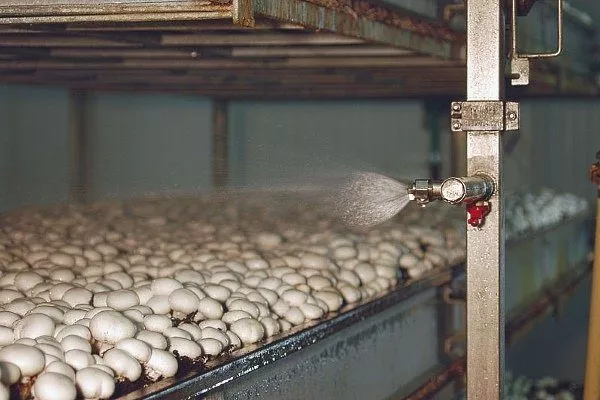
For larger spaces, it's best to purchase foggers, which automatically and artificially create fog. Automated foggers are convenient because they're easily adjustable, creating a suitable artificial environment depending on the mushroom's growth stage.
Another irrigation system option is a watering tree. It typically has several tiers. Each shelf is connected to a branch on a rotating spear. This allows for watering up to 1.5 meters across the entire shelf. Many of these are equipped with a water meter.
Ventilation equipment
The cultivation chamber needs to be supplied with fresh air, especially during the mushroom maturation period, so the installation of a ventilation system should be taken very seriously. It includes:
- coarse and fine air filters that are mounted in ventilation shafts;
- radial and axial fans to ensure the flow of fresh air and its uniform distribution throughout the chamber (the optimal air flow per 1 ton of substrate is 200 cubic meters/hour);
- An air extraction system for the chamber, which is installed on the floor or at the lowest level of the walls, to effectively remove settled spores, otherwise they will begin to accumulate and cause serious harm to the health of workers.
Steam supply system
Achieving a large mushroom harvest is impossible without a steam system. A steam generator performs several functions:
- pasteurization of the substrate;
- air humidification.
The steam generator has two steam pipes of a large and a smaller diameter: air is supplied through the first one, and steam is released from the second one.
The substrate should only be sterilized if you prepare it yourself. This is not necessary when purchasing packaged compost, as it is sold already processed.
It is imperative to humidify and disinfect the premises.
The video below explains how to make a humidifier yourself (without the ability to disinfect):
Growing chamber
Mushroom cultivation on an industrial scale is accomplished using mycotron chambers. These are manufactured industrially using PVC profiles equipped with a climate control system.
The convenience is that they come with all the necessary accessories. To grow mushrooms, simply add the substrate and turn them on. These chambers are safe for human health—spores cannot spread because they are hermetically sealed.
Refrigerators
To ensure the mushrooms' appearance remains intact, they must be stored in a cool place. Refrigerators must be installed in the room for this purpose.
To improve the shelf life of mushrooms, they should be placed in a special chamber where the temperature is maintained between 0 and +5°C. If they are to be stored for a long time, the temperature can be lowered further. It is also necessary to set the optimal humidity level—at least 80%. This method allows for the preservation of 15% of the harvest.
After this flash freezing, the mushrooms should be transferred to a chamber where they are packaged into containers. This chamber should also be maintained at a low temperature. The packaged mushrooms should be returned to the refrigerator.
If buyers purchase loose mushrooms, they are immediately refrigerated using a shock storage method. This will keep the mushrooms fresh for up to three days.
You can construct a refrigeration chamber for mushrooms yourself from two old refrigerators and fans:
Necessary equipment
In order to optimize mushroom cultivation as much as possible, special equipment is purchased:
- Autoclave. This equipment will be needed when you need to grow mycelium yourself. For this purpose, you can purchase an autoclave, similar to those used in medicine or industry.
- "Hot table" for packing mushrooms into trays. This table is essential for quickly and efficiently packing mushrooms into trays using stretch film. It ensures accurate and fast work, as the applied film will protect the product from drying out and spoiling, and will also give the packaging a marketable appearance. This table is equipped with a stainless steel thermal knife. It is safe and very easy to use.
- Thermometer. The room where the mushrooms are growing requires temperature control. During the incubation period, the temperature should be higher, and as the mushrooms begin to ripen, it should be lowered by 5-10°C, depending on the mushroom variety.
- Stove and metal barrelThe substrate needs to be boiled to sterilize it. A stove is needed for this purpose. To sterilize large quantities of compost at once, experienced farmers use metal barrels.
- Racks and shelves. Growing mushrooms is convenient if you have shelves and racks. Metal is considered the most practical surface, as it can be painted with antibacterial paint. Wood is also suitable if properly treated and painted, but it is still unsafe due to the potential for bacteria and fungi.
- Polyethylene bags. Polyethylene bags are needed for growing mushrooms, so they are purchased in large quantities. Certain mushroom varieties, such as boletus, prefer to grow in containers.
- Cloth. When working in the mycelium, wear overalls and tight pants. Sleeves should also be short and not too loose to prevent them from touching the mushrooms while harvesting, as this could damage the mycelium. Wear a hat or scarf. Change your clothes daily to prevent the spread of bacteria.
- Shoes. The soles of shoes are of great importance. They must be made of rubber and non-slip on wet surfaces to prevent workers and mushroom pickers from slipping. The condition of the shoes is checked monthly.
- Gloves. Thin surgical gloves are purchased for disinfection. They are changed when moving to new sections or washed with disinfectants. After use, they are disposed of and never left in the areas where mushrooms are grown.
- Towel. Always carry a towel with you, as picking mushrooms can make your hands sticky and cause the mushroom substrate to stick to them. To avoid staining your harvest, regularly wipe your hands and the mushroom picking knife with a towel.
- Scales. Growing produce is weighed, so scales are essential. Electronic scales are ideal.

- Knife. Mushrooms are cut using a special knife, which has a curved blade on one side. It should always be sharp to avoid damaging the mushroom stems. A brush is attached to the other side of the knife. This is used to remove peat from the mushroom caps.
- Template rings. Mushrooms should be picked to be the same size. Template rings are used to measure the caps. They are made of metal or plastic.
- Bucket. Waste must be placed in plastic buckets.
- Mini rake. Used to level the substrate.
- Stand for working on upper tiers. A necessary tool when growing mushrooms in tiers. It's needed for convenient watering and harvesting. The stand should be safe and regularly disinfected with bleach.
- Cleaning equipmentThe cells need to be cleaned periodically. To do this, prepare a mop, a broom, and water hoses.
Equipment for mushroom processing
If mushrooms are grown for commercial use, equipment will be needed to process them into high-quality products. The following equipment is essential:
- Drum-type calibrators are used to sort the fruiting bodies of champignons, chanterelles, honey mushrooms, etc. During their operation, the mushrooms are sifted through a sieve with holes of the appropriate caliber.
- Washing machines, which can be brush or with a bubbling-vortex cycle of operation.
- Vacuum-type installations for impregnating mushroom mass with water or another solution, depending on the intended purpose.
- Blanchers, which are needed for processing whole and chopped mushrooms.
- Dryers and slicing devices of various types – for slicing dry and wet products with a thickness of 4-8 mm.
To avoid throwing away the stems of the mushrooms after cutting them, you can cut them again, crush them, and dry them to create mushroom powder for preparing mushroom dishes.
Equipment for substrate production
To obtain a complete compost for home mushroom growing, you will need to purchase:
- straw chopper;
- containers for mixing compost components (barrels and tubs).
However, this equipment will not be required if you purchase a special substrate machine.
It's especially useful for growing mushrooms on an industrial scale. This machine can produce approximately 2.5-3 tons of compost in 8 hours. The following can be used as raw materials:
- sunflower husk;
- straw;
- wood chips.
This type of machine has a fan that supplies steam to treat the substrate, so it is moistened and cooled, and then unloaded through special hatches.
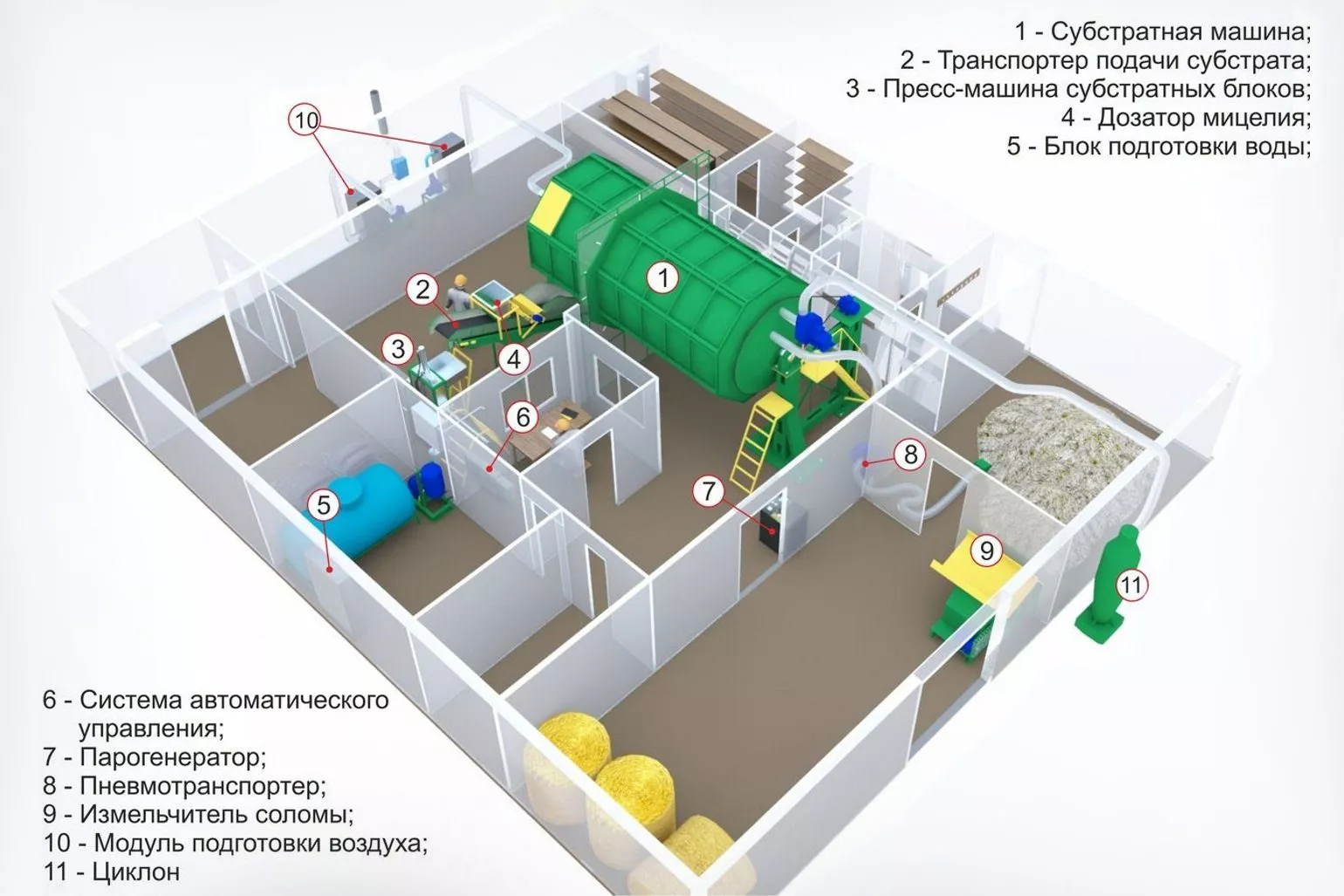
The prepared substrate must be compactly packed into blocks. For this purpose, you can purchase a compacting machine, which is controlled by pedals and a handle. It can produce 175 blocks per hour. Some machines are equipped with scales for weighing the blocks, as well as a conveyor for delivering the blocks to the mushroom growing areas.
Many pressing machines are equipped with a safety lock to prevent the sequence of operations being performed from being violated.
Growing mushrooms from mycelium is becoming increasingly popular. To ensure a good harvest and good profits, you should prepare all the necessary equipment in advance—from automated systems to devices for processing mushrooms for sale.
I bought a Tuman Pro HP-20 high-pressure fogging system. I installed 20 nozzles for 85 square meters. I'm happy with the results! I use a timer and plan to purchase a humidity controller in the future.