
Besides the pleasant taste and attractive appearance, chanterelle mushroom It's renowned for its resistance to spoilage. It almost never harbors worms. It remains intact under any weather conditions. Learn about this unique property of chanterelle fruiting bodies in this article.
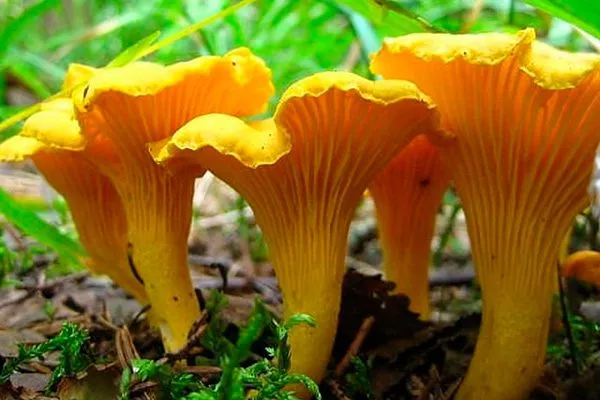
Why are chanterelles not affected by worms?
This yellow mushroom, which appears in the forest in the second half of June, is characterized by a unique chemical composition. It is rich in many beneficial substances:
- amino acids;
- vitamins (A, C, E, B1, B2, B3, D);
- minerals (zinc, potassium, manganese, iron);
- ergosterol, which ensures cleansing and normal functioning of the liver;
- trametonolinic acid, which suppresses the hepatitis virus;
- natural antibiotics.
Thanks to them, chanterelle has many healing properties: tonic, restorative, bactericidal, antiviral.
The rich chemical composition gives chanterelles such a unique property as resistance to spoilage:
- they do not rot at the root;
- do not get worms;
- do not dry out from the heat;
- do not spoil during transportation even in closed containers.
The presence of the following two substances in its composition ensures protection of the chanterelle from damage by pest larvae:
- chinomannoses (or chitinmannoses);
- beta-glucan.
Chinomannose plays a key role in protecting the mushroom from worms. When it enters the invertebrate pest's body, it paralyzes its nerve centers. Once inside the chanterelle's fruiting body, the parasite cannot survive. These conditions are also detrimental to the parasite's eggs.
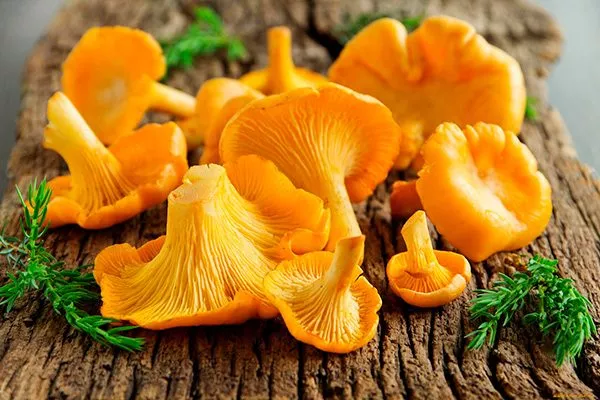
This substance is unstable. It decomposes under the following conditions:
- heating above +50⁰С;
- contact with salt or acid.
Beta-glucan is the second antiparasitic component of chanterelle. Present in its fruiting body, it activates the fungus's immune system. The resulting production of large numbers of white blood cells destroys the worms, as well as any foreign protein structure.
Why do we sometimes find chanterelles that are infested with insects?
It's extremely rare to find this mushroom damaged by insects in the forest. In rare cases, it's damaged by worms. In such chanterelles, the stem or central portion of the cap is damaged. The causes of worm infestation include:
- low chitin mannose content;
- weakened immunity;
- hot weather.
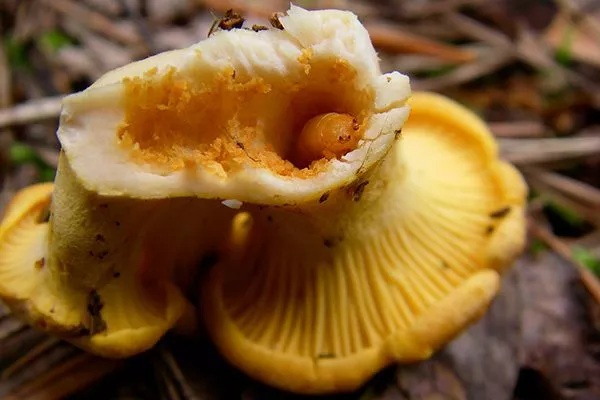
Chanterelles suffer from attacks by pests such as the black beetle (its larva) and wireworms. These creatures bore characteristic burrows into the mushroom's flesh. They are resistant to many adverse factors. These insects are also immune to the paralyzing effects of chinomannose. They are reliably protected by a chitinous shell.
Thanks to their resistance to worms, these red mushrooms have become popular among hunters and are widely used in medicine. Chinomannose protects not only the chanterelle but also its eater from parasites.
Poisonous mushrooms can be wormy…