
The white chanterelle is considered a rare variety in our latitudes, yet it is very popular among mushroom pickers due to its excellent taste. It is also known as Cantharellus pallens, or pale chanterelle. This variety belongs to the Cantarellaceae family and genus Chanterelle.
Brief history
The Czech biologist Albert Pilat is considered the discoverer of the white chanterelle. He described the mushroom as a distinct species. Despite this, it was later classified as a member of the Chanterelle family.
Description
The pale chanterelle is considered a beautiful edible mushroom, which is characterized by the following characteristics:
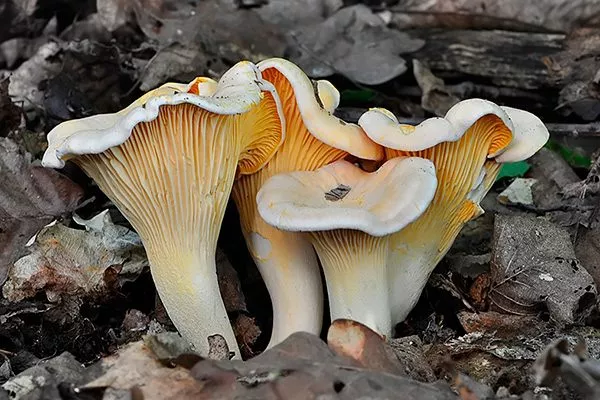
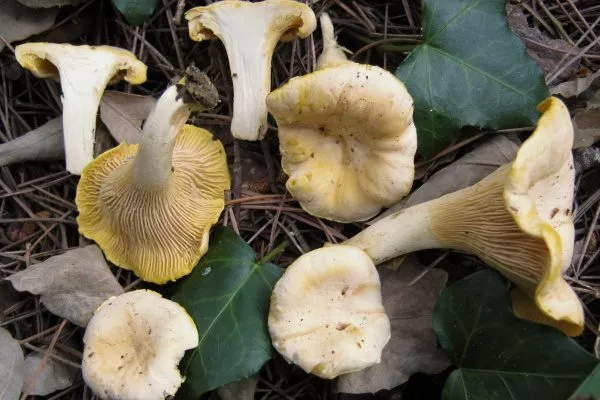
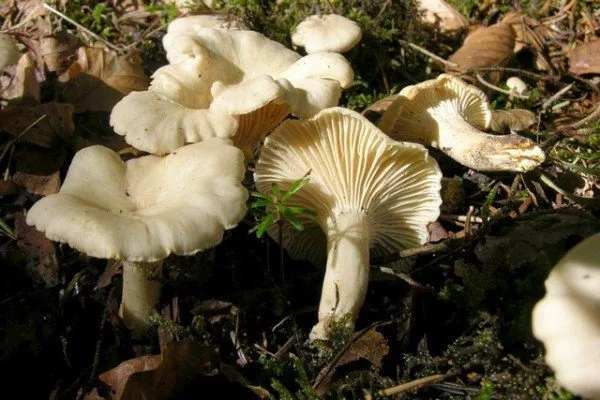
- Hat. It has a funnel-shaped form with a diameter ranging from 1 to 8 cm. The edges are smooth when young, but later become wavy. The color is white or with a slight yellowish-fawn tint. There are spots on the surface, so the coloring is not uniform.
The peculiarity is that the center of the cap is concave inward, not outward. - Pulp. When cut, the pale chanterelle is completely white, but some specimens have a yellowish tint, and the flesh is firm. Immediately after cutting, the mushroom emits a pleasant aroma, and when bitten, a spicy note is noticeable.
If you press on the pulp, it darkens slightly. - Leg. This part of the white chanterelle is quite thick (almost 1.5 cm), but its length varies from 2 to 15 cm. Size depends directly on the mushroom's age and growing environment (the more favorable the growing conditions, the larger the chanterelle). The color is pale yellow, turning white where cut, and the color remains unchanged when pressed.
The stem consists of two halves—an upper and a lower. The first is cylindrical and club-shaped, while the second is conical and tapering toward the bottom. The stem is difficult to separate from the cap because the gills are fused to both halves. - Spore-bearing layer and powder. The hymenophore is distinguished by its pseudo-lamellar type and pale yellow hue. The laminae are large and droop downwards. The spore powder is creamy-golden in color.
Where does the pale chanterelle grow and when to collect it?
The light chanterelle prefers deciduous forests, but always with a thick grassy litter or moss. It is sometimes found on flat and mountainous terrain. Its favorite trees are chestnut, pine, and beech. It bears fruit abundantly after heavy rains.
Other features of collection and growth:
- the optimal period is June-September;
- growth type – in groups (both small and large);
- Most often, mushroom pickers find them near rivers and other bodies of water (where the soil moisture is increased);
- the area is extremely shaded, you won’t find white chanterelles in the sun;
- The favorite strip in Russia is the Middle Strip.
- ✓ Soil moisture level should be at least 70% for optimal mushroom growth.
- ✓ The air temperature during the collection period should fluctuate between 15°C and 20°C.
Similar species
The pale chanterelle has many similarities. This primarily concerns the shape of the mushroom, but differences lie in its color and other characteristics. Among these similar varieties are both edible and poisonous.
| Name | Leg height (cm) | Cap diameter (cm) | Forest type | Fruiting period |
|---|---|---|---|---|
| Chanterelle clubface | 14-16 | 7-10 | Foliar | Early summer – late autumn |
| Amethyst Fox | 7 | 8-10 | Deciduous, coniferous | Until October |
| Humpbacked fox | 4-6 | 4-6 | Coniferous, mixed | August - frosts |
| Trumpet chanterelle | 6 | 4 | Coniferous, mixed | August - October |
Chanterelle clubface
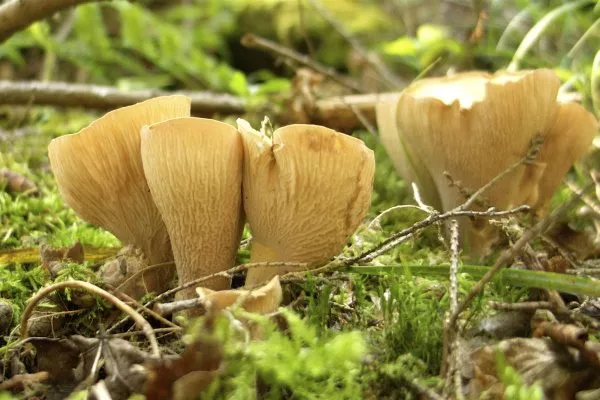
This edible mushroom has a pleasant taste and aroma. Fruiting lasts for a fairly long time, from early summer to late fall. It reaches 14-16 cm in height and 7-10 cm in diameter. It grows exclusively in groups, with the chanterelles growing together. It can be found in deciduous forests.
Amethyst Fox
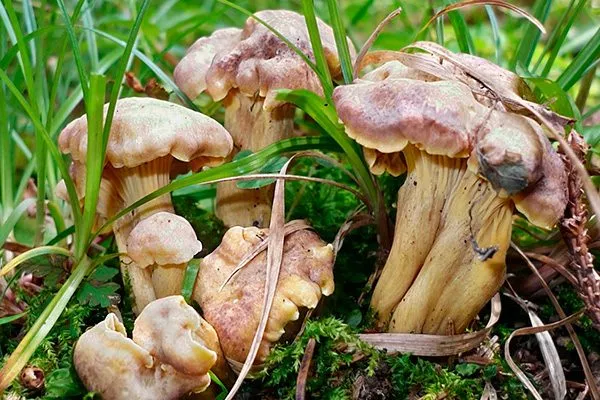
Another edible member of the Chanterelle family, it grows up to 7 cm in height. The cap is massive – about 8-10 cm in diameter. Fruiting continues until October, growing in colonies and can form circles. Trees – deciduous and coniferous.
Humpbacked fox
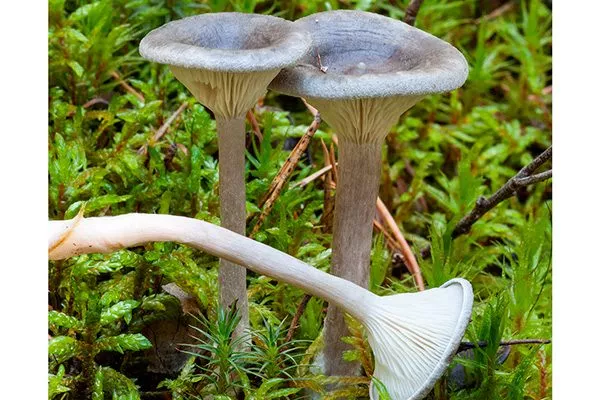
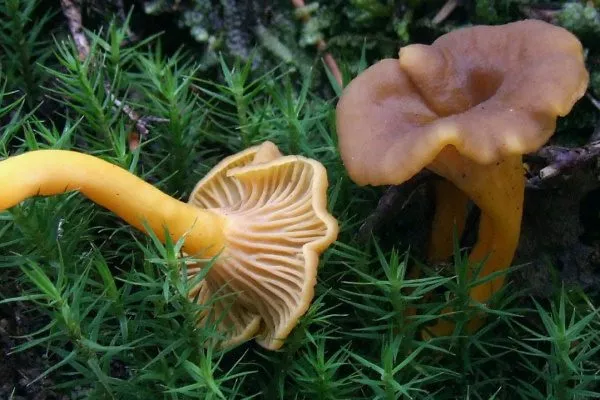
It's considered a small mushroom, as both the stem height and cap diameter are no more than 4-6 cm. It also has other names, including the tuberculate cantharellula and the convex false cantharellula. It's similar in shape to the white chanterelle, but has a distinct grayish coating.
It grows in coniferous or mixed forests, bearing fruit from August until frost. It's considered a conditionally edible mushroom, so it's important not to confuse the two.
Trumpet chanterelle
Reaching up to 6 cm in height, with a cap diameter of about 4 cm, it is an edible mushroom that prefers coniferous and mixed forests. It can be found starting in August, and fruiting ends in October. It grows in huge colonies and never alone.
Characteristic
To decide whether to harvest or grow white chanterelles, it's important to understand their characteristics. There are certain criteria for this, including edibility, flavor, and properties.
Edibility and taste assessment
The light chanterelle is considered edible, category II, and therefore poses no threat to humans. However, this is only true if the mushroom is not infected. Otherwise, it begins to release toxic substances, just like any other species.
As they mature, chanterelles accumulate toxins from the outside, specifically from the atmosphere, when growing near industrial zones, major highways, and garbage dumps. Therefore, collect them when young and in safe locations.
Medicinal properties, benefits and possible harm
White chanterelles are used not only as food, but also as a source of medicinal properties, making them popular in folk medicine and pharmaceuticals. The mushroom contains high levels of beta-glucan and d-mannose, allowing the active ingredients to penetrate the body at the cellular level.
Of particular note is the chanterelle's ability to develop eosinophils, which contain protein hormones that dissolve foreign proteins. Thus, white chanterelles have the following effects on the body:
- strengthening the immune system;
- radiation suppression;
- removal of harmful substances;
- stopping the growth of cancer cells;
- destruction of helminths;
- normalization of blood pressure;
- liver cleansing for hepatitis;
- lowering blood sugar levels;
- strengthening the walls of blood vessels and restoring normal blood circulation;
- improving visual acuity and thyroid gland functionality;
- suppression of cold viruses.
White chanterelle is used in different forms:
- Powder. Medicinal infusions are prepared from it: 1 tablespoon of the substance per 200 ml of hot water. Let it steep for 30 minutes, and drink 100 ml before breakfast.
- Alcohol tincture. It's most often used to treat worms and other parasites. Dissolve 3 tablespoons of crushed, freshly picked mushroom in 150 ml of alcohol. Take three times daily, divided into doses.
- Extract. Use granulated chanterelle mushrooms, purchased at a pharmacy. Take according to the package instructions.
Despite its beneficial properties, pale chanterelle can be harmful, but only when used with contraindications:
- diseases of the gastrointestinal tract;
- individual intolerance to mushrooms – an allergic reaction occurs;
- age up to 8 years;
- period of pregnancy and breastfeeding.
Cooking Features
For edible mushrooms, pick them after heavy rainfall—firstly, there will be plenty of them, and secondly, they will have the maximum amount of nutrients. Be sure to properly prepare chanterelles before using.
Primary processing
Before cooking mushrooms, remove any debris—sticky twigs, leaves, and soil. At the same time, select only edible specimens, discarding any that show signs of damage, disease, or mold.
What to do next:
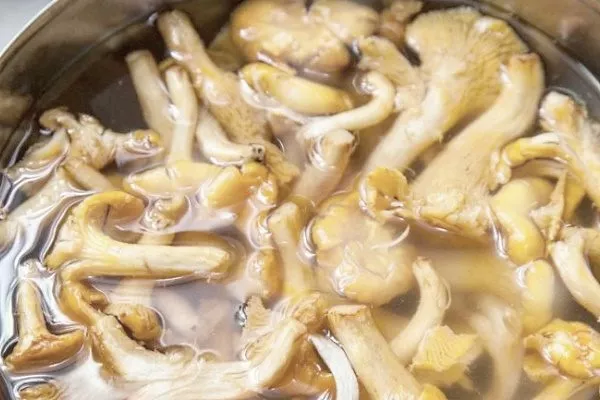
- Place the mushrooms in a large bowl of water and leave them there for about 15-20 minutes.
- Replace the water with fresh water. Soak the mushrooms for another 10 minutes. If the mushrooms emit a slight bitterness (this is possible, as they contain special substances that repel worms and insects), let them steep in two more waters for another 30 minutes.
- Rinse each mushroom under running water. Do this carefully, as the skin and structure of the chanterelle are quite fragile. Using a small brush (a toothbrush will do), clean the gills underneath the cap.
- Inspect the mushrooms. If there are any minor blemishes, scrape them off with the sharp side of a knife.
- Cut off the bottom of the leg.
How to cook properly?
Pre-boil chanterelles when preparing pickled, salted, or canned mushrooms. This is not necessary for frying, but is recommended to avoid a bitter taste and the need for repeated soaking.
There are cooking rules that must be followed, since undercooked mushrooms lack the desired flavor, and overcooked mushrooms disrupt the structure, causing the chanterelle to break into small fragments:
- if the cap diameter is up to 5 cm, keep it on the fire for about 5-6 minutes, throwing it immediately into boiling and already salted water;
- If the cap diameter is 5-10 cm, it is better to boil it for about 10 minutes.
Pickling
Pickled chanterelles are a favorite dish of many mushroom pickers. To prepare, you'll need the following:
- mushrooms;
- black and allspice - 4-5 peas per liter jar;
- bay leaf – 2 pcs.;
- garlic – 1 clove;
- cloves and other - as desired and to taste;
- sugar, salt - 1 tsp each;
- vinegar (9%) – 1 tbsp.
How to cook:
- Pre-boil the mushrooms in lightly salted water.
- Place the chanterelles in jars, layering them with spices.
- Add sugar, salt, and vinegar.
- Boil water and fill the jars with boiling water.
- Roll up the lids.
The mushrooms will be completely marinated in a month.
Freezing and drying
Frozen and dried mushrooms are convenient for using in soups, sauces, and stir-fries. Frozen mushrooms have a shelf life of 10 months, provided they are not re-frozen after thawing. Dried mushrooms have a shelf life of 6 months longer.
How to freeze:
- Boil the mushrooms in salted water.
- Let the water drain completely. You can squeeze them lightly with your hands.
- Place the chanterelles on a paper or cloth towel to remove any remaining moisture.
- Pack the mushrooms in airtight containers. Plastic containers, plastic bags, and especially vacuum-sealed ones are suitable. Arrange the mushrooms in portions.
- Place in the freezer.
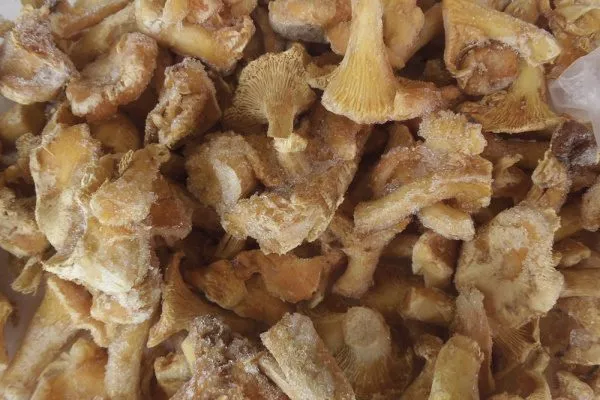
There are various ways to dry mushrooms—outdoors in the sun, in an aerator, or in the oven—but they can only be used raw. Most often, home cooks use the oven method. Here's how to do it right:
- Clean the mushrooms thoroughly with a brush, but do not wash them. If you do wash them, allow them to dry out by laying them out on a towel.
- Cut into fractions or leave whole.
- Line a baking sheet with parchment paper or use a wire rack.
- In both cases, spread the chanterelles in a single layer and place in the oven.
- Turn it on to 50 degrees, leave the door slightly open, which will reduce drying time.
- Simmer for about 2 hours, then lower the thermometer to 10-15 degrees Celsius. Continue simmering for another 60-80 minutes.
- Let cool completely, then store in glass jars or cloth bags. Process into powder immediately if needed.
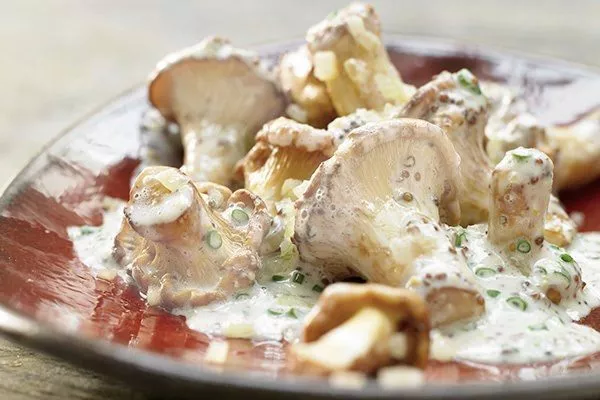
Frying
To ensure pale chanterelles turn out delicious, they need to be properly prepared and fried. Here's what you'll need:
- Wash the mushrooms thoroughly and be sure to dry them, laying them out on a towel so that they do not touch each other.
- Cut small mushrooms into 2 pieces and large ones into 4.
- Pour vegetable oil or butter into a frying pan and heat it.
- Cut the onion into half rings and throw into the frying pan.
- After 3 minutes, add the chanterelles. Fry over medium heat, stirring constantly, for about 5-8 minutes.
- Add salt and pepper and fry for another 2 minutes.
Pickling
There are two ways to salt chanterelles: hot and cold. For the first method, follow these steps:
- Place pre-boiled chanterelles in a container.
- Add spices.
- Separately, cook the brine: 2 tablespoons of sugar and 3 tablespoons of salt per 1 liter of boiling water.
- Cover the mushrooms with brine and leave for 2-4 days.
Cold salting involves the following steps:
- Place the boiled mushrooms with their stems facing up in any container.
- Sprinkle each layer with salt.
- Add any spices.
- Place a weight on top.
- After a couple of hours, the mushrooms should start to ooze juice. If it doesn't cover all the mushrooms, add some cold water.
- Keep it like this for 20-30 days.
Canning for the winter
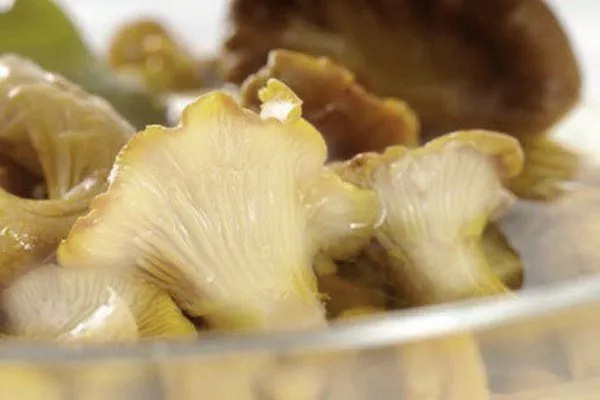
When canned for winter, chanterelles turn out crispy yet tender. Ingredients for a 2-liter glass jar:
- white chanterelles – about 3 kg;
- salt – 50 g;
- sugar – about 100 g;
- vinegar – 50-60 ml;
- cloves and peppercorns – 5 each
Canning process:
- Boil the mushrooms, rinse with boiled water and strain.
- Add sugar, salt, and spices to the mushroom broth. Cook for 5-7 minutes.
- Pour in vinegar and simmer for another 4-5 minutes.
- Place the chanterelle mushrooms in a jar.
- Pour boiling brine over.
- Seal with metal lids.
In winter, before serving, add chopped onions and a little vegetable oil.
What spices go best with these mushrooms?
Light chanterelles don't like a lot of seasoning, otherwise their distinctive mushroom flavor and aroma will be lost. When preparing them, you can use the following:
- black and allspice peppercorns;
- dried cloves;
- bay leaf;
- coriander;
- greens – basil, dill, parsley;
- vegetables - onions and carrots.
Is it possible to grow it yourself and how to do it?
Pale chanterelles, like other members of this family, are easy to grow in the garden. To create the most favorable conditions, it's best to sow them under trees, but a regular greenhouse can also be used.
Methods
Two types of planting material are used for propagation:
- Mycelium. It's usually purchased in specialty stores, but you can also collect it yourself. To do this, dig up the mycelium along with the soil in the forest.
- Disputes. Another good option. To collect spores, simply select large specimens, crush them, and soak them in water. The pulp will serve as planting material.
Growing nuances
Don't expect a harvest in a month or two, as full rooting, adaptation, and development require at least 10-12 months. To avoid problems during cultivation, pay attention to the following:
- Be sure to use leaves from the tree under which the planting material was collected;
- The optimal method for beginners is considered to be propagation by mycelium;
- soil taken from under the tree where the mycelium was located is always added to the hole - the proportion with ordinary soil is 1:1;
- Caring for white chanterelles involves frequent watering, as the fungus does not develop without high humidity - water once a week, make sure that a dry crust does not form on the surface of the soil mixture;
- Be sure to do some light weeding.
- Collect soil from under trees where chanterelles naturally grow to use as a substrate.
- Mix the collected soil with turf soil in a 1:1 ratio to create optimal conditions.
- Make sure the soil pH level is between 5.5-6.5 for best mycelial growth.
Conditions
The best growing option is considered to be planting under a tree rather than in a greenhouse. As the mycelium grows, it develops mycorrhiza, which actively interacts with the tree's root system, ensuring maximum nutrition.
If there are no necessary trees in the garden plot, use a greenhouse, but at the same time create favorable conditions for mushrooms:
- humidity level – about 90%;
- optimal temperature is 21-24 degrees;
- presence of shadow, absence of sunlight;
- The best substrate for a greenhouse is turf soil, half mixed with soil taken from the mycelium;
- covering with mulch from leaves, moss.
Step-by-step instructions
The best way to grow pale chanterelles is with mycelium. It's easy; just follow these step-by-step instructions:
- Collect the planting material. To do this, in March or August, cut off the top 15-16 cm of soil from the mycelium. This can be done with a regular shovel. The area should be free of weeds and plenty of old leaves.
Choose mycelium that ranges in size from 20 to 30 cm. - Treat the mycelium to improve the quality of the planting material. To do this, place the soil mixture with the mycelium in a wide basin (a natural fabric bag or burlap sack can be used instead). Cover with any woven material. Keep it in this condition for 7 to 12 months.
This is necessary to destroy pathogenic microorganisms and strengthen the root system of the mycelium. - Sow the mycelium. Make holes about 25-30 cm deep and 12-15 cm in diameter under a tree or in a greenhouse.
- Place the collected mycelium, pour in 1 liter of settled, but preferably rainwater.
- Cover the surface with moss or leaves.
For more information on how to grow light chanterelle fruiting bodies, watch the following video:
Interesting facts
Light chanterelles have different characteristics, but there are also nuances that are of interest to many:
- these mushrooms never do not contain worms, the reason for this is chinomannoses (substances that destroy helminths);
- white chanterelles contain many antibacterial substances;
- In France and other European countries, the mushroom was considered a product only for aristocrats;
- In Scandinavia, chanterelle was used to improve libido;
- the edibility category allows them to be consumed raw;
- In terms of nutritional value, chanterelles are comparable to meat, but their calorie content is very low;
- The variety is most often used for making medicines in China.
The white or light chanterelle belongs to the edible variety of the family, but is rare in Russia, making cultivation a profitable business (a niche opportunity). Growing these mushrooms is quite simple; the key is patience until the first harvest.
I've already had experience growing mushrooms at home... I really love white chanterelles—they're so tender and have a truly mushroom-like flavor. Thanks so much for the growing tips, I'll definitely be using them!