
Today, numerous methods have been developed to test a mushroom's toxicity. But the mushroom world contains a wide variety of poisons. There's no single test that can detect all toxic substances. To detect the poison hidden within a mushroom, several tests must be used for different toxins. Below are the most popular methods for identifying poisonous mushrooms.
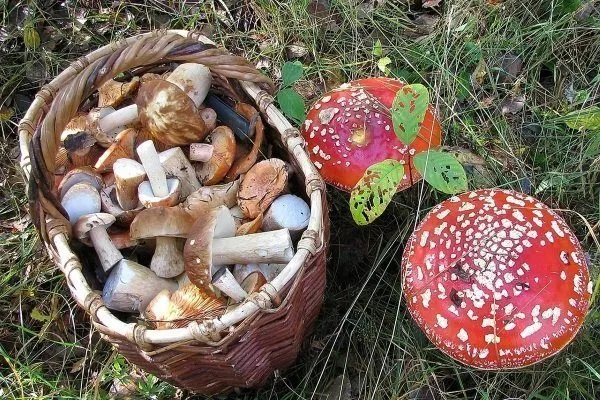
How to identify poisonous mushrooms – the most reliable method
There are many popular methods for testing mushrooms for toxicity, but they are all unreliable and rely on detecting a single poison. Accurate identification is only possible based on characteristic features that can unmistakably identify deadly mushroom species. If you come across a questionable specimen whose identity you're unsure of, follow these steps:
- Look inside the cap to determine whether an unidentified specimen is a lamellar or a tubular mushroom. All the most poisonous mushrooms are lamellar, such as fly agarics and toadstools. Therefore, be especially wary of these mushrooms.
- Examine the underside of the mushroom carefully. All varieties of fly agarics and toadstools have an egg-shaped thickening at the base of the stem.
- Look to see if there's a collar ring on the stem. It's located roughly in the middle, slightly closer to the cap. If the mushroom has a "skirt," discard it immediately.
Key signs of poisonous mushrooms
- ✓ Lamellar structure under the cap
- ✓ Presence of a volva (egg-shaped thickening at the base of the stalk)
- ✓ Presence of a ring on the leg
- ✓ Vivid contrasting coloring
This video introduces viewers to the most dangerous mushrooms. Learn how to identify them and how they affect the body:
How to distinguish doubles?
Edible mushrooms, sought after by mushroom pickers, have lookalikes—inedible, conditionally edible, or poisonous. Here are the most famous pretenders:
- Gall and Satanic mushroom. These are lookalikes of the boletus, the most valuable member of the mushroom kingdom. But distinguishing between the lookalikes is easy. The first has a dark mesh of veins on its stem, while the second has a reddish one. You can also cut off a piece of the stem to see if its color changes. If the cut doesn't change after a minute, the boletus is ready to be put in the basket. The lookalikes will change from white to pink (for the gall mushroom), and purple (for the devil's mushroom).
- False aspen mushroom. Its cap is darker than that of the real one. The cut stem color doesn't change, while that of the real redhead, on the contrary, darkens.
- False birch bolete. You can distinguish it from the edible mushroom by its darker cap and blue cut surface. Another sure sign is where it grows. False boletes don't grow under birch trees.
- False chanterelles. To distinguish them from edible ones, you need to be attentive. Look at the color of the caps. True chanterelles have light orange, almost yellow, caps. False chanterelles are bright orange, and when broken, droplets of white juice appear.
- False honey mushrooms. There are many poisonous and inedible mushrooms that resemble honey fungi. True honey fungi can be distinguished from false ones by their brownish or brownish-yellow scaly caps. While the caps are pale, false ones are brightly colored, such as red-brown or rusty-red. Edible honey fungi can also be identified by their smell—they have a pleasant, rich mushroom aroma. False ones emit a musty, earthy odor.
Comparison table of mushrooms and their look-alikes
| Edible mushroom | Poisonous Double | Key differences |
|---|---|---|
| White mushroom | Gall mushroom | The mesh on the stem is dark, the cut turns pink |
| Aspen mushroom | False aspen mushroom | The cap is darker, the cut does not change color |
| Fox | False chanterelle | Bright orange color, white juice when broken |
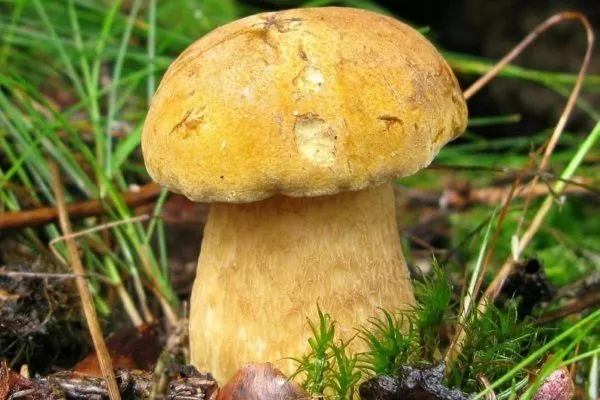
Gall mushroom
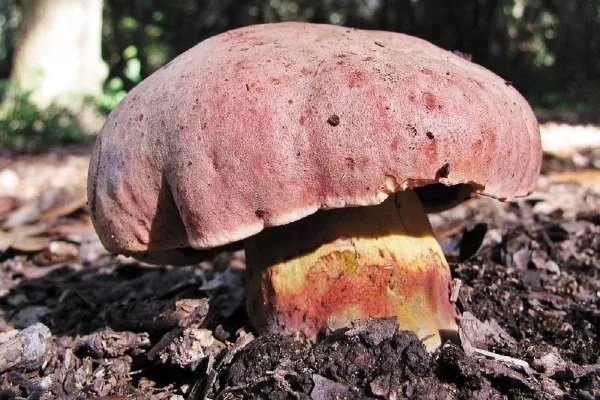
Satanic mushroom
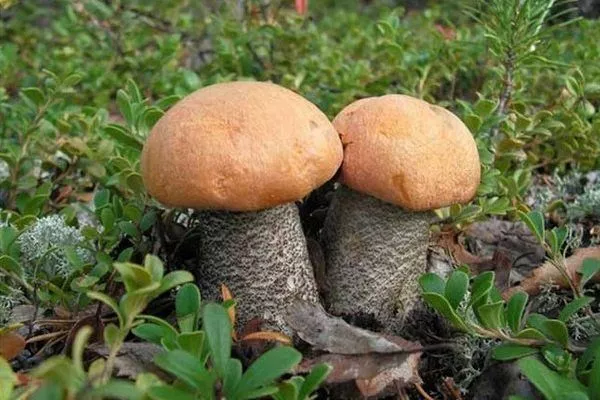
False aspen mushroom
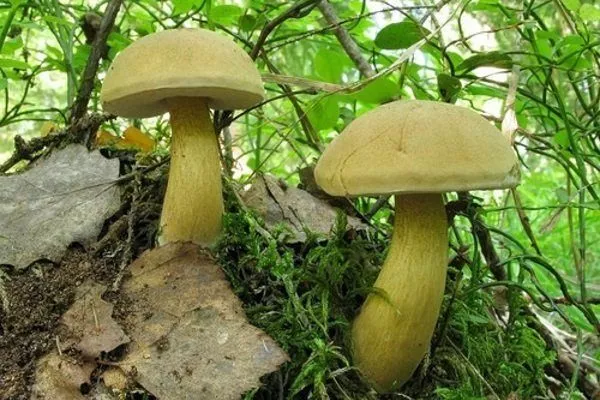
False birch bolete
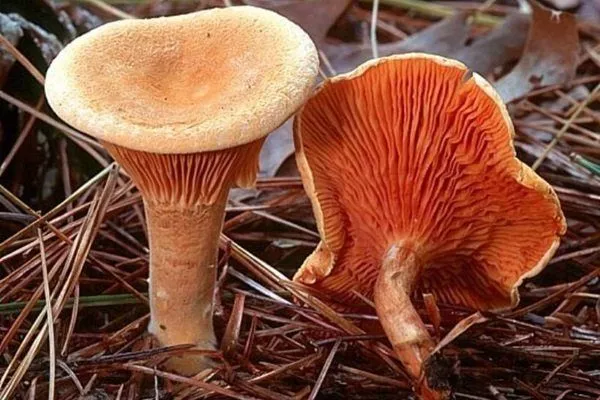
False chanterelles
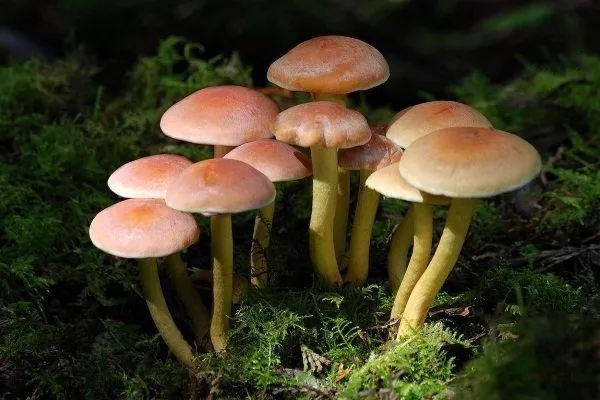
False honey mushrooms
Misconceptions about identifying edible and poisonous mushrooms
There are several popular beliefs for identifying poisonous species, many of which are incorrect. For example:
- Edible specimens are considered to be pleasant to eat. This isn't true—fly agarics are also delicious.
- Young mushrooms are safe, but toxicity comes with age. This isn't true, especially for the death cap, which is deadly at any age.
- Poisonous mushrooms smell unpleasant. Nothing of the sort. Many poisonous and semi-edible specimens have a pleasant aroma, while many are odorless. The unpleasant odor is usually associated with the inedible category.
- It's a common misconception that poisonous mushrooms aren't worm-eaten—supposedly, insects don't like them. When picking worm-eaten and snail-gnawed mushrooms, mushroom pickers assume they're definitely edible. In fact, insects can infest any mushroom.
- Many people believe that alcohol neutralizes the poison. Again, this is untrue. This misconception is particularly dangerous—alcohol, in fact, contributes to the body's intoxication with mushroom poison. If you drink alcohol with poisonous mushrooms, the risk of death increases.
- The belief that boiling mushrooms is beneficial is also misguided—boiling doesn't remove all their toxins. Some toxins are neutralized by boiling, while others are resistant to high temperatures.
Don't taste mushrooms. Experimenting with them can lead to severe poisoning. Fly agarics and toadstools are delicious. Mushrooms should be identified by appearance only.
When going on a "silent hunt," it's important to know the exact description of edible mushrooms. If a specimen doesn't match the description in any way, it's best to discard it.
Control check
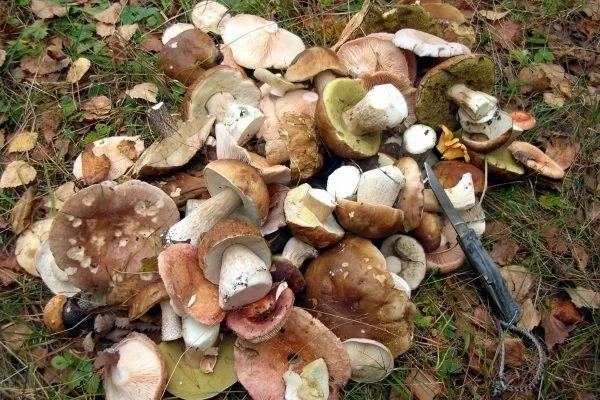
Mushroom trophies aren't stored—as soon as they come in from the forest, get to work cleaning, washing, and cooking. A few hours pass, and the entire harvest will spoil. During cleaning, carefully inspect the mushrooms to ensure no poisonous ones slip through. Set aside old specimens—after cooking, they will become soft and tasteless, and they can even cause food poisoning.
The procedure for processing mushrooms
- Sort by type
- Checking each copy
- Cleaning of debris and damage
- Rinsing in running water
- Mandatory heat treatment
People's "testing"
People have come up with a multitude of methods for identifying poisonous mushrooms. Unfortunately, many of them are ineffective, as they rely on a specific poison or group of poisons. Moreover, many methods are flawed, and the cost of error is human lives. Let's explore these methods, what exactly they detect, and why they shouldn't be trusted.
Silver testing
There's a popular belief that toxicity can be detected using silver objects. This is a misleading method and shouldn't be relied upon. Silver tarnishes not because of poisons, but because of certain amino acids that can be found in any mushroom, regardless of its edibility.
Garlic and onion test
Mushroom pickers have another way to test for quality—during cooking. They add an onion or garlic clove to the pot. If it's poisonous, it turns blue. The undercooked soup must be discarded. However, the browning of onions and garlic isn't caused by poison, but by tyrosinase, a special enzyme that has no connection to edibility—it can be present in both toxic and edible specimens.
What will insects tell us?
Some mushroom pickers believe that insects don't eat poisonous mushrooms. In fact, the presence of insects doesn't mean anything – some mushrooms are resistant to poisons.
Milk test
It's believed that milk that comes into contact with a poisonous mushroom will curdle. In fact, curdling is caused by the enzyme pepsin, which can be found in all types of mushrooms, edible and toxic.
Vinegar test
It's believed that boiling them in a vinegar and salt solution helps neutralize toxins. Indeed, this can render mildly toxic species, such as morels, harmless. However, the death cap mushroom is unaffected by such treatments; its poison remains potent no matter how it's treated.
Recognition by the color of the plates
The color of the subcapital gills. It's said that pinkish gills indicate harmlessness. Not quite. The button mushroom does have pink gills, but the yellowing button mushroom and the entoloma—poisonous species—also have pinkish gills.
Fault recognition
Color of the split. It's believed that if the flesh at the split suddenly turns red or purple, the mushroom body contains poison. However, edible hornbeams, for example, turn purple at the split, while oak boletes turn blue.
Can you get poisoned by edible mushrooms?
Even edible mushrooms can easily cause poisoning. Reasons why these mushrooms become toxic:
- BacteriaWhen bacteria enter the nutrient medium—the mushroom body—they rapidly multiply. Sources of contamination include soil, transport containers, and dirty hands. If mushrooms are not handled properly, they can cause bacterial poisoning. Frying or boiling mushrooms kills almost 100% of the bacteria. However, pickled mushrooms can be harmful if they are improperly prepared—for example, if they were left in the same water for too long, if the ambient temperature was high, or if the marinade was not salted enough.
- BotulismThis scourge affects canned foods. The culprits are clostridial spores. Pickled mushrooms, stored without access to air, can also cause botulism.
- ToxinsMushrooms, like sponges, absorb all the chemicals in their environment. Mushrooms grown in industrial areas or near agricultural fields can also carry heavy metals, herbicides, and other chemicals, causing severe toxicity.
- OvereatingMushrooms are considered a heavy food. Their consumption should be in moderation. They are generally contraindicated for people with gastrointestinal problems, kidney disease, or liver disease.

First aid for mushroom poisoning
If, after eating mushrooms, you feel unwell – dizziness, nausea, abdominal pain, shortness of breath, or other suspicious symptoms, immediately:
- Call an ambulance.
- Rinse your stomach. To flush the poison out of your system, induce vomiting. Drink 1-2 liters of dissolved potassium permanganate or absorbents such as white or activated charcoal (1 g per 1 kg of body weight).
- If you don't have charcoal or potassium permanganate, use table salt. Dissolve 2 tablespoons of salt in a glass of water and drink it—the saline solution has a laxative effect.
- After removing toxins, you need to replenish lost fluids by drinking mineral water or sweetened tea.
When picking and eating mushrooms, using "folk remedies" is not only ineffective but also dangerous. Only by studying the appearance and distinctive features of mushrooms—both edible and deadly poisonous—can you avoid this fatal mistake.
Thank you, very well written article.
I've been looking for one like this for a long time.
Excellent article!!!!! And most importantly, it's very useful and relevant, written in understandable, human language.