
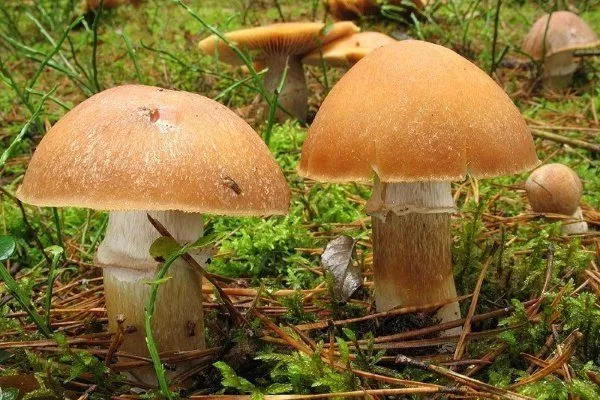
The ringed cap mushroom (Rozites caperatus), commonly known as the hen or cockerel mushroom, is unfairly ignored by even the most experienced mushroom pickers. This unsightly mushroom from the cobweb family evokes associations with toadstools and doesn't seem particularly appetizing. But if prepared correctly, it tastes just like the bird. That's why these mushrooms are also called cockerels or hens.
What else is it called?
This is a little-known mushroom. Many haven't even heard of it, and when they encounter it, they pass it by, unaware of the delicious pleasure they're missing out on.
The official name for this mushroom is the ringed cap mushroom. It belongs to the genus Rosites (Rozites caperatus). Despite its low rating among mushroom pickers, it has many common names. Besides its "chicken" names, it is also known as:
- white marsh grass;
- cap;
- greenfinch;
- gray sandpiper;
- green stuff.
It's sometimes called the "gray rowan," but it's not related to the family. It differs from the true gray rowan in color and the structure of its stem.
Characteristics of cockerels
Chickens, indeed, are somewhat reminiscent of toadstools. They're just as fragile and fragile. To avoid picking up toadstools instead of tasty chickens, you need to know the exact description of the mushroom:
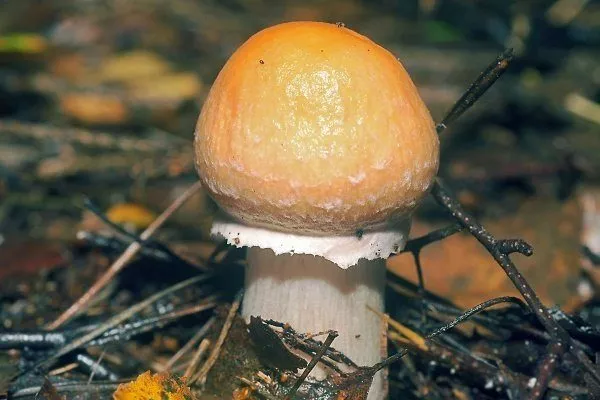
- Hat. This is the most noticeable part of the betta, so it's worth examining it closely. The ringed cap, when young, is rounded, resembling an egg. The edges are slightly curled downward. The color is slightly brownish, similar to the color of chicken eggs. The cap diameter in young bettas is 5 cm, while in older bettas it's 10-12 cm.
As the mushroom grows, the ovoid cap unfolds, turning into a cloisonné. The edges smooth out, and the ruptured membrane forms a ring around the stem. The gills, which are covered with spores, are initially light yellow. As the mushrooms grow, the gills darken. In older mushrooms, they are rusty or light brown. The top of the cap is covered with cracks and a light whitish coating. - Leg. The chicken's pelvis is the most common. It reaches 12 cm in length and up to 3 cm in thickness. It is cylindrical in shape, with a slight thickening at the bottom and a membranous membrane. The underside is smooth, with a slight coating on the top. The color is light yellow.
- Pulp. Its flavor is similar to champignons. It has a fibrous texture. It is dense but somewhat watery. It is white in color. It is often infested with worms.
Experienced mushroom pickers share a video about the characteristics of the ringed cap mushroom—what it looks like, where it grows, and what makes it so special:
Where and when does it grow?
Chickens prefer to grow up in mountain and foothill forests. Growing season is from August to October. Favorite places:
- near the blueberry patches;
- next to a low birch tree;
- under the beeches;
- in deciduous forests.
Fungi choose their favorite plant hosts. Living alongside them, they form mycorrhiza—a fungal root that is a symbiotic relationship between fungal mycelium and the roots of higher plants.
The mushroom is native to Europe, North America, and Japan. As we can see, the cockerel mushroom has spread across the globe. It can even be found in Greenland and Lapland. The mushroom can grow high in the mountains, up to 2,500 meters above sea level. The hens love acidic and podzolic soils, where they settle in entire colonies. This mushroom is widespread in the forests of Belarus, and in Russia, it can be found in marshy areas.
The mushroom is ready for picking from early July until the first frost. Knowing the cap mushroom's fondness for acidic soil, look for it in swamps and blueberry patches. The cap mushrooms grow in colonies, making them a tempting catch—you can quickly fill a basket.
Who can be confused with?
| Name | Cap diameter (cm) | Leg length (cm) | Cap color |
|---|---|---|---|
| Ringed cap | 5-12 | 12 | Brownish |
| Fly agaric | 7-20 | 10-20 | Red with white spots |
| Purple Cortinaria | 4-10 | 5-12 | Purple |
Chickens can be confused with inedible mushrooms:
- Fly agarics. Fly agarics are distinguished from them by a mealy coating on their caps and ochre-colored spores. Fly agarics have white scales and spores.
- Purple Cortinaria, as well as other members of this family, which contains many poisonous species. Chickens are distinguished from them by their ringed skirt; similar mushrooms have only fragments of it.
The value of the mushroom
Cockleburs are a sought-after culinary staple. They're edible and can be cooked however you like. The mushroom's calorie content is 22 kcal per 100 g. Nutritional value per 100 g of ringed cap mushroom:
- protein – 3.09 g;
- carbohydrates – 3.26 g;
- fats – 0.34 g.
The ringed cap also contains:
- water – 92.45 g;
- fiber – 1 g;
- sugar – 1.98 g.
Mushrooms are rich in vitamins C and D, thiamine, riboflavin, minerals – calcium, magnesium, selenium, zinc, phosphorus, iron, potassium, sodium and other useful elements.
Champignons are a valuable product, similar in flavor to champignons. In Russia, this mushroom is undervalued, but in Europe, it is considered a delicacy and is even cultivated artificially.
It's no wonder this mushroom is called by such delicate food names as "hens" and "cockerels." The ringed cap mushroom is not only edible but also versatile—it can be prepared in any way. Hens are classified as a food category 4 mushroom, which indicates their low nutritional value.
All restrictions on the consumption of cockerels are related to a characteristic feature of these mushrooms: they accumulate heavy metals present in the environment. Therefore, they should not be collected near roads or in ecologically unfavorable areas.
Raising cockerels
These mushrooms are delicious, easy to pick and cook. It's no surprise that such a delicious member of the mushroom kingdom is cultivated.
Growing on stumps
Stumps left over from tree felling are most often used for cultivation. Growing procedure:
- First, you need to collect the spores. Place the caps of mature bettas on a sheet of paper to release the spores. Pour the resulting seed into a small container of water.
- Water with spores is poured onto the stumps.
- From time to time the stumps are watered.
Chickens grow best on pine, spruce, birch and aspen stumps or on logs of these species.
The substrate is "inoculated" with fragments of rotten stumps containing the mycelium of the chickens growing on them. The "seed" should be collected from an area where the hens are growing in colonies. Methods for inoculating with stump fragments containing mycelium:
- Cavities are made in the infected stumps and graft wood is placed there.
- The mycelium material can also be secured to the ends of the stumps with nails. To retain moisture, the grafted mycelium is covered with spruce branches or pieces of moss.
You can raise mushrooms this way throughout the growing season. However, don't expect a harvest during hot and dry weather. The mushroom grows best in spring and summer. Hobby mushroom growers say that mushroom caps can grow for 5-8 years on infected material.
- ✓ Use only freshly cut trees for mycelium inoculation, as they retain moisture and nutrients better.
- ✓ Maintain substrate humidity at 60-70% for optimal mycelial growth.
Growing on logs and wood waste
Also caps can be grown:
- On wooden blocks. Round wood cuttings 30-40 cm long and at least 15 cm in diameter are used. The cuttings are collected in spring or fall. Only freshly cut trees are suitable. The logs are infested like stumps. However, they must first be kept in a dark place for 2-3 months. The favorable temperature is 15-20°C. The logs are then placed vertically in holes 20 cm deep, spaced 50 cm apart. The infested areas are covered with spruce branches, just like on stumps. Here, the cockerels will bear fruit twice a year for 2-3 years.
- On wood wasteThis method is suitable for growing indoors. You can use wood shavings, chips, or sawdust—place them in glass jars or pots. Take the sawdust and wood shavings, mix them, and pour boiling water over them. Add starch (7.5 g per 1 kg of mixture), bean flour (15 g), oatmeal, and corn flour (25 g each). Pour the mixture into sterilized jars. Sterilization time is 1 hour.
Wooden boxes or plastic bags can be used for breeding. Nutrient supplements can vary. Along with flour and starch, you can use:
- beer wort;
- malt;
- potato pulp.
Petushki mushrooms are a delicacy worthy of the attention of mushroom connoisseurs. Their unsightly appearance conceals a mushroom of astonishing delicacy, easily ranking alongside champignons and porcini mushrooms in the nutritional rankings.