
The common name "kozlyata" (goat mushrooms) refers to tubular mushrooms of the Boletaceae family (genus Butter mushrooms), classified as a fourth-class prize. They are not very popular among mushroom pickers, but they are edible and taste similar to butter mushrooms. Some of these mushrooms are even used for medicinal purposes.
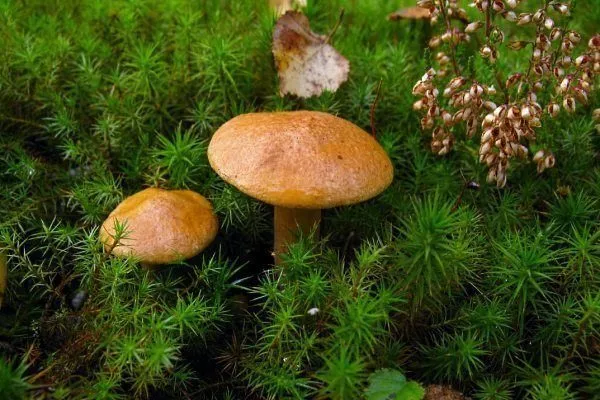
Kozlyak mushroom
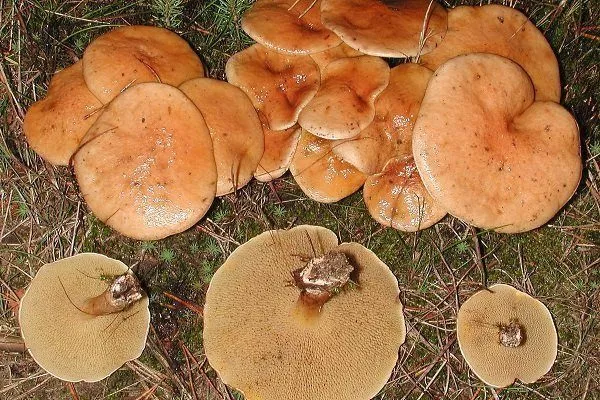
In damp weather, the Goat mushrooms become covered in slime.
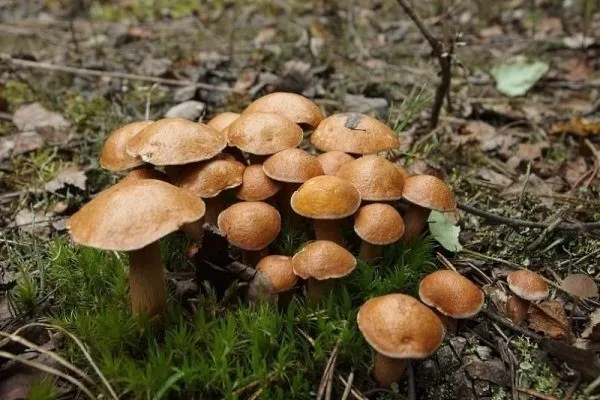
The goat's cap (Suillus bovinus) is a tubular mushroom of the Boletaceae family.
Description of the mushroom
Kozlyaki are small edible mushrooms that grow throughout Russia's northern temperate zone. The mushroom's traditional name has many synonyms. Different regions have their own: reshetnik (reshetnik) – because its lower part resembles a sieve; bolotnik (bog-like mushroom) – because it grows in swamps; and other popular nicknames (horned, devil, moshornik, moss-loving, Ivanchik, sheep-loving, mullein, etc.).
In appearance, boletus mushrooms resemble butter mushrooms, and some mistakenly put them in their baskets instead of birch boletes. Their cap color is indeed similar to the latter: yellowish or reddish-brown, reddish-brown, or ocher. Its diameter typically reaches 4-12 cm. The skin is difficult to remove from the cap. It is smooth to the touch, and in damp weather it becomes covered in slime. The cap shape is cushion-shaped, convex or flat-convex, changing with age, becoming flat or fuzzy. The spores are yellow and smooth.
- ✓ Check that the mushroom cap is covered with slime in damp weather.
- ✓ Make sure the flesh turns pink when cut.
Other characteristic signs of a kid:
- The stem is 1-2 cm thick and up to 10 cm long. It is matte, dense, cylindrical in shape, often curved and thickens towards the bottom.
- The color of the stem and cap matches.
- The flesh is firm, red or brown in the stem and pale yellow to yellow in the cap. It turns pink when cut.
- A decurrent or slightly decurrent tubular layer. In young mushrooms, it is grayish-yellow, turning yellow with age, and turning brown with age. The edges become torn.
- The tubes (about 8 mm high) usually grow onto the stems and are difficult to separate from the cap flesh.
- If you taste the pulp, you'll notice a hint of sourness. The flavor is generally indistinct, but the aroma is pleasant.
Where and when does a kid grow up?
Goatberries form mycorrhiza with pine trees, so they grow in coniferous forests, dry pine forests, acidic, poor soils, and damp places. They prefer roadsides and marshy areas. Goatberries often grow near the pink water locust (Gomphidus roseus), which parasitizes them. Cloudberries and blueberries—berries that prefer damp places—can be found nearby. Rich harvests of goatberries are gathered after heavy rains. They are found singly or in small groups.
- ✓ Check for pine trees in the collection area, as goat weeds form mycorrhiza with this tree.
- ✓ Look for areas with acidic and poor soils, preferably moist places.
The goat kids mature from June to November, and in most regions, in August and September.
The distribution range of the lattice is quite wide. It grows:
- in Europe and in the European territory of Russia;
- in the North Caucasus;
- in Siberia;
- in the Far East;
- in the Urals.
What mushrooms grow in central Russia, you can find out from this article.
How to assemble a grate correctly?
The peak harvest of goatlings occurs during the summer months of July, August, and early September. By October, there are very few of them. It's best to select young fruiting bodies and avoid older ones, as they accumulate harmful components. It's especially dangerous to pick fruiting bodies along highways and in industrial areas near operating plants. Goatlings absorb radioactive substances and exhaust fumes.
When picking scaly-cap mushrooms, select only firm, intact specimens. Listen to their aroma (it should be pleasantly mushroomy), and avoid any that appear unfamiliar, or have a strange color. Unfortunately, scaly-cap mushrooms are a bit of a record-breaker when it comes to worminess. Both the caps and stems can be rotten. It's best to immediately cut off and discard any wormy parts of scaly-cap mushrooms.
For beginning mushroom pickers, a review of the "Kozlyata" mushrooms is provided in the video below:
Nutritional value and taste of the mushroom
What sets the goat mushroom apart from its relatives is that it is better absorbed by the body—almost 70% better. And the calorie content is only 20 kilocalories per 100 grams. However, in terms of flavor, this mushroom is inferior to many, such as butter mushrooms. For this reason, they are not popular. Lattices do not have a distinct flavor, so they make for neutral dishes. To remove the bitterness, which is often present in fruiting bodies growing in humid coniferous forests, it is necessary to boil the fruiting body in salt water.
Goat mushrooms are suitable for winter preservation, such as drying, pickling, and, to a lesser extent, frying and soups. Dried mushrooms can be made into a powder, which makes an excellent base for gravies, cream soups, and sauces. Young mushrooms are also used to make jam in syrup (such as orange syrup).
More than its taste, sieve is valued for its composition. The product contains:
- amino acids – lecithin, tryptophan, polysaccharide glycogen;
- carotene;
- vitamins B, D, PP;
- phosphates.
Folk medicine experts say that goat's tongue also has healing properties, as it contains a powerful substance called nebularin. Thanks to this substance, goat's tongue has antimicrobial properties.
The use of these mushrooms in folk medicine:
- A compress made from fresh caps helps relieve pain from bruises and joint inflammation.
- An infusion of the peel and spongy base under the cap is used to boost immunity.
- For bacterial infections, goat's tongue is used as a concentrated extract from the raw mushroom. It is also effective for herpes and purulent wounds.
- Alcohol tincture (rubbing) is used for radiculitis, gout, osteochondrosis.
- In cosmetology, an infusion of fresh goat's milk is used as a lotion; it eliminates skin flaking and irritation.
Processing mushrooms
To preserve all the beneficial properties of the mushroom, it must be cooked properly. Goat's cap mushrooms do not need to be soaked for long periods of time or subjected to additional heat treatment. If you plan to make mushroom soup, soak the fruiting bodies in hot water first, bring to a boil, and then drain the liquid, and cook the soup in clean water. Skim off any foam that appears on the surface of the pot. After cooking, the goat's cap mushrooms take on a distinctive purple color.
When planning to preserve mushrooms for the winter, there are several ways to do so. For example, you can dry them by hanging or laying them out in the sun for a few days. Goat mushrooms make a wonderful roast (with potatoes and onions) and stew (mushrooms in sour cream with carrots and herbs). In salads, goat mushrooms go well with egg, chicken breast, turkey, rice, and fried onions. Both marinated and dried mushrooms are delicious.
Doubles and false types of kids
| Name | Hat size (cm) | Cap color | Place of growth |
|---|---|---|---|
| Goat | 4-12 | Yellowish or reddish-brown, reddish-brown, ocher | Coniferous forests, dry pine forests |
| Pepper mushroom | 2-6 | Dry, more reddish | Coniferous rainforests |
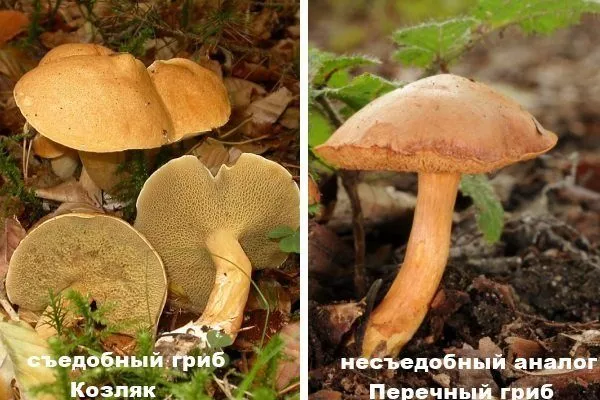
When heading into the forest to find edible mushrooms, it's important to know what their inedible counterparts look like. The goat mushroom has no false subspecies, but it can easily be confused with the pepper mushroom. It also belongs to the Boletaceae family, genus Boletaceae, and grows in the same areas (moist coniferous forests). The pepper mushroom is not eaten due to its taste and toxicity, although some believe it can be added to dishes as a seasoning. Inexperienced people should avoid adding this mushroom to their basket.
How can you tell a pepper mushroom from a goat mushroom? The external differences are as follows:
- The fruiting bodies of the lattice are larger.
- The pepper cap is dry to the touch.
- The pores of the pepper fungus are colored in a more reddish hue.
- The flesh of the goat's meat is not spicy in taste.
Do they raise kids?
Like other members of the Boletaceae genus, goat's cap mushrooms can be raised at home. However, they are not suitable for resale, as these mushrooms are not popular. Planting a mushroom plantation is recommended for personal consumption only.
How to grow lattice:
- Mycelium They are planted in boxes filled with substrate at any time of the year, but it is advisable to do this from September to April-May, which will speed up the harvesting process.
- Pieces of mycelium are placed into the holes made in the boxes – there are 10 to 15 of them – and covered with substrate.
- Over the winter months, the mycelium will grow. In the spring, it is planted in the ground.
- First, you need to prepare the holes: mix the soil with wet sawdust.
- Planting holes are dug near the conifer. They are about 10 cm in diameter and 20 cm deep.
- Each hole with mycelium is slowly watered with a liter of water with lime (50 g per bucket) to disinfect the soil.
- The mycelium requires fertilization. The plantings are covered with a layer of branches, moss, and leaves.
- On hot days, the soil around the holes must be moistened: once a week, 2-4 buckets of water are poured onto each tree.
Although goat's rue isn't exactly popular, it has a pleasant taste and contains amino acids beneficial to humans. They're easy to find in the forest and easily identified by their appearance. Goat's rue don't require additional soaking and are easy to prepare. They make excellent pickles and hot dishes (powdered soups, potato stews).