
Mushrooms are a valuable food product, tasty and healthy, so buying a mushroom farm can be a profitable business. It doesn't require a large investment, but you will need to purchase some equipment. Most importantly, you'll need to learn the technology for growing popular mushrooms.
What is a mushroom farm?
A mushroom farm is an effective tool for growing mushrooms, and it comes in a wide variety of configurations. These range from small cardboard boxes to huge facilities capable of growing hundreds of kilograms of button mushrooms, oyster mushrooms, or other marketable mushrooms.
There are several methods of cultivation:
- In the garden beds. This is an economical method that requires film and compost. The downside is that it's seasonally dependent.
- In bags. They pour substrate into them, make holes and hang them up.
- In briquettes. A modern method in which the mixture is pressed into briquettes. Plus, it makes maintenance easier.
- In containers. This is an American technology in which soil with mycelium is placed in plastic or wooden containers that have been pre-treated to remove mold.
It's generally accepted that a mushroom farm with potential for growth should occupy at least 100 square meters of land. Smaller farms can still be profitable, but they don't offer much opportunity for business growth. Growing mushrooms for yourself is also an option, allowing you to save money on purchasing mushrooms.
Where to buy a mushroom farm?
Mushroom growing equipment can be purchased at gardening stores. However, most people order online. A simple search for mushroom farms will return dozens of offers from both retailers and individuals.
When purchasing mushroom kits, choose companies that offer cash on delivery. This will help you avoid scams.
Features and Benefits
The mushroom business, like any other, has its advantages and disadvantages, along with some drawbacks. Before starting to grow mushrooms for sale, it's helpful to familiarize yourself with all the pros and cons to decide if this venture is right for you.
Benefits of growing mushrooms:
- the products are environmentally friendly and safe - you can provide your family with a valuable protein product;
- A great business idea: if you put mushroom cultivation on stream, you can make a good profit, as mushrooms are in stable market demand;
- there is no need to invent or think up anything - the technology is well thought out, you just need to follow the instructions;
- no expensive equipment or large initial investments are required;
- Mushroom cultivation can be done all year round – in a basement or at home.
Cons:
- The mushroom harvest is affected by various factors - problems with ventilation, lighting, temperature conditions;
- To quickly recoup the costs associated with opening a mushroom business, large-scale and diligent work, as well as reliable distribution channels, are necessary;
- When cultivating mushrooms on a large scale, it is necessary to wear protective clothing and equipment;
- If the farm is located in a basement, you have to spend a lot of time in an unfavorable environment;
- It is necessary to find not only a premises with a suitable area—if we are talking about growing mushrooms for sale—but also to ensure the appropriate microclimate there.
What mushrooms to grow?
There are approximately 80 species of mushrooms suitable for cultivation on mushroom farms. However, only a few varieties are suitable for commercial cultivation. The most popular commercial mushrooms are button mushrooms (37%) and oyster mushrooms (21.5%).
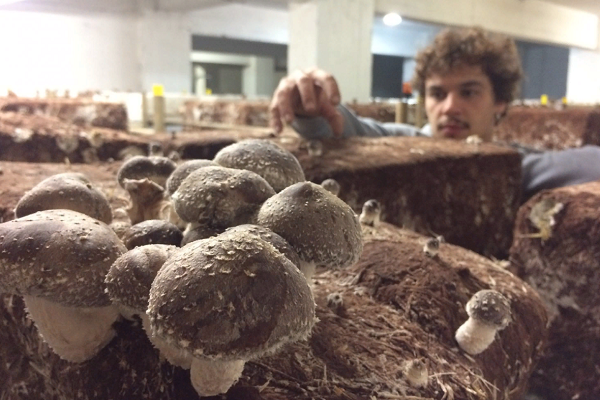
Also grown on an industrial scale, but on a much smaller scale than oyster mushrooms and champignons, are porcini mushrooms, truffles, shiitake, chanterelles, and honey mushrooms.
Champignons
| Name | Ripening period | Disease resistance | Demanding of light |
|---|---|---|---|
| Hauser A 15 | Early | High | Low |
| Sylvan 130 | Average | Average | Average |
| Somicel 512 | Late | Low | High |
| Somicel 608 | Average | High | Low |
| Somicel 609 | Early | Average | Average |
Usually mushrooms are grown indoors - garages, basements, greenhousesThree to four harvests are collected per year. The best varieties for growing for sale are:
- Hauser A 15;
- Sylvan 130;
- Somicel 512, 608, 609.
Pros:
- simple cultivation technology and minimum maintenance;
- Suitable for a wide variety of premises;
- are in high demand;
- can be sold in large quantities;
- bear fruit in waves;
- high yield.
Cons:
- It is difficult to find high-quality domestically produced substrate; you have to buy compost and casing soil from imported manufacturers, which increases the cost;
- high competition.
Porcini mushrooms
This mushroom is considered the most valuable in the entire mushroom kingdom. This is due to its excellent taste and nutritional value. This species enjoys constant demand among consumers.
Benefits of growing porcini mushrooms:
- can be grown both in open ground and in greenhouses;
- high profitability and return;
- no special training required;
- is in demand.
Cons:
- requires symbiosis with certain trees;
- it is necessary to create special conditions in the room that are as close to natural as possible;
- special forest soil is needed for growing.
Oyster mushrooms
| Name | Yield per 1 ton of substrate | Temperature requirements | Disease resistance |
|---|---|---|---|
| Rx | 250 kg | Average | High |
| NK-35 | 250 kg | High | Average |
| R-24 | 250 kg | Low | High |
| P4 | 180-200 kg | Average | Low |
| P20 | 180-200 kg | High | Average |
| P40 | 180-200 kg | Low | High |
Oysters oyster mushrooms — a tasty and productive mushroom that grows naturally on tree trunks and stumps. Cultivated since 1900, the mushroom was first cultivated in Germany and then spread throughout the world. Oyster mushrooms are especially abundant in China.
The best varieties to grow for sale:
- the highest yields (up to 250 kg from 1 ton of substrate) - Rx, NK-35, R-24;
- average yields (from 180 to 200 kg per 1 ton of substrate) — P4, P20, P40.
Pros:
- simple growing process;
- consistently high demand;
- any premises are suitable;
- up to 4 harvests are harvested per year;
- grows on straw.
Cons:
- It is necessary to change varieties every 3-4 years so that the substrate does not become contaminated with specific diseases;
- problems with transportation, since the structure is delicate.
Types of mushroom farms
The design of a mushroom farm depends on its purpose: it can be designed for growing produce for personal use or for sale. The latter option can be unlimited in scale, allowing for production ranging from a few dozen kilograms to several tons per month.
Mushroom farm in general
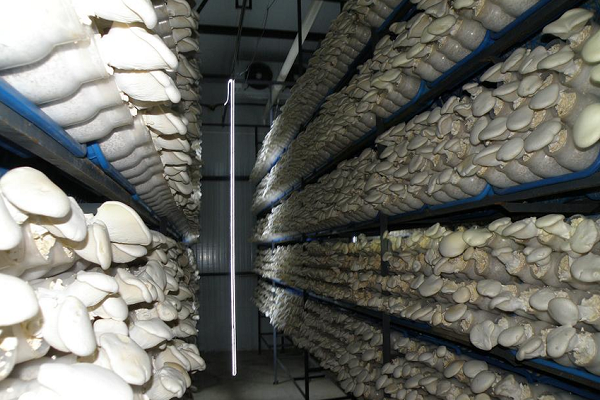
A home farm can be set up in almost any available space. The main thing is that it's warm, has ventilation, and has other conditions conducive to favorable mushroom growth. A simple home farm can be set up in a basement, greenhouse, or shed.
- ✓ Humidity levels should be at least 75% for most mushroom species.
- ✓ Temperature conditions: +16…+24°C depending on the growth phase.
- ✓ Availability of a ventilation system to control CO2 levels.
Regardless of the type of premises, a mushroom grower will need the following equipment:
- climate control system;
- shelving;
- lighting fixtures;
- refrigeration equipment;
- steam generator.
A more precise list is compiled depending on the selected type of mushroom, the method and scale of cultivation, and other nuances.
Mini mushroom farm for home growing
A mushroom farm is a fairly simple kit used to grow mushrooms at home.
What does a mushroom farm consist of:
- carton;
- mycelium (mycelium).
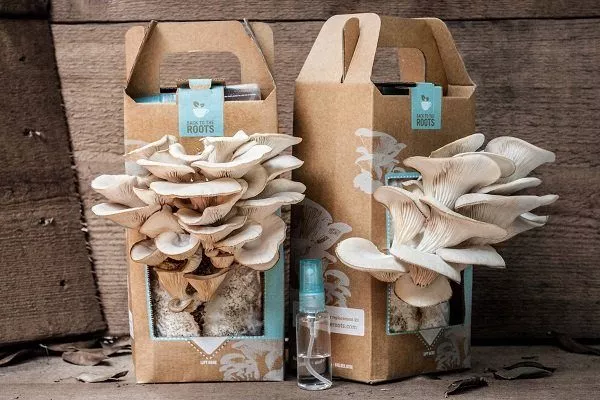
The boxes can vary in size, with larger ones available—20x13x6 cm or 8x10x4 cm. This is a very small volume, ideal for growing mushrooms for home use. While these mini-farms won't generate significant income for business, they can be a significant boost to the family budget.
Manufacturers and suppliers of mushroom farms assure that they can be located in any location convenient for the owner, and that they can be used to grow:
- champignons;
- oyster mushrooms;
- porcini mushrooms;
- butter mushrooms and other species.
One box costs 150-200 rubles. The exact number of mushrooms grown in one box is not specified. Experience shows that this yields approximately 1 kg of produce.
How to start a mushroom farm:
- Open the packaging. To do this, cut off the top along the cut line. All instructions for doing this are located directly on the box.
- Spray the mycelium with water regularly - 2-3 times a day.
Before ordering a large quantity of kits, buy 2-3 oyster mushrooms or button mushrooms to experiment. While this method of mushroom cultivation has its advantages, it also has several disadvantages.
Pros:
- You can grow mushrooms anywhere - at home, on the balcony, in the country, in the barn, in the basement;
- your own mushrooms are cheaper;
- it is possible to obtain environmentally friendly products;
- You can make money by growing mushrooms by planting pieces of mycelium in different containers;
- Different types of mushrooms are grown.
Cons:
- needs to be watered regularly (several times a day);
- small volumes of grown products;
- There is no guarantee that the mushrooms will grow.
There's no point in thinking about any kind of business when purchasing such kits. Firstly, the quantities are small. Secondly, even with proper cultivation techniques, mycelium doesn't always grow. Mushrooms grown for sale are grown in spacious rooms where compost containing the mycelium is placed.
Mushroom cultivation technology
Each mushroom species is grown using a specific technology that maximizes yields. Oyster mushrooms and button mushrooms are the easiest to grow—it's no wonder they are the leaders in commercial mushroom farming.
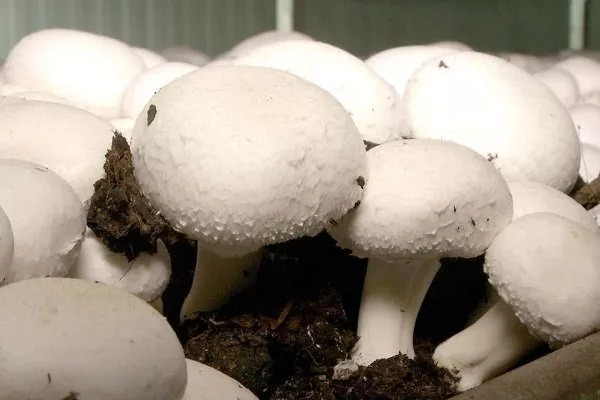
Champignons
The mushroom farm can be located in any warm room—then they can be grown year-round. Greenhouses are the most convenient way to grow these mushrooms. The mycelium is placed in bags or containers with substrate. Another option is pressed briquettes pre-seeded with mycelium.
To grow mushrooms, you need a basement, bags or shelves, substrate, and mycelium. The room should be ventilated but draft-free, not damp, and with minimal light. With proper management, you can harvest up to 10 kg of mushrooms per square meter.
How to grow champignons:
- Disinfect the room before planting mushrooms. Whitewash the walls to prevent mold and mildew growth. Spray the basement with a copper sulfate solution.
- Prepare the substrate. Manure (cow or horse) should make up 80% of the mixture. Bird droppings reduce yields by a quarter and are therefore not used. Add fresh straw, black soil, superphosphate, and crushed chalk to the manure. Fermentation of the substrate takes 3-4 weeks.
- When the mass reaches the active decomposition phase, heat it to 90°C, then cool it quickly to 30°C. Once the substrate has sufficiently rotted, plant the mycelium. Obtain it from specialized retailers. High-quality mycelium is grown in strict sterile conditions.
Plant the mushrooms in boxes or bags. Use 400-500 g of mycelium per square meter. Place it in the soil, making shallow furrows (up to 5 cm). Sprinkle the top with substrate. - Immediately water the planted mycelium. Maintain humidity levels of 75-90% while it grows.
- After planting the mycelium, maintain the temperature at +22…..+24°C, and during the fruiting period, +14…+17°C.
- When the mycelium threads appear on the surface, sprinkle them with a mixture of equal parts garden soil and peat moss. Apply a 3-4 cm thick layer. Then water.
- After the incubation period is complete, the active phase of mushroom formation begins. Reduce the temperature and wait for the harvest.
The first mushrooms can be harvested 2-3 months after planting—the exact time depends on the variety. Avoid overripening the mushrooms, as this spoils their flavor and adversely affects their growing environment. You can tell when the mushrooms are ready by the color of their caps—as soon as they turn bright white, they're ready to harvest.
Active mushroom development lasts 1-2 weeks per season. The harvest consists of several waves—5 to 7. There are meadow varieties that produce even more. Yield can be increased by 200-300% with the help of specialized chemicals (Dutch technology), but this is not recommended.
Despite proper cultivation technology and the use of only high-quality raw materials, champignons can become diseased and be attacked by pests.
What diseases and insects are there?
- Rot. It occurs due to excess moisture in the mycelium. The rot quickly spreads throughout the plantings. Affected mushrooms are removed, and the substrate is treated with a 0.3% formalin solution.
- Mold. This occurs due to poor ventilation. If slippery spots appear on the caps or stems of mushrooms, they should be immediately pulled out by the roots. Sprinkle the areas where the diseased mushrooms grew with a mixture of superphosphate and table salt (in equal doses).
- Mite. This small insect can eat mushroom stems. Treating the soil mixture with dry tobacco—100 g per 50 kg of substrate—helps prevent mites.
- Fungus flies. They eat the fruit stalks and damage the mycelium. If flies have appeared, the affected areas are removed, and the remaining areas are treated with 0.5-1% chlorophos.
Oyster mushrooms
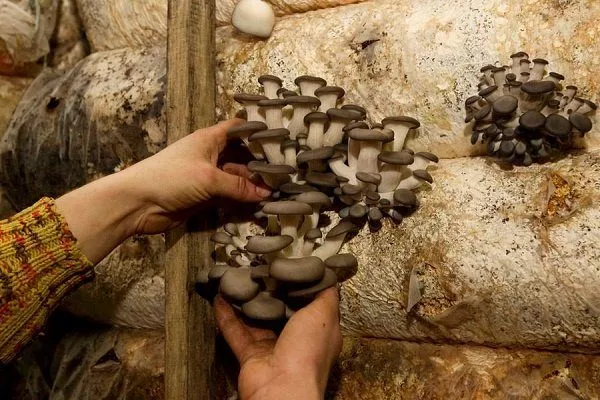
These mushrooms are grown in bags filled with substrate or on tree stumps. Before planting, the growing areas are disinfected with a solution of lime and copper sulfate to prevent mold growth.
The ventilation holes are covered with fine mesh to prevent fungus gnats from entering. The optimal temperature is 16–18°C, and the humidity is 80–95%. The best place for oyster mushrooms is a cellar.
Growing order:
- Prepare the substrate. In addition to straw, you can use corn stalks and leaves, buckwheat or sunflower seed husks, or sawdust. Clean and dry the substrate. If it has rotted, boil it for 40 minutes. Then steam it for a few more hours.
- Drain the water and squeeze the straw thoroughly to remove any moisture.
- Crumble the mycelium in a sealed bag and pour it into 5-8 kg bags, alternating with the substrate. Once the bags are full, tie them tightly and hang them from the ceiling. Or arrange them on shelves.
- Boil the substrate for 40 minutes to sterilize.
- Steam the substrate for several hours to remove excess moisture.
- Cool the substrate to a temperature of +25…+30°C before adding the mycelium.
The second planting option is to first add the substrate, then cut holes (at 10 cm intervals) and plant the mycelium in them. Features:
- keep the room dark, do not ventilate - oyster mushrooms need carbon dioxide emitted by the substrate (turn on a fan to create air flow);
- incubation period: 15-25 days;
- when the first mushrooms appear, the bags are moved to another room - the temperature there should be +10…+18°C, and the humidity - 90-95%;
- provide lighting for 8 hours;
- There is no need to water the substrate, otherwise it will rot;
- After the first harvest, the substrate is not thrown away;
- One bag can yield 5 harvests, the fruiting period is 4 months.
During mycelium planting, there should be no drafts in the room. Wear gloves and a gauze bandage on your face.
Oyster mushrooms, like button mushrooms, can be affected by mold, pathogens, mites, woodlice, mushroom flies, and mosquitoes. Disinfection and ventilation help combat these diseases, and sticky traps are also used to control insects.
Porcini mushrooms
Large-scale industrial production of boletus mushrooms is currently being established in Russia. This mushroom boasts excellent flavor, making it a serious competitor.
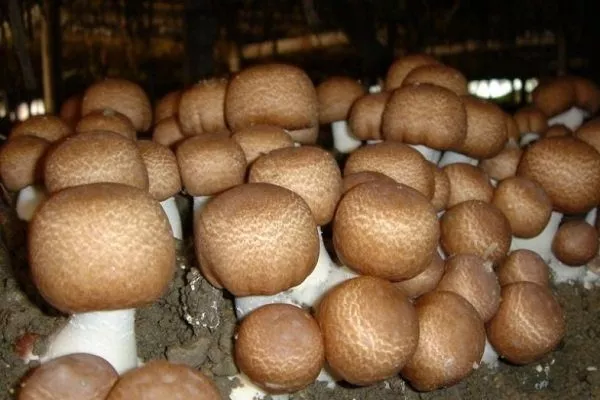
To grow porcini mushrooms on a large scale, it's best to have a room. This will allow for a year-round harvest. Prior to planting, purchase high-quality mycelium. Good planting material should not have an ammonia smell.
How to grow boletus mushrooms indoors:
- air out the bags with mycelium and crush them, but do not tear the packaging;
- prepare the room by treating it with a disinfectant;
- Boil the substrate for an hour and cool;
- mix the substrate with mycelium - add 2.5-5% of boletus mycelium to the mixture;
- place the mixture in bags and compact;
- Make cuts on one side of the bags so that the mushrooms can grow through them;
- place bags on the shelves (vertically);
- Water the substrate regularly and ventilate the room.
Wear gloves when handling mushrooms. Boletus mushrooms rarely get sick, but if watering and temperature conditions are not met, they can become infected with white rot (mycogonosis). Mushrooms showing signs of the disease grow underdeveloped and deformed. To combat this, disinfect them with 40% formalin.
Is it possible to build a mushroom farm business?
The mushroom market is quite competitive—mushroom cultivation is already a standard industry, so you can't expect large profits. Most importantly, before starting a business, you need to ensure there are markets.
What do you need to open a mushroom farm?
When starting a business, be sure to analyze the local market for supply and demand. Learn more about future competitors and business risks, and master cultivation technology.
What you need to open a business:
- Premises. Its area must correspond to the scale of production, and its features must be tailored to the growing conditions of specific mushrooms. A 100 square meter area yields 2-4 tons.
- Permission. It's recommended to register as a sole proprietor. To do this, you must submit an application to open a business and pay the state fee. Please indicate OKVED code 0 1.13.6 "Cultivation of truffles and mushrooms."
To obtain permission, you must submit documents on radiological control, a phytosanitary certificate, certificates of compliance with GOST standards, and relevant instructions. - Equipment. To grow mushrooms for sale, you'll need an air conditioner, a thermo-hygrometer, lamps, a scale, a steam generator, a water heater, and a refrigerator. You'll also need boxes, shelves, and trays, depending on the growing method you choose.
- Staff. A small business will require 3-4 people. They will plant mushrooms, care for the harvest, harvest the produce, maintain the premises, and maintain optimal conditions.
Where to sell finished products?
A prerequisite for a successful mushroom business is reliable sales markets. Mushrooms grow continuously and cannot be stored for long periods, so it's important to have multiple sales outlets to be on the safe side. You can also set up your own sales outlet at a market, equipped with a large refrigerator.
Where can I sell my finished products:
- to grocery stores;
- to supermarkets;
- to processing plants;
- resellers;
- in cafes and restaurants.
Experts say starting a mushroom business requires at least 700,000 rubles. This money will primarily go toward purchasing equipment for growing mushrooms and maintaining a microclimate.
Monthly operating expenses are 70,000 rubles. This money goes toward rent, water, electricity, taxes, and employee salaries. The first mushrooms will be harvested only two months after the business launches, so overall, the startup will require approximately 1 million rubles.
1 kg of mushrooms (champignons) retails for about 250 rubles. Wholesale price is 150 rubles. A 100 square meter plot can yield 2,000 kg per month. One mycelium yields six harvests. Total annual income: 1,800,000 rubles. Monthly profit: 150,000 rubles. Profitability: 25-40%. The business pays for itself in a year or more.
The mushroom business is not without risks:
- Mushrooms may not sprout or die. This misfortune often happens to beginning entrepreneurs who, without sufficient experience, immediately set up large plantations.
- You may be left without a harvest due to diseases or pests. Strict adherence to technology, regular ventilation and cleaning help to minimize risks.
- It is not always possible to find buyers. It is problematic to sell the entire harvest.
Mushroom growing is an interesting and promising activity that can become a hobby, a business, or simply a household supplement. It all depends on the scale and interest of the person choosing to grow mushrooms for family or for sale. This business doesn't currently generate significant profits, but with proper organization, it can easily become a stable source of income.