
This mushroom belongs to the edible family, but only after pre-boiling. It can be pickled and marinated, and can also be used in soups or sauces. This article discusses the main types of mushrooms: purple, spruce, felt, spotted, and pink. They grow in coniferous and mixed forests and bear fruit from June to October.
Other names for mokrukha
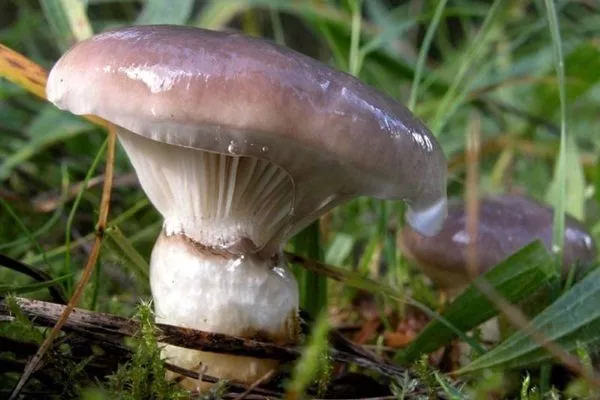
The mushroom is called "mokruha" (pronounced "mokruha") because the cap of any variety takes on a wet, sticky consistency, especially after rain. This mushroom also has other names:
- slimy mucus;
- yellow-legged wetland;
- shiny wet grass;
- pine moss;
- purple mokruha.
Features of mokrukha
Any variety of mokrukha has a pleasant taste and aroma when prepared properly. They share some similarities, but the mushrooms differ primarily in color and shape. The most common variety of mokrukha is the spruce mokrukha:
- hat This species of mushroom reaches 14 centimeters in diameter and is gray-brown or gray in color. The cap may be spotted or have a purple or lilac tint. When newly ripe, the cap is hemispherical, but with age, it becomes flattened and depressed. Almost all mushrooms have a small tubercle in the center of the cap. The skin is soft, sticky, and easily peeled off.
- Leg. It reaches a height of 14 centimeters, lemon-colored underneath and gray on top. If you press lightly, the stem darkens slightly; most often, the entire stem is covered in scales. The stem is attached to the cap by a kind of mucus blanket; the stem, like the cap, is sticky.
- Records. In young mushrooms, the gills are white or gray; as the mushroom ages, they darken, eventually turning brown. The gills are thick, branched, and covered with a slimy covering.
- Pulp The mushrooms have a pink or white tint; in older mushrooms, the flesh is gray, and at the very bottom, it is yellow. The aroma is weak, and the taste is slightly sour.
The first description of the spruce moss was made by the renowned botanist Jacob Schaeffer. He classified this mushroom as a champignon and named it "Agaricus glutinosus," which translates as "molar."
When and where does it grow?
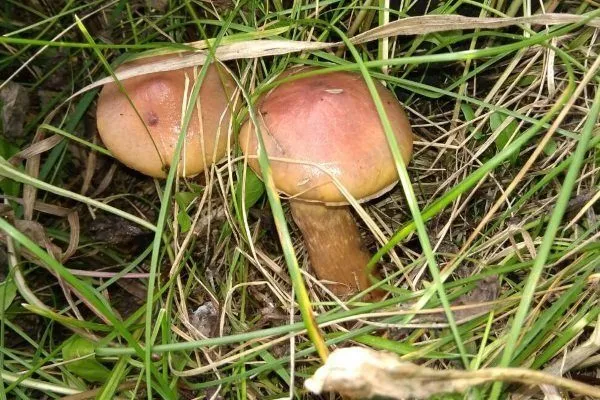
This mushroom variety can be found from mid-August to October in the northern region of Eurasia. It can be found near pine and fir trees in forests:
- mixed;
- deciduous;
- coniferous.
Signs of an optimal collection site
- ✓ Presence of coniferous litter
- ✓ Areas with wet moss
- ✓ Northern slopes of forested areas
- ✓ Clearings with moderate lighting
It can also be found where moss grows and thickets are present. If you're going for more than one type of mushroom, it's best to set aside a separate container for the wet mushroom to avoid contaminating other mushrooms with the slime.
Varieties
There are several species of the mokruha mushroom, all belonging to the same genus, but each differs in appearance. The flesh of the cooked mushroom has a pleasant flavor and aroma, so mushroom pickers should be familiar with the appearance of each variety when going mushroom hunting.
Pink woodlouse
This type of mushroom is considered edible, but only after being boiled. Characteristics of the pink mushroom:
- hat The mushroom grows small, just 6 centimeters in diameter, with a pinkish-gray hue and wavy edges. The color quickly fades in the center, and the cap becomes pale pink. Young mushrooms can be recognized by their cap shape: in young mushrooms, it is convex and slimy, while in older mushrooms, it is spread out.
- Leg It reaches no more than five centimeters in height, is smooth, and cylindrical in shape. The stem has a mucous ring that gradually disappears with age.
- Records Thick, slimy, and sparse. In young mushrooms, they are white, while in older ones, they are purple or gray. The underside of the stem is a soft pink, hence the name.
| View | Cap diameter (cm) | Cap color | Leg height (cm) | Peculiarities |
|---|---|---|---|---|
| Spruce | 12-14 | Gray-brown with a purple tint | 10-14 | Scaly stem, plates darken with age |
| Pink | 4-6 | Pale pink | 4-5 | Disappearing mucus ring on the stalk |
| Purple | 8-14 | Reddish brown | 8-10 | The flesh turns red when cut |
| Spotted | 5-7 | Gray with dark spots | 6-7 | Rare plates, the flesh turns yellow in the air |
| Felt | 8-10 | Ochre with a fuzzy surface | 7-9 | Orange plates, the stem is thickened in the middle |
Consumption. Before cooking mushrooms, they must be cleaned, boiled, and then fried, salted, or dried.
When and where does it grow? You can encounter the pink mullein in forest clearings from July to September. The mushrooms grow in pine forests with high humidity.
Purple wetness
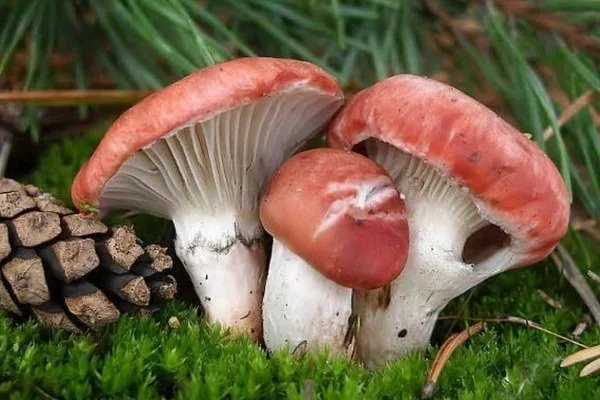
This lamellar species of scaly-sided mushroom is quite rare but edible. It's also known as the slimy scaly-sided mushroom or the shiny scaly-sided mushroom. Its color isn't necessarily purple, as its name suggests. It's so named because it always takes on a purple hue when exposed to intense heat:
- Hat. It grows up to 14 centimeters in diameter. Its color is shiny, red with a brown tint, brick red, or purple. When young, the cap is conical with a prominent tubercle, but as it ages, it becomes convex and spreading. After rain, it becomes covered in a thick slime and has a brownish blanket. The edges curl inward.
- Leg. It reaches 10 centimeters in height and has a curved, cylindrical shape. The stem is the same color as the cap and is slightly sticky.
- Records The gills are arc-shaped and easily detached from the cap. The gills are purple or lilac in color, darkening with age, and in very old mushrooms, they become black.
- Pulp. The underside is fibrous and fleshy. When broken, the flesh reveals a yellow color, and when exposed to air, it turns red. It has no strong flavor or odor. This mushroom is a favorite among various insects, so before placing it in your basket, carefully inspect it from top to bottom.
Similar mushrooms. Edible mushrooms include the felt, spruce, Swiss, pink, and spotted varieties. They are distinguished by the following characteristics: the felt mushroom has a white pubescence on its cap, while the spruce mushroom is distinguished by the fact that it grows exclusively near or under fir trees. The Swiss mushroom has an ochre cap.nIt has a felt-like pubescence. The pink mokruha has a pink cap and light-colored gills.
When and where does it grow? The purple mullein ripens from August to September in Eurasia. In Russia, this mushroom can be found throughout European Russia, Siberia, and the Caucasus. The purple mullein grows in coniferous, mixed, and coniferous forests near birch and pine trees.
Spruce wetness
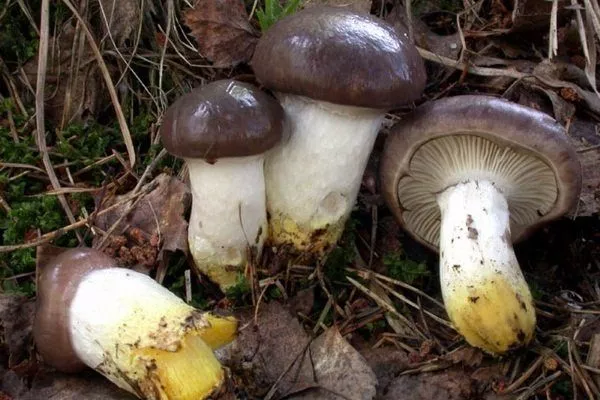
The spruce mushroom is an edible mushroom. Its main characteristics are:
- Appearance: The cap has a gray-brown tint. A purple tint may be visible. Diameter: 12 cm.
- Similar mushrooms. Relatives of the spruce wood sorrel are also edible: the purple wood sorrel and the spotted wood sorrel, mushrooms with dark-colored caps similar to butter mushrooms. The difference is that butter mushrooms lack gills, and where the wood sorrel is broken, the flesh turns red.
- Benefits when growing. Spruce rhizomes can be harvested or grown specifically for pharmaceutical purposes. In folk medicine, a tincture made from spruce rhizomes is used as an antimicrobial agent.
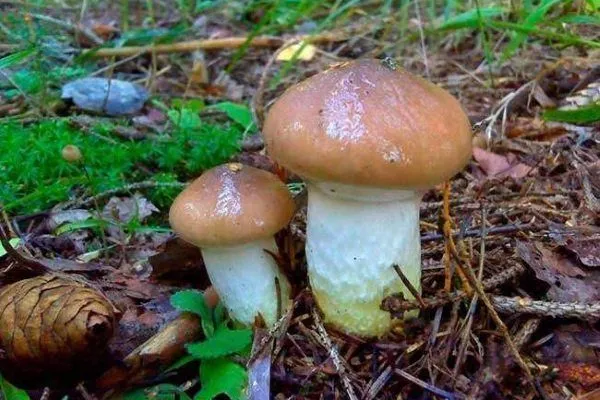
Spotted wetland
It is also called mucous, they grow near larches and spruces:
- Hat. The cap has small dark brown spots. The flesh turns red where broken. The gills are white and sparse, darkening with age.
- Leg The stem is a dirty dark color, curved, and dense, with yellow spots. The stem reaches seven centimeters in length. It is connected to the cap by a slimy film, which over time develops into a ring enveloping the top of the stem.
- Records. The mushroom has sparse, branching gills that extend along the top of the stem. When young, the gills are white, but with age, they turn brown.
- Pulp. The color is white or yellow, turning red when exposed to air. The spore powder is dark green.
When and where does it grow? This mushroom can be found in Eurasia and North America. It grows in small clusters among moss and thickets. This species can be found in both coniferous and deciduous forests.
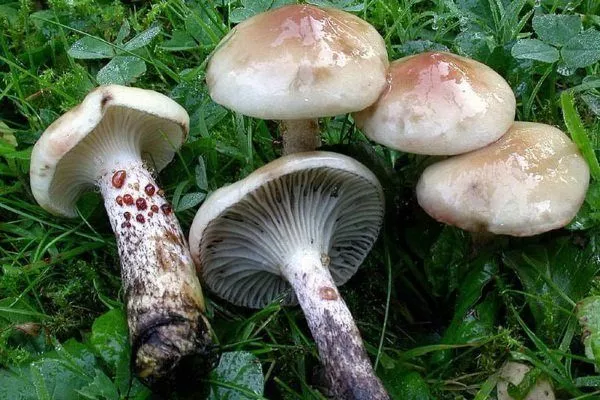
Before eating the mushroom, it should be boiled for a long time, and then it can be fried, marinated or dried.
Felt mokruha
It is also called the shaggy mokrukha, due to the shaggy hairs that cover the mushroom cap.
- hat Smooth, reaching 10 centimeters in diameter. There are fine grooves along the edge. Orange-colored gills hang down and cover the stem.
- Records rare and wide, sliding down the stem.
- Mushroom pulp It can be of different shades of ochre, is quite dense, and acquires a brown tint as it ages.
- Leg Smooth, the same color as the cap, the stem is slightly thicker in the middle. Brown spores with a dark sheen.
Where and when does the mushroom grow? The felt-like moth can be found in nature reserves near fir or pine trees. They most often grow in large groups in the autumn.
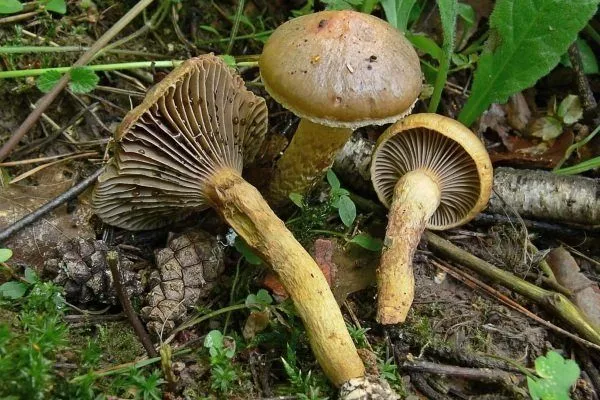
Composition and beneficial properties
Any mushroom is nutritious yet heavy. The mushroom known as mokrukha contains numerous beneficial components. It contains 19 kilocalories per 100 grams:
- 0.9 grams of protein;
- 0.4 grams of fat;
- 3.2 grams of carbohydrates.
The mushroom also contains the following vitamins:
- RR;
- E;
- WITH;
- B1;
- B2.
Protein is digested very well by the body, even better than meat, making it ideal for vegetarians. These mushrooms can be eaten even while on a diet.
Contraindications
It is important to understand that before consuming the Mokrukha mushroom, it is necessary to study the contraindications:
- gastrointestinal diseases;
- gout;
- children under 10 years of age;
- allergic reactions.
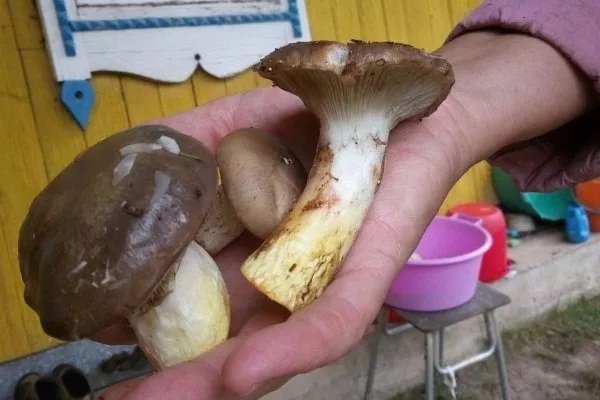
How to use mushrooms in nutrition
The mokrukha mushroom isn't particularly prized, but it's still often prepared for family lunches or dinners. It can be boiled, fried, dried, or pickled. It's best to cut the mushrooms into pieces and boil them this way; this will help the stomach digest the food faster. Dried mushrooms offer more nutritional benefits, but it's important to understand that mushrooms are difficult to digest and shouldn't be consumed in large quantities.
Is it possible to grow a mokruha yourself?
You can grow your own mokrukha mushrooms using mycelium. To do this, follow these steps:
- The mycelium of the mokrukha is mixed with 500 grams of sand.
- Next, you should loosen the soil just before planting.
- A hole about 10 centimeters deep is made in the soil.
- The mycelium is sprinkled evenly over the entire soil (one package is enough for one square meter of soil).
- The top is covered with forest soil, which was previously mixed with humus in a 1:1 ratio.
- Watered with water (10 liters per square meter).
- Cover with loose soil.
Mycelium care schedule
- Daily watering during dry periods (10 l/m²)
- Adding humus after each harvest (15 kg/m²)
- Mulching with pine needles before wintering
- Soil acidity control (optimal pH 5.5-6.5)
You can plant mushrooms at any time of year under coniferous trees. The mycelium grows as long as the tree. In summer, the area should be watered several times a day. The first harvest can be collected 2.5 months after planting, and generally, you can harvest mushrooms four times a year. When there are no mushrooms in the area, cover the area with humus at a rate of 15 kilograms per square meter.
There are several varieties of the mokrukha mushroom, each with a distinct appearance and location. All varieties are edible, but only after boiling. The mushroom has a good taste; in some countries, it's even considered a delicacy. However, before you begin eating this dish, you should familiarize yourself with the contraindications to avoid any health problems.