
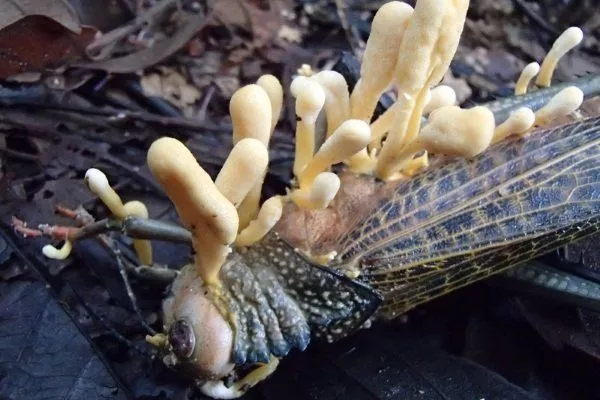
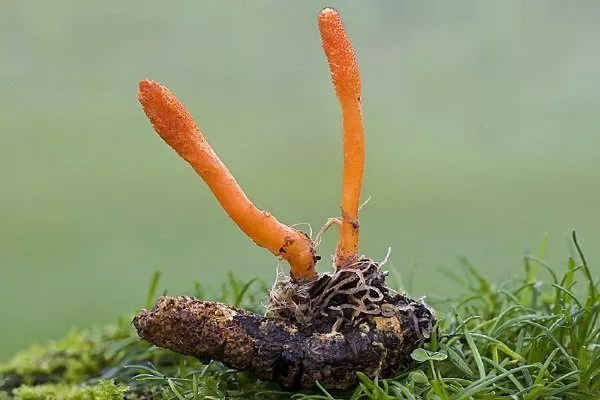
Cordyceps fungus, a member of the ergot family, parasitizes insects. When spores of this fungus land on an ant, butterfly, or caterpillar, they cause growth and development, resulting in the insect's mummification. Cordyceps has health benefits and can improve the condition of patients, even those with severe illnesses.
General characteristics
Cordyceps is widespread in Eastern countries. This is due to the large number of insect species that provide the fungus with favorable conditions for development, as well as the natural conditions that favor their growth. Most fungi develop in caterpillars.
This fungus has an unusual development cycle. Its spores lie dormant on the ground. When an insect capable of harboring Cordyceps appears nearby, the spores attach to the insect's body via papillae. The fungus typically develops within the caterpillar during its overwintering period.
The parasitic fungus's mycelium grows inside the insect's body and gradually completely engulfs it, literally sucking out all its vitality. Cordyceps secretes cordycepin, a natural antibiotic, into the insect's body. This allows the parasite to build up its own defenses against pathogenic microorganisms.
Under such conditions, the host insect dies, and its body, like a frame, becomes a reliable protection for the fungus from bacteria and various damages.
This video shows how a parasitic fungus grows inside an insect:
Cordyceps has an unusual appearance: as it parasitizes, the caterpillar takes on a brownish tint, while the fungus itself remains a rich brown. The fungus grows upward. The parasite reaches a height of no more than 11-13 cm.
Cordyceps has a pleasant aroma and a slightly sweet taste.
This parasitic fungus has a valuable composition. It contains the following elements:
- vitamins B, C, E, K, PP;
- antioxidants;
- enzymes;
- amino acids;
- coenzymes;
- iron;
- magnesium;
- zinc;
- potassium;
- calcium.
Comparison of the biochemical composition of cordyceps and other medicinal mushrooms (per 100 g dry matter)
| Component | Cordyceps | Reishi | Shiitake | Chaga |
|---|---|---|---|---|
| Cordycepin, mg | 120-180 | 0 | 0 | 0 |
| Polysaccharides, % | 7-12 | 5-8 | 4-6 | 6-9 |
| Adenosine, mg | 80-110 | 20-30 | 15-25 | 10-15 |
| Zinc, mg | 8.5 | 5.2 | 3.8 | 4.1 |
Cordycepin, a component of mushrooms, deserves special attention. This substance is a powerful antitumor agent that also inhibits the activity of many viruses, including hepatitis and HIV.
Cordycepic acid, found in parasitic mushrooms, helps lower blood cholesterol levels, strengthens ligaments and bones, and reduces intracranial pressure.
Another valuable substance in Cordyceps is adenosine, a high-energy substance. It improves skin condition, reduces the appearance of wrinkles, prevents the risk of blood clots, and helps dissolve existing ones.
Scientists still have not determined which area cordyceps belongs to: flora or fauna.
Places of growth
Cordyceps was first discovered in the high mountains of Tibet. It currently grows in China, where it has been cultivated. In China, Cordyceps is widespread in the provinces of Sichuan, Qinghai, and Jilin.
These parasitic fungi thrive in fertile soils. Cordyceps prefers mountainous areas at altitudes of 6,500 meters. Cordyceps tolerates low temperatures, is not affected by oxygen deficiency, and adapts well to any conditions.
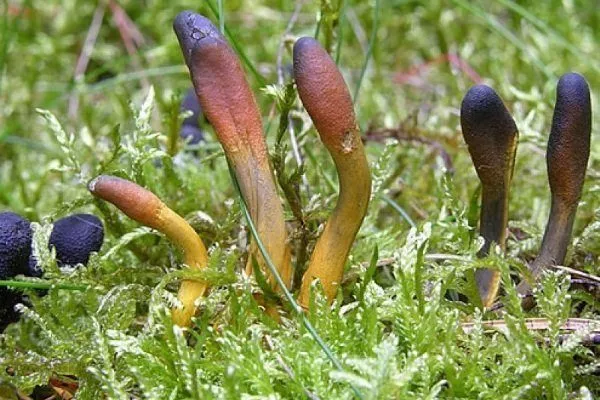
This mushroom is sometimes found in foothill areas, but the Chinese claim that only those species that grow high above ground level have the full spectrum of medicinal properties.
Beneficial properties of cordyceps
The Chinese have studied the mushroom's medicinal properties to the greatest extent. They have proven that cordyceps possesses the following valuable properties:
- stimulates blood circulation and has a beneficial effect on blood composition;
- restores strength and energy after intense physical activity;
- has an anti-inflammatory effect;
- rejuvenates the body's cells;
- removes toxins from the body;
- has a bactericidal effect;
- restores liver cells;
- protects the body from radiation;
- fights infertility;
- helps suppress cancer cells;
- improves muscle tone;
- normalizes the general well-being of those who suffer from diabetes;
- normalizes liver and kidney functions;
- stimulates the functioning of the spleen;
- stimulates brain function;
- restores the functionality of the nervous system;
- accelerates metabolic processes in the body;
- dissolves kidney stones;
- improves the functioning of the endocrine system;
- reduces cholesterol levels in the blood;
- has a positive effect on the condition of nails, skin, hair;
- strengthens potency;
- acts as a natural antibiotic, suppressing many pathogenic microorganisms, including streptococcus, Staphylococcus aureus, pneumococcus;
- rejuvenates the body;
- promotes the resorption of blood clots.
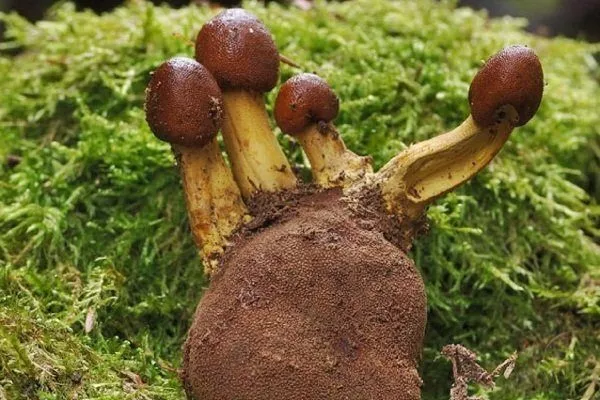
The Chinese believe that the Cordyceps mushroom can preserve the primordial Qi energy that a person receives at birth from their parents. While this initial amount of energy cannot be increased, thanks to the mushroom's composition, it can be maintained throughout life.
Eastern healers also believe that cordyceps is effective in treating diseases that, from a traditional medical perspective, are difficult to treat or do not respond to treatment at all.
The valuable properties of this mushroom were discovered by chance: shepherds tending sheep in the Himalayas began to notice that their sheep loved a grass that resembled mushrooms. Those animals that ate this grass more often than others became more resilient, remained healthy, and lived longer. Rumors about the herb's properties began to circulate, and these rumors gradually reached Chinese healers. From then on, research into the properties of cordyceps began.
Cordyceps doesn't grow in Russia, but it can be purchased as a dietary supplement. Cordyceps mycelium capsules offer a full spectrum of therapeutic benefits.
Contraindications for use
Cordyceps in any form should not be used by people with certain autoimmune diseases (rheumatoid arthritis, systemic lupus erythematosus). These conditions may increase the body's immune response.
Also, cordyceps should not be given to children under 3 years of age, or used during pregnancy or breastfeeding.
Products containing this parasitic fungus can cause calcium to be flushed out of the body, so supplements containing this mineral should be used while taking them.
Elderly people need to strictly adhere to the dosage when taking medications based on this mushroom.
Methods for growing cordyceps mushrooms
Cordyceps is highly prized for its valuable properties. Researchers are interested in the possibility of artificially breeding this mushroom, as large-scale collection is difficult due to its growth in remote, high-altitude regions.
Cordyceps is grown artificially in the following ways:
- Cultivation of a parasitic fungus using two separate strains in a medium enriched with rattlesnake venom. When the two fungal species cross, a new hybrid strain with high biological activity is created.
- Germinating cordyceps mycelium. The necessary conditions are diffused light and a temperature of 20-22 degrees Celsius. The mycelium is maintained in these conditions for a month, after which it is placed in a completely darkened room. The air temperature should be 30 degrees Celsius.
- Industrial method. In this case, a parasitic fungus with medicinal properties is grown in a nutrient substrate and conditions are created that mimic its natural growth environment. This method does not require the use of caterpillars or other insects. The nutrient mixture contains millet, sorghum grains, and mineral supplements. As the fungus develops, up to 96% of the substrate is replaced by cordyceps mycelium.
Industrial cultivation technology
- Sterilization of the substrate (autoclaving at 121°C, 2 hours)
- Mycelium inoculation (consumption rate 5-7% of the substrate weight)
- Incubation (20-22°C, humidity 85%, 25-30 days)
- Stimulation of fruiting (temperature reduction to 18°C, lighting 500 lux)
Growing at home
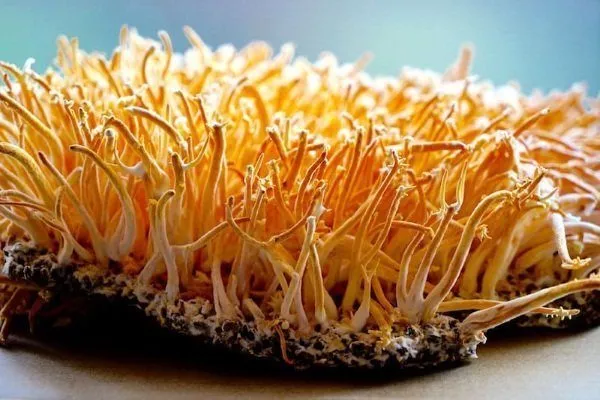
Cordyceps can also be grown indoors. A garden plot, located in the shade, is sufficient. If you don't have a private plot, you can grow this mushroom in a basement or shed, using boxes filled with soil.
Optimal parameters for cultivation
| Parameter | Meaning |
|---|---|
| Incubation temperature | 20-22°C |
| Substrate humidity | 65-70% |
| soil pH | 6.0-6.8 |
| Depth of larval placement | 1.5-2 cm |
To grow cordyceps, you'll need the mycelium of this parasitic fungus. First, mix equal parts regular garden soil with compost and pour the mixture into a container. Layer the mixture to a thickness of 15 cm.
Sow 100 g of cordyceps mycelium into the resulting nutrient medium. Place live larvae on top (those sold in fishing stores are suitable). There should be a fairly large number of them – about 5-6 kg. Cover the larvae with 1-2 cm of soil.
The first harvest can be expected after 3-4 months.
Use of cordyceps in medicine
Cordyceps is used for such diseases and disorders as:
- pneumonia;
- bronchial asthma;
- bronchitis;
- ARVI;
- flu;
- tuberculosis;
- cystitis;
- pyelonephritis;
- uterine bleeding;
- endometritis;
- colpitis;
- ischemic heart disease;
- angina pectoris;
- hepatitis;
- cirrhosis;
- leukemia;
- anemia;
- sexual dysfunction;
- prostatitis;
- infertility;
- herpes;
- benign neoplasms of the mammary glands;
- Malignant tumor lesions of internal organs.
Cordyceps acts both as a healing agent and as a preventative measure, preventing the development of virtually any disease in the future.
Cordyceps is available as a dietary supplement in powder or capsule form, as well as as a liquid for oral administration. The typical dosage for these supplements is 5-10 grams per day.
If natural cordyceps bodies are available, various medicinal products are prepared using them. The following composition is prepared for the treatment of various acute illnesses:
- Take one cordyceps and grind it into powder.
- The resulting mixture is divided into two equal parts.
- The first part of the mushroom powder is poured into 200 ml of water at room temperature, stirred, and left for 12 hours in a dark place.
- Drink the resulting infusion.
- The next day, repeat all manipulations with the second part of the mushroom powder.
The course of treatment using the powder solution lasts 10-12 days.
Cordyceps tincture also has medicinal properties. To prepare it, take one cordyceps, grind it into powder, and add 100 ml of vodka. Let the mixture steep in a dark place for 3-4 weeks. Shake the mixture periodically. Take the cordyceps tincture in the morning on an empty stomach, one teaspoon at a time.
Side effects from taking cordyceps-based products may include diarrhea, bloating, nausea, and a feeling of dry mouth.
Cordyceps mushrooms have numerous health benefits. They can be consumed as a dietary supplement or grown on a home farm for personal use or commercial sale.