
The term "porcini mushroom" encompasses many species of boletus, each differing in habitat and appearance. This mushroom is highly prized for its unrivaled flavor, which is why it has long held the unofficial title of "king of mushrooms."
Description of boletus
Regardless of the species, all porcini mushrooms look roughly the same. Boletus mushrooms (boletas) differ only in subtle nuances. Their appearance is influenced by climate zone, season, and environmental conditions.
Like most mushrooms, porcini mushrooms have a multitude of secondary, regional names—literally, in every region, this mushroom has its own name: bear's ear, wood grouse, yellow one, mullein, belevik, podkorovnik, etc.
hat
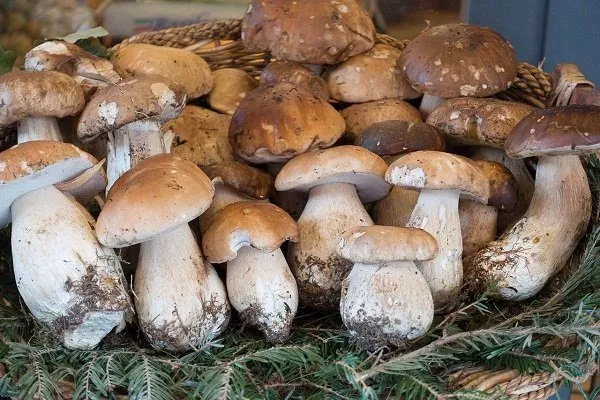
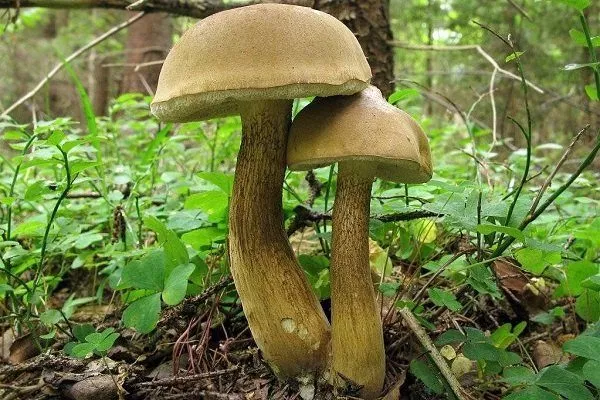
Young boletus mushrooms have spherical caps; as they mature, they become flat. Their color depends on growing conditions and ranges from white to chocolate brown. Some mushrooms have lemon-yellow and even reddish caps. The hymenophore is tubular, yellow or white.
The cap is cushion-shaped or rounded, reaching 30 cm in diameter. In regions with favorable growing conditions, specimens with caps up to 50 cm in diameter are found. The outer skin is dry, velvety or smooth, tightly adhering to the flesh. In hot weather, the cap cracks.
Leg
The cap of boletus mushrooms is massive and deeply embedded in the soil. The base of the stem can be larger than the cap itself. The color ranges from white to brown and may have a pattern. The stem has no skirt.
The average length of the stem of an adult mushroom is 20 cm, the diameter is 5-7 cm. A significant part of the mushroom stem is located in the soil.
Pulp
The flesh of the porcini mushroom is dense, juicy, and meaty. A distinctive feature is that it does not darken when cut or dried. It is for this characteristic that the mushroom is called "white."
Just looking at it and its tubular "cushion" whets the appetite. In young mushrooms, the tubular body is white, turning yellow as they mature. The spores are olive-brown and powdery.
Characteristics and composition
Distinctive a feature of porcini mushrooms — a rich mushroom flavor and aroma. It has pleasant nutty notes that intensify during cooking and drying.
They must be picked on time; overripe specimens have fibrous, yellowish flesh. When overripe, the tubular body becomes greenish, soft, and slippery.
Useful properties of porcini mushrooms:
- Riboflavin promotes the growth of nails and hair, improves the condition of the skin, thyroid gland, and overall health;
- stimulate the secretion of digestive juice;
- sulfur and polysaccharides help fight cancer;
- have anti-infective, wound-healing, anti-tumor, and tonic effects;
- Lecithin prevents cholesterol deposits on the walls of blood vessels - porcini mushrooms are recommended for atherosclerosis and anemia;
- amino acids support cell renewal processes - the mushroom is beneficial for the eyes, kidneys, liver and bone marrow;
- are powerful antioxidants and strengthen the immune system;
- promote the breakdown of fats.
Raw porcini mushrooms have low calorie content - 22 kcal per 100 g, fried ones - 26 kcal, but dried ones - 286 kcal.
Nutritional value per 100 g:
- proteins — 3.8 g;
- fats — 1.7 g;
- carbohydrates — 1.1 g;
- ash — 0.8 g;
- water — 89.5 g.
Porcini mushrooms contain especially a lot of cobalt, copper, potassium, selenium, chromium, manganese, phosphorus, vitamins PP, C, B2, B5.
The cuisines of many cultures around the world feature a wide variety of dishes made with porcini mushrooms. Boletus mushrooms are used in soups, main courses, salads, and appetizers. And most importantly, they can be preserved for future use—porcini mushrooms are delicious dried, pickled, and salted.
Time, place and duration of growth
The boletus adapts easily to a variety of climatic conditions and is found on virtually every continent. It's absent only from Australia and Antarctica. In Russia, the porcini mushroom grows throughout the country, from Kaliningrad to Kamchatka.
The fruiting period depends on the climatic conditions in the region:
- In the southern regions of the country, boletus mushrooms are collected from May to November;
- in the north - from June to September.
Boletus edulis grows in clusters. It's found in a variety of forests—deciduous and mixed—but prefers coniferous and mixed-coniferous forests. Experienced mushroom pickers know that if you find one boletus, there are probably several more lurking somewhere—check the area within a 1-2 meter radius.
The trees under which boletus mushrooms most often grow are:
- birches;
- oaks;
- fir trees;
- pine trees.
Porcini mushrooms are most often found in areas overgrown with moss and lichen. This can be a sunny clearing or a shady spot.
Porcini mushrooms grow best in moderately warm weather with light but regular rainfall and nighttime fog. The king of mushrooms doesn't like excessive moisture, so don't look for them in marshy soils or peat bogs.
The porcini mushroom grows very quickly. The average growth time for other mushrooms is 5 days. However, their average weight is 80 g. Boletus mushrooms, on the other hand, are much larger, weighing around 150 g, so they grow in about a week. The record for a porcini mushroom is 10 kg.
Varieties
Porcini mushrooms are divided into several species, which differ from each other in their external characteristics, as well as in the characteristics of their symbiosis with tree roots.
| Name | Type of symbiosis | Fruiting period | Preferred trees |
|---|---|---|---|
| Reticulate | Pines, oaks | June-September | Oaks, pines |
| Dark bronze | Beeches, hornbeams | July-October | Beeches, hornbeams |
| Birch | Birches | June-October | Birches |
| Pine | Pine trees | May-October | Pine trees |
| Spruce | Spruce, fir | June-October | Spruce, fir |
| Semi-white | Beeches, hornbeams | May-September | Beeches, hornbeams |
| Half-bronze boletus | Deciduous trees | July-October | Deciduous trees |
| Burroughs | Coniferous and deciduous trees | July-September | Coniferous and deciduous trees |
Reticulate
This brown-capped mushroom resembles a boletus mushroom. It's also known as the oak boletus. It's stocky, with a short, thick stem and a dense cap. The cap is initially spherical, then opens to become hemispherical.
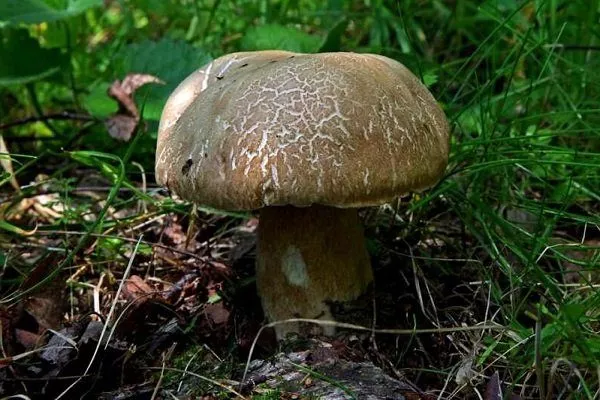
The reticulated boletus prefers alkaline soils. Fruiting occurs from June to September. It grows in Europe, Africa, and the Americas.
Description:
- leg - cylindrical, with a mesh, light brown pattern;
- leg height — 25 cm, in diameter — up to 7 cm;
- leg color - light brown;
- cap diameter — 30 cm;
- cap color -ocher or brownish.
The cap surface is covered with fine cracks that form a mesh. The skin may have lighter patches.
Dark bronze
Because of its dark, fleshy cap, this variety of porcini mushroom has earned several other names, including hornbeam and copper. This mushroom grows exclusively in deciduous forests located in warm climates.
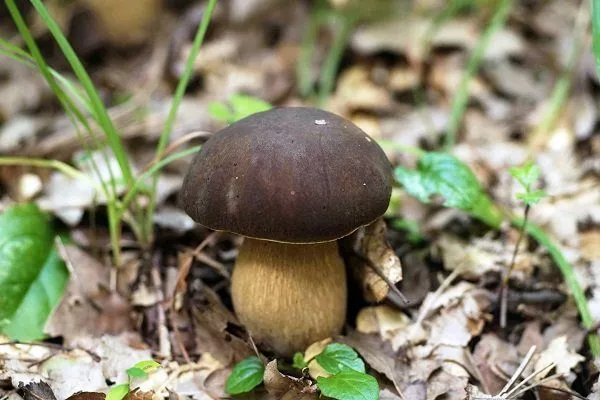
This is a rare mushroom prized by gourmets for its unique flavor. Other names include bronze and dark chestnut. It bears fruit from July to October. In the southernmost regions, it can appear as early as May.
Description:
- hat - dense, convex, smooth, may contain cracks;
- cap color - young mushrooms are black, later - dark brown;
- cap diameter — up to 15-17 cm;
- leg - cylindrical, with a thickening at the bottom, pinkish-brown in color;
- leg height - 9-12 cm, width - 2-4 cm;
- pulp - white, with a rich mushroom aroma;
- tubular layer - almost white in young mushrooms, then it turns yellow, and when pressed it becomes greenish.
The bronze bolete grows in mixed forests, where beech and hornbeam trees grow. It prefers moist, humus-rich soils. Its primary habitat is southern Russia. It grows singly or in groups of two or three mushrooms. It is very similar to the Polish bolete, which lacks a netted stem and has a blue flesh.
Birch
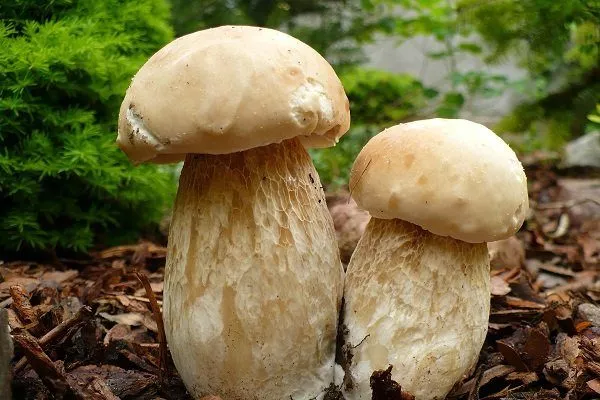
Also known as the "kolosovik," it tastes just as good as the common porcini mushroom. The "kolosovik" got its name because its fruiting time coincides with the earing time of rye fields. It resembles the gall mushroom, which is inedible. Fruiting occurs from June to October.
Description:
- hat - at first cushion-shaped, then flat, with smooth or slightly wrinkled skin;
- cap color - whitish-ocher or light yellow, shiny;
- cap diameter — 5-15 cm;
- leg - barrel-shaped, whitish-brown, with a white mesh at the top;
- leg height - 5-12 cm, width - 2-4 cm;
- pulp - dense, white, with a pleasant mushroom aroma and neutral taste;
- tubular layer - white, becomes light yellow over time.
It grows primarily at forest edges and along roadsides. It is most common in regions with harsh climates—Siberia, the Far East, and the Murmansk region. The mushroom grows singly or in large groups.
Pine
One of the most common species. Like pines, it prefers sandy soils. Growth begins in spring, and fruiting continues until October (the exact timing depends on the regional climate). This species gets its name from its symbiosis with pine trees—it's usually found near these trees.
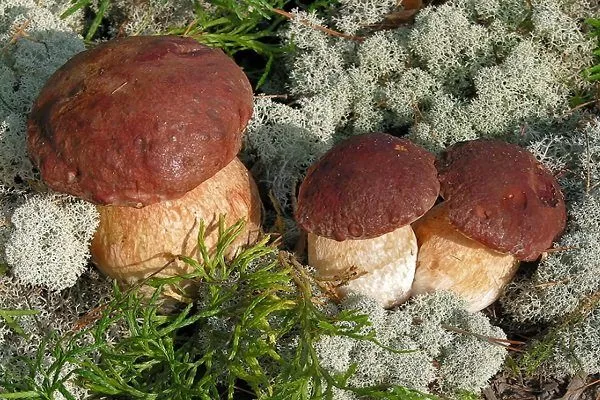
Description:
- hat — grows up to 20 cm in diameter;
- mushroom height — 15 cm;
- cap color - chocolate with a lilac tint;
- pulp color - powdery;
- on a leg - light brown mesh;
- color of the tubular body - yellow, thickness - 2 cm;
- bottom of the leg - thickened, reaching 5 cm in diameter at the base.
Spruce
Belongs to the Boletaceae family, genus Borovik. It is also known as the common white mushroom. It is the most common species in Russia. It is found in spruce and fir forests, but can also grow under deciduous trees.
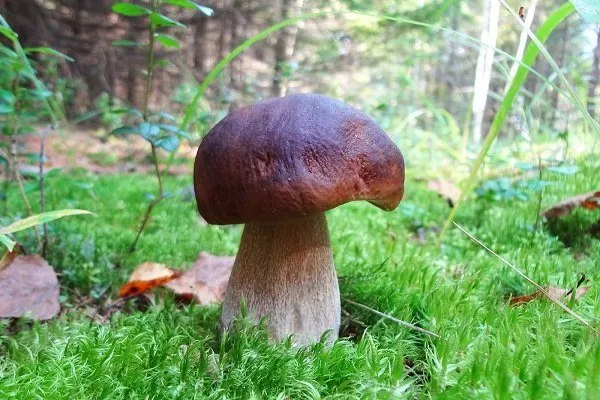
It prefers to grow under spruce trees, on sandy soils, and loams. It bears fruit from June to October. It thrives in warm, rainy weather. It is often found in open, sunny areas. It likes to grow among mosses and lichens.
Description:
- hat - convex, dense;
- cap color - brown;
- cap diameter — up to 30 cm;
- leg - cylindrical, light brown in color, with a thickening at the bottom;
- leg height — 8-12 cm, thickness up to 7 cm;
- pulp - does not separate well from the peel;
- tubular layer - lemon green color.
Semi-white
After a revision of the Boletaceae family, mycologists assigned the semi-white mushroom to the genus Boletaceae. This heat-loving mushroom grows primarily in coniferous forests, but also thrives under beech and hornbeam trees. It prefers calcareous soils.
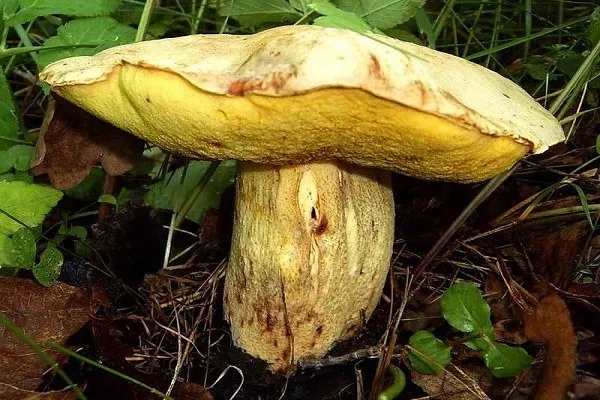
Fruiting occurs from late May to September. This mushroom is rare and bears fruit abundantly, though not every year. It can easily be confused with the porcini mushroom or the inedible deep-rooted bolete, which has a light gray cap and a slightly bitter taste.
Description:
- hat - convex, then becomes cushion-shaped or spread out, its skin is at first velvety, then smooth;
- cap color - clayey with an orange tint or light gray with a greenish tint;
- cap diameter — up to 5-20 cm;
- leg - cylindrical, fibrous, slightly rough, dark brown at the base;
- leg height — 6-10 cm, thickness 3-6 cm;
- pulp - thick, pale yellow in color, may turn slightly pink or blue at the cut, sweetish in color and with a slight carbolic odor;
- tubular layer -golden yellow or pale yellow, becoming greenish-yellow over time.
Half-bronze boletus
This is a valuable mushroom with an excellent taste and aroma. It is rare and prefers mixed and deciduous forests. It bears fruit from mid-summer to mid-autumn. It grows singly or in groups.
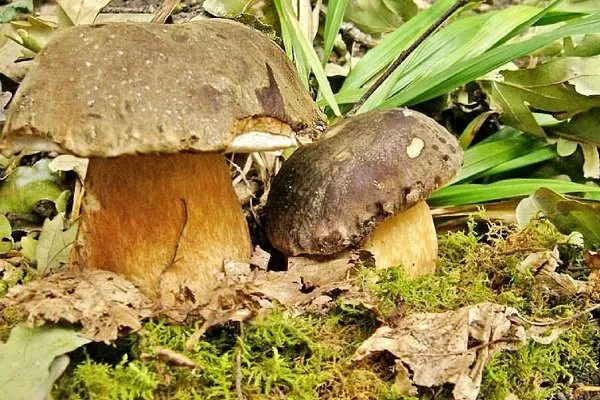
Description:
- hat - convex, in old mushrooms flat-convex or spread out, smooth or wrinkled;
- cap color - gray-brown;
- cap diameter — up to 20 cm;
- leg - massive, barrel-shaped, becomes cylindrical over time, whitish, reddish, brown in color, with a mesh;
- leg height — 12 cm, thickness 5 cm;
- pulp - fleshy, firm, juicy, with a mild flavor;
- tubular layer - olive green, light, easily separated from the cap.
Burroughs
This mushroom grows primarily in North American coniferous and deciduous forests. This bolete is not found in Europe. Burrows's boletus grows in small or large groups.
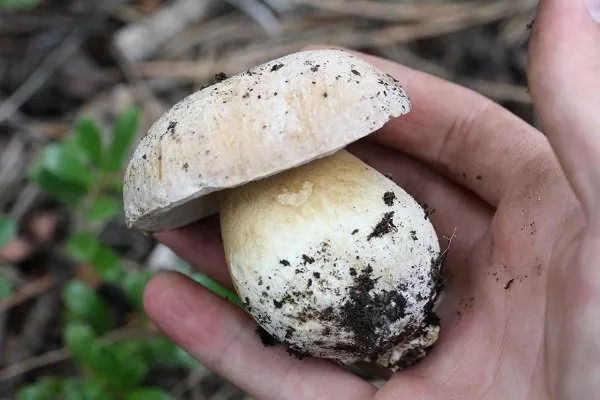
Description:
- hat - large, fleshy, dry, shape from flat to convex;
- cap color — from white to yellow-brown or gray;
- cap diameter — 7-25 cm;
- leg - club-shaped, light, covered with a mesh;
- leg height — 10-25 cm, thickness 2-4 cm;
- pulp - white, dense, with a pleasant sweet taste;
- tubular layer — first white, then yellowish-green, thickness — 2-3 cm.
Other
In addition to the above-described types of porcini mushroom, other varieties are found in nature. All are similar and represent a valuable food product.
Other types of boletes:
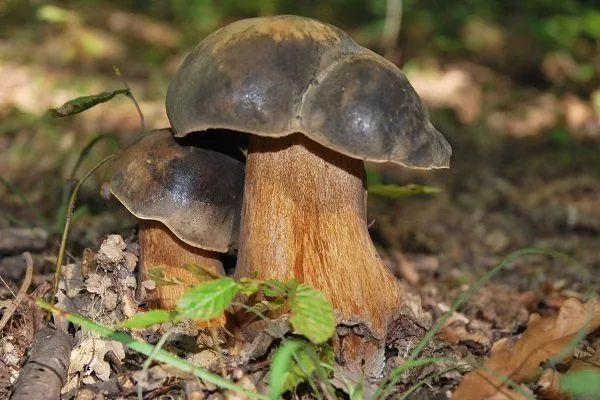
- Bronze. A rare mushroom that grows primarily in deciduous forests. It's a heat-loving species and is found in the southern regions of the United States, southern Europe, and Sweden. Its cap is brown, and its stem is bronze, strong, and thick.

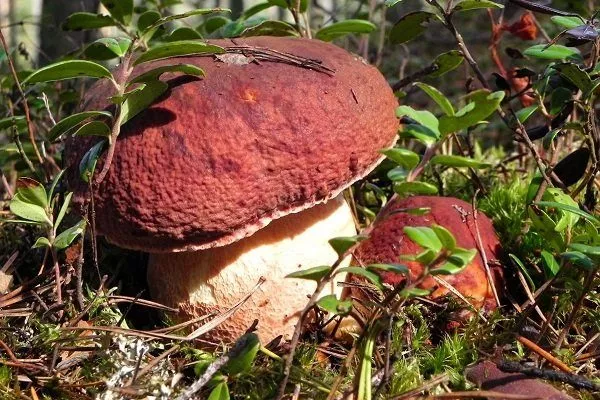
- Tsar's (royal). Commonly found. It prefers sandy soils rich in limestone. This bolete has a brightly colored cap and a yellowish stem. When broken, the flesh turns blue.
How not to confuse them with false mushrooms?
The boletus mushroom has inedible "look-alikes." They closely resemble their edible counterparts, but their flesh contains toxic and poisonous substances. Inexperienced mushroom pickers often confuse boletus mushrooms with false mushrooms, leading to poisoning.
- ✓ The presence of a mesh pattern on the stem, which is absent in false doubles.
- ✓ The pulp does not change color when cut, unlike its poisonous counterparts.
Inexperienced mushroom pickers, unaware of the nuances of mushroom appearance, often confuse the boletus with the false porcini mushroom. This is the bitter mushroom, also known as the bitterling. It is not poisonous, but it contains toxic substances that can cause poisoning.
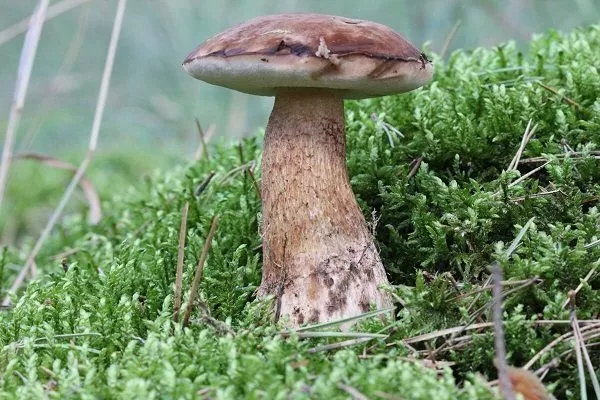
Differences by which you can identify the gall mushroom:
- the flesh of the bitterling turns pink when cut;
- bitter taste - one mushroom is enough to ruin a mushroom dish;
- the cap becomes sticky after rain;
- the leg is beige, widened at the bottom, with an openwork pattern;
- has an unpleasant smell - similar to the smell of rotten onions (young mushrooms do not smell);
- Bitter mushrooms are not eaten by animals, insects, or worms.
To quickly identify a mushroom—whether it's a boletus or a bitterling—mushroom pickers lick the flesh with the tip of their tongue. This method is legal, but risky. Be sure to spit and rinse your mouth with water after sampling a bitterling.
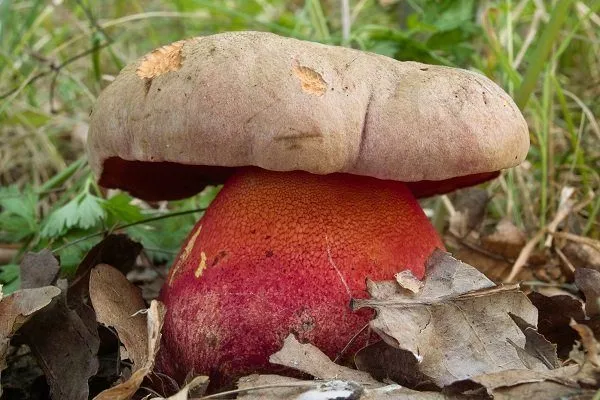
Another false lookalike that can be confused with the edible boletus is the Satan's mushroom. It is much more dangerous than the bitterling and can cause serious poisoning. Immediate hospitalization is required after consuming this mushroom.
How to recognize a satanic mushroom:
- It has a bright red stem that turns blue almost immediately when cut;
- Old mushrooms have an onion smell.
Growing porcini mushrooms at home
The wonderful taste of boletus mushrooms encourages many mushroom lovers to grow them in their gardens with varying degrees of success. The easiest way is grow porcini mushrooms in areas adjacent to the forest, since symbiosis with trees is essential.
- ✓ The optimal soil temperature for mycelium should be within 15-20°C.
- ✓ The soil pH level should be slightly acidic, in the range of 5.5-6.5.
Trees suitable for symbiosis:
- oak;
- pine;
- birch;
- aspen;
- spruce.
The minimum age of the trees is 10 years. There are two ways to grow porcini mushrooms: from mycelium and from caps.
How to grow mushrooms from mycelium:
- Buy mycelium and prepare the area between May and September.
- Remove 15-20 cm of the top layer of soil near the tree. Make a circle 1-1.5 m in diameter. Set the removed soil aside.
- Place peat or rotted compost in a circle in a layer of 2-3 cm.
- Place the mycelium on the fertile substrate at intervals of 30 cm. Place the pieces of mycelium in a checkerboard pattern.
- Sprinkle with a layer of previously removed soil and water with 2-3 buckets of water.
- Sprinkle the plantings with straw. The layer thickness should be 20-25 cm.
- Water the plantings 1-2 times a week.
- Cover the plantings with leaves and moss before frost.
- In the spring, carefully remove the covering using a rake.
The first mushrooms should appear within a year of planting the mycelium. These myceliums bear fruit for 3 to 5 years.
You can also grow boletus mushrooms from caps collected in the forest. Mature and overripe mushrooms with caps 10-15 cm in diameter are suitable. They should be planted under the same trees where they were found.
A dozen mushroom caps are soaked in 10 liters of rainwater for 24 hours. Add 15 grams of sugar. Then, crush the mushrooms by hand, strain, and plant them in a similar manner to mycelium.
Collection rules
Even beginners can pick boletus mushrooms—they're easy to spot and distinguish from inedible mushrooms. However, when going on a "silent hunt," it's important to review the rules for safe picking.
How to pick porcini mushrooms:
- Don't put a mushroom in your basket unless you can identify it 100%. It is better to give up the prey than to risk it.
- Do not pick mushrooms growing along roads and railways. Their flesh absorbs toxins and poisons like a sponge. Also, avoid looking for mushrooms in industrial areas and cemeteries.
- Carefully cut the mushrooms, do not pull them out. This will help preserve the mycelium.
- The mycelium is often located along natural folds of the relief. We are talking about ditches and ravines; this is where you should look for groups of boletus mushrooms.
- Leave worm-eaten mushrooms in the forest. Pin them on a branch, cap side down. This will encourage the spread of spores and the formation of new myceliums. Dried mushrooms will also serve as food for birds and squirrels in the winter.
Interesting facts
Porcini mushrooms are not only of culinary interest. Being the most valuable and delicious in the entire mushroom kingdom, boletus mushrooms have other distinctive features as well.
Interesting facts about porcini mushrooms:
- Contain substances that have antitumor effects. And if you eat them in dried form, about 80% of the protein is absorbed.
- In Russia, the largest specimen was found in 1964. It grows in the forests of the Vladimir region. The record-breaker weighs 8 kg. The most recent mushroom was found in 1974 in the Zhytomyr region (Ukraine). The date was December 29.
- Mushroom tours are popular among Europeans. Fans of the "silent hunt" go mushroom hunting in Finland.
- Despite advanced technology, porcini mushrooms are still picked by hand. Growing them in greenhouses is considered unprofitable. Moreover, within 10 hours of harvesting, boletus mushrooms lose their nutritional value, negatively impacting their marketability.
The porcini mushroom has only a few varieties, and it's extremely difficult to confuse it with poisonous or false mushrooms. This large and delicious mushroom has unique flavor and nutritional properties, as well as a striking appearance, making it easy to recognize among other members of the mushroom kingdom.