
The summer white mushroom (boletus) is a prized mushroom. It's hard to confuse it with its inedible counterparts. Its name comes from its ability to retain its white color in any form: boiled, fried, or dried. It is renowned for its incomparable flavor.
Description of the porcini mushroom
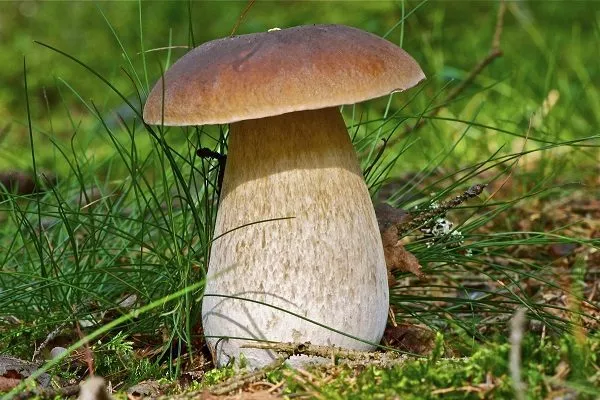
The white summer mushroom is a tubular mushroom belonging to the species Boletus edulis sensu lato of the Boletaceae family. Appearance:
- Hat. Thick and fleshy, up to 25 cm in circumference, it is semicircular at the base and then convex, smooth, and dry. Its color varies depending on the growing conditions and age: light, dark brown, with a lilac hue.
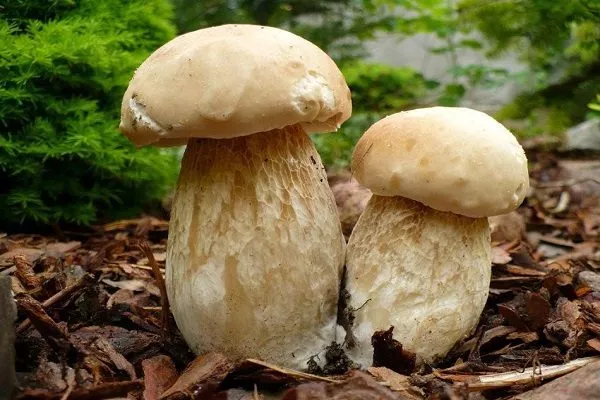
- Leg. 4-15 x 2-5 cm, barrel-shaped at the base. Off-white or light brown in color, with a reticulated pattern.
- Pulp. White when young, yellow when old, dense. Pleasant mushroom aroma.
- ✓ The presence of a mesh pattern on the stem, which is absent in the doubles.
- ✓ No change in the color of the pulp when cut, unlike some of its counterparts.
Where do white summer mushrooms grow in Russia?
The summer white mushroom prefers to grow in coniferous, mixed, and deciduous forests. During peak summer, it is most often found in young groves. During the remaining months, it is found in areas where trees are at least 20 years old.
There are many such places in Russia. That's why the summer white mushroom grows everywhere. Boletus mushrooms are collected from the southern latitudes to Kamchatka.
When and how much does it grow?
The peak fruiting period for porcini mushrooms is generally considered to be the third ten days of August, but some members of the summer family appear throughout the warm season. Growth depends on several factors:
- rain – fruiting bodies grow faster;
- insects - significantly slow down growth;
- temperature regime – summer mushrooms bear fruit when the thermometer reaches +15 degrees;
- Night temperature fluctuations negatively affect growth.
The advantages and disadvantages of summer porcini mushrooms
The summer porcini mushroom is not only delicious but also a valuable product. Advantages:
- stimulates the gastrointestinal tract;
- gives a long-lasting feeling of satiety;
- can be eaten in any form (except raw);
- equal in value to meat;
- the number of dishes that can be prepared from porcini mushrooms is countless;
- higher nutritional value than chicken eggs;
- dietary product.
Flaws:
- When heat treated, valuable properties are lost, cooking time must be reduced;
- mushrooms are prohibited for children under 12 years of age;
- long digestion by the human body;
- may cause allergies;
- Mushrooms can be harmful to health if collected near roads.
What types of summer mushrooms are there?
| Name | Forest type | Fruiting period | Features of the hat |
|---|---|---|---|
| Netted white mushroom | Coniferous | June | White or light ocher color |
| Birch porcini mushroom | Foliar | June-October | Pale yellow |
| Aspen porcini mushroom | Foliar | August | White or pinkish color |
| White oak mushroom | Foliar | June | Gray with light spots |
| Pine porcini mushroom | Coniferous | The beginning of summer | Red-brown with a purple tint |
| Spruce porcini mushroom | Coniferous | June | Brown with red spots |
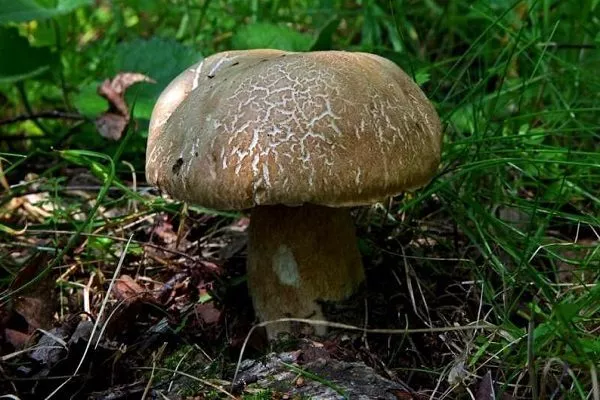
| Dark bronze white mushroom | Foliar | June | Dark with cracks |
| Lemon-yellow white mushroom | Coniferous | June-October | Lemon-colored |
| Smooth-stemmed porcini mushroom | Foliar | The beginning of summer | Like a boletus, but without the mesh on the stem |
There are many types of boletus. It's clear from their appearance that they belong to the same species, but there are some nuances.
What types of white summer mushrooms are there?
- Netted white mushroom. The cap is white or light ochre. The stem is cylindrical and short. It is often confused with the boletus mushroom. It begins bearing fruit in June. It is rare and does not occur in Russia.

- Birch white mushroom or spikelet. The cap is pale yellow, and the flesh has no strong flavor. The stem is barrel-shaped and has a fine, light-colored mesh. It grows under birch trees, singly or in groups. Harvesting occurs from June to October.
- Aspen white mushroom. The cap is up to 15 cm, hemispherical, white or pinkish in color. The surface is dry. The stem is tall, thick at the bottom, white with scales. It grows in drained peat bogs, near aspen trees in depressions. It is native to northern regions. The peak harvest season is August.
- Oak porcini mushroom. The cap is gray with light speckles. The flesh is loose. The stem is about 12 cm long and massive. It grows in oak groves in the Caucasus and Primorsky Krai. It begins bearing fruit in June.
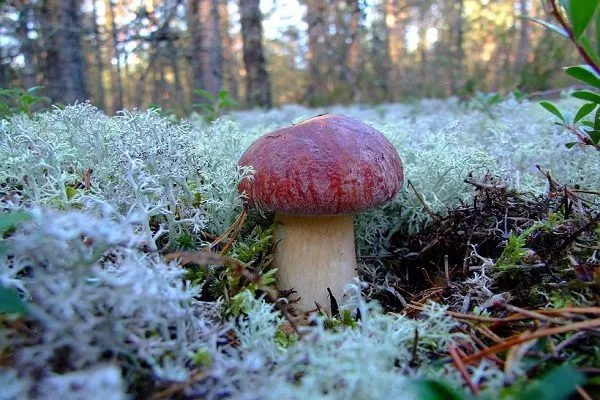
- Pine white mushroom. The cap is reddish-brown with a purple tint. The stem is short but thick, with a pale brown mesh. Growth begins in early summer. Collection takes place near pine trees in regions where conifers are abundant.
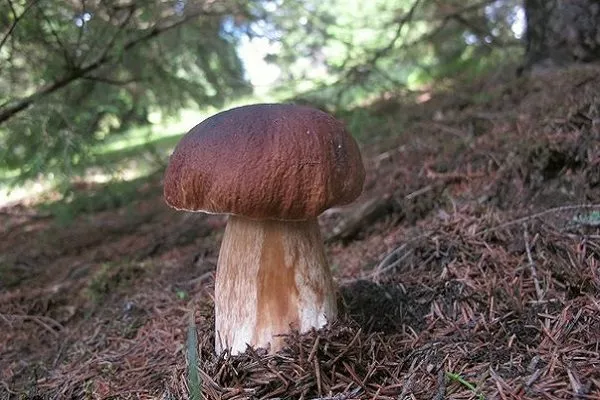
- Spruce white mushroom. The most common species. The cap is brown with red speckles. The stem is elongated and thick at the base. It grows in spruce forests throughout Russia. The bodies appear in June.
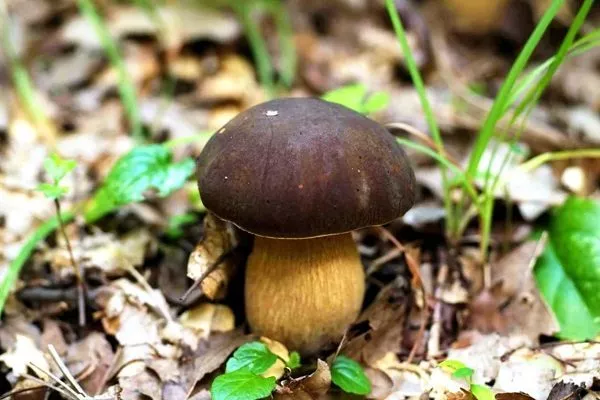
- Dark bronze white mushroom. Another name for this mushroom is copper. The cap is round, fleshy, dark, and cracked. The stem is massive, brown with a pink tint, and has a mesh. It bears fruit in June. It grows in deciduous forests throughout the European part of the country.
- Lemon-yellow white mushroom. It resembles the classic boletus, but has a lemon-colored cap. It grows from June to October in spruce and pine forests.
- Smooth-stemmed porcini mushroom. It's similar in appearance to the boletus. The only difference is that it lacks a mesh on the stem. It begins to grow in early summer in birch forests.
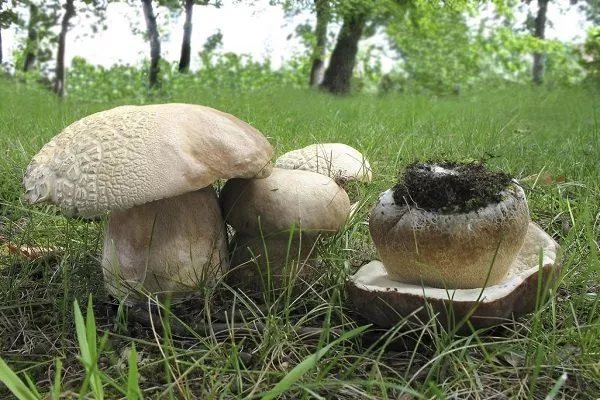
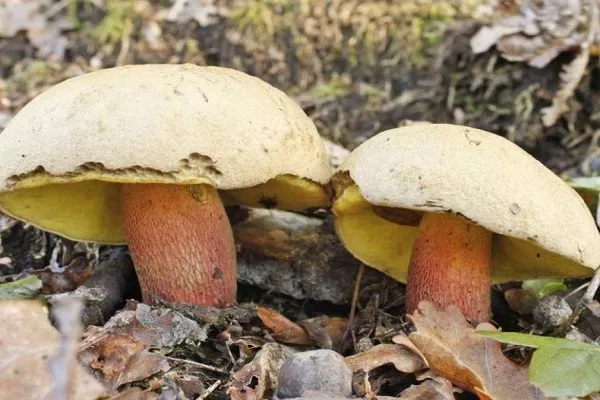
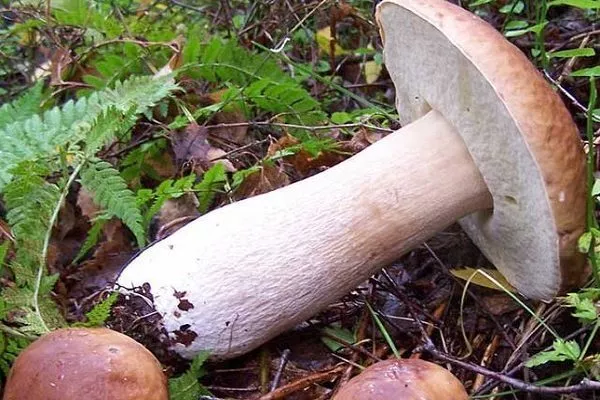
- ✓ Reticulated porcini mushroom: absent in Russia, making its collection impossible for local mushroom pickers.
- ✓ Birch porcini mushroom: a thin light mesh on the stem, which distinguishes it from other varieties.
What can you confuse porcini mushrooms with in summer?
| Name | Toxicity | Distinguishing feature | Edibility |
|---|---|---|---|
| Bitterling gall mushroom | Low | Bitterness | Inedible |
| A mushroom that turns blue when cut | No | Turns blue when cut | Edible |
| Red russula | No | Red | Edible |
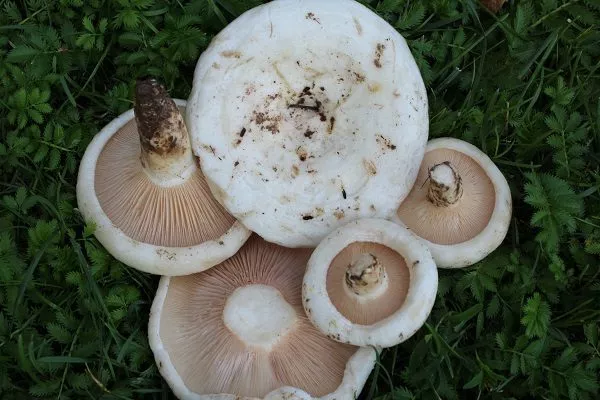
| White milk mushroom | No | Funnel shape | Edible |
| Satanic mushroom | High | Red stripe on the leg | Poisonous |
| Bitterling | Average | Bitter taste | Inedible |
When picking porcini mushrooms in the summer, be careful. The boletus has lookalikes, some of which are poisonous. It's important to know their characteristics.
False porcini mushrooms:
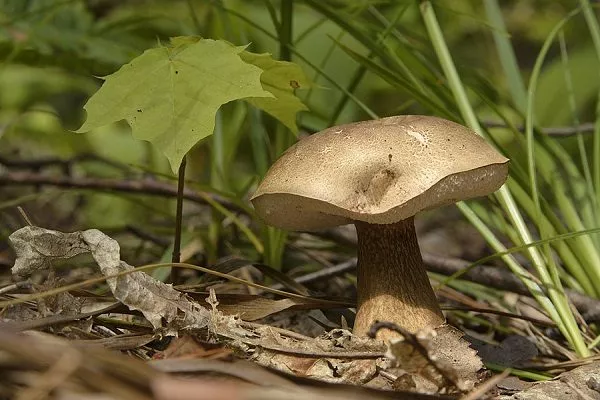
- Bitterling gall mushroomBelongs to the same genus as the boletus. The main difference is bitterness. Cooked mushrooms have a bilious taste. This mushroom is not poisonous to humans, but it can cause intestinal upset.
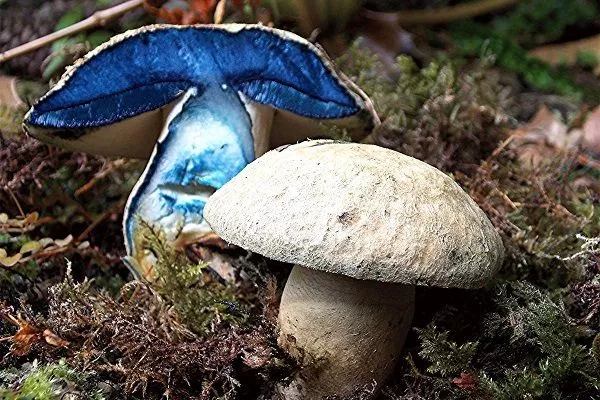
- A mushroom that turns blue when cut. The smell is just as pleasant, the taste is excellent, but when you break the cap, the cut turns blue. The mushroom is edible.
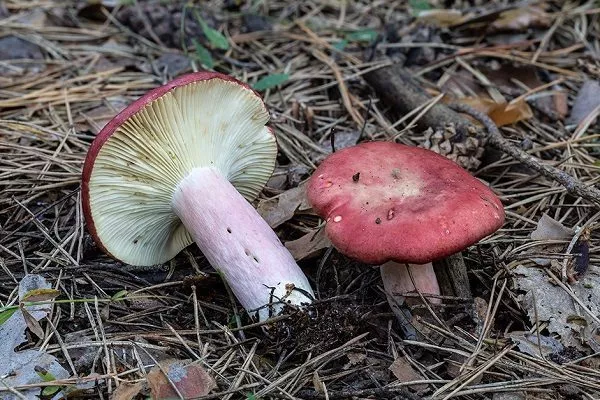
- Red russulaIt can be confused with a young white boletus. The difference is its very deep red color. It is a lamellar mushroom, visible on the inside of the cap. It is not poisonous.
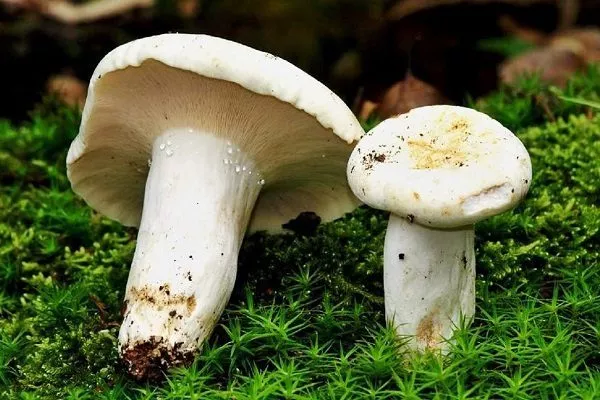
- White milk mushroom. It looks like a porcini mushroom, but the milk mushroom's cap is funnel-shaped, with a fringed edge. Its flavor is also reminiscent of the summer boletus.
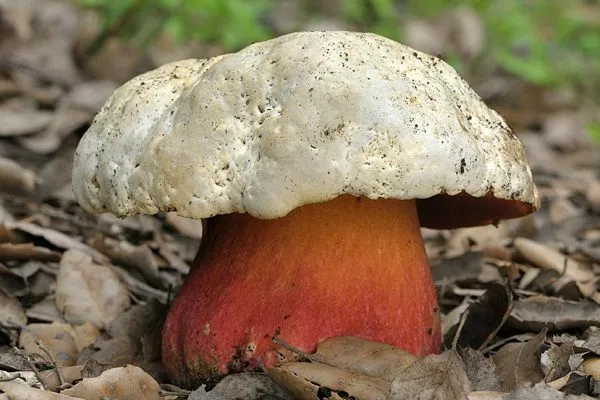
- Satanic mushroom. A member of the same genus. Dangerous to humans. It can be recognized by: a red stripe on the stem, blue flesh after breaking, and the smell of rotting onions.
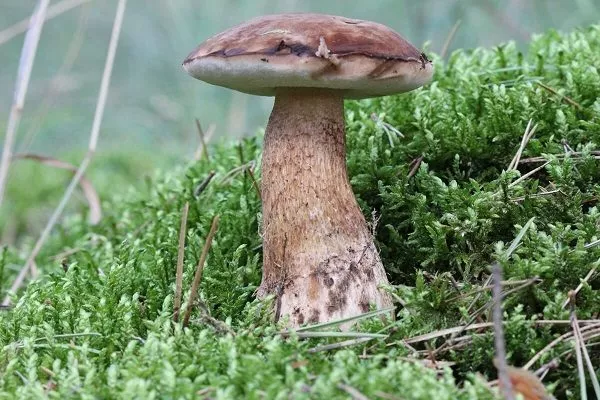
- Bitterling. The flesh is odorless, soft, and white, but turns red when cut. The mushroom has a bitter taste. It is not recommended for consumption.
Which porcini mushrooms don't grow in summer?
There are varieties of porcini mushrooms that bear fruit in the fall or spring. Mushrooms that don't grow in the summer:
- real milk mushroom;
- aspen or poplar milk mushroom;
- orange-red white mushroom;
- arctic;
- late boletus;
- pink-legged.
The summer white mushroom is a popular member of the Boletaceae family. It has excellent flavor. There are numerous varieties of summer mushrooms, all of which are edible. The boletus has false lookalikes, some of which can be harmful to human health.