
Zamioculcas is a plant that adapts to a variety of conditions. It copes well with both bright sunlight and partial shade, and can thrive in any temperature. However, even such an easy-to-grow houseplant can have problems with new growth, and this can be due to various reasons.
Growth characteristics
Zamioculcas, also known as Dollar Tree, belongs to the Araceae family and is the only succulent among its relatives. In the wild, it grows in Madagascar and Africa, preferring dry, sandy soils.
In fact, the plant dies only if its underground tubers dry out completely. However, moisture evaporates from the tubers very slowly. One species of Zamioculcas, the zamiifolia variety, is most often grown indoors.
Natural causes
A Zamioculcas that has stopped growing doesn't always require active measures to stimulate its development. Sometimes, simply giving the plant time and patience is sufficient, as it can resume growth on its own.
Adaptation to new conditions
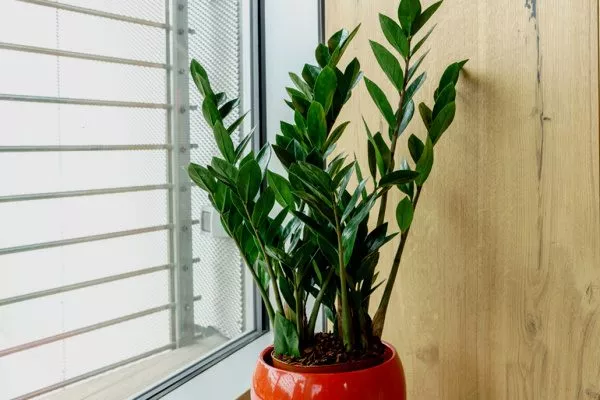
After purchasing a zamioculcas, young leaves often temporarily stop growing, and the already-grown rachis often stop developing. It's important to leave the plant alone while it adapts. Typically, after 2-4 weeks, the plant will begin to form new shoots.
Variety
| Name | Plant height | Sheet type | Drought resistance |
|---|---|---|---|
| Bug (Beetle) | 30-40 cm | Succulent | High |
| Zenzi | 60 cm | Succulent | High |
Sometimes a zamioculcas may fail to thrive simply because it's a dwarf cultivar. Acquiring such a plant is a stroke of luck, as only two small varieties currently exist:
- Bug (Beetle), Korean selection of 2018, 30-40 cm high;
- Zenzi, bred by Dutch breeders, which can reach 60 cm in height.
The creation of new cultivars is difficult due to the monotypic nature of this genus, meaning it consists of a single species. The lack of suitable plants for crossbreeding and the unpredictability of successful mutations are the main reasons.
Rest period
During the fall and winter, zamioculcas enters a state of relative dormancy, and its growth slows significantly. Even under optimal conditions, the plant may only grow one or two new leaves.
However, don't rely on this and expect vigorous growth. It's perfectly normal for a plant to show minimal growth and "stand still" during the winter.
Causes related to improper care
Often, houseplant growth stagnation is due to care errors at home. It's important to first identify these errors and then make appropriate adjustments to provide the plant with optimal conditions. Once the problems are corrected, the plant will begin to thrive again.
Deep planting
When a zamioculcas plant fails to produce new shoots, the first thing to check is whether it was planted too deeply when repotted. The tuberous rhizome should only be lightly covered with soil.
If a zamioculcas is planted too deeply, it may simply stop growing. Overwatering can cause both roots and leaf bases to rot. While the tubers can be cleaned of damage and the plant given time to recover, damaged rhizomes cannot be restored.
The wrong pot
If the pot is too large, the zamioculcas will stop developing stems, focusing on root and tuber growth. The plant may appear healthy, without yellowing or drying out. In this case, the only solution is to wait.
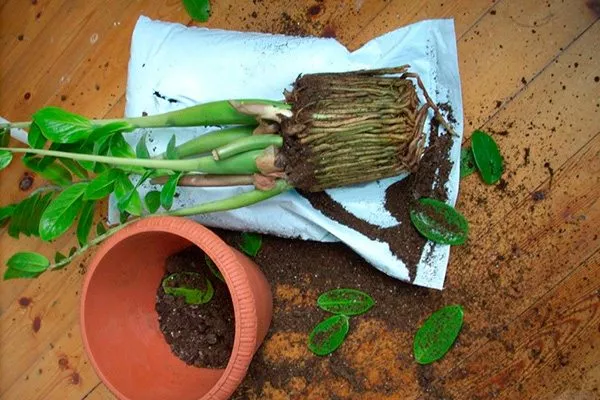
On the other hand, if the pot is too small, the tubers will begin to press against each other, which will stop the stems and leaves from growing. In this case, repotting the plant is necessary, otherwise it will begin to wilt.
Ideally, the pot diameter should be 3-5 cm larger than the width of the plant's tubers. Under these conditions, the zamioculcas will thrive and continue to grow.
Unsuitable soil
Zamioculcas prefers dry, sandy soil with stones of varying sizes. These conditions help prevent moisture retention, which can negatively impact the plant's tubers.
| Soil type | Breathability | Recommendations for use |
|---|---|---|
| Sandy with rocks | High | Ideal for zamioculcas, prevents moisture retention. |
| Ready-made substrate for cacti | Average | Suitable, requires good drainage. |
Poor soil requires little fertilizer, especially one high in nitrogen—it's essential for the normal growth and development of the money tree's stems. It's important that the soil be well-aerated. The pot should have a drainage layer and holes at the bottom to allow excess moisture to drain.
Watering errors
Zamioculcas, like other succulents, doesn't require frequent watering or misting. Excessive moisture can cause rotting and make it vulnerable to rot and pests. The optimal watering frequency is once every 12-15 days.
Allowing the plant to dry out is unacceptable, but not dangerous. When this happens, it begins to turn yellow, the leaves become limp, and fall off. If you resume watering, new leaves will soon appear. The plant can retain moisture in its underground tubers, so it easily tolerates long periods without watering.
Incorrectly chosen location
Zamioculcas prefers well-lit, draft-free, wind-free locations with low humidity. If it's not positioned correctly, the following problems may occur:
- The bush stops growing, the stems become thin and elongated. The reason for this phenomenon is insufficient lighting and lack of sunlight.
It's recommended to move the plant to an east-facing window or use a special lamp that mimics natural light. Standard incandescent bulbs won't provide sufficient illumination. - The bush stops growing, the leaves turn yellow, and yellow spots appear on the stem. The cause is sunburn. It often occurs due to the refraction of light through water droplets left behind after spraying.
- The growth of the bush slows down, the stems wrinkle. The cause is cold wind, drafts or damage to the root tuber by parasites.
It often happens that water droplets appear on the plant's surface, making it appear as if it's "crying." This is caused by high humidity and improperly selected fertilizers.
Lack of light
All plants require adequate sunlight for vigorous growth and development. Some gardeners mistakenly move zamioculcas from the window and place it in the corner of the room. However, if the plant receives too little natural sunlight, its growth will be stunted.
Although zamioculcas can survive in low light conditions, its development will be impaired if there is insufficient light.
Root damage
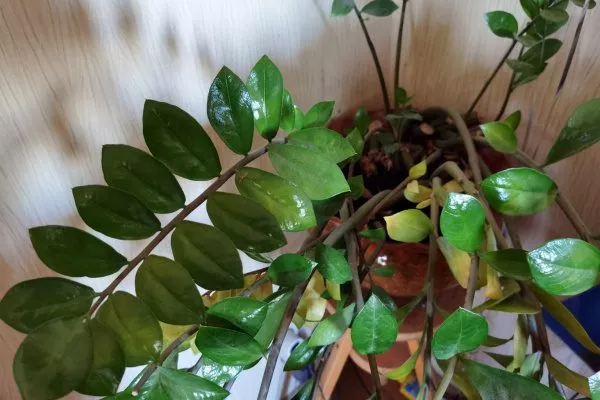
Zamioculcas may stop growing due to damage to the roots and tubers. This can occur as a result of improper repotting, overwatering, or infection from the soil.
In such cases, restoring the plant's tubers is crucial. Carefully clear the roots of soil and inspect them. If rot is detected, remove it with a sharp knife, and treat the cut with crushed activated charcoal. It's also important to water the soil with a weak solution of potassium permanganate.
Pests
Scale insects or mites in dry air rarely cause damage to zamioculcas. These pests generally don't pose a serious threat to the plant. However, weakened plants with damaged roots may be susceptible to these pests.
Fertilizers
Fertilizers don't promote rapid growth of zamioculcas. They only affect leaf quality, promoting thickening and elongation of the rachis, as well as compaction and enlargement of the segments.
Excessive fertilizer can be harmful to the plant and will stunt its growth rather than accelerate it. Nitrogen is particularly harmful, as, unlike other plants, it stimulates vigorous growth of the above-ground part. Zamioculcas requires nitrogen in small quantities.
Bloom
Severe weakening has a negative impact on the growth of zamioculcas. If you're willing to accept a less-than-attractive start, you should be prepared for a significant reduction in the number of new leaves.
How to make zamioculcas grow?
First, check the pot size, as Zamioculcas won't thrive in a large container. It's better to wait for the roots to rot than to wait for new leaves to appear.
If you want to stimulate rapid growth of zamioculcas, it should be transplanted into a pot of the appropriate size, where a small layer of soil will remain between the rhizome and the wall.
Then it is important to provide the zamioculcus with proper care:
- Moderate watering with warm water (30-32°C) stimulates growth. Allow the soil to dry completely between waterings. You can create a watering schedule: every two weeks in summer, once a month in winter, and more frequently in hot weather. Excess water should be removed from the tray immediately.
- Lighting should be bright or partial shade; complete lack of sun can suppress plant growth.
- The most comfortable temperature for zamioculcas is 20-25°C year-round. During the dormant period, the minimum temperature is 16°C, but it's best not to drop below 18°C.
- Air humidity isn't particularly important; zamioculcas tolerates dry air well indoors. In hot weather, you can mist the foliage or wipe it with a damp cloth.
- The soil for zamioculcas should be light and neutral; ready-made cactus substrate is suitable. Good drainage is also essential.
- It's recommended to repot a mature zamioculcas approximately every five years. However, to stimulate rapid growth, you can repot it each spring into a slightly larger pot.
- Fertilizing doesn't play a significant role in increasing the number of rachis in zamioculcas, but it can improve the plant's quality and overall health. During the active growth period, it's important to fertilize 1-2 times a month, and stop fertilizing in winter.
- ✓ Optimum temperature for growth: 20-25°C, minimum during the dormant period - 16°C.
- ✓ Watering: once every 12-15 days, the soil should dry out completely between waterings.
Zamioculcas is a wonderful plant, ideal even for beginners. It requires little care and is highly resilient, easily surviving long periods without watering or fertilizing. Simply adjust your care routine, and the zamioculcas will begin to grow vigorously again.