
Zamioculcas is one of the most popular plants, renowned for its decorative qualities and considered a symbol of financial well-being. In some cases, the leaves of the money tree may change color, become deformed, dry out, and die. In such cases, the plant requires first aid, but it is important to determine the cause of its ailment.
Natural aging
If the plant appears healthy and you haven't detected any care or maintenance issues, the yellowing leaves are most likely a natural part of aging. Older lower leaves decline, gradually turning yellow and drying out, releasing their remaining nutrients back into the plant.
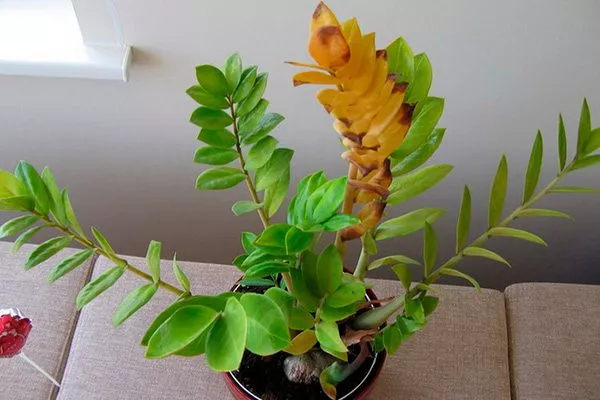
If you do decide to remove a yellowed leaf or branch, prune it first, leaving a short stem (stump) to avoid damaging the tuber. Avoid twisting or breaking off the leaf, as this can damage the base of the plant.
Watering errors
Incorrect watering can be one of the reasons why zamioculcas leaves turn yellow and begin to dry out. Overwatering, as well as insufficient or irregular watering, can cause the roots to dry out and disrupt the plant's water balance.
Overflow
An arid climate with high temperatures and insufficient rainfall poses no threat to the plant. However, constantly overwatering the soil in a flowerpot can cause damage:
- The rhizome of the zamioculcas, which is a juicy tuber with excess moisture, begins to rot if water is retained in the pot for a long time.
- Root rot processes manifest themselves in the form of yellowed leaves.
If root rot is detected, immediately remove the old soil from the plant, rinse the roots, and inspect them. If the root system is completely damaged, try to save the zamioculcas by using healthy parts as cuttings.
In the future, be mindful of the frequency and volume of watering. Water only after the soil in the pot has dried out by 50-70%. During dormant periods and cold seasons, water infrequently and in minimal amounts.
Overdrying
Underwatering rarely causes yellowing of the dollar tree's crown. Brown leaf tips and leaf drop from the upper parts of the plant indicate dry young shoots.
Zamioculcas is quite tolerant of drying out, and even in hot summers, it can survive for a month without watering without any noticeable loss of its decorative qualities. Yellowing of the plant's leaves from drying out usually occurs only in hot weather, when temperatures exceed 30°C for prolonged periods.
One of the methods is bottom watering:
- Place the pot in a bowl of settled water at room temperature.
- Wait until the soil surface becomes moist (this may take several hours).
- Remove the pot from the basin and let the water drain.
- Return the plant to its usual location.
- ✓ Water for bottom irrigation must be settled and have a temperature of at least +20°C.
- ✓ The soil should be dry to the touch at a depth of 2-3 cm before watering.
Another, more radical option is to immerse the zamioculcas:
- Remove the plant from the pot and immerse the root ball in water for 3-5 minutes.
- After this, dry it slightly with newspapers and return it to the pot.
After this procedure, you won’t have to water the money tree for a month.
Incorrect temperature
The optimal temperature range for growing zamioculcas is between 18 and 26°C. If the temperature drops below 15°C or if there are cold drafts, the plant's leaves may begin to turn yellow due to stress caused by low temperatures.
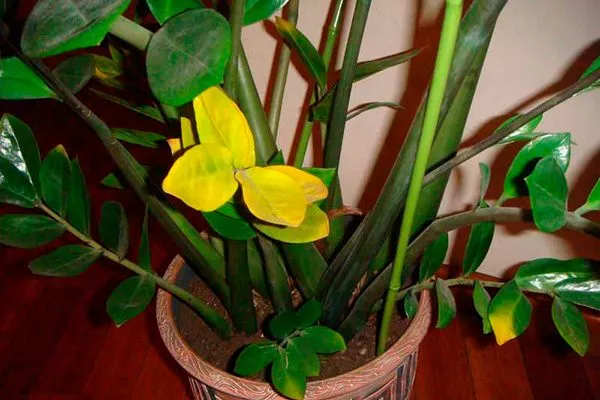
It is important to carefully monitor the plant during cold periods of the year and place it away from cold windows, as the temperature on the windowsill can be significantly lower than in the room.
Excess or lack of light
Zamioculcas originates from tropical Africa, where bright sunlight poses no threat to its health. In its natural habitat, the plant thrives in constant, scorching sunlight.
However, when Zamioculcas is grown as a houseplant indoors and without a cool breeze, the leaves are exposed to heat from direct sunlight, which can lead to sunburn in the form of yellow spots on their surface.
Typically, these burns are visible only on the sun-facing side of the leaf. The spots are initially light yellow, later becoming a rich yellow, and then turning a russet-brown color and drying out.
To save the plant, follow the instructions:
- Trim all affected parts to the base.
- Move the plant pot to a semi-shaded area, such as the middle of the room.
Top dressing
Zamioculcas is a slow-growing plant that requires little nutrition. Overfeeding not only hinders its growth and development but can also cause yellowing of the leaves and compaction of the soil in the pot.
This can negatively impact the plant's root system, causing root rot and ultimately leading to its death. The appearance of yellow leaves may be a sign of this problem.
Immediately repot the plant in new soil, inspect and treat its root system. Apply fertilizer sparingly and at a concentration three times lower than recommended in the fertilizer instructions. Use fertilizers designed for succulents and cacti.
Incorrect transplant
Experienced gardeners recommend paying special attention to the rules for repotting plants. If a flower is transferred to a new pot without due care, mechanical damage to the bulb may occur.
However, even in this situation, the flower can be saved. Carefully remove the deformed plant from the pot, remove the damaged areas, and allow it to dry.
Injuries
Mechanical damage caused by repotting, pruning, or other plant manipulations often leads to the development of fungal diseases. To prevent the growth of pathogens, treat the wounds with a disinfectant.
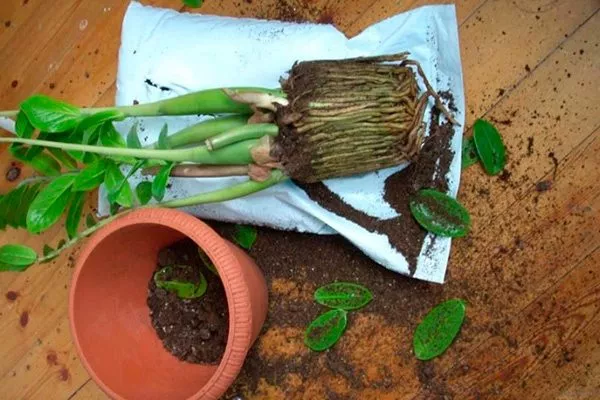
Use crushed activated charcoal or charcoal, cinnamon powder, or a potassium permanganate solution. If the infection has already occurred, remove the rotten area and then treat it with a fungicide.
The plant has outgrown the pot
A situation often arises when a money tree grows so large that its roots and tubers lack sufficient space in the pot and soil. In such cases, it becomes clear that the plant needs to be repotted into a larger pot. This will allow the roots enough room to grow and develop.
Pests
The presence of harmful insects is a common problem that can lead to plant death. Among the most dangerous pests are aphids, scale insects, and mites.
The appearance of yellow dots, spots, holes and web hairs on leaf blades is a clear sign of the presence of pests.
When you notice the first signs of pests, take the following measures:
- Prepare a soap solution by mixing laundry soap or tar soap with water.
- Cover the soil tightly with paper, cling film or a plastic bag.
- Remove pests and their larvae using a soapy solution and a soft sponge.
- Rinse the leaves with clean water at room temperature.
If the leaf blade has been damaged by sun rays or low temperatures, move the plant to more comfortable conditions and apply restorative preparations to the leaves.
Diseases
Fungal and bacterial diseases pose a serious threat and can lead to the death of the money tree. Among the most dangerous diseases of the zamioculcas are the following:
- Fusarium, late blight and anthracnoseSigns: growth retardation or its full stop, the appearance of brown spots on the bulb, wilting of the foliage and a change in its structure and color.
- Wet and dry rotSigns: appearance of dark gray, black and brown spots.
If fungal and bacterial diseases occur, follow the instructions:
- Move the flower pot to a dry, well-ventilated area and stop watering.
- Remove the plant from the pot and remove all affected parts by pruning.
The appearance of yellow leaves on a zamioculcas without the formation of new shoots is a sign that the plant needs help. To save the plant, it is necessary to identify the cause of its illness and take appropriate measures. However, it is much easier to provide the plant with proper care from the very beginning, ensuring its long-lasting beauty and health.