
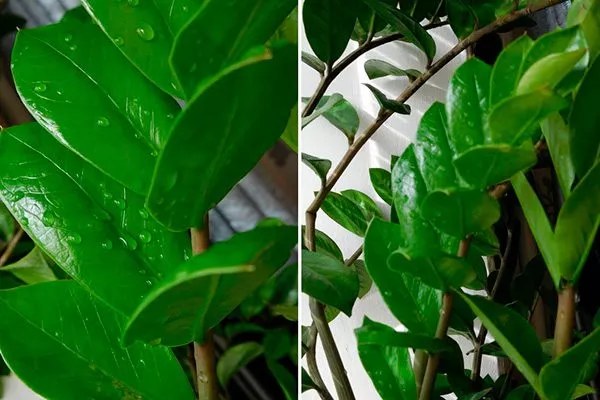
Zamioculcas, aka dollar tree, is considered a popular exotic flower for indoor growing. It's not particularly demanding to grow, but it does have one unusual characteristic: it weeps. This fact frightens many beginning gardeners, but in reality, the presence of "tears" on the leaves isn't always dangerous or a sign of problems.
The main reasons for a flower to cry
In its native land, the flower is known as the Zanzibar gem because it grows along the rocky coastline of southeastern Africa. This hot and arid climate allows the plants to retain moisture throughout their entire body.
This is what later manifests as "tears" on the zamioculcas leaves. But there are other reasons for this, especially when it comes to indoor growing.
| Name | Type of crying | Conditions of occurrence | Care instructions |
|---|---|---|---|
| Dew | Condensation of moisture | High humidity in the room | Reduce humidity, ventilate the room |
| Bathing | Physical impact | After spraying or bathing | Wipe the leaves with a dry cloth |
| Guttation | Physiological process | Inadequate conditions for evaporation | Normalize watering and temperature |
Dew
If there's high humidity in an apartment—specifically, water vapor, but already cooled—a natural reaction occurs, causing it to condense from the air. This is why the leaves of the dollar tree become covered in droplets.
Bathing
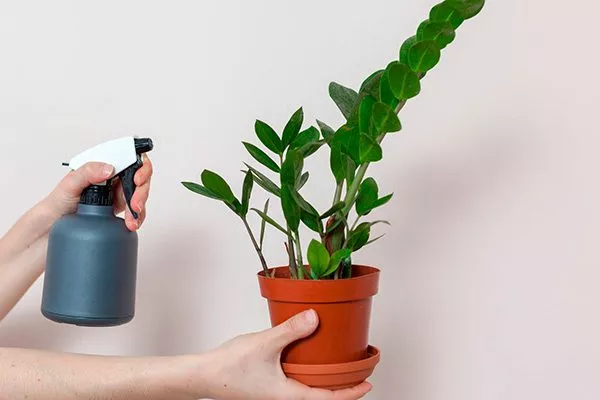
"Tears" form on zamioculcas after bathing or spraying, which is also completely normal. To correct the situation, simply wipe the plant with a dry, soft cloth.
Guttation
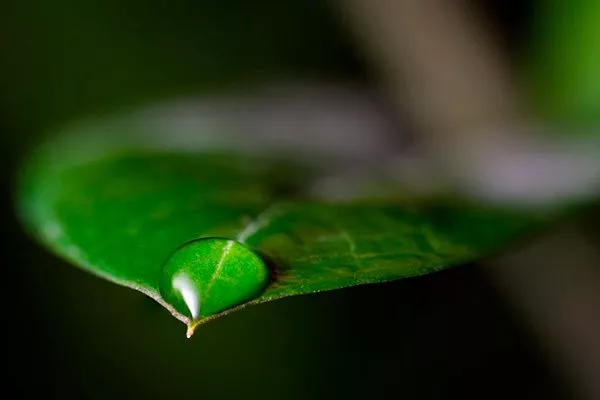
Guttation refers to the physiological process that maintains water balance. Specifically, it occurs between the absorption and release of moisture by the plant. This process is accompanied by the formation of tear-like droplets on the surface.
Other features:
- This process is observed when conditions are not suitable for natural evaporation of water.
- This occurs by forcing moisture from the roots to the leaves, after which it is expelled through pressure. For this purpose, the zamioculcas plant has stomata, or hydrators.
- The money tree grows in conditions where rain falls half the season and drought accompanies the other half. Normal plants die in this situation, but the zamioculcas plant has the ability to store fluid in its roots and aboveground parts. It is these reserves that the plant uses during drought, allowing it to survive.
This is a kind of defensive reaction. - Thanks to guttation, the plant doesn't even shed its leaves, but if the room humidity is high, the green mass can burst from excess fluid in the cells. To prevent this, the zamioculcas begins to weep, releasing water.
- Young indoor flowers are more susceptible to crying.
- Drops are more often found in the morning.
There are negative factors that contribute to the occurrence of “tears”:
- high humidity along with lack of light;
- abundant watering in the evening (at this time the hydrators-stomata close, so evaporation does not occur, therefore in the morning there is a sharp release of water);
- high humidity with low temperature;
- over-wetting at one time;
- sparing but frequent watering;
- the presence of a humidifier nearby;
- sharp changes in temperature.
Therefore, it is extremely important not to over-humidify the air in the room and the substrate itself – it is better to water rarely than often.
How to distinguish dew from guttation?
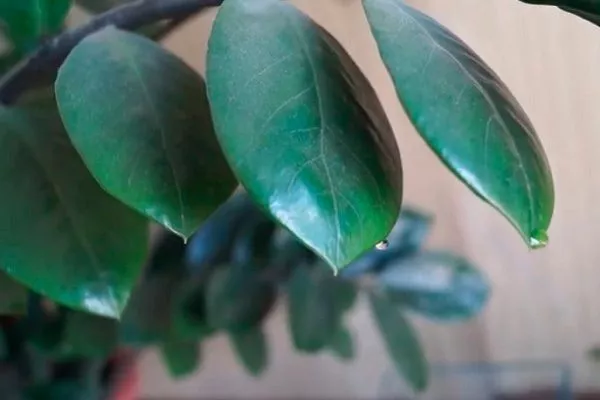
Guttation is a natural process for zamioculcas. It manifests itself as the formation of tear-like droplets. Moreover, they flow from the upper portion of the segments, which is what creates this appearance.
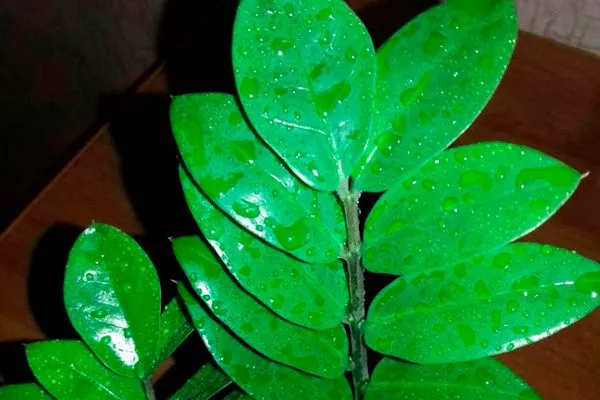
Is guttation dangerous?
The guttation process isn't always considered safe. If it causes the substrate to become waterlogged (where water drips into the pot), it will inevitably lead to root rot. Sometimes this is accompanied by the soil becoming sour, which can lead to a persistent unpleasant odor, yellowing of the leaflets, the formation of waterlogged spots, and softening of the leaf bases.
To prevent this from happening, follow these steps:
- Humidity levels. Sometimes, if you have succulents nearby that require additional leaf watering, artificial humidifiers, etc., move the zamioculcas away from them.
- The room temperature - if it drops below +15 degrees, the flower may freeze and begin to evaporate excess moisture excessively.
- Frequency of watering – the money tree requires rare and not abundant watering.
- Watering time - it is best to do this in the morning, when the stomata open for natural evaporation of liquid.
How to stop a plant from crying?
To stop the uncontrollable weeping of your money tree, normalize the frequency and amount of watering, and pay attention to the thermometer readings in your apartment. To do this, carefully familiarize yourself with the growing conditions for not just your Zamioculcas, but the specific variety growing in your pots.
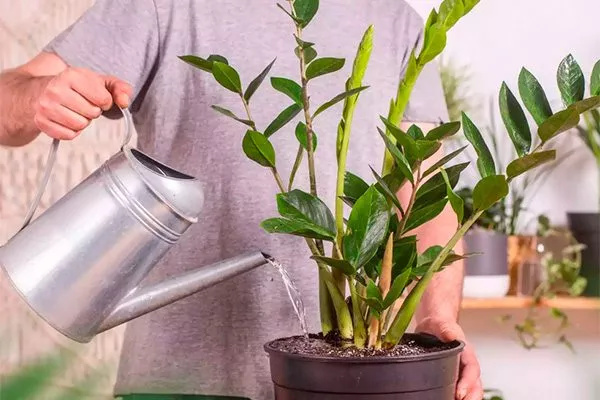
- ✓ Watering should be carried out only when the substrate is completely dry, as checked by inserting a wooden stick into the bottom of the pot.
- ✓ The optimal water temperature for watering should not be lower than room temperature to avoid stressing the plant.
Remember that this succulent should only be watered when the entire substrate, not just the top layer, is completely dry. To check this, insert a wooden skewer all the way to the bottom and inspect it – if it's dry, feel free to water the plant.
Signs and superstitions associated with this phenomenon
It's generally accepted that only a money tree that grows abundantly and blooms regularly will bring prosperity to the home. If the tree begins to cry, superstitious gardeners believe it's a sign of rain. Moreover, the more abundant the tears, the heavier the rain will be outside.
It should also be noted that this sign arose not from mystical explanations, but from completely scientific ones - before rain, the air humidity always increases, and if the windows in the room with the flower are open, then the plant will begin to get rid of excess moisture in the roots and leaves in advance.
A money tree doesn't cry without a reason, so identify the underlying cause and adjust your care routine early. Remember that water droplets on the zamioculcas leaves are a signal to reduce watering and increase the room temperature.