
Zamioculcas is an evergreen herbaceous plant that can be propagated both vegetatively and generatively. Each method has its own characteristics, advantages, and disadvantages. It's important to familiarize yourself with the plant's characteristics and preparation to ensure successful rooting.
Plant characteristics
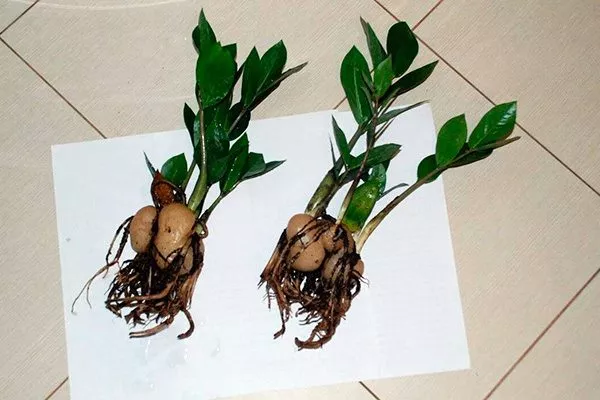
Dollar Tree (Zamioculcas, also known as the common name, is a member of the Araceae genus and a succulent. It differs from other similar plants in its unique structure: Zamioculcas lacks shoots and a main stem, as compound leaves grow directly from a tuberous root. These are composed of numerous feather-like leaves.
The tubers, in turn, produce root shoots that resemble worms nesting on the surface of the pot. This structure allows the plant to reproduce in a variety of ways.
Under what conditions does zamioculcas reproduce?
For successful propagation, it is necessary to adhere to certain requirements – the season, the level of illumination, the temperature regime, etc. It is also important to choose the right substrate and pot.
Time
To ensure rapid rooting of the zamioculcas, it's best to perform this procedure during its growth phase, specifically in May and June. By the time the plant enters dormancy, the plant will have already formed, allowing it to begin to reproduce rapidly in early spring.
Humidity, lighting and temperature
Zamioculcas prefers dry air, so artificially increasing room humidity is not recommended. The optimal temperature for rooting and development ranges from 20 to 25 degrees Celsius. Daylight hours range from 10 to 14 hours, so it may be advisable to provide supplemental lighting. The light should be diffused and soft.
Choosing soil for indoor plants
The soil for the dollar tree should be loose, light, and permeable to air and water. Therefore, mixtures designed for succulents or cacti are ideal. If you plan to make your own soil mix, use equal parts leaf mold, turf, coarse river sand, and peat.
The soil should be fertile and neutral in pH. Therefore, before planting, a mineral fertilizer for succulents is added.
Choosing a flower pot
Plastic cups can be used for propagation, but when transplanting the seedling to its permanent location, it's important to choose a wide pot. Ideally, its diameter should be 2-4 cm larger than the root system. If the container doesn't have drainage holes, make your own.
Please note that the root system exerts significant pressure on the pot as it grows, so clay is the best material to withstand this. Plastic and ceramic containers are also acceptable, but be aware that these are more likely to crack (if not repotted annually).
Methods of reproduction
The dollar tree can be easily propagated both generatively (by seeds) and vegetatively. However, the latter method allows you to obtain a young plant with the characteristics of the mother plant. Using seeds, you can create an entirely new variety, which is also interesting when growing zamioculcas.
By dividing the tuber
This method is most often used when it is necessary to cut complex leaves. For example, if the plant is diseased or attacked by pests, or if the flower has been damaged during long transportation, etc.
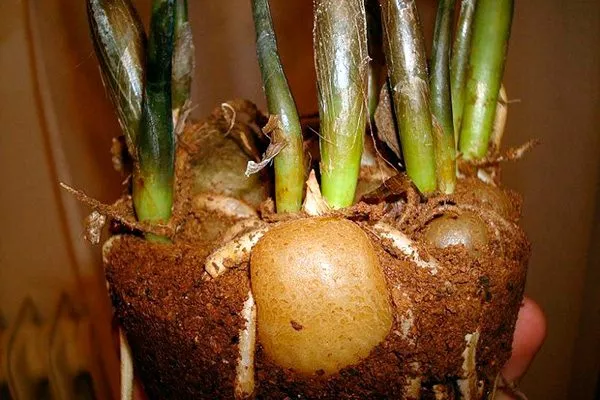
- ✓ Presence of live, white root shoots without signs of rot.
- ✓ No spots or damage on the leaf blades.
- ✓ Elasticity of leaves, which indicates sufficient moisture.
How to propagate by dividing tubers:
- After cutting off the above-ground part, remove the tubers from the pot.
- Inspect them for damage or injury.
- Determine which tubers have viable buds and root shoots – only these parts are suitable for propagation.
- Using a sharp knife, or better yet, a scalpel, cut the tubers into pieces. Immediately dust the cut areas with crushed activated charcoal or wood ash.
- Leave the tubers to dry for 2-4 hours.
- Plant the tubers in different containers in a pre-prepared substrate.
- Moisten lightly and grow as usual.
By dividing the bush
Zamioculcas grows slowly, so if you want to quickly get mature plants, divide an adult plant. Keep in mind that the plant must be at least 4 years old and completely healthy.
Division rules:
- Remove the flower from the soil.
- Shake off any remaining dry substrate from the roots.
- Divide the plant so that each tuber has root shoots and compound leaves with buds.
- Sprinkle the cut areas with activated carbon and let them dry.
- Plant the cuttings in different containers with pre-moistened soil.
Cuttings and rachis leaves
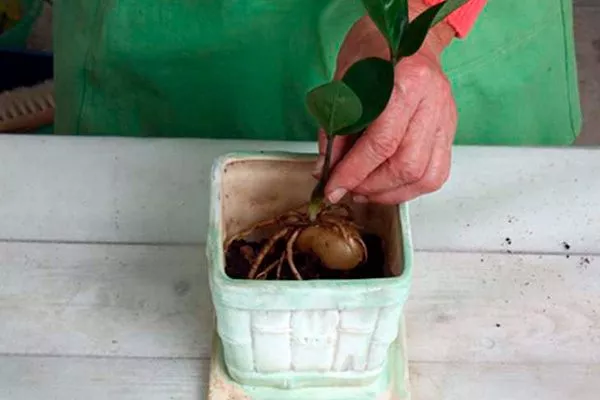
An excellent option for quickly rooting and producing young plants. If using cuttings, the cut is made at the very base of the flower; if using a simple rachis leaf, trim the upper parts to a length of about 10 cm. The lower cut is made at a 45-degree angle, then dusted with wood ash and dried.
There are two ways to root cuttings and compound leaves: in water or in a special substrate. Soil propagation:
- Prepare a soil mixture of sphagnum moss, peat, coarse sand, coconut fiber, and steamed soil. Use equal parts of each component, and be sure the soil is humus-free.
- Place drainage at the bottom of the glasses and the substrate on top.
- Insert the cuttings or rachis leaves with the lower feathery leaves cut off. Place the cuttings deep so that the lower leaf node is under the soil and the upper leaf node is above the surface.
- Water generously with settled and warm water.
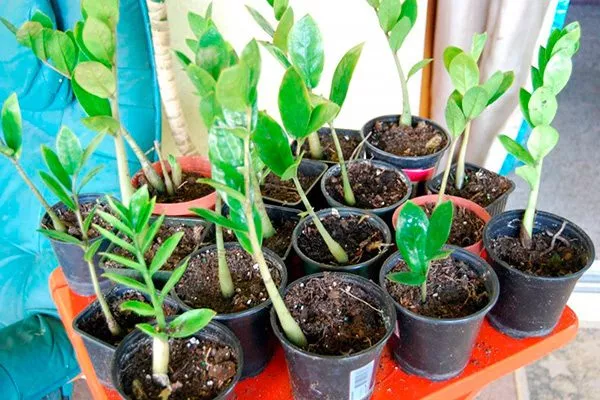
Avoid watering the seedlings for the first two days, then continue to moisten them as the soil dries. Be sure to mist the cuttings and leaves moderately during watering to ensure they remain evenly moist. After about two or three months, transplant them to their permanent location.
Rooting in water occurs as follows:
- Remove all leaves from the stalks/rachis leaves, leaving only the top 2.
- Fill a glass with clean water. To speed up the rooting process, you can add a little Kornevin (the dosage is four times less than for soaking).
- Immerse the planting material to half its total length.
- Cover with a glass or plastic wrap.
Open the cover daily for ventilation, and when new roots appear, remove the cover completely. Periodically top up the water to the original level. Transplanting into a permanent pot is possible after two months.
Leaf blade
To propagate using leaf pinnae, select the largest and most resilient specimens. Here's the procedure:
- Cut the leaf blade so that the stalk remains. Make the cut at an angle.
- Treat the cuttings with Heteroauxin or Kornevin.
- Leave to dry for a couple of hours.
- Prepare the substrate as for cuttings. Pour it into disposable cups or a common container.
- Insert the leaves into the planting plate to a depth of 1/3 of its length. Leave 3-5 cm between the plantings.
- Moisturize.
To see how gardeners propagate zamioculcas using feather-like leaves, watch the following video:
Seeds
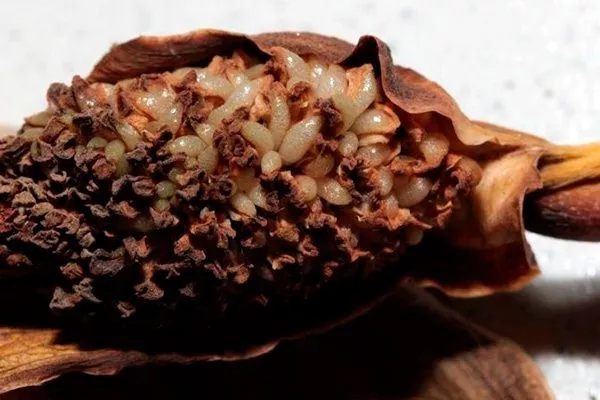
This method is time-consuming, but also effective. If you succeed in achieving flowering, prepare the seeds after collecting them. To do this, take one step: soak the seeds in Kornevin. If you purchased the planting material from a store, skip this step. In all cases, propagation by seed proceeds as follows:
- Prepare a container with the substrate and disinfect it. For the potting mix, mix sand and peat in equal parts. If peat is unavailable, use vermiculite.
- Treat the seeds in a pink solution of potassium permanganate.
- Remove and discard any hollow ones (they usually float to the surface of the liquid). Discard them.
- Mix suitable seeds with sand.
- Place the substrate into the container.
- Sprinkle the planting material on top, moisten with a spray bottle and cover with plastic wrap.
- Place the container in a warm place.
Caring for a young plant
The most important thing in the early days after planting a seedling is to ensure the necessary growing conditions. Be sure to follow these guidelines:
- During the first 2 days, watering is prohibited - otherwise the rooting part will rot;
- further watering should be moderate - water is needed when the soil lump is completely dry;
- When watering, you can add a little bit of any rooting agent, which will significantly speed up the process;
- direct sunlight should not fall on the plant - the cuttings will burn;
- If you create a temporary shelter, be sure to remove it every day - first for 15 minutes, then for 20 minutes, etc., gradually increasing the time;
- The optimal air humidity in a room is from 40 to 60%.
Potential problems and pests
Planting material for propagation is considered immature, as the immune system hasn't yet developed. When a tuber or bush is divided, the plant experiences stress, which can also lead to problems. Here are the most common issues gardeners encounter:
- Sometimes cuttings and other planting material rot. This is caused by two main factors: overwatering and the development of infectious diseases. Therefore, carefully monitor watering and disinfect the pots and substrate. You can apply fungicides to the soil a week after propagation.
- If roots do not form, look for the cause in under-watering, which is causing the cut areas to dry out.
- If a cutting or leaf is wilting, it may be exposed to direct sunlight.
- When a white coating appears on the above-ground part of the plant, it indicates the presence of spider mites. Use Actofit or Fitoverm to combat this. You can also spray with tobacco infusion.
- If you find a scale insect that can be seen with the naked eye, use Bankol, Actellic or Aktara.
- If there are aphids, it is recommended to spray the seedling with Fitoverm.
The money tree can be propagated in a variety of ways. Each has its own unique characteristics, so choose the method that works best for you. Consider all the requirements for propagation conditions and subsequent care of the planting material. This is the only way to ensure successful and rapid rooting.