
Even in a small room, a dollar tree can be given a corner where it can become the focal point of the interior. It's important to repot the plant when needed. With proper care and comfortable conditions, the zamioculcas will retain its decorative qualities for a long time.
Why is a transplant necessary?
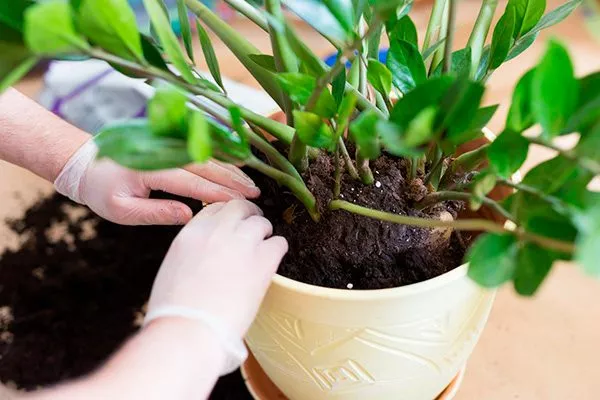
Repotting a Zamioculcas is an important procedure, especially when you first buy it or if the plant's root system has become overgrown and the pot is overcrowded. Other signs that repotting is necessary include wilted foliage, stunted growth, poor soil aeration, and cracks in the pot.
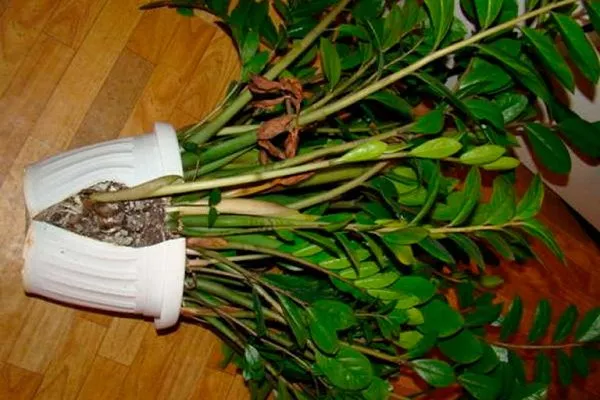
When repotting, it's recommended to allow the zamioculcas time to acclimatize and quarantine it to identify any potential diseases or pests. Proper repotting will provide the plant with the necessary nutrients and root space, promoting its recovery and maintaining its health.
Regular monitoring and care of the plant will play an important role in maintaining its beauty and well-being.
How often should zamioculcas be repotted?
Zamioculcas may not grow quickly, but replanting the plant indoors is still an essential part of its care. Repotting can be planned or urgent.
Young plants require repotting annually, while mature plants require repotting much less frequently, approximately every 2-3 years. Repotting zamioculcas refreshes the soil, providing the plant with fresh nutrients and space for its roots.
The best time for transplantation
The best time to repot a zamioculcas is spring, especially March or April. Both young and mature specimens can be repotted during these months. However, the money tree, known for its slow growth, is recommended to be repotted only after 3-4 years.
Repotting in winter raises certain concerns. The optimal time for this procedure is spring. However, there are exceptions for plants purchased in transport soil. This mixture is only suitable for temporary growth and is not suitable for long-term cultivation.
Autumn is the least suitable time for repotting, as plants are preparing for winter. At this time, they enter a dormant state, and their vital processes slow down. Repotting in the fall can negatively impact the plant's survival rate.
Rules for replanting a flower
The rules for repotting zamioculcas are very simple, but they require strict adherence. The plant's tuber itself is loose and retains a fair amount of moisture, while the roots that emerge from it are fragile and easily damaged. It's important to carefully transfer it to its new pot.
Choosing a pot
Choosing the right pot for repotting a zamioculcas is important. The plant has fleshy leaves that are quite heavy, so it's important to choose a sturdy container.
- ✓ Use only thick-walled clay pots to ensure stability and breathability.
- ✓ Prepare a soil mixture with the addition of expanded clay, sand and perlite in a ratio of 1:3 to improve drainage.
Helpful tips:
- A plastic pot can be lightweight and prone to tipping over under the weight of foliage, while ceramic pots are also not considered the ideal choice.
In a ceramic pot, the soil dries out faster and is susceptible to temperature fluctuations, which can negatively impact the health of the zamioculcas. Furthermore, the plant's robust tuber can damage plastic containers. - When choosing a pot, focus on the volume of the roots, and the next container should be slightly larger than the previous one by 2-3 cm.
- In addition to the pot's size, pay attention to the material it's made of. The zamioculcas root system is very strong and can damage a container made of low-quality plastic, fragile ceramic, or glass.
- Clay pots with thick walls are the best choice. They not only provide strength but also allow air to penetrate and excess water to drain freely.
- Consider the pot size when repotting your zamioculcas. Don't choose a container that's too large. If the zamioculcas' rhizome is left undisturbed, it will begin to grow vigorously, which can slow down foliage growth until the entire pot is filled with roots.
This can lead to acidification of unsuitable soil, which is detrimental to the plant. The diameter of the new pot should be slightly larger, by only 15%.
The height of the container is also important. A low pot is a good option for zamioculcas. It's preferable to choose a container with a hole in the bottom to accommodate the growth of the houseplant's stems.
Soil
In its native habitat, zamioculcas grows in sandy soil with a high rock content. Indoors, it also requires light, well-drained soil. If you don't want to create your own, you can purchase a ready-made soil designed for succulents and cacti.
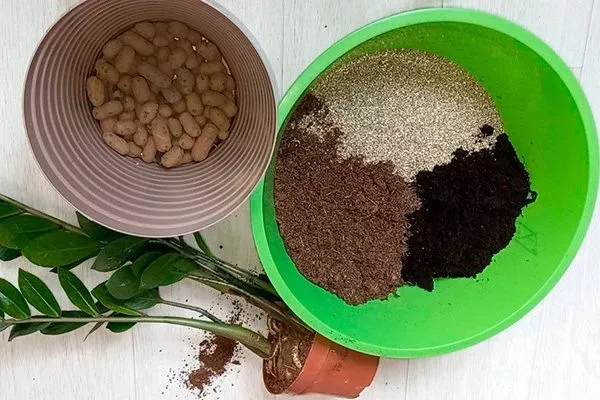
A general-purpose soil is suitable, but can be made more suitable for zamioculcas by adding loosening agents such as expanded clay, sand, and perlite. These components should be used in equal proportions and mixed with the soil at a ratio of 1:3.
Some gardeners prefer to prepare the soil for repotting zamioculcas themselves. They mix equal parts sand and peat to ensure a loose soil, and also add turf and leaf mold to nourish the plant.
Zamioculcas planting scheme
There are several methods for replanting zamioculcas, including transshipment, complete soil replacement, etc. Each of these methods can be used depending on the condition and needs of the plant.
By transshipment method
Transplantation is the best method for replanting any houseplant, as the root ball is not broken up, which minimizes the risk of root damage.
Step-by-step instructions for replanting at home:
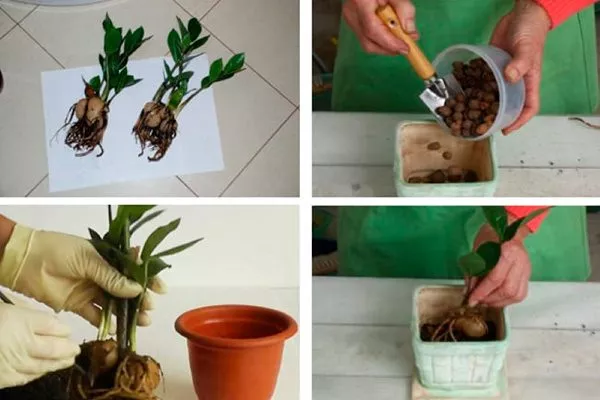
- Place a drainage layer and fresh soil at the bottom of the new planting container so that the top level of soil is approximately 2-3 cm below the edge of the pot after installing the zamioculcas.
- Carefully remove the plant from the old pot.
- Check the roots for signs of rot. If rotten roots are found, remove them along with any old drainage material.
- Place the plant in the center of the new pot and fill the spaces between the root ball and the sides of the pot with fresh soil.
- Return the pot to its original location. If the plant's roots weren't damaged during repotting, no additional shading is necessary.
- If the zamioculcas is difficult to remove from its old pot, try reducing the strain on the roots. If the pot is plastic, lay it on its side and gently squeeze the sides. If the pot is clay, tap it on the table to loosen the root ball. As a last resort, cut the plastic and break up the clay.
- Healthy zamioculcas roots should be light in color and have a faint, fresh aroma. Black, slimy, or foul-smelling roots may indicate disease.
If you want to add fresh soil on top of the root ball, remove a small layer of old soil.
With complete replacement of soil
Repotting zamioculcas by dividing the plant or in case of disease is a common procedure. Follow the instructions for repotting the Money Tree with root cleaning:
- Carefully remove the plant from the old pot and remove as much soil as possible from the roots. Use a wooden stick for this.
- Trim off any darkened or softened root areas.
- Sprinkle the cut areas with crushed charcoal to prevent possible infection.
- Let the plant dry for 2-3 days. Place it in a well-ventilated area in partial shade.
- Sterilize the old pot or take a new one, but smaller.
- Place a drainage layer and a small amount of fresh soil at the bottom of the pot.
- Center the plant and fill the roots with potting soil. Firm the soil by tapping the sides of the pot, but be careful not to damage the roots by pressing too hard.
- Make sure the tubers are at the surface of the soil, about 2-3 cm below the rim of the pot.
- Place the plant in partial shade, protected from drafts.
After purchase
If you've purchased a healthy plant with no signs of root rot or pests, there's no need to completely disturb the root ball when repotting. Transport peat, although it doesn't contain any nutrients, doesn't require thorough removal. Removing half or a small portion of the root ball is sufficient.
If the bush was purchased from a breeder rather than a flower shop, it was likely already grown in high-quality soil. In this case, there's no need to repot it.
How to create support when replanting zamioculcas?
Sometimes even young money tree specimens may not hold their rachis strictly upright. Mature bushes can have a wide crown and occupy a space up to a meter in diameter.
To carefully support their pseudo-branches, you can use staking or staking. One convenient option is to use a circular support for indoor plants, which can be installed directly during repotting. It's quite simple.
However, there's a trick to securing it. Don't try to compact the soil with too much force; instead, prop up the plant's legs with large expanded clay or pebbles. This will provide much greater stability and support for the plant.
- Place the plant in partial shade for 2-3 days to allow it to adapt.
- Limit watering during the first weeks after transplanting to avoid overwatering.
- Start fertilizing a month after repotting, using fertilizer for succulents.
Post-transplant care
Despite its elegance and impressive appearance, the zamioculcas is a very low-maintenance plant. It's no wonder it's often called the ideal plant for those who prefer minimal effort in growing it.
Lighting
Regarding lighting, zamioculcas doesn't require any special conditions and thrives in bright light, but requires some protection from direct sunlight. It grows well in diffused light.
In summer, the plant thrives outdoors. However, in winter, it's recommended to place the zamioculcas closer to a window to prevent the leaves from losing their rich color during limited daylight hours.
Temperature
Zamioculcas, native to hot Africa, prefers warm climates. Therefore, it thrives at temperatures around 30°C. In summer, it's recommended to maintain a comfortable temperature between 20°C and 25°C.
In winter, the plant is best placed in cool conditions at temperatures between 16 and 20°C. The critical lower temperature limit in winter is 12°C.
Watering
When watering zamioculcas, be careful, as the plant can retain moisture in its roots and often suffers from overwatering. In summer, wait until the soil in the pot is half dry before watering again.
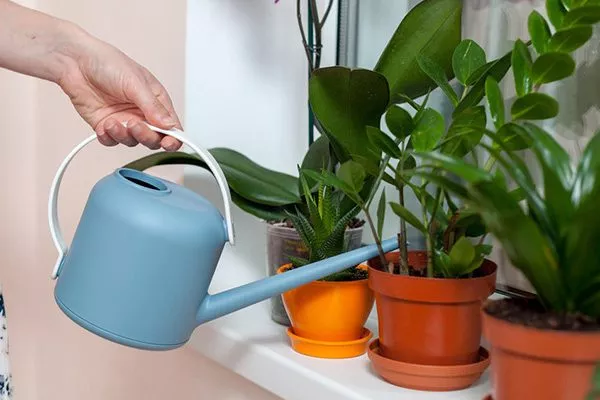
In winter, when the plant is kept in a cool room, reduce watering to a minimum, and water the next time after the substrate has almost completely dried out, which can be determined by the color of the soil - dried soil will have a lighter shade.
Top dressing
During the active growth period, from March to September, it is recommended to fertilize zamioculcas once every two weeks. Be careful when choosing a fertilizer. Nitrogen-containing fertilizers can harm the root system, especially if their concentration is too high.
For zamioculcas, it is better to use fertilizers intended for succulents and cacti, while it is recommended to dilute the fertilizer solution in more water than indicated.
Problems after transplantation
Incorrect planting of zamioculcas can cause several problems. Here are the main ones:
- Loss of leaf turgorOverwatering can cause yellowing and wilting leaves. Root rot can cause the plant to lose its turgor. If you notice the first signs of deterioration, reduce watering. If the situation does not improve, repot the plant in dry soil.
- The wrong potDon't immediately place the plant in a container that's too large. Soil that isn't fully absorbed by the roots can quickly become acidic and become an ideal breeding ground for rot. Choose a pot that's appropriate for the size of the root system.
- The need for transplantation into different soilIf the soil is poorly aerated and retains moisture, this can negatively impact the plant. If the substrate has become compacted, repot the plant in lighter soil.
In addition, there are other nuances associated with plant care:
- Broken flower leafPlace the damaged part of the leaf in water. After a few months, roots will appear, and you can plant a new one. Change the water regularly to keep it fresh. To speed up the process, add Kornevin.
- Cessation of growthInsufficient pot space or insufficient light can slow the plant's growth. Zamioculcas thrives in sunny or partial shade locations, but excessively shaded areas can cause stunted growth.
Water carefully, allowing the soil to dry out to a depth of 3-4 cm. Choose suitable soil to ensure the plant's good health.
If you have unrotted root tubers, plant them in soil suitable for cacti. To do this, follow these steps:
- Clean the tuber of any remaining soil and rinse it in a weak solution of potassium permanganate. Then let it dry.
- Remove any rotted roots and cut off a portion of the tuber. Sprinkle the cuts with ash and treat the above-ground portion of the plant with products such as Oxychom or Fundazol. These will help prevent infections.
- Disinfect the container in which you will plant the tuber and replace the soil.
By following these recommendations, you can successfully transplant zamioculcas root tubers and provide them with good conditions for further growth.
Questions and Answers
Planting often presents challenges that can be difficult to resolve. We offer answers to the most frequently asked questions:
During this time, potential diseases and the presence of harmful insects can be detected. In such cases, it is important to promptly initiate the necessary treatments.
1. Inspect the removed plant after removing the soil.
2. Using a knife with a sharp blade treated with an antiseptic, separate the parts of the tuber that contain the roots and growth points.
3. Sprinkle the cuts with powdered activated carbon.
4. Place the cuttings on thick paper in a warm room and let them dry for 3-4 hours before replanting.
5. Plant the cuttings in separate pots.
After transplanting, do not water the plant for the first three days.
Here are the main reasons for the problems:
- Excessive waterlogging of the soil. Under such conditions, roots may begin to rot.
- Prolonged lack of moisture. If a plant doesn't receive enough moisture, it may become weak and wither.
Using clayey and dense soil when replanting a house.
If these problems occur, it is recommended to conduct further research and assess the condition of the plant to determine whether repotting is necessary to restore it.
If the plant's growth has slowed, it should be carefully removed. The tuber should be shaken and rinsed in a light pink solution of potassium permanganate. Then, it should be left to dry for 2-3 hours in comfortable conditions before replanting.
Using a sharp, disinfected knife, remove damaged root shoots and tuber fragments. Then, treat the cuts with ash and replant the houseplant in disinfected soil.
Repotting a zamioculcas is an important procedure that promotes its healthy growth and development. Choosing the right time and approaching the repotting process are key factors for success. It's crucial to repot the plant promptly to avoid negative consequences and ensure a healthy, profitable tree.