
In the world of ornamental houseplants, the spathiphyllum, known as "women's happiness," holds a special place thanks to its exquisite beauty and ease of care. Behind its wonderful appearance lies a diversity of species and varieties, each with its own characteristics and unique appearance.
Types of Spathiphyllum
There are several fundamental species of Spathiphyllum, considered classic. These basic varieties have served as the basis for the development of numerous unique hybrid cultivars, varying in size, shape, and even foliage and flower color.
| Name | Plant height (cm) | Leaf color | Flower blanket size (cm) |
|---|---|---|---|
| Wallis | 20 | rich green | 9 |
| Spoon-shaped | 80-100 | dark green | 13-15 |
| Abundantly flowering | 50-60 | bright emerald | 6-8 |
| Heliconia-leaved | 90-120 | dark green | 20-25 |
| Cannolistny | 60-70 | bright green | 20-23 |
| Nice | 20-30 | dark green | 15-20 |
Wallis
This Colombian plant species is ideal for indoor growing. It features robust rosettes of leaves and small, lanceolate leaves with slightly wavy edges and a rich green color.
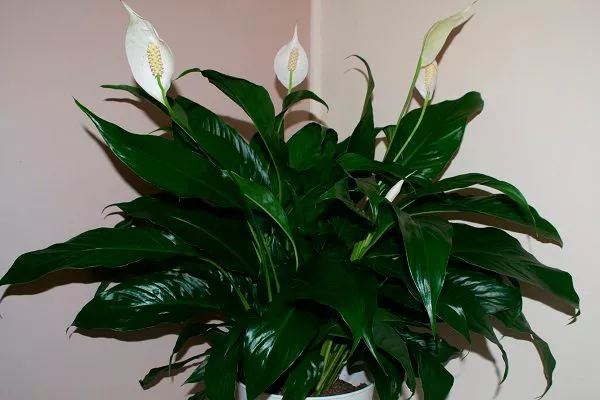
The petioles are long, reaching up to 20 cm. The flower spadix is narrow, up to 3 cm in size, with a snow-white spathe extending 9 cm. The flowers retain their whiteness for two weeks, and as they fade, they acquire a greenish tint.
Spoon-shaped
This species is distinguished by its decorative appeal, large size, and unusually shaped inflorescences. It is a tall plant, reaching 80-100 cm in height. The leaves are dark green, oblong-elliptical, with pronounced veins and a smooth, glossy surface.
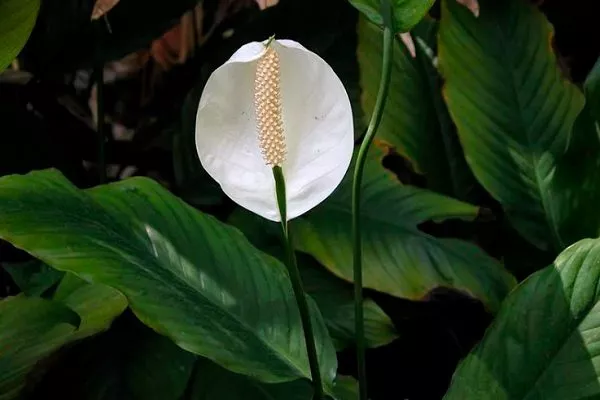
The leaf blades are large, up to 35-40 cm long and 13-15 cm wide. The petioles are very long, up to 60-70 cm, growing directly from the plant's underground root. The floral spathe is white, with an unusual concave, spoon-shaped form. The inflorescence is large, light yellow, becoming darker after flowering.
Abundantly flowering
A distinctive feature is its abundant and long-lasting flowering with numerous buds, which is the reason for its name. The leaves are oval-lanceolate, bright emerald green, with a lighter shade on the underside. The leaf blades are large, reaching up to 18-20 cm in length.
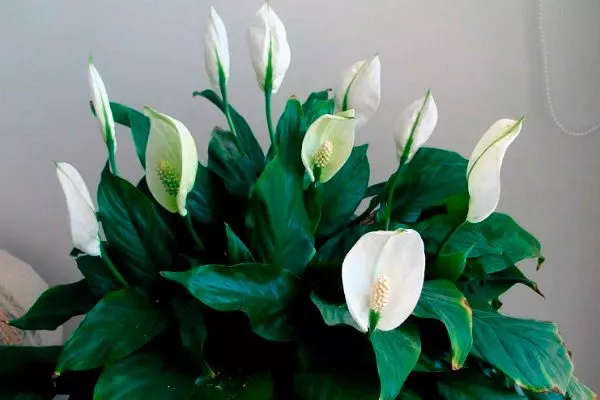
The slender, long flower stalks reach 50-60 cm in length. The inflorescence is a white spadix with a tuberculate texture. The perianths are small, up to 5 cm in size. The floral spathe is snow-white, long and narrow, up to 6-8 cm in size.
Heliconia-leaved
This species of peace lily is tall, reaching 90-120 cm in height. The leaves are elongated, with a smooth and glossy surface, and their edges are slightly wavy. The dark green leaf blades are 40-50 cm long and up to 20-25 cm wide.
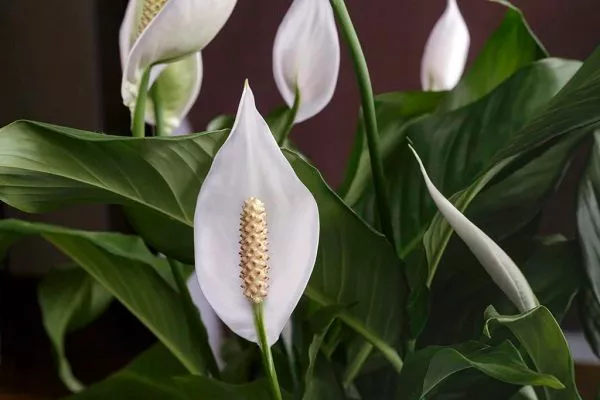
The petioles are thin and long, reaching a length of up to 80-100 cm. The inflorescence, in the form of a cob, can be greenish or vanilla-cream in color, up to 7-10 cm in size. The floral spathe is larger than the cob, white, oval-shaped, and protruding slightly above the inflorescence.
Cannolistny
Basal leaves form lush rosettes arising from the underground stem. The leaves are long, narrow, densely textured, and bright green. The floral spathe is large, reaching 20-23 cm, and is yellowish-white in color.
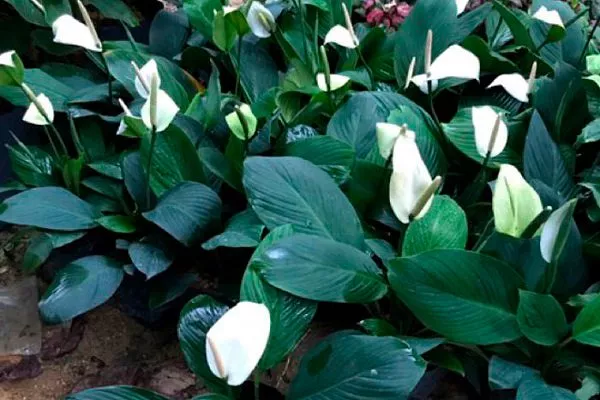
The spadix is yellowish or white in color, with a smooth structure, its size is half that of the spathe and is 10-12 cm. Spathiphyllum inflorescences have a delicate and pleasant aroma.
Nice
Spathiphyllum has a short, underground stem that spreads through the soil. The leaf blades are elliptical with prominent veins and pointed tips. The large leaves, with a smooth, matte texture, reach 20-30 cm in length and 8-10 cm in width.
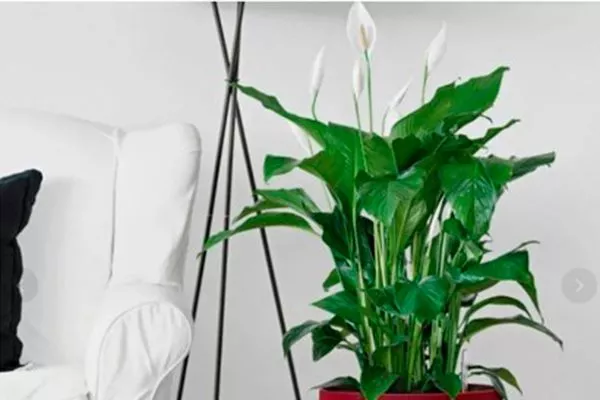
The light yellow inflorescence, shaped like an erect cob, reaches a length of 15-20 cm. The floral cover is white or light green.
Varieties
Thanks to the efforts of breeders, numerous unique varieties of peace lilies, suitable for indoor cultivation, have been created based on classic species. They vary in plant size, leaf and flower color, and even the shape and shade of their flower heads.
| Name | Plant height (cm) | Leaf color | Flower blanket size (cm) |
|---|---|---|---|
| Verdi | 35 | bright green | 5 |
| New One | 20 | dark green with white areas | 20 |
| Gemini | 40 | dark green with gray and cream spots | 6-8 |
| Vivaldi | 50 | green | 6-8 |
| Sebastian | 70 | dark green | 15-20 |
| Moon Shadow | 70-80 | motley | 15-20 |
| Milk | 50 | light green to dark | 6-8 |
| Sweet Lauretta | 70-80 | dark green | 25-35 |
| Sweet Chico | 60-70 | dark green | 15-20 |
| Silver Cupido | 50 | rich green | 15-20 |
| Strauss | 30 | dark green | 15-20 |
| Sweet Silvio | 65-75 | dark green | 15-20 |
| Quattro | 30 | light green | 6-8 |
| Tango | 50 | dark | 15-20 |
| Japanese | 60-70 | bright emerald | 15-20 |
| Sensation | 120-150 | dark green | 60-75 |
| Picasso | 50 | white and green | 22 |
| Dominoes | 40 | green with white spots | 15-20 |
| Chopin | 35-40 | bright | 15-20 |
| Cupido | 50 | emerald | 15-20 |
| Royal | 130-150 | dark emerald | 60-75 |
| Alana | 50 | rich green | 15-20 |
| Haiti | 30 | deep green | 15-20 |
| Mauna Loa | 50 | green | 15-20 |
Verdi
The compact Verdi variety, a miniature hybrid, forms a small bush up to 35 cm tall. The foliage has an elegant shape, a bright green hue, and medium density.
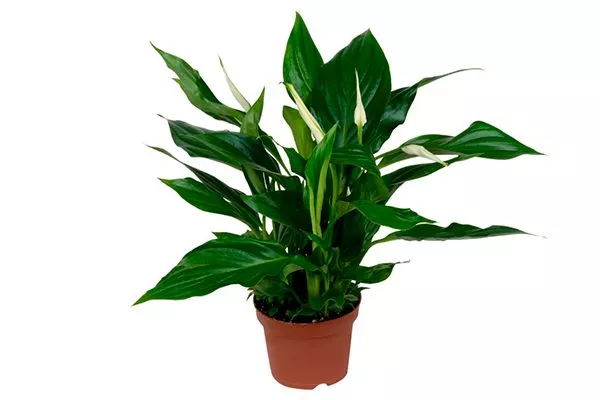
The sail-shaped spathe is whitish, and the spadix is a soft yellow. The flowers are distinguished by an outer longitudinal vein and a sharp, greenish tip.
New One
This multicolored hybrid is distinguished by the fact that even at a young age, its dark green leaves are adorned with striking, rich white patches. A distinctive feature of New Van is its ability to retain its vibrant color even in partial shade.
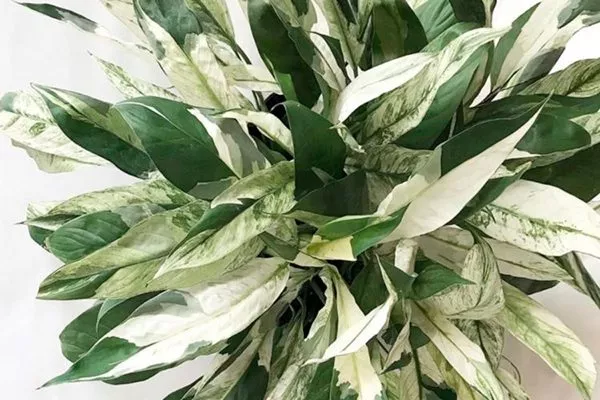
The leaf blade is wide, reaching up to 20 cm in length, pointed, with slightly inward-curving tips. The bush is spreading and medium-height. The flowers are white, and the spathes can be variegated with greenish blotches at the base.
Gemini
This variegated variety resembles the Domino cultivar in appearance. The dark green leaf surface is decorated with a scattering of light gray and cream spots of varying sizes, running along the midrib.
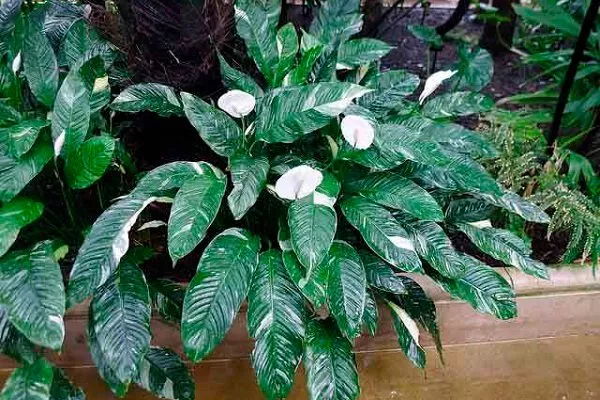
The spathe itself is varied—greenish dots and streaks combine against a snow-white background. The inflorescence of this variety is covered in soft pubescence and has a yellowish tint. The leaves are dense, elliptical, curved, and pointed.
Vivaldi
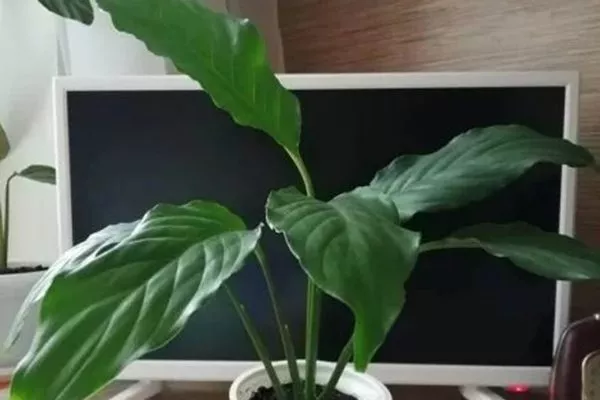
This plant's rhizome is shorter than other species, and the flowers are borne on long stalks. The inside of the flowers is white, while the outer part has a green tint. The inflorescence itself is a distinctive, creamy, attractive color.
Sebastian
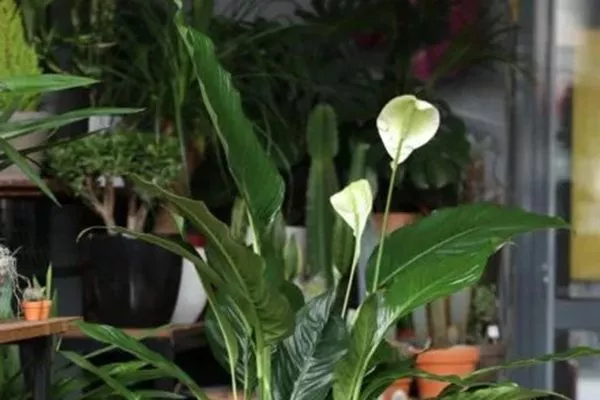
With proper care, this plant can reach a height of up to 70 cm. The leaves are large and fairly dense. The inflorescences are borne on tall stems, and the blooming is not as abundant but lasts for a long time.
Moon Shadow
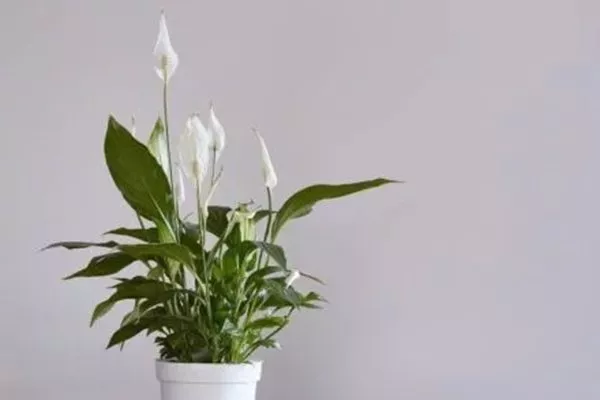
It has multicolored leaves with a variegated pattern, each slightly elongated. The bush reaches a height of 70-80 cm. The flowers are white with a creamy tint. The plant has gained popularity due to its abundant blooms and pleasant aroma.
Milk
A fascinating species of peace lily, its leaves change color and size depending on the ambient lighting. The brighter and more abundant the light, the lighter the leaves become and the larger they become. The plant can take on either a light green or dark color depending on the lighting conditions.
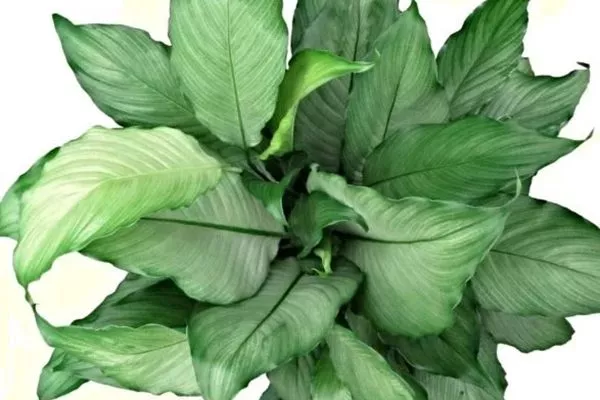
Sweet Lauretta
Sweet Lauretta is a popular Dutch hybrid, created in 2001. This variety attracts attention with its lush, rounded shape, the crown diameter of which corresponds to the height of the plant, approximately 70-80 cm.
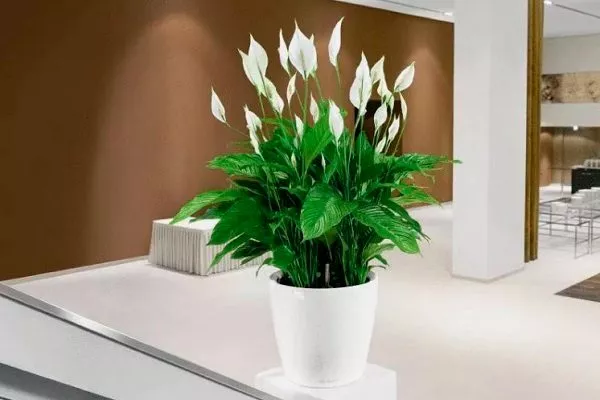
Spathiphyllum leaves are elliptical, dark green, and 25 to 35 cm long. The spathe is large and exquisitely white. The plant begins flowering approximately 6 to 7 months after the seedling has rooted.
Sweet Chico
The plant is characterized by a shortened, creeping underground stem, from which large rosettes of leaves form. The flower reaches 60-70 cm in height. The leaf blades are large, located on erect, long petioles. The leaf surface is smooth and shiny, with clearly visible veins.

During flowering, the spathiphyllum produces a profusion of inflorescences consisting of a white or light yellow spadix and a snow-white spathe. The spathe gradually acquires a greenish tint.
Silver Cupido
This ornamental plant attracts attention with its abundant blooms and richly colored foliage. The large flowers of the peace lily are white with a slight creamy tint. The spathe of the large flower is decorated with distinctive veins.
Strauss
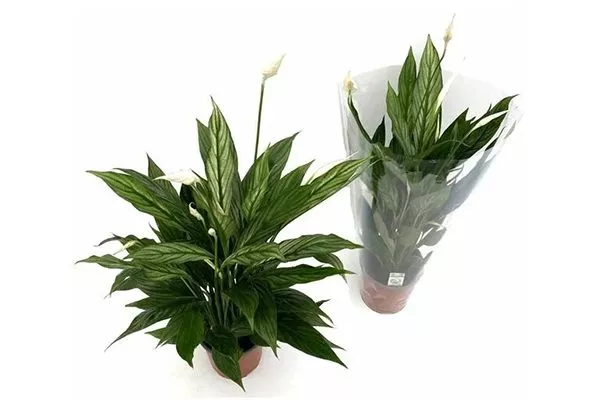
Strauss is the result of selection conducted in the 1970s in the Netherlands, in the city of Aalsmeer. This dwarf variety is characterized by a bush height of barely 30 cm. It stands out for its dark green, abundant leaves.
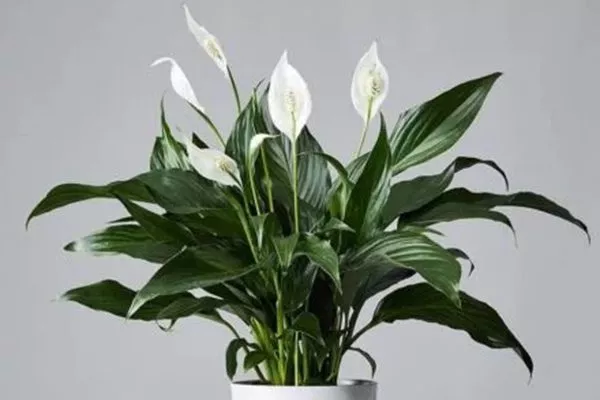
The leaf blade is pointed, with a leathery, matte surface and a waxy coating. The flowers of this variety are long and curved.
Sweet Silvio
This popular hybrid from the Dutch Sweet series produces a compact and neat plant, reaching 65-75 cm in height. This spathiphyllum variety attracts attention with its refined and elegant inflorescences.
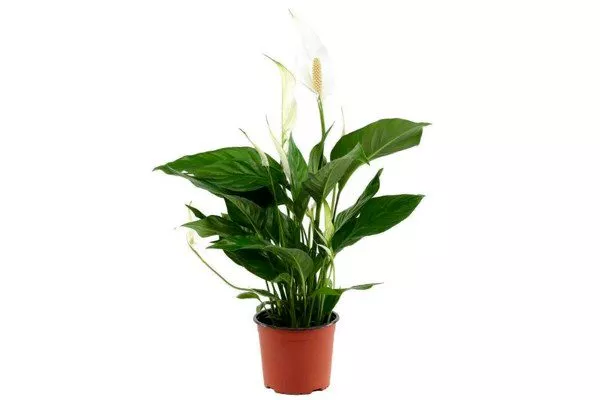
Spathiphyllum Sweet Silvio is successfully used in interior design. It serves as a striking accent in multi-level compositions and decorates spaces of various purposes.
Quattro
This hybrid spathiphyllum is an easy-to-grow plant that can reach a height of up to 30 cm. It boasts long and abundant flowering. The oval-shaped leaves are light green.
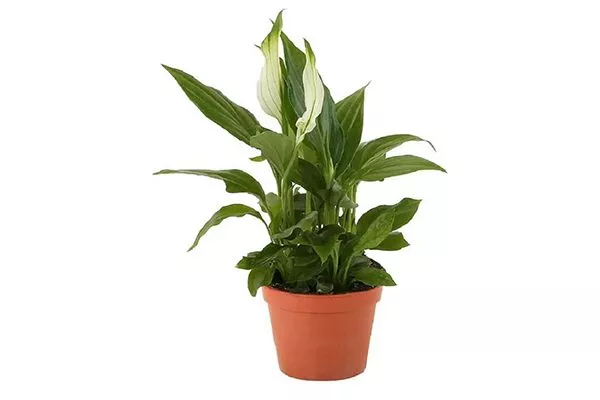
Tango
This variety of peace lily is a medium-sized plant, reaching a height of no more than 50 cm. The leaves are dark, smooth, and glossy, with pointed edges. The upper part of the spathe is greenish, fading to white.
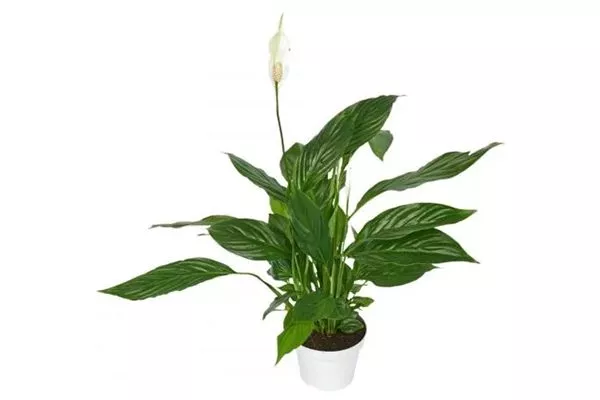
Japanese
Spathiphyllum is a luxurious, branched plant with elongated flower stalks. Its large leaves have a bright emerald hue, prominent veins, and wavy edges, giving them a distinctive appearance.
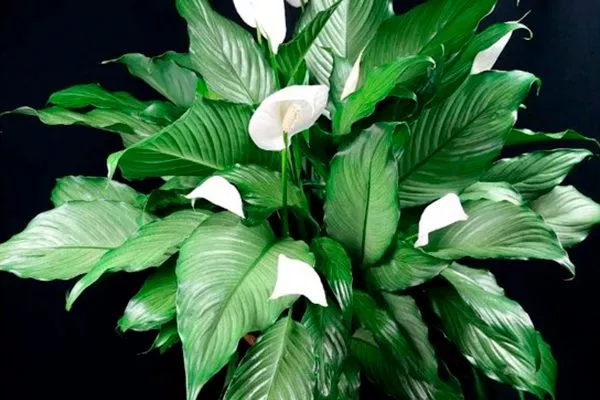
The flower stalks reach an impressive length of 60 to 70 cm. The inflorescence consists of a small, tuberculate spadix and a white or cream-colored spathe, elongated oval in shape and with a light green vein down the center. Japanese peace lily delights with its blooms twice a year.
Sensation
Sensation is one of the most sought-after tall varieties, reaching a height of 120-150 cm. The plant is characterized by large leaves, reaching 60-75 cm in length, and a rich, dark green color.
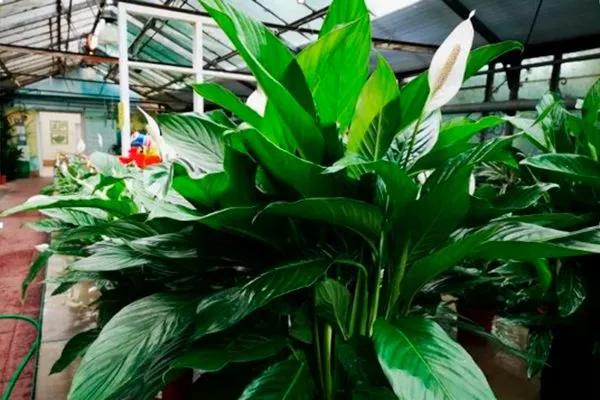
During flowering, the spathiphyllum looks quite impressive, crowned with large inflorescences consisting of a smooth spadix and a vast snow-white spathe. As the spathe develops, it acquires a greenish tint. The flowers are ideal for cutting, remaining fresh for several weeks.
Picasso
This unique dwarf hybrid, developed in the Netherlands, attracts attention with its extravagant leaf coloring. Large white and green spots form a harmonious and unique pattern. The bush reaches a height of 50 cm.
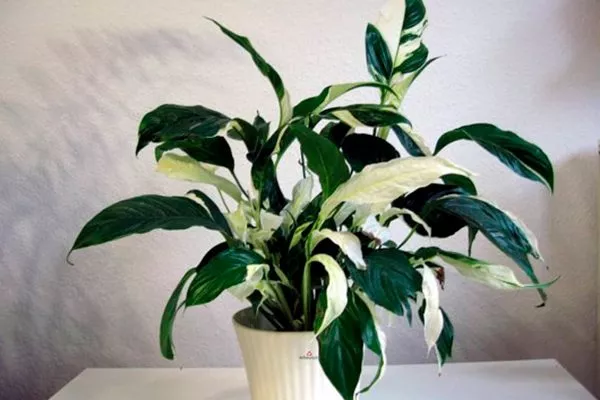
The surface of the delicate white spathe is adorned with green dots. The leaves are broad and oblong, reaching up to 22 cm in length. They are medium-thick and glossy. The petioles are flexible and elongated, adding to the plant's elegance.
Dominoes
This variety of variegated, rare spathiphyllum hybrids attracts attention with its unique leaf coloring. White spots and streaks are randomly arranged around the entire perimeter of the green leaf surface. Domino is easy to care for, adapts easily, and is resistant to common diseases.
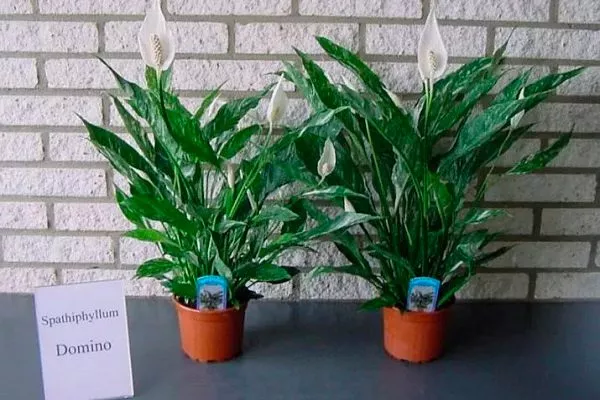
This dwarf shrub reaches a maximum height of 40 cm at maturity, making it compact and easy to grow. The leaves have wavy edges, a figured shape with pointed tips, and a glossy surface. The fragrant white spathes are slightly curved, and their light yellow spikes are covered in hairs.
Chopin
This compact variety grows as a low bush, reaching a height of 35-40 cm. This plant features prominent veining on bright, glossy, elongated leaves, pointed at the tip. The veins are clearly visible on the leaf surface.
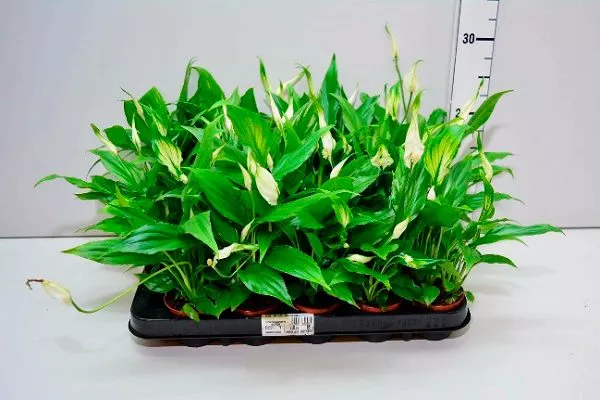
A snow-white, gracefully curved spathe surrounds a yellow spadix. The inflorescence is covered in hairs. A distinctive feature is the fragrance of the flowers. The perianth is elongated, with a sharp, veined tip of a greenish hue.
Cupido
This hybrid variety is based on Spathiphyllum wallisii. The main characteristic of this plant is its unique emerald foliage, which attracts attention with its lushness and richness of color. The flower spathes have a classic color and an elegant curve.
Royal
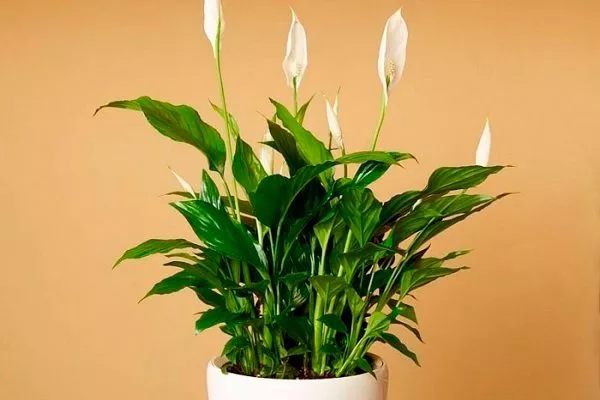
The Royal Spathiphyllum is a massive and tall plant, reaching a height of 130-150 cm. Its large leaf blades are distinguished by their size and elongated shape.
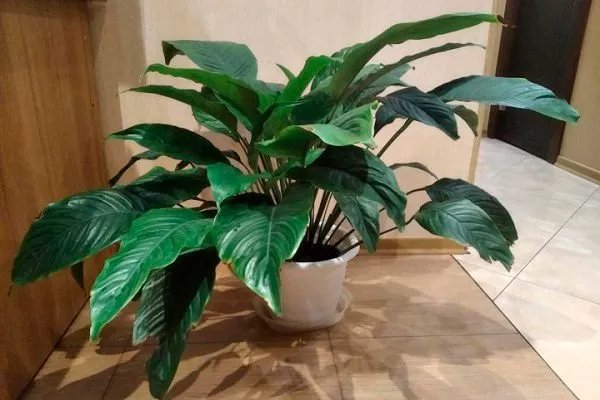
The leaves have a dense structure, wavy edges, a glossy surface, and an unusual dark emerald color. During flowering, the spathiphyllum produces an inflorescence consisting of a small, tuberculate spadix and an oval, snow-white spathe.
Alana
This branched ornamental shrub reaches a height of up to 50 cm. A distinctive feature is that the leaf blades do not fall with age and remain upright. The leaves are elongated, glossy, medium-dense, and a rich green hue.
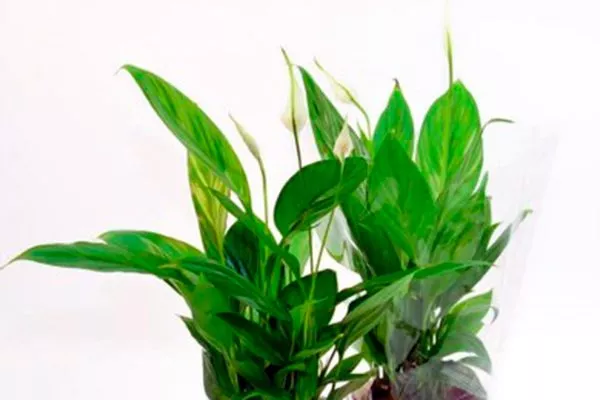
The leaf blade margin has a wavy, ornate shape. The bract itself is broad and expansive, with pointed tips. A distinctive, convex, greenish vein stands out on the inner side of the creamy-white spathe. As the flowers fade, they acquire a light green hue, blending with the foliage.
Haiti
Spathiphyllum 'Haiti' is a rare and exquisite dwarf variety. This miniature and compact plant is characterized by narrow, slightly drooping leaves of a rich green hue.
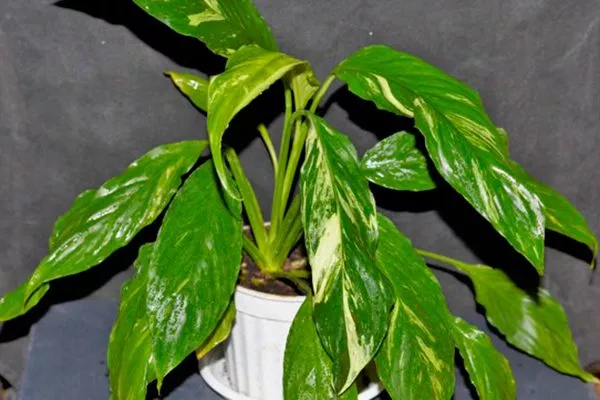
Spathiphyllum blooms with a small, cream-colored, tuberculate spadix and a large, snow-white spathe. The plant is demanding in terms of care, and to successfully grow indoors, it needs comfortable conditions.
Strauss
This compact dwarf variety grows to a height of 20 to 30 cm. This ornamental plant features narrow, oblong leaves and a classic-shaped bract, colored snow-white.
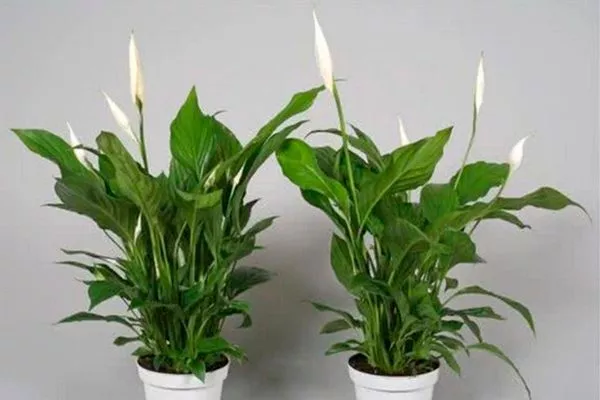
Proudly blooming twice a year, the Strauss variety is ideal for growing in small spaces. It also thrives in low-light conditions.
Mauna Loa
This tropical plant originates from Colombia. Spathiphyllum has a short underground stem from which rosettes of long, narrow leaves form. The perianths are concave, oblong-elliptical.
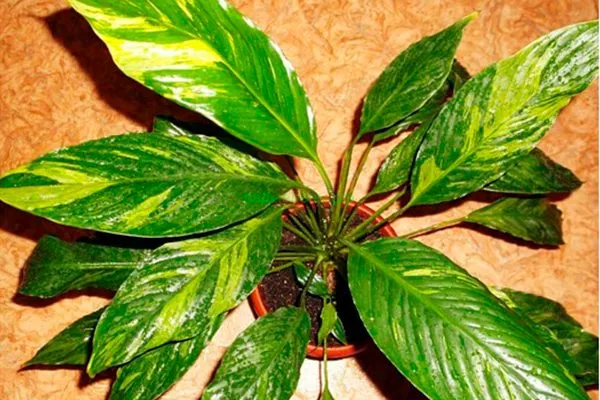
The spathiphyllum is characterized by its small size and snow-white or cream color. One of its key characteristics is its long flowering period, which, with proper care, can last year-round.
How to choose?
The vibrant diversity of spathiphyllum varieties offers gardeners a wealth of options. To simplify the process of choosing a plant for indoor growing, consider a few key points:
- Foliage. Healthy leaf blades should be intact, free from mechanical damage, spots, or blackening. Leaf color should be uniform, with the exception of variegated varieties with a variegated greenish-white color.
- Escapes. Healthy shoots should be strong and dense, without signs of fungal diseases, darkening or other damage.
- Inflorescences. The flower cobs and spathes should not show any damage, signs of wilting, or drying out. The spathe tips should not be dry, but slightly damp.
- Soil in a pot. The soil in the flowerpot should not have an unpleasant odor, show signs of mold, or show signs of insect infestation. Make sure the soil isn't overwatered, as this could indicate root problems.
Spathiphyllum is a remarkably diverse family of ornamental plants, extremely popular in indoor gardening. Species and cultivars offer a striking variety of shapes, sizes, flower colors, and foliage textures. Breeding advances have allowed the creation of unique hybrids for a variety of growing conditions.