
Spathiphyllum wallisii, with its exquisite white blooms and glossy green foliage, is a delightful addition to the world of houseplants. Growing and caring for it not only adds coziness and a picturesque touch to the home but also becomes an exciting and rewarding pastime for houseplant lovers.
History of origin
German botanist Gustav Wallis discovered the peace lily in the early 19th century in Colombia, where he was on a scientific expedition. After Wallis brought the plant back home, it thrived in temperate climates and began to spread rapidly.
Over time, the Wallis plant adapted to the tropics and began to grow in eastern Asia and Polynesia. The process of creating hybrids for indoor cultivation began in 1960.
Peculiarities
Spathiphyllum wallisii is very popular among gardeners worldwide due to its appearance and ease of care.
Botanical description
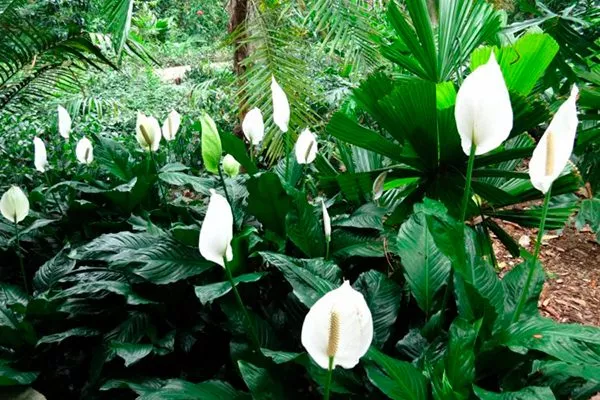
The plant is compact, not exceeding 30 cm in height. The leaves are lanceolate, up to 6 cm wide and up to 25 cm long. The dense, glossy leaves have a distinct midline and veins, and are arranged in a basal rosette, lacking a stem.
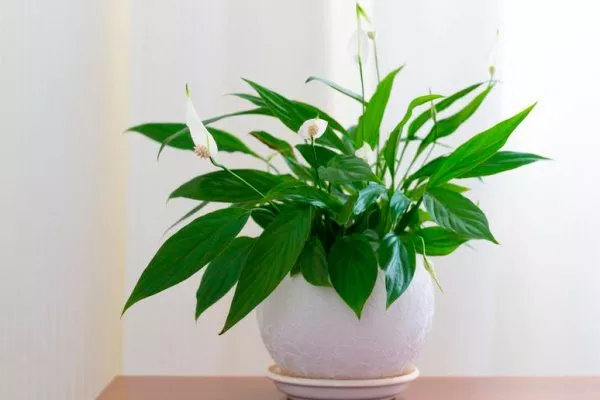
The green petioles are almost as long as the leaf. The inflorescence consists of a white spadix, reaching up to 3 cm in length, protected by a perianth, known as a "sail," three times longer than the inflorescence.
What is the difference from other representatives?
Spathiphyllum wallisii is the most common of the various species. This variety's distinctive feature is its compact size, making it ideal for growing indoors. Growing it is straightforward, and care is similar to other species.
Bloom
Spathiphyllum wallisii begins flowering at approximately 1.5 to 2 years of age, with a long blooming period from late March to early September. The flowers are yellow spadixes surrounded by snow-white bracts.
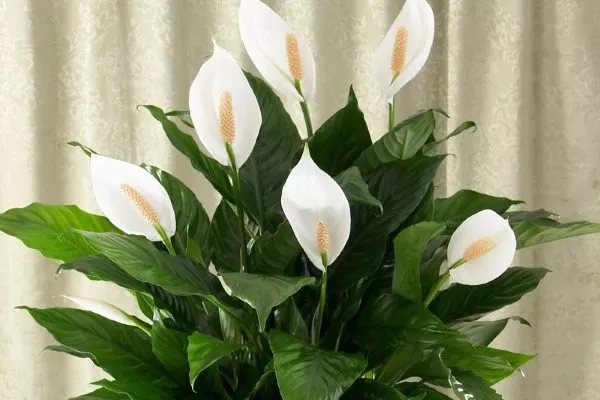
Before this important stage, it is recommended to add fertilizers containing potassium and phosphorus to the soil. At this time, the plant requires more nutrients and moisture. Mineral components play a key role in prolonging the flowering period and strengthening the plant's defenses.
Medicinal properties
One of the key properties of this plant is its ability to absorb carbon dioxide and formaldehyde, which are often emitted by new furniture, insulation materials, and linoleum.
Is Spathiphyllum wallisii poisonous?
Spathiphyllum sap has an irritating effect on the mucous membranes of the larynx and stomach. Accidental contact with a small piece of a leaf during flowering, when pollen is released, may cause the following symptoms:
- skin rash (urticaria);
- difficulty breathing;
- dull cough;
- headache;
- general weakness;
- sweating.
If these symptoms occur, remove the contact area, rinse your mouth, and consult a doctor. If you can't see a doctor, take antihistamines.
Pets can experience similar irritations, manifested by decreased activity, difficulty breathing, drooling, and a slow heart rate. In such cases, give your pet activated charcoal and consult a veterinarian immediately.
To avoid poisoning, follow these simple rules:
- When caring for and replanting the plant, use gloves.
- Place the flower pot in a place inaccessible to pets and children.
People with increased allergic reactions are advised to be careful and gradually test their body's reaction to the flower.
Subvarieties
| Name | Plant height | Leaf shape | Flower size |
|---|---|---|---|
| Cladius | up to 30 cm | lanceolate | small |
| Chopin | up to 30 cm | wide | large |
| Mozart | up to 30 cm | narrow, lanceolate | small |
| Macho | up to 30 cm | wide | large |
| Numero Uno | up to 30 cm | variable | small |
| Florin | up to 30 cm | rounded | small |
| Sweet Silvio | up to 30 cm | dark green, large | fragrant |
The Wallis cultivar includes 40 different flower varieties, each of which is popular. Below are some of them.
Cladius
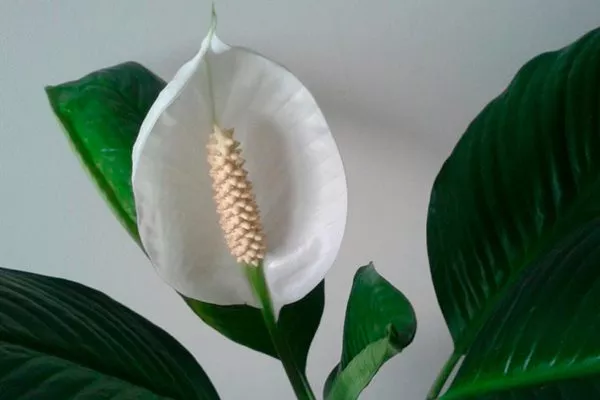
Unlike other spathiphyllum varieties, the Claudius variety is characterized by its small size. The flower height does not exceed 30 cm.
Chopin
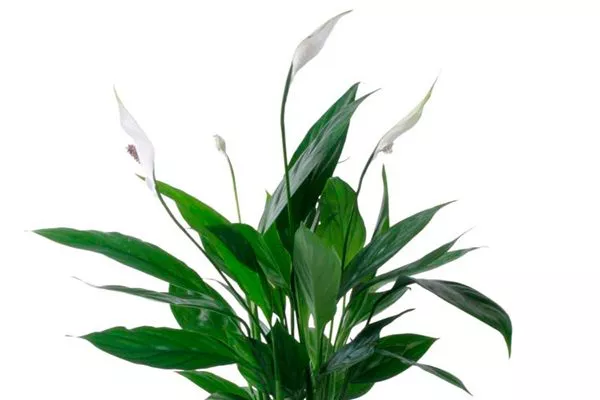
This plant blooms profusely, distinguished by large flowers with wide bracts. Interestingly, the leaf size remains constant throughout the blooming period.
Mozart
This small bush of a plant attracts attention with the unusual shape of its leaves. They are narrow and lanceolate.
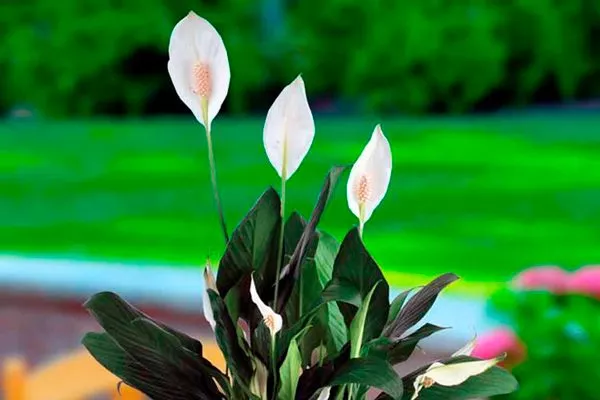
Macho
The flowers of this plant are larger than those of the Chopin variety. In addition to a wide white spathe, they are distinguished by a large spadix.
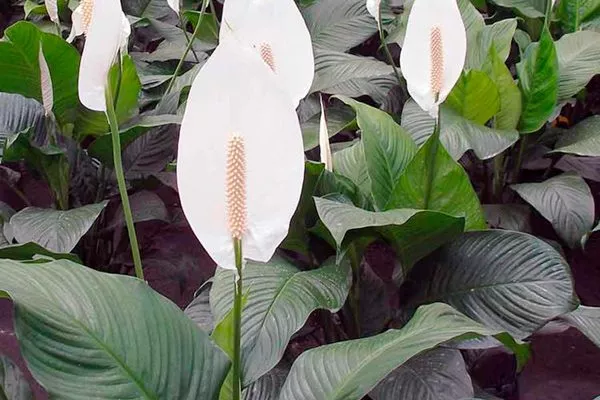
Numero Uno
This variety was recently bred, and its special feature is the ability to change the color of the leaves depending on the lighting: they can be either solid or variegated.
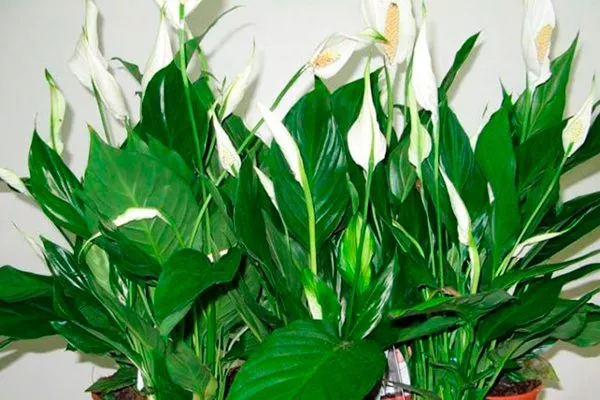
Florin
The plant is characterized by small, rounded leaves and does not tend to grow vigorously, making it suitable for narrow windowsills and small spaces.
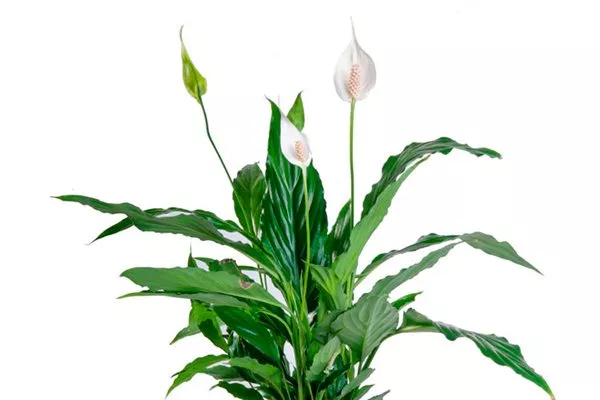
Sweet Silvio
The leaves of this variety are large and dark green. A distinctive feature is the more pronounced aroma of the flowers compared to other varieties.
Growing conditions
To successfully grow peace lilies, it's important to adhere to lighting, temperature, humidity, and other requirements common to all species. Follow the recommendations of experienced gardeners to ensure a robust plant.
Humidity and temperature
To successfully grow Spathiphyllum wallisii, it is recommended to maintain high humidity, approximately 60-75%. This can be achieved by following a few recommendations:
- Spray the foliage regularly with a spray bottle twice a day.
- Place a container of water next to the plant.
- Hang a damp towel on the radiator or place small pebbles filled with water in the pot tray.
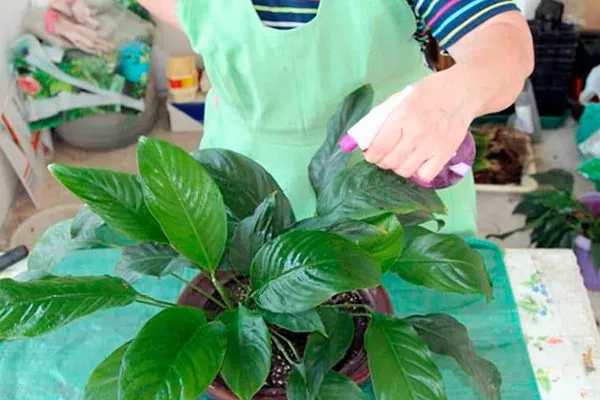 Additionally, wipe the leaves with a damp, soft cloth every 10-14 days. Spathiphyllum wallisii prefers temperatures of 22-25°C in summer and 16-20°C in winter. Maintaining the summer temperature range during the winter helps improve flowering.
Lighting for a flower
The plant prefers bright light, but avoid direct sunlight to prevent leaf and flower scorch. During the shortened winter daylight hours, use artificial lighting to support flowering.
Soil requirements
The soil for spathiphyllum should provide good air exchange. A combination of the following components is an option: leaf mold, peat, expanded clay granules, charcoal, sand, sphagnum moss, fern roots, and mineral loosening agents. Ready-made soil is also available.
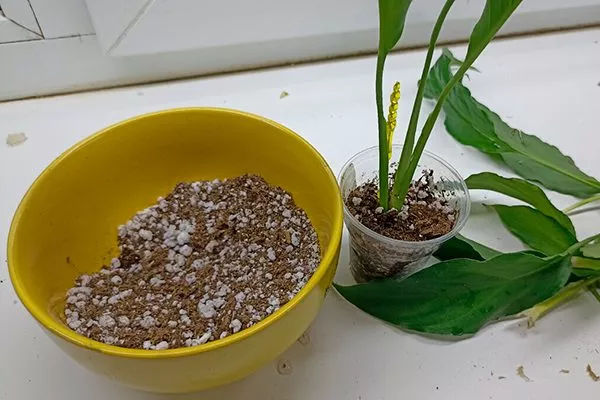
To maintain optimal plant health, renew the soil every 2-3 years. When repotting, choose a pot 2-3 cm larger than the previous one, ensuring sufficient space for the spathiphyllum's root system to develop.
Choosing a location
For best plant growth, place the pot in a well-lit area, avoiding direct sunlight. Ideal locations include windowsills on the east or west side of the building. If such locations are unavailable, the plant can be placed in partial shade.
Caring for a flower at home
Spathiphyllum care isn't particularly difficult, but it does require certain care. It's important to provide this houseplant with the attention it deserves to ensure it thrives and thrives.
Watering
In spring and summer, water the plant daily. During the fall and winter, moisten the soil every 7-10 days. When watering, use clean water without additives. Maintain humidity in the room where the plant is located at 50-60%.
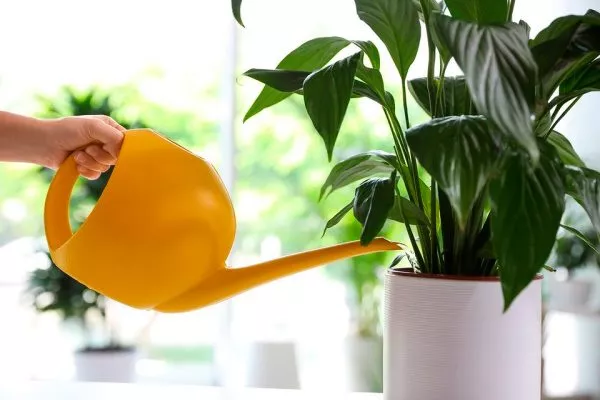
It is recommended to mist the plant's leaves 2-3 times a day. To humidify the air, you can use trays filled with wet expanded clay or sand, or use a household humidifier.
During the active growth and development period (March-September), fertilize the spathiphyllum with a complete mineral fertilizer at a low concentration (1-1.5 g per 1 liter of water). Alternatively, you can use specialized fertilizers for indoor plants, excluding those containing lime, such as Azalea or Tsvetochok.
An effective method is alternating fertilizing: using solutions of mineral fertilizers and diluted fresh mullein in a ratio of 1:15 or 1:20. Before and after fertilizing, water the plant generously with room-temperature water.
Trimming
Spathiphyllum wallisii requires regular pruning to maintain its decorative appearance. Follow these recommendations:
- Remove yellowed foliage, especially if the yellowing is due to natural aging. If only the tip of a leaf is yellowed, trimming off just that portion is sufficient.
- Damaged leaves should also be removed.
- Carefully trim off faded flowers.
- Trim off any excess parts of the plant that are rotted or attacked by pests.
- If the cutting is leaning significantly towards the ground, cut it off.
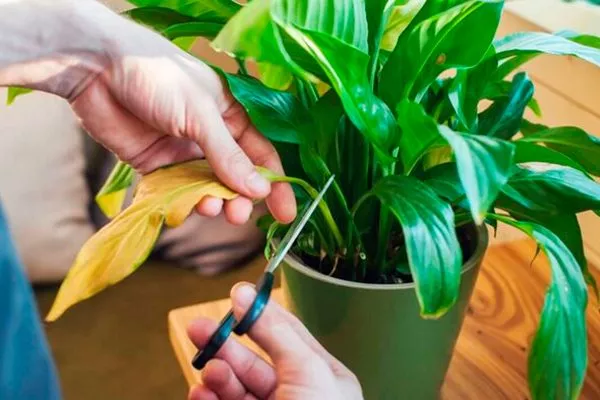
To speed up the recovery process and as an additional disinfectant measure, treat the cut areas with crushed charcoal.
Transfer
When repotting is necessary, the signal is when the roots fill the entire pot. Repotting is recommended in the spring, as spathiphyllum is sensitive to root damage, so care is essential when performing this procedure.
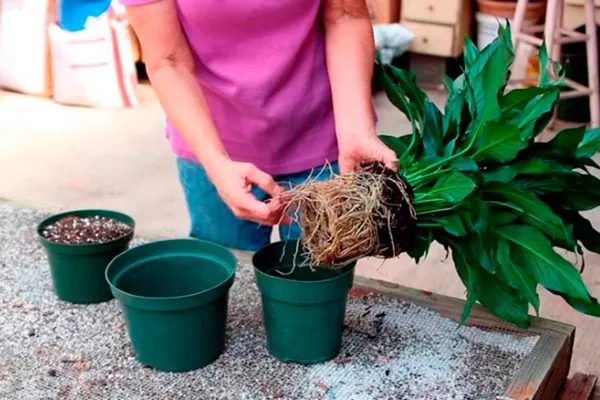
Helpful tips:
- The optimal soil for repotting should be slightly acidic (pH 5-6.5) and loose to avoid excess moisture, which can harm the plant. Good results can be achieved using a mixture of leaf mold, turf, humus, peat, and river sand.
Ordinary humus with the addition of brick chips and pieces of charcoal is suitable. - It is permissible to use a ready-made substrate for aroids with the addition of pieces of charcoal.
- Drainage is very important, and the pot should be chosen slightly larger than the previous one, so as not to slow down flowering.
- Before replanting, water the soil with a dark pink hot solution of potassium permanganate.
After repotting, the plant requires warmth, moderate watering, and frequent misting to promote rapid rooting. Creating greenhouse-like conditions, such as covering the plant with a transparent material, and ventilation will help speed up the rooting process.
How to propagate?
There are three ways to increase the number of seedlings. Many gardeners use cuttings and division. More experienced specialists propagate spathiphyllum by seed.
Division
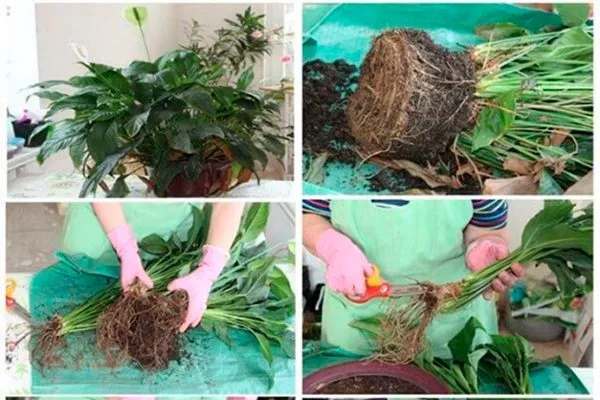
This is the most popular method because it's very quick and easy. The process for dividing Spathiphyllum wallisii is as follows:
- Place the pot with the mature plant on the oilcloth.
- Tap the pot around the circumference to loosen the soil. If this doesn't work, water the soil thoroughly.
- Grasp the plant's stems at the base with one hand and grasp the pot with the other. Carefully remove the plant from the pot along with the soil ball.
- Carefully remove any remaining soil from the root system, avoiding damage to the roots.
- Divide the plant so that each part has a developed root system and at least 3 stems with leaves.
- Place each section in a dry place to allow the roots to dry out a little.

- When the roots are dry, immerse each part in water with a 0.5% solution of manganese for about 20 minutes to disinfect the planting material.
- Rinse the roots, then place the seedlings in containers filled with water and a root growth stimulant. Keep them there for a day or two to speed up establishment.
- Transfer each seedling into pre-prepared pots with soil.
- Water the soil.
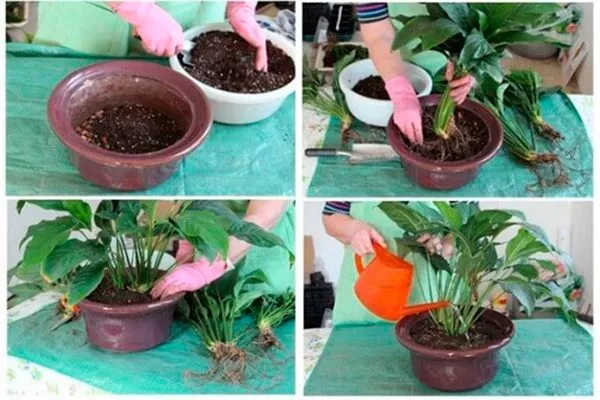
During the period of seedling establishment, avoid direct sunlight and ensure moderate soil moisture.
Cuttings
To grow a seedling from a cutting, it's important to follow certain guidelines. Follow these instructions:
- Select the most developed cutting, at least 10 cm long, and cut it from the plant.
- Treat the cut area with charcoal powder.
- Fill a clear plastic cup with damp sand and insert the cutting into it about 3-4 cm deep.
- Cover with another smaller cup (or use a bag) to create a greenhouse effect.
- When leaves appear on the cutting and the root system is well developed, the seedling will be ready for transplantation.
- ✓ The presence of at least two aerial roots with a length of 1 cm.
- ✓ No spots or damage on the leaf blade.
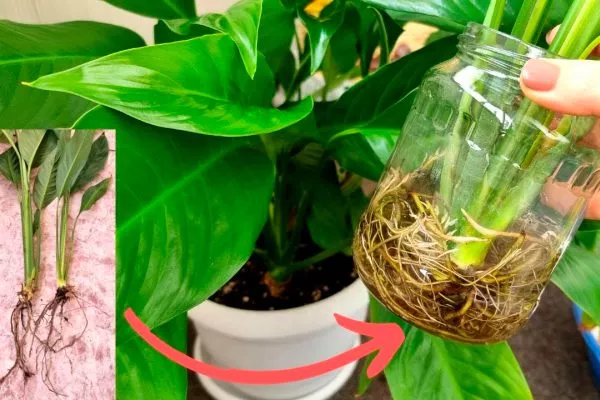
During the rooting process, ventilate the planting material daily (10-15 minutes is enough) and moisten it as the soil dries out.
Seeds
Propagating spathiphyllum by seed is rarely used due to a number of disadvantages. Here are the main ones:
- Obtaining a seedling takes a significant amount of time.
- Not all seeds can germinate and take root successfully.
- A crop may not inherit all the desired characteristics from a parent.
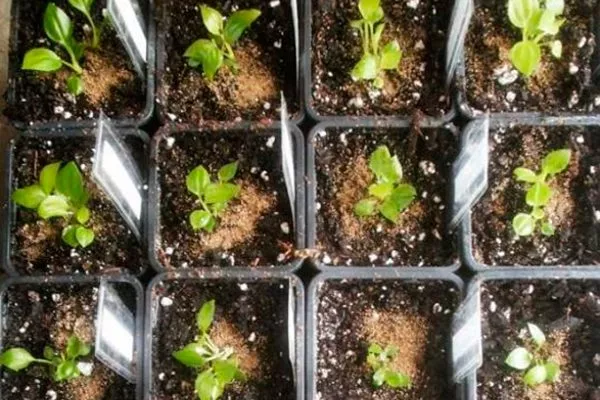
The procedure for propagating spathiphyllum by seeds includes the following steps:
- Remove any moldy or misshapen seeds.
- Place the seeds in water with added potassium permanganate for 20 minutes. Discard any seeds that float to the surface.
- Fill the trays with a mixture of peat and river sand. Moisten the soil.
- Place the seeds in the soil to a depth of about 2 cm, spacing them 5 cm apart.
- Cover the container with film to create a greenhouse effect.
- Ventilate the plantings daily for 15 minutes and moisten the soil, preventing direct exposure of the tray to sunlight to avoid damaging the emerging sprouts or seeds.
It's best to purchase standard spathiphyllum seeds from stores, as obtaining viable seeds from homegrown plants can be challenging. Homegrown seedlings typically take root better and retain all their characteristics, unlike store-bought plants.
Diseases and pests
Despite the high resistance of spathiphyllum flowers to various diseases, this houseplant can become the target of attack by pests such as spider mites, which prefer dry indoor air, mealybugs, which eat the base of the leaves, and aphids.
To control insects, use soap solutions and pesticides such as Actellic, Decis, and Karbofos. It's important to treat both the above-ground portion of the plant and the soil in the pot.
To prevent the plant from weakening, take the following precautions:
- Use clean water for irrigation with a temperature within the range of +30…+40°C.
- Prepare the soil for the plant yourself, disinfecting each part of the soil and the pot itself with boiling water.
- Wash the plant periodically in the shower, removing dust and dirt from the leaves.
- If a white coating appears on the surface of the soil, replace the soil in the pot.
- Feed the spathiphyllum with mineral fertilizers.
- Inspect the surface of the leaves for insects.
- Avoid overwatering the pot to prevent root rot.
- Do not repot the plant during the flowering period.
- Drain excess water from the plate under the pot 15 minutes after watering.
- Place the spathiphyllum in a sunny spot, occasionally moving it to partial shade in the summer.
- Remove dry parts of the plant.
- In winter, place the plant pot away from the radiator.
Avoid excessive use of pesticides to avoid weakening the plant. Before using pesticides, try controlling pests with a soap solution.
What to do if it doesn’t bloom?
To maintain the flowering of Spathiphyllum wallisii, it is recommended to adhere to certain rules. Follow these instructions:
- Buds will only appear if the root system completely fills the pot. Avoid transplanting this small houseplant into a container that's too large.
- Avoid overwatering. Water the peace lily only after the soil has completely dried out.
- When providing lighting, avoid direct sunlight, although the plant prefers bright conditions. Make sure the pot is in a well-lit area, avoiding areas that are too dark.
- Place the pot away from drafts, as these can negatively impact the plant's health. Check the roots regularly and, if necessary, lift them and remove any accumulated soil.
- If moisture is retained in the soil, which can lead to weakening of the plant, dry it out and replant.
- ✓ Lighting level should be at least 2000 lux to stimulate flowering.
- ✓ The temperature during the budding period should not fall below +18°C.
To stimulate flowering, avoid overwatering the peace lily for a while. Afterward, place the pot in a cool room.
Growing and caring for Spathiphyllum wallisii is not only accessible but also enjoyable thanks to its magnificent blooms and decorative appearance. This easy-to-grow plant thrives with proper watering, lighting, and moderate fertilizing. Growing this flower is a pleasant and engaging hobby for amateur gardeners.