
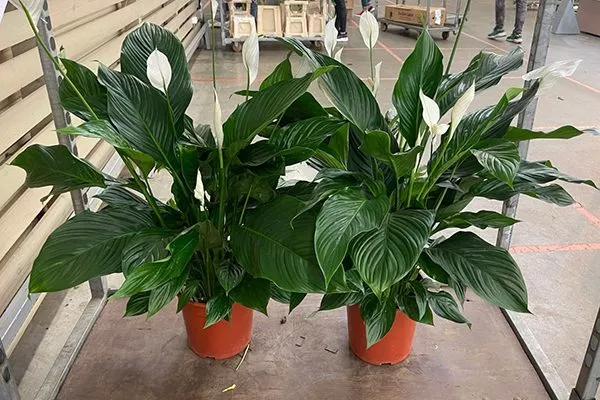
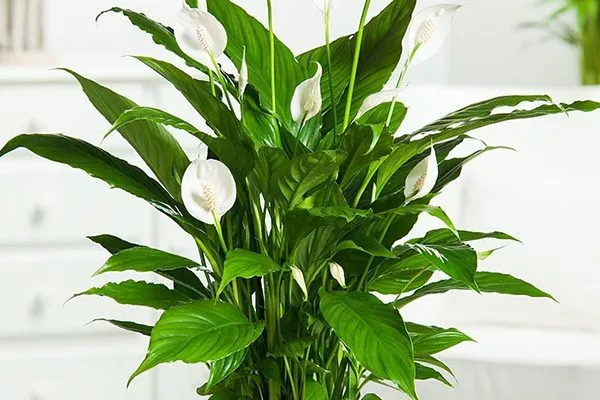
Sweet Lauretta is a variety of peace lily, commonly known as "women's happiness." This luxurious hybrid boasts a large size and looks perfect in modern interiors.
History of creation
Sweet Lauretta is a striking, tall hybrid developed in 2001 by Dutch breeders. It is a hybrid of the Spathiphyllum wallisii species. Sweet Lauretta is very similar to its parent plant, differing only in size—the hybrid has larger leaves and a taller bush.
Description
The Lauretta variety is a representative of the Sweet spathiphyllum, which differs from its relatives by its larger bushes and leaves, as well as highly projecting inflorescences.
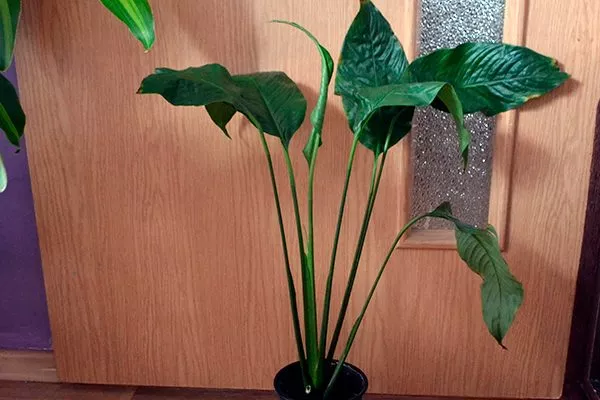
Description of the Sweet Lauretta variety:
- plant height - up to 80 cm;
- bush width - 85 cm;
- inflorescence length - 16 cm;
- leaf blade length - 35 cm;
- The length of the cutting is 50 cm.
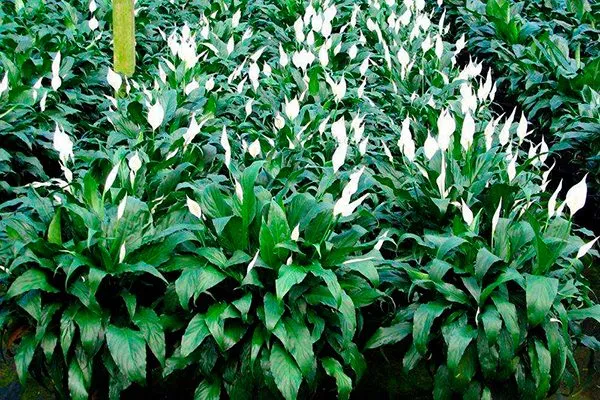
Laurette grows lushly, its width almost equaling its height. The leaves, with dense petioles, are gathered in a basal rosette; they are curved and have pronounced veins, creating a ribbed effect.
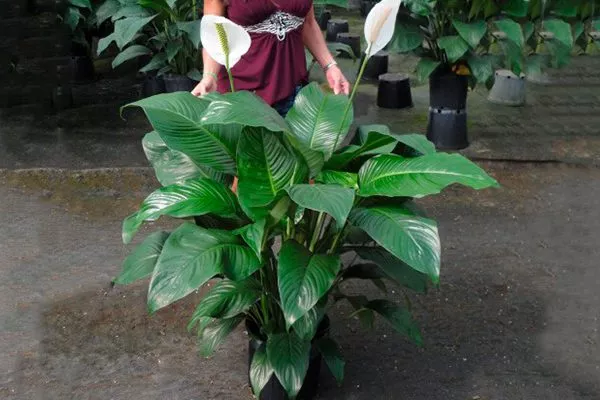
The inflorescences are creamy-white spadixes, covered with oblong, curved perianths (spatulas). The tip of the spadix is slightly greenish. The flower emits a rather pleasant fragrance.
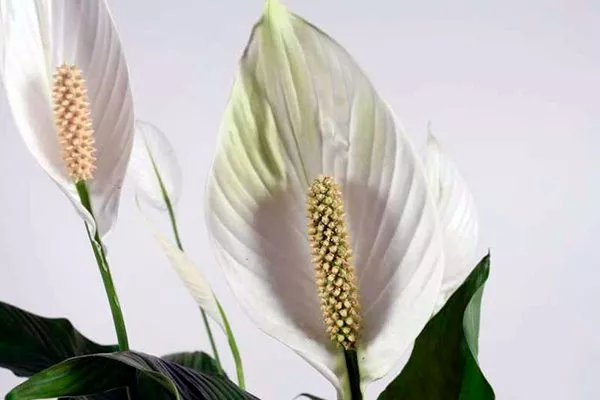
Flowering occurs a month after rooting. Its spathe is large, the size of a palm. Flowering time is from April to May.
Other varieties of Spathiphyllum Sweet
| Name | Plant height (cm) | Bush width (cm) | Inflorescence length (cm) | Length of leaf blade (cm) | Length of the cutting (cm) |
|---|---|---|---|---|---|
| Sweet Lauretta | 80 | 85 | 16 | 35 | 50 |
| Chico | 75 | 75 | 15 | 30 | 45 |
| Silvio | 60 | 60 | 12 | 25 | 40 |
| Benito | 70 | 70 | 14 | 28 | 42 |
Along with Lauretta, the following varieties are popular in indoor floriculture:
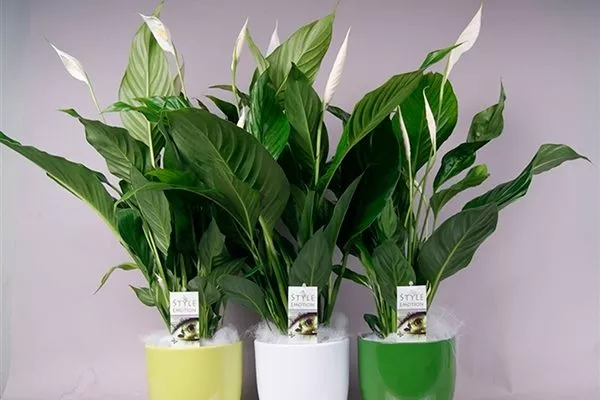
- Chico. This plant reaches 75 cm in height. It produces voluminous bushes and large white flowers. The leaves are large, oval, smooth, and richly green. It produces flower stalks twice a year.

- Silvio. This variety reaches a height of 60 cm. It has wavy glossy leaves that reach a length of 25 cm.
- Benito. This Dutch variety is capable of producing up to 15 inflorescences at a time, with half of them blooming simultaneously.
Growing conditions requirements
To ensure the Sweet Lauretta Spathiphyllum maintains a presentable appearance and blooms regularly, it's important to provide it with suitable growing conditions. Particular attention should be paid to temperature, humidity, and lighting, as each of these factors directly affects the beauty and health of the plant.
Growing conditions requirements:
- Lighting — partial shade. Direct sunlight for several hours is acceptable. Optimal placement is east- and west-facing windows; north-facing windows are also suitable.
- Humidity - moderate (at least 35% is the normal humidity in the shade outdoors).
- Soil - loose and nutritious, with weak acidity.
- Temperature — in spring and summer at +20…+24°C, and in autumn and winter within the range of +17…+19°C.
- ✓ Lighting levels should be at least 2000 lux for optimal photosynthesis.
- ✓ Air humidity should be maintained at 60-70% to prevent leaf tips from drying out.
The plant loves semi-shaded areas and thrives in warm rooms, but it cannot tolerate stifling heat and scorching temperatures, and drafts are strictly contraindicated for it.
Pros and cons
Before bringing a Sweet Lauretta spathiphyllum into your home, it's helpful to evaluate all its positive attributes and benefits. It's also important to be aware of its drawbacks; perhaps this plant isn't suitable for your specific needs or conditions.
Transfer
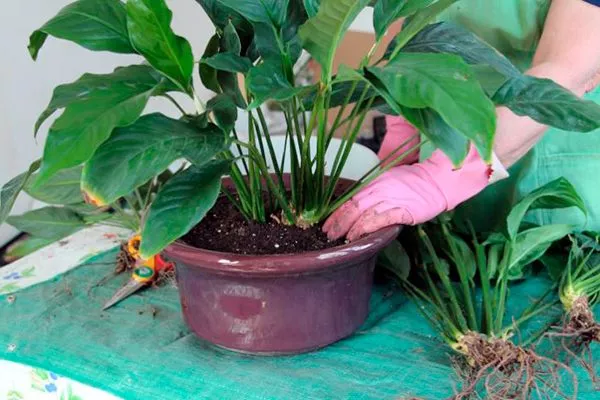
Repotting a purchased plant and an adult plant follows the same procedure. First, prepare the soil and pot. A purchased plant should be repotted as soon as possible into a new pot made from store-bought soil. Adult plants are repotted every spring, as their roots fill almost the entire pot within a year.
Preparing the pot
Spathiphyllums can be grown in any pot, ceramic or plastic, as long as it's the right size and has drainage holes. For a young plant, choose a container with a diameter of 15-20 cm.
The plant's roots gradually take over the entire pot, so it needs to be moved to a larger container. For the plant being repotted, select a pot that is 2-3 cm larger in diameter than the previous one.
Priming
You can use store-bought soil for indoor plants. It's available at any flower shop. You can also make your own potting mix, but you'll need to calcine it or treat it with fertilizer.
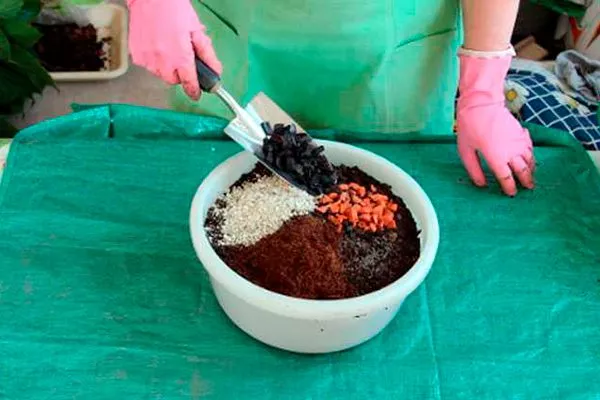
Approximate composition of the soil mixture:
- turf - 2 parts;
- leaf humus - 1 part;
- peat - 1 part;
- coarse sand - 1 part;
- fine brick chips - 0.5 parts;
- charcoal - 0.5 parts.
Instead of charcoal, you can use coconut fiber or tree bark. To improve soil fertility, you can also add a little superphosphate.
You can prepare the following composition:
- store-bought soil - 5 parts;
- vermiculite - 1 part;
- chopped pine bark - 1 part;
- humus - 0.5 parts.
Before adding potting soil, ensure proper drainage. Apply a layer 2-3 cm thick. Suitable materials include vermiculite, expanded clay, or fine gravel. Add the substrate on top, leaving a 3 cm gap from the top.
The transplant process step by step
It's recommended to repot the spathiphyllum when it's not blooming. If the plant has already sprouted shoots, they should be removed with pruning shears to reduce the stress of moving it to a new location.
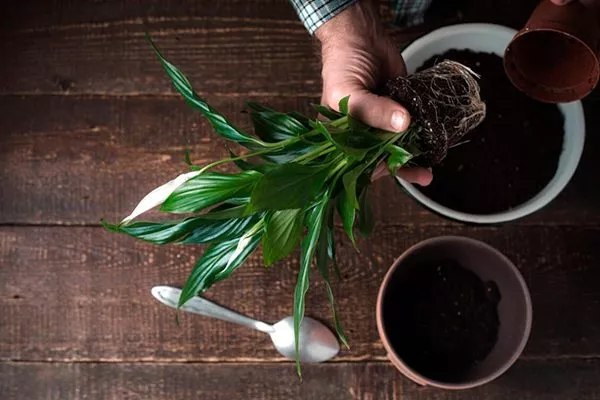
Spathiphyllum transplantation procedure:
- Water the plant being repotted to make it easier to remove from the soil. This should be done with extreme care, as peace lilies have fragile roots and are very sensitive to injury.
- Try to shake off any drainage material remaining from the roots. Inspect the roots carefully for damaged shoots. Remove any rotted areas, if any, and trim off any excessively long branches.
- Place the plant in the center of the pot filled with potting soil. Gently distribute the roots. Cover them with soil and compact it lightly. The plant should be firmly planted in the soil; it shouldn't lean or wobble. Therefore, its base should be slightly buried and the soil around it should be compacted.
The plant's stem has dark bumps—these are buds from which aerial roots emerge. These should not be covered with soil. Once the shoots reach the soil and take root, the plant will gain additional stability. - Water the flower generously and spray the above-ground part with water from a spray bottle.
In the future, carefully care for the plant, water it at the roots and on the leaves, shade it from direct sunlight in time and protect it from drafts.
Care
The Sweet Lauretta flower is generally considered low-maintenance, but it does require some care; without it, the plant will quickly wither. The Sweet Lauretta variety requires watering, fertilizing, and timely repotting.
Watering
The plant requires regular watering, and the soil in the pot should not dry out. A lack of moisture immediately affects the plant's appearance, causing its leaves to droop and eventually dry out. Spathiphyllum Lauretta should be watered at least three times a week.
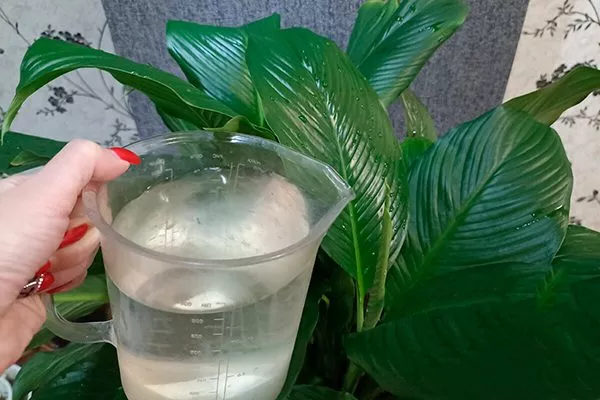
Regular misting with water is essential for the successful growth and development of Spathiphyllum Laurette. The plant responds well to a shower—it can be watered from a watering can or sprayed with a spray bottle. The key is to use room temperature, settled water.
Experienced gardeners prefer to wait until the plant's leaves droop slightly before watering it—this helps prevent excessive moisture in the pot. The plant tolerates short-term drought much better than overwatering.
Top dressing
Fertilize the plant approximately once a month, but only during the active period. Do not fertilize the plant from October to March. Use a special fertilizer for indoor plants. These do not contain lime, which is harmful to flowers. Suitable products include "Flower," "Azalea," and similar products.
- In early spring, apply a complete fertilizer with NPK 20-20-20 to stimulate growth.
- In summer, switch to a fertilizer with a higher potassium content (NPK 15-30-15) to support flowering.
- In autumn, reduce the frequency of fertilizing to once a month, using a fertilizer with NPK 10-10-10.
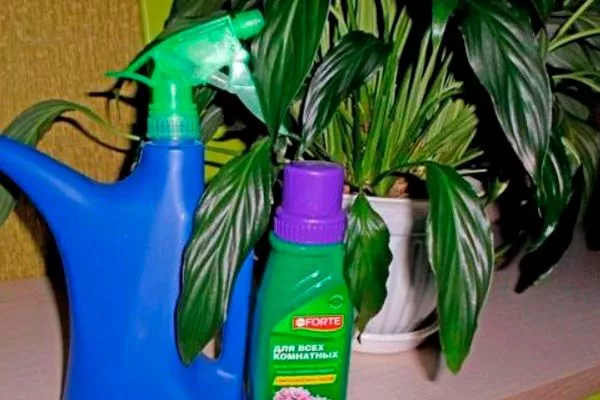
Helpful tips for applying fertilizers:
- If the plant blooms in the fall or winter, apply the same fertilizers as in the spring and summer. During this period, increase the frequency of fertilizing to once every two weeks, but be sure to reduce the fertilizer concentration by half.
- For one and a half months after transplantation, the spathiphyllum should not be fed - all its energy should be directed towards rooting.
- If the plant does not produce flowers and its growth slows down, fertilizing should be stopped in the fall.
Trimming
After the flower has finished blooming, the flower stalk is carefully trimmed. The cut is made as close to the rhizome as possible. This is done to prevent the flower stalks from drawing nutrients from the plant. Wilted, dry, and diseased leaves are also regularly trimmed, and the cut areas are sprinkled with crushed charcoal.
Diseases and pests
The most dangerous pest for peace lilies is the spider mite. This tiny insect entangles the leaves in a web and sucks the sap from them. The plant can also be attacked by aphids, thrips, and scale insects. For minor infestations, a soapy solution is sufficient; for severe infestations, systemic insecticides are used.
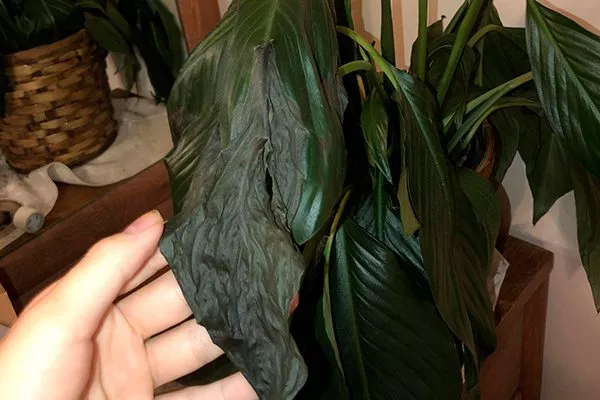
Under unfavorable growing conditions—nutrient deficiency, dry air, excessive moisture, etc.—the plant can be susceptible to fungal and other infections. Spathiphyllum can be susceptible to powdery mildew, late blight, and sooty mold. To combat these diseases, use fungicides such as Fitosporin, Topaz, Bordeaux mixture, copper sulfate, and others.
Reproduction
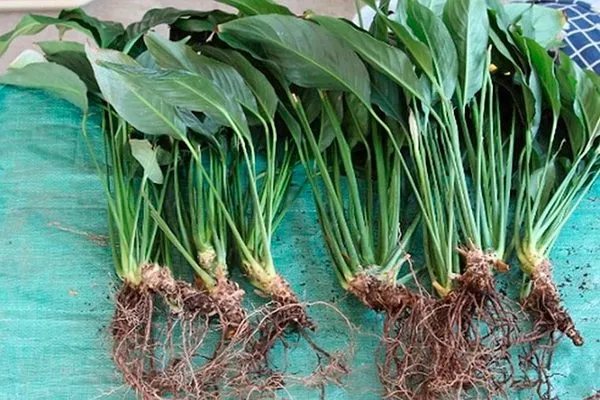
Sweet Lauretta, like other species and varieties of peace lily, is easiest to propagate by division, combining this process with annual spring repotting. The plant can also be grown from cuttings and seeds, but the latter method is extremely time-consuming and labor-intensive, so it is rarely used by gardeners.
Reproduction methods:
- Dividing the bush. It's important to avoid damaging the roots by carefully cutting off one or two leaves from the side, along with some of the roots. It's important not to tear the bush apart, as repotting is a significant stress on the plant, and separating a portion of it only makes it worse. The separated portion should contain at least three leaf rosettes and a portion of the rhizome.
It's important to treat all cuts with sharpened birch charcoal or cinnamon powder. After planting, the plant will not grow for a long time, adapting to its new location. Plant the divisions in small pots, otherwise they will take a long time to develop.
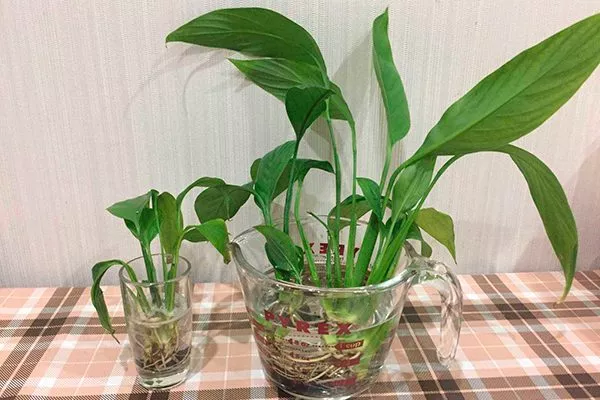
- Cuttings. This propagation method is carried out during the warm season. The cut leaf rosette is immersed in water and kept there until roots appear. The cutting is then transplanted into a suitably sized container and covered with transparent film.
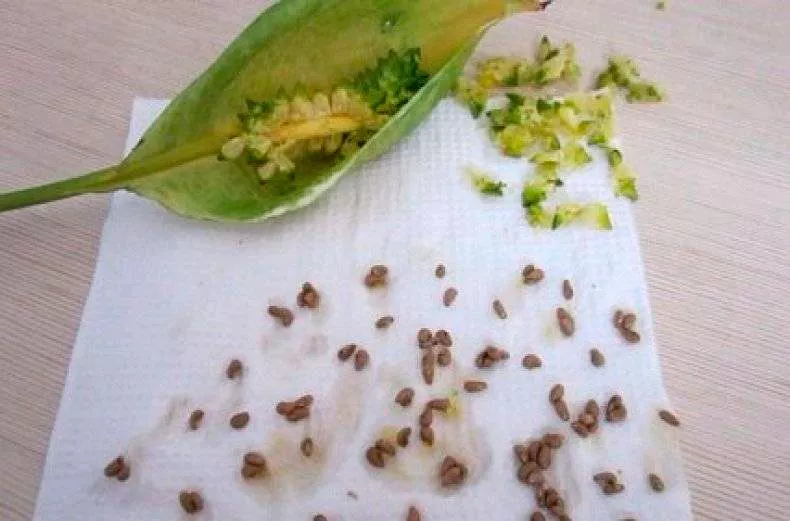
- Seeds. This propagation method allows you to see the first bloom three years after sowing. The advantage of growing flowers from seed is that you get a more resilient and strong plant that is less demanding of growing conditions.

Sweet Lauretta is a large and beautiful flower, stunning not only for its large, glossy leaves but also for its spectacular blooms. Growing this plant requires little effort and is easy even for beginners.