
Growing Spathiphyllum Cupido is a fascinating process that brings joy to both beginner and experienced gardeners. This easy-to-care-for and elegant plant delights with its refined beauty, delighting with vibrant leaves and white flowers. It also acts as an effective air purifier in the home, so it requires careful care.
Description
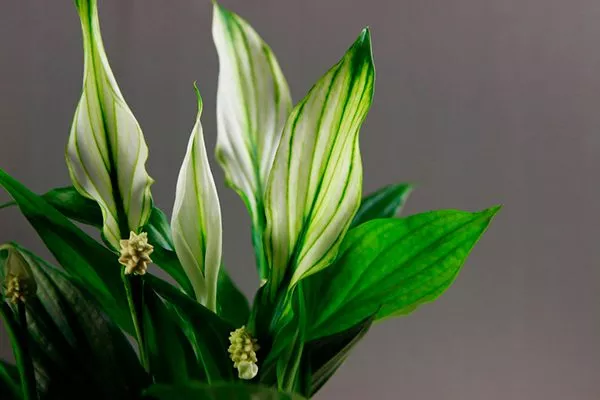
Spathiphyllum Cupido is a stunning plant, captivating with its beauty and elegance. Its snow-white flowers and colorful leaves make it a wonderful addition to any interior, and its low-maintenance nature makes it an ideal choice for any gardener.
History of origin
The flower known as Spathiphyllum cupido was discovered by the German scientist Wallis in the 19th century. The species grows in Colombia, Peru, and Haiti.
In the mid-20th century, hybrids developed for indoor cultivation appeared in Europe and America. A variety for pot cultivation was developed in a Dutch nursery.
Appearance and characteristics
Spathiphyllum cupido is a perennial plant native to tropical forests. It exhibits high adaptability and undemanding nature, allowing many of its species to successfully adapt to environmental conditions and home environments in Russia.
Specifications:
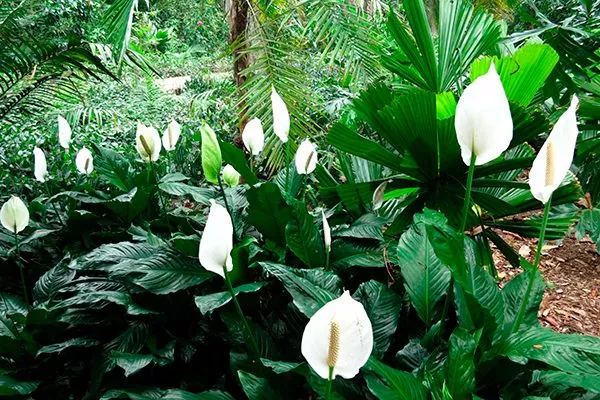
- An adult indoor plant reaches a height of 40-50 cm.
- Large leaves, elliptical in shape and 15 to 20 cm long, have elongated petioles of 10-15 cm.
- The leaves grow directly from the soil, where a short rhizome, which is a modified stem, is located.
- The leaves are bright green, with a leathery, smooth surface. Silvery stripes and dots are present along the veins.
- When young, the leaves grow vertically, but with age they gracefully curve into an arc.
- The flower is a white spathe (a recycled leaf blade) with a yellowish spadix-shaped inflorescence in the center.
The plant remains fresh all year round, maintaining a bright green color of foliage.
Beneficial properties
Spathiphyllum Cupido effectively purifies the air of carbon dioxide and formaldehyde vapors, which can be emitted from furniture made of pressed wood, as well as linoleum and wallpaper. The plant also maintains the required humidity level.
Is the plant poisonous?
Cupido, like other species of Spathiphyllum, is not poisonous, but the plant's sap can cause irritation and allergic reactions in some people. Therefore, caution is recommended when handling the plant and avoiding contact with the sap, especially for those prone to allergies.
Bloom
This plant's first flowers appear towards the end of its second year. It delights with its blooms every year, producing flower stalks in the spring, usually in March, and blooming in April or early May.
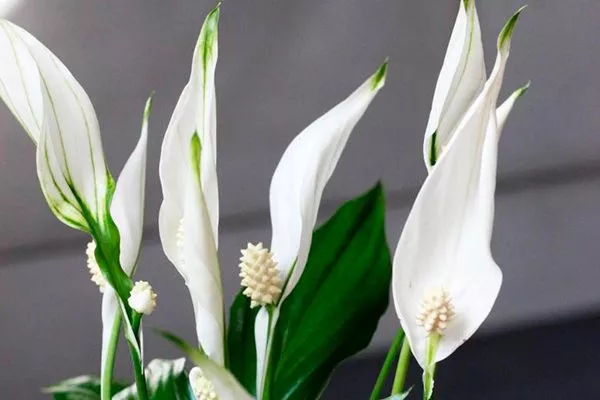
The inflorescence initially has a light creamy (milky) hue and is surrounded by a white perianth, which is slightly elongated and has a green tip. The flowering process lasts about a week, up to nine days, after which other buds, about 10 in total, bloom.
Cupido subvarieties and their photos
Spathiphyllum Cupido has many subvarieties, each with distinct appearance and distinct characteristics. Descriptions and photos are provided below.
| Name | Plant height (cm) | Leaf length (cm) | Bloom |
|---|---|---|---|
| Silver | 30-40 | 15-20 | Spring |
| Picasso | 40-50 | 20-25 | Spring-summer |
| Dominoes | 35-45 | 15-20 | Spring |
| Cannolistny | 50-60 | 25-30 | Summer |
| Heliconia-leaved | 50-60 | 25-30 | Summer |
| Chopin | 30-35 | 15-20 | Spring |
| Pearl | 30-40 | 15-20 | Spring |
| Compact | 25-35 | 10-15 | Spring-summer |
| Pearl Mini | 10-12 | 5-10 | Spring |
Silver
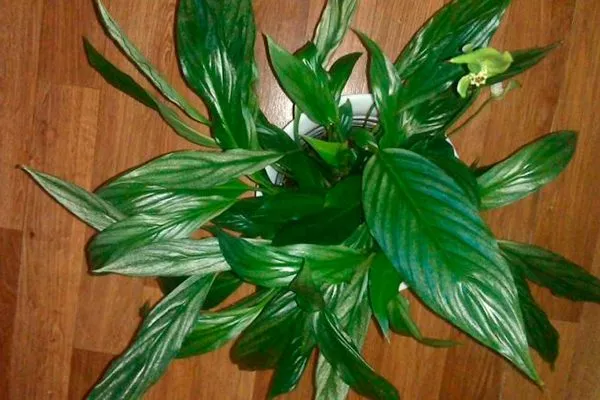
Spathiphyllum effectively purifies the atmosphere of various harmful impurities, making it a sought-after plant. It even fights mold. Preferring humid conditions, its petals are green, fading to white only at the tips. It is a low-growing plant.
Picasso
This species is distinguished by its prominent green leaves, adorned with large, snow-white spots. The shape of its flower resembles a sail, giving it a special charm. It has earned the nickname "flower of happiness."
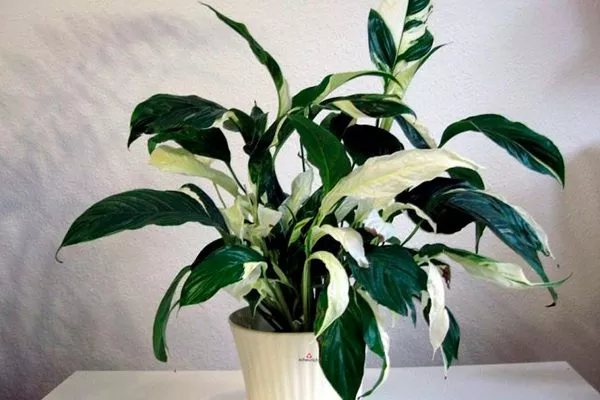
Dominoes
The main characteristics of this variety are its striking coloring and unique leaf patterns. The plant is quite demanding: bright sun negatively affects the bright green leaves, so it's important to avoid direct sunlight. Drafts and wind also dry out the soil.
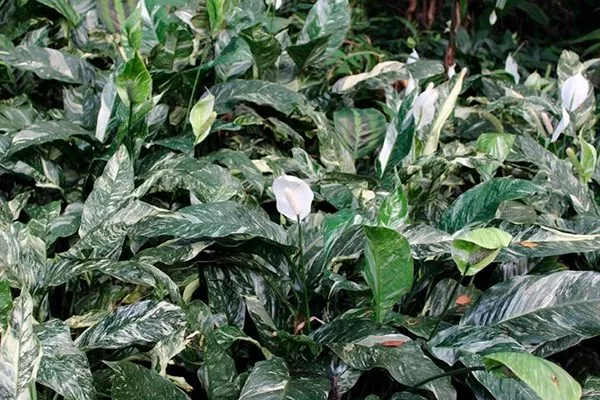
Cannolistny
Another plant resembling a canna leaf in shape, its main advantage lies in the stunning emerald green hue of its leaves. The snow-white flowers of this species are exceptionally fragrant, filling the air with a pleasant, rich scent.
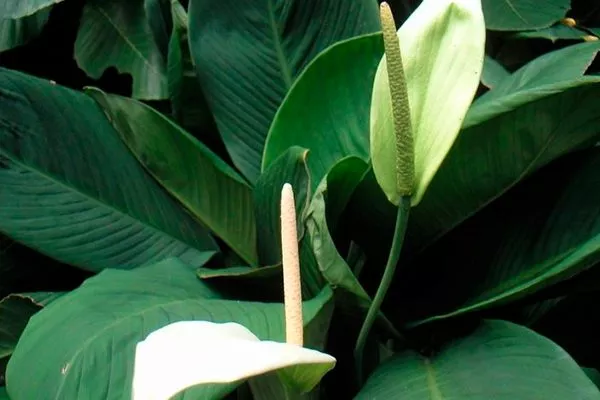
Heliconia-leaved
A dense, tall bush with large leaves reaching 50 cm in length. The leaves have a vibrant green hue and a glossy surface. As the flower matures, its color changes from white to almost black, creating a magnificent visual effect.
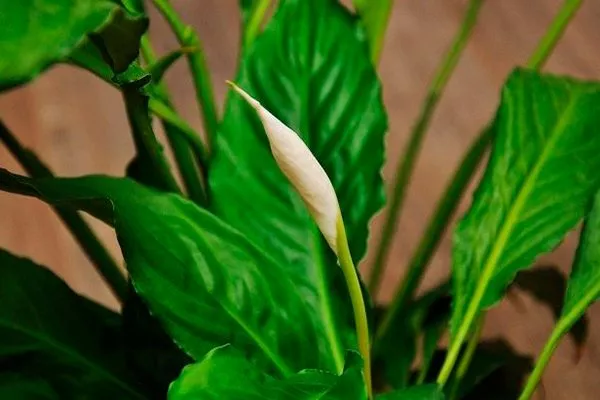
Chopin
This variety boasts large, rich green leaves. Thick stems with delicate veins and a pleasant aroma, while the flowers are creamy. This easy-to-care-for, compact plant reaches a height of up to 35 cm. Provide it with the necessary conditions, and you can enjoy its beauty year-round.
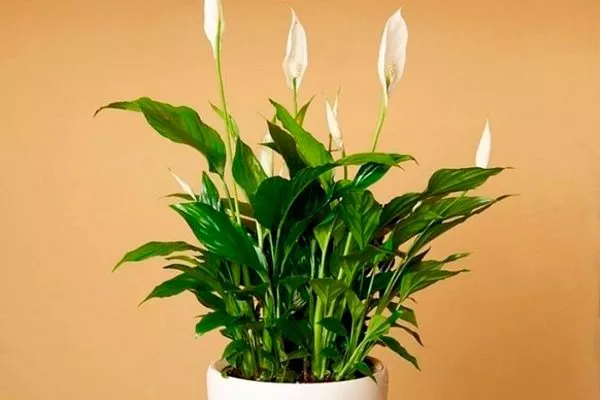
Pearl
An unusual variety with variegated leaves, magnificent inflorescences, and glossy foliage. Its coloring resembles the Silver subvariety, and it thrives indoors with proper care.
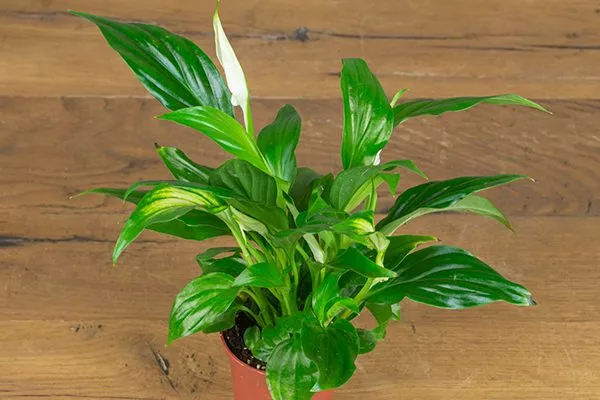
Compact
Spathiphyllum Compacta is one of the most sought-after and popular plants due to its frequent flowering. The plant itself is eye-catching due to its decorative appearance and is considered a rare species. Its milky white flowers instantly attract attention.
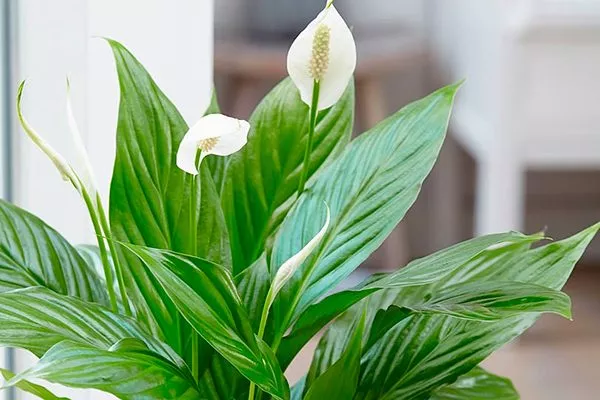
Pearl Mini
Pearl Cupido Mini is a tiny bush, 10-12 cm tall. Its leaves are small, light green, with a central light green vein.
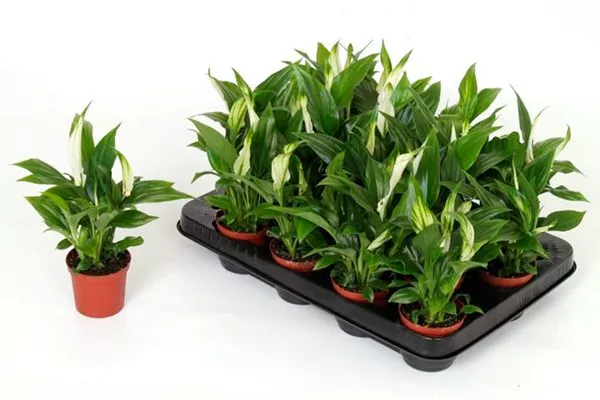
How to plant?
There are two methods for planting peace lilies: from seedlings and from seeds. Each method has its own unique characteristics.
seedlings
To successfully plant a seedling, it's important to choose the right pot. It should be 3-4 cm larger than the previous one. A larger container won't work, nor will a small one. The former will restrict the roots, while the latter will prevent the plant from blooming due to a lack of moisture and nutrients.
Step-by-step planting instructions:
- Take a pot of the required size.
- Prepare a nutritious soil, which can be purchased at a store or made at home, combining leaf mold, peat, river sand, charcoal, and turf soil in equal proportions.
- Water the plant you are going to separate the seedlings from well and give it some time.
- Carefully remove the root ball from the pot. The seedling consists of three leaves emerging from a single rosette, with a portion of the root attached.
- Carefully separate the seedlings.
Place perlite at the bottom of the pot, then fill it halfway with soil, place the seedling and, holding it, cover it with soil.
Seeds
Sowing a plant from seeds is not a difficult process, but it does require several key points. First, prepare a container or tray with rims up to 4 cm high.
Stages of sowing seeds:
- Fill the container with soil (it is better to pre-heat it), moisten it and sow the seeds.
- Cover the container with glass and maintain the temperature within +23-24°C.
- Monitor the soil moisture, ventilate regularly to avoid stagnation, and prevent the development of mold.
- Once the sprouts appear, continue watering and aerating until they reach a height of 3 cm.
- Transplant the seedlings into small cups.
- When the sprouts reach a height of 6 cm, transplant them into larger cups.
- After three months, the seedlings can be transplanted into pots and placed in a permanent location.
The first feeding of the plant should be done after two weeks.
Step-by-step instructions for home care
Care procedures include maintaining temperature, pruning, watering, fertilizing, and repotting the peace lily. Proper care is essential to maintain the plant's beauty.
Choosing a location
The best location for pots is an east- or west-facing window. Avoid direct sunlight, as it is undesirable for Spathiphyllum Cupido. Place the plant in a location free from drafts and cold air from an air conditioner.
What should the soil be like?
For Spathiphyllum Cupido, it's recommended to use loose, slightly acidic soil. Buying a ready-made soil mix from a store is preferable; a universal mix for aroids or tropical plants is suitable for this variety.
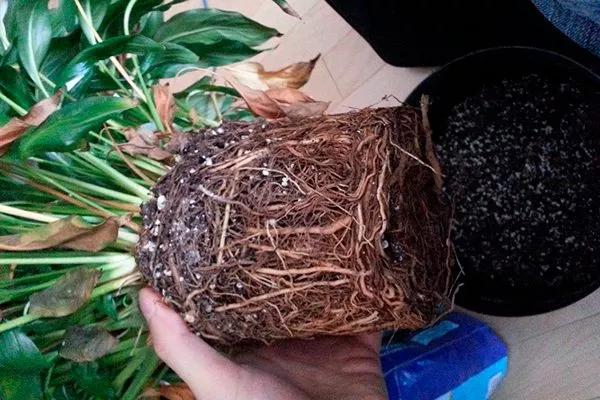
If you prefer to prepare the mixture yourself, mix turf, leaf mold, high-moor peat, and coarse river sand in a ratio of 2:1:1:1. Add 0.5 parts each of charcoal and brick chips.
Landing
Planting a peace lily is fairly simple, but it does require following certain guidelines. Follow these instructions:
- Place a 2 cm thick drainage layer at the bottom of the pot, using expanded clay, pebbles or pieces of bark.
- Fill the pot halfway with a special soil mixture.
- Place the planting bush vertically in the center of the pot, spreading the roots evenly.
- Fill in the remaining substrate, compacting it lightly with a trowel.
- Deepen the stem a little, ensuring that the substrate fits tightly around the trunk.
- Water the plant generously.
- When the soil has settled, add a small amount of substrate to the pot.
- Spray the leaves.
Keep the seedling under a plastic cap for 4-5 days.
Temperature
Spathiphyllum Cupido is a heat-loving plant, with an ideal temperature of 19-25°C. Maintain temperatures at least 15-16°C to ensure comfortable conditions for its growth and development.
- ✓ The optimal air humidity should be 60-70% to prevent the leaf tips from drying out.
- ✓ Use filtered or settled water for watering and spraying to avoid leaf chlorosis.
Watering
The key to caring for this plant is regular and abundant watering. During the warm season, daily misting is necessary, as the plant appreciates moisture. Use a damp sponge to moisten the leaves. Water should be clean and at room temperature.
In winter, reduce the frequency of watering by half. Avoid stagnant water in the tray by pouring out excess moisture after each treatment.
Top dressing
In spring, fertilize your spathiphyllum with mineral supplements, diluting 1-2 g per liter of water. Feed young plants every 3 weeks, and mature plants once a month. Reduce the amount of feeding during winter.
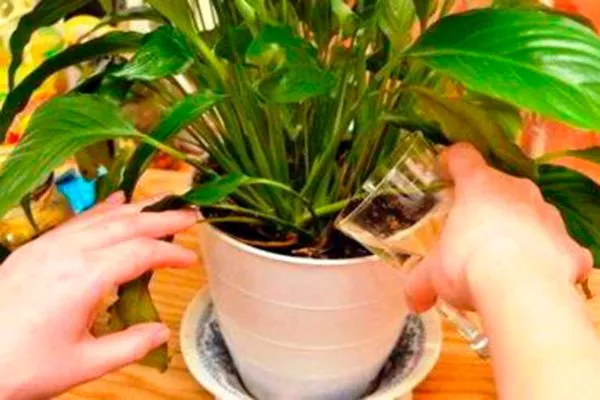
Liquid fertilizers added by spraying are an effective replacement for root feeding. To stimulate foliage growth, use nitrogen fertilizers, while to support flowering, potassium-phosphorus supplements in a 1:1 ratio are preferred.
Trimming
After flowering, trim the flower stalks until the spike turns dark. This includes trimming not only the flower but also the stem to the base, which promotes the maturation of new buds. To promote large, richly colored leaves, remove side shoots when repotting.
Transfer
Spathiphyllum Cupido requires periodic repotting as it grows. Use nutrient-rich soil for this procedure.
Repot after flowering, around June. Young peace lilies should be repotted 3-4 times a year. The transshipment method involves the following steps:
- Select a pot one size larger than the previous one.
- Place a 2 cm thick drainage layer on the bottom.
- Moisten the soil well.
- Carefully remove the flower along with the root ball.
- Add the nutrient substrate, forming a small mound.
- Place the spathiphyllum on a mound and carefully spread out its roots.
- Fill the remaining soil into the flower pot to avoid creating voids.
- Lightly compact the soil in the pot and water generously, but do not do this for the next 2-3 days; spraying the leaves is enough.
If the plant was purchased in a ready-made container, use the soil inside when repotting. Avoid burying the aerial roots, which are small protrusions at the base, too deeply when planting, as they will eventually root and provide additional support for the plant.
Reproduction
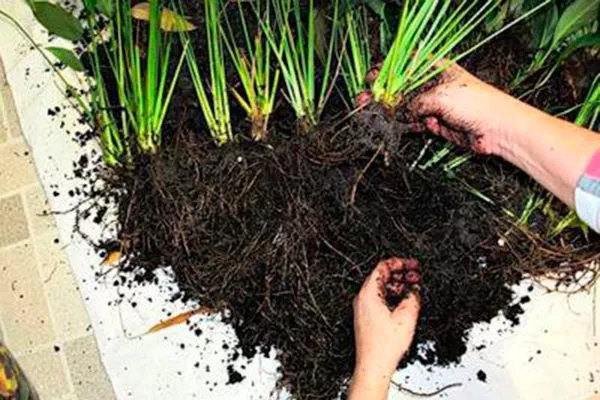
The simplest and most trouble-free method of propagation is division. This procedure is performed in the spring. Here are the step-by-step instructions:
- Prepare the substrate carefully.
- Remove the plant from the pot.
- Clean the roots from dry and damaged parts.
- Treat the cut areas with charcoal.
- Perform the division of the bush directly, ensuring that each separated part has 2-3 rosettes and a part of the root.
- Choose a pot that is 2 cm larger in diameter than the root.
- Place a drainage layer at the bottom of the pot.
- Place the seedling in the pot without burying it too deeply and smooth out the roots.
- Fill the soil around the root.
- Water generously.
Diseases and pests
The main cause of diseases in Spathiphyllum Cupido are mistakes made by the gardener during plant care. Let's take a closer look:
- Most often, such problems arise due to overwatering, which can lead to moisture stagnation in the soil, as well as due to the flower freezing, being in a draft, or using contaminated soil.
- The most common fungal diseases are late blight and root rot, and chlorosis may also occur. For late blight, use antifungal fungicides, and for root rot, use iron-based fertilizers.
- Spathiphyllum is susceptible to pests such as aphids, spider mites, thrips, scale insects, and mealybugs. For minor infestations, try using natural remedies (such as a tobacco or soap solution).
In case of extensive infestation, it is advisable to use insecticides designed to control pests of indoor plants.
Spathiphyllum Cupido is a unique variety with excellent ornamental qualities, disease resistance, and low maintenance. It's important to promptly identify the cause and eliminate it to ensure the plant continues to bloom beautifully.
What to do if it doesn’t bloom?
If all necessary parameters, such as temperature, humidity and lighting, are met, if the flower does not bloom, it is recommended to create a stressful situation for the plant.
Stages of flowering stimulation:
- Reduce the air temperature to +14-16°C for about three weeks.
- Reduce the amount of watering.
- After this, return the plant to normal conditions, and flower stalks will definitely appear.
If this procedure doesn't produce results, carefully review the plant's care conditions. Possible causes may include excess nitrogen, low temperatures, or insufficient moisture. Check the soil moisture at a depth of 5 cm.
Spathiphyllum Cupido is a popular plant lover thanks to its exquisite, snow-white flowers and rich green foliage. Besides its stunning appearance, spathiphyllum is prized for its low-maintenance nature and its ability to purify indoor air. We've covered how to properly plant and care for this plant.