
Spathiphyllum 'Domino' is a variety of a popular houseplant popularly known as "women's happiness." This type of spathiphyllum attracts indoor gardeners with its unusual leaf coloring: 'Domino' has variegated white and green leaves.
Description and photo
Spathiphyllum Domino is a variegated perennial plant in the Araceae family. This flowering plant reaches a height of 40 cm and is highly decorative—its green leaves are randomly scattered with white spots and stripes of varying sizes and shapes.
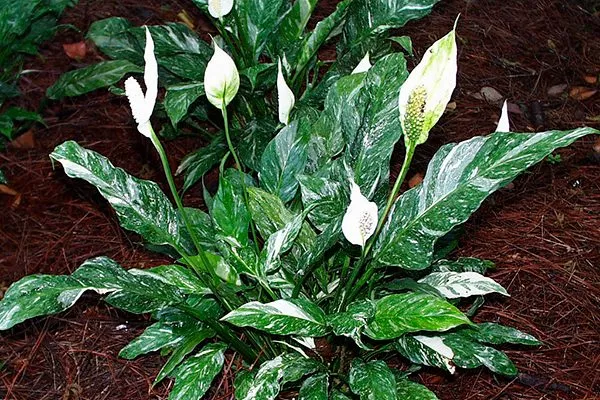
Brief botanical description of Spathiphyllum Domino:
- Leaves They are oval-shaped, with pointed tips and petioles of equal length. The leaves are glossy, with smooth edges, a well-defined midline, and longitudinal veins, gathered in a basal rosette. The maximum leaf width is 10 cm, and the length is 25 cm. The base color is bright green with white blotches and streaks.

- Roots shortened, well developed, strong, actively branching in width.
- Inflorescences The flowers are shaped like a spadix. They are yellow or cream-colored. The base is covered with a white spathe, which turns green after flowering. The bracts are large, round or oval.
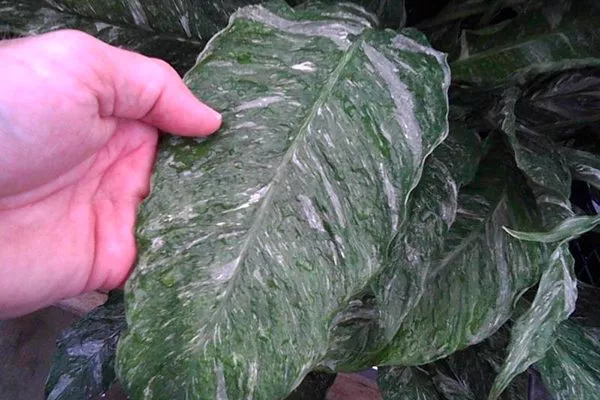
The plant is quite compact and can easily fit even in a small room.
History of origin
Spathiphyllums are native to the tropical forests of South Asia and South America. They were brought to Europe in the 19th century and began to be grown as an ornamental plant.
The Domino variety was developed by Dutch breeders through selective breeding. To create the new variety with variegated leaves, they used the popular plant species Spathiphyllum wallisii.
Bloom
Domino blooms for a long time, from May to October. With proper care, it can bloom almost year-round. Variegated peace lilies bloom when they reach full development, usually two years after planting.
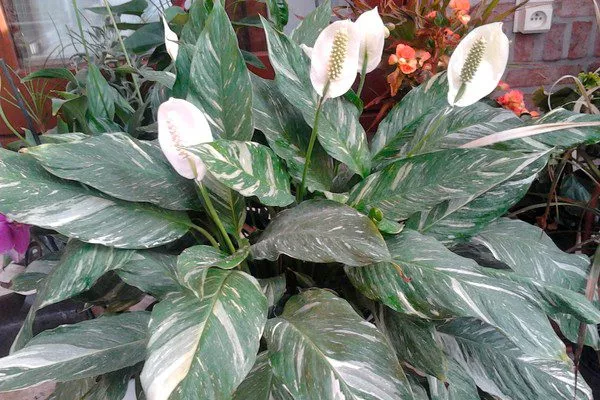
The flower begins to bloom in the spring. Increased daylight hours trigger the blooming of the spathiphyllum. The first flowers appear in May, and then bloom profusely throughout the summer. The spent cobs produce seeds that can be used for planting.
Magical properties
All spathiphyllums are known as "women's happiness." They are associated with hopes for a happy family life and the possibility of having children. This flower is also credited with various magical properties, and is associated with many legends, superstitions, and beliefs.
Signs and beliefs:
- If a spathiphyllum doesn't bloom, it means the atmosphere in the house is unfavorable. It has been observed that the plant doesn't produce flower stalks in homes where there are frequent arguments and quarrels.
- If a flower becomes ill and unexpectedly wilts, it means a lot of negative energy has accumulated in the house. The couple needs to take better care of each other.
- If drops appear on the leaves, it means an important event will take place in the family's life—a wedding, anniversary, or other celebration. "Tears" can also appear after a long argument and subsequent reconciliation between spouses.
- They say that if lovers inhale the scent of a blooming spathiphyllum flower together, and then dry and save it, they will never quarrel.
- It's believed that girls shouldn't part with their spathiphyllum. Even a small cutting shouldn't be given to anyone, as this could lead to a deterioration in their relationship with their loved one.
- If a spathiphyllum develops a round, ball-shaped inflorescence, it means its owner will soon become pregnant.
Is the plant poisonous or not?
Spathiphyllum juice contains calcium oxalate, which can irritate the mucous membranes of the mouth and stomach.
When in contact with the juice, people prone to allergic reactions may experience:
- difficulty breathing;
- headaches;
- hives;
- general weakness;
- drowsiness;
- sweating.
Calcium oxalate poisoning can cause abdominal pain, nausea, vomiting, and diarrhea. To prevent this, keep peace lilies out of the reach of children.
Landing
Spathiphyllum Domino can be planted in two ways: from cuttings taken from the parent plant or from seeds. The first option is popular among gardeners, as it's simpler and allows for a full-fledged flower to be produced in the shortest possible time.
shoots
Before planting, prepare a pot of the appropriate size. A 9-10 cm diameter container is sufficient for starters. Add a layer of drainage material, such as expanded clay, to the bottom. Make sure the bottom of the pot has drainage holes. Add the growing medium on top, filling it to about 2/3 of its height.
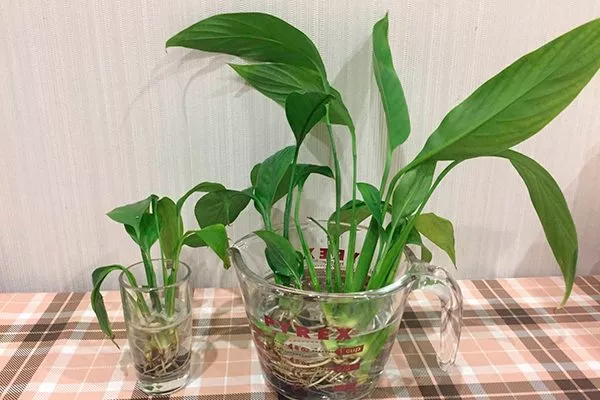
To fill the planting containers, you can use a purchased substrate or a self-prepared soil mixture. The latter can be prepared from a mixture of equal parts turf and leaf soil, peat, sand and humus.
Procedure:
- Water the mother plant to soften the soil.
- Carefully remove the flower from the soil, along with the root ball, and place it on the table.
- Inspect the plant and its roots, carefully separate the seedlings with roots.
- Transplant the separated sections (divisions) into new, pre-prepared pots.
- Fill the remaining empty space with soil around the roots, compact it lightly, and then water the plant with warm, settled water.
Seeds
Planting spathiphyllum also begins with choosing and preparing a planting container. For sowing, choose a pot appropriate for the number of seeds you'll be planting. Any material will do, including ceramic, but it must be glazed.
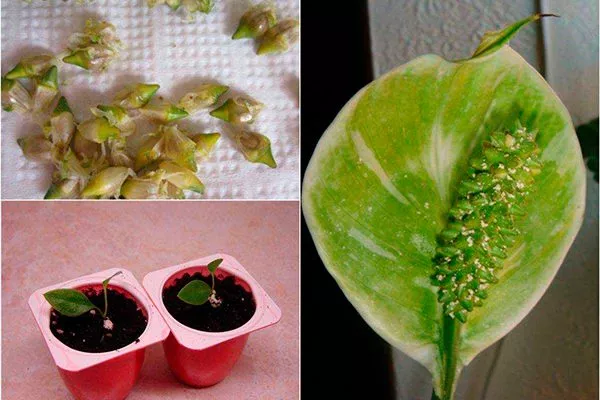
Planting order:
- Fill the pot with soil and moisten it.
- Sow the seeds, you can simply press them into the soil.
- Place the container in a well-lit area, covering it with a transparent material such as plastic film or glass. Maintain the room temperature between 24°C and 25°C. Ventilate the mini greenhouse periodically to prevent condensation and mold.
- As soon as the first shoots appear, increase the ventilation time to sufficiently harden the young plants.
- When the seedlings reach 3 cm in height, transplant them into individual small cups. At 6 cm in height, transplant them into larger pots and place them in their permanent location.
- Fertilize the plants 3 months after the last transplant.
Conditions
The Domino variety, like all spathiphyllums, is quite easy to care for. However, to ensure the plant maintains its most presentable appearance, long-lasting and beautiful blooms, and disease-free growth, it's important to provide it with suitable growing conditions. Particular attention should be paid to temperature, lighting, and location.
Location and lighting
Spathiphyllum thrives near east- or north-facing windows. This heat-loving plant enjoys sunlight, but not excessively bright light; soft, indirect light is preferred.
Spathiphyllum shouldn't grow in excessively shaded areas. Insufficient light causes the plant's leaves to fade and it won't bloom. Drafts and cold temperatures also prevent the plant. If the pot is placed near a window, it's important to ensure there are no cold drafts coming from any cracks.
Temperature and humidity
The optimal temperature range for Domino Spathiphyllum growth is between 16°C and 23°C. The plant should not be exposed to cold temperatures. A brief drop to 9°C or below is enough to permanently kill the plant.
The flower grows best in high humidity conditions—around 60%. To maintain the proper humidity, the plant should be misted with warm, settled water at least twice a day. In winter, the frequency of watering is reduced to 3-4 times a week.
To avoid the hassle of misting, you can install a humidifier in the room. Moist sphagnum moss or expanded clay placed in a tray can also help.
Home care
Creating ideal growing conditions is impossible without maintaining them. To ensure a plant thrives and blooms for a long time, it requires regular care—maintaining soil moisture and nutrition, and performing other activities necessary for growth, development, and flowering.
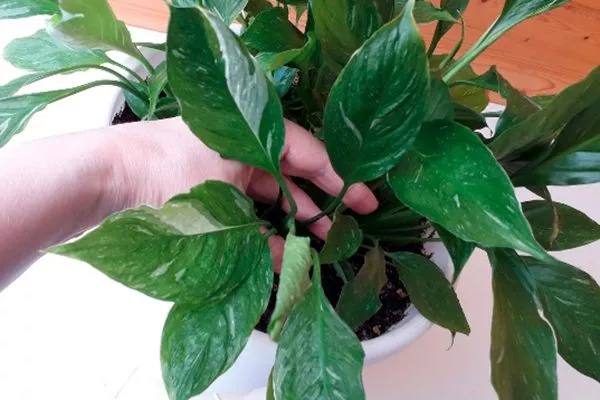
How to care for Spathiphyllum Domino:
- Watering Water as needed, when the top layer of soil has dried out. The average frequency is twice a week in summer and twice every 10 days in winter. Use only settled, room-temperature water. Apply water carefully, avoiding contact with the leaves.
- Top dressing Apply every 2 weeks in spring and summer, and once a month in autumn. The plant doesn't need fertilizer in winter. Use organic matter, such as diluted cow manure or bird droppings, as well as formulations containing phosphorus and potassium.
Avoid applying too much nitrogen, as too much will lead to excessive foliage growth and prevent flowering. The fertilizer should be applied directly to the soil; avoid contact with leaves. - Trimming The flower is pruned after flowering. Remove faded flower stalks with a sharp, disinfected knife. Make the cut as close to the rhizome as possible and be sure to sprinkle it with crushed wood ash. Remove any dry or wilted leaves by hand promptly.
Diseases and pests
The Domino variety, like all spathiphyllums, is not prone to diseases, but under unfavorable conditions it can be affected by fungal and other infections, and be subject to attacks by insect pests.
Most often, Spathiphyllum Domino is affected by the following pests:
- Spider mites. These tiny insects hide on the undersides of leaves, entangling them in a fine web. Washing with soapy water helps control the pest. For larger infestations, use insecticides.
- Scale insects. These small, waxy insects leave spots and pitted areas on leaves. Wash the leaves with soapy water and sprinkle with tobacco dust.
- Aphids. For minor infestations, use tobacco-soap solutions; for severe attacks, use insecticides.
- Mealybug. His Remove with a cotton swab dipped in alcohol. If there are numerous pests, it's best to spray the plant with a strong product.
| Pest | Method of struggle | Processing period |
|---|---|---|
| Spider mite | Spraying with acaricides | Every 7-10 days until the pest disappears |
| Scale insect | Mechanical removal + insecticide treatment | 2-3 treatments with an interval of 14 days |
| Aphid | Treatment with soap and tobacco solution | Every 5-7 days until completely gone |
Plants can be susceptible to a wide variety of diseases, most commonly fungal and bacterial. If symptoms of any particular disease are detected, immediate action is necessary to save the plant.
The most common diseases:
- Late blight. This fungal disease causes leaf rot and often leads to plant death. Remove affected leaves and spray the plant with a fungicide.
- Root rot. It causes the leaves to turn black and dry out. The plant should be repotted, with all blackened roots trimmed. The disease is caused by a fungus that attacks the soil when it's overwatered.
- Chlorosis. This disease is caused by a lack of iron in the soil. The leaves turn yellow, but the veins remain green. Iron-containing fertilizers should be added.
- Gummosis. A bacterial disease causes blackening of the leaf margins. It is treated with specialized antibacterial agents.
Transfer
After purchasing, the plant needs to be repotted. Leaving it in the store-bought pot for long periods of time is not recommended, as store-bought potting soil is very poor, lacking in nutrients, and is not designed for long-term plant growth.
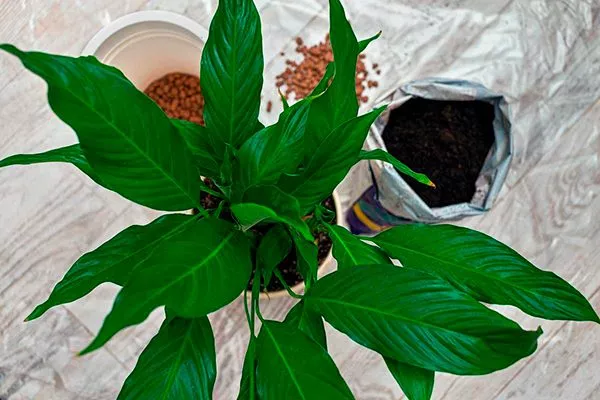
For repotting, use a container prepared in the usual manner—with drainage and nutrient-rich substrate. The plant may also need repotting if it grows excessively or if diseases appear.
Features of the transplant:
- It is recommended to carry out the procedure in the spring.
- It is better to take a small, narrow, oblong pot.
- The soil can be prepared from turf soil (2 kg), peat and sand (1 kg each), charcoal (and ceramic chips (0.5 kg each). Before use, heat the soil in the oven.
- Before removing the plant, water the soil to soften it. Inspect the roots, and if you find any rotten or damaged shoots, carefully trim them off. Then proceed as usual: plant the flower, cover with soil, compact it, and water.
What varieties does it resemble?
| Name | Plant height (cm) | Leaf color | Flowering period |
|---|---|---|---|
| Spathiphyllum Domino | 40 | Variegated (white and green) | May-October |
| Gemini | 45 | Variegated (white and green) | June-September |
| Picasso | 50 | Variegated (white and green) | April-November |
Spathiphyllum Domino is often confused with the Picasso and Gemini varieties. In fact, upon closer inspection, the differences are easy to spot.
Similar varieties:
- Gemini. A mutant hybrid of Domino with an oval perianth. Its main distinguishing feature is its corrugated leaves.
- Picasso. A tall, variegated variety. It has an oval perianth with a pointed tip. It is variegated, like the leaves. White areas can occupy entire sectors of the leaves, unlike Domino, where the coloring resembles marbled patterns.
If the flower does not bloom?
Sometimes, despite good care and ideal conditions, a plant fails to bloom. In this case, it's recommended to lower the temperature and reduce watering, both in frequency and volume. After a month, return to the original conditions; the plant should bloom.
- ✓ Optimum temperature for flowering: +22…+24°C during the day and not lower than +16°C at night.
- ✓ The air humidity level should be at least 60% to stimulate flowering.
Other reasons for lack of flowering:
- drafts;
- long-term exposure to low temperatures, below +18°C;
- excessive shading;
- excess of nitrogen fertilizers.
Once you have identified the cause, try to eliminate it as quickly as possible, and the flower will soon produce flower stalks.
Price
Spathiphyllum Domino can be purchased at flower shops or online flower markets. The price depends on the plant's age. A young plant is much cheaper than a mature flowering bush. Prices range from 250 to 4,000 rubles.
Possible difficulties
When growing spathiphyllum, problems may arise that the gardener can solve if he knows the possible cause of their appearance and how to eliminate them.
Problems when growing spathiphyllum:
- Brown spots appeared. If they appear at the edges or in the center of the leaves, the watering regime may be incorrect (under- or over-watering). This phenomenon is also typical when watering with hard water.
- The leaves are drying out. There is a possibility that the air has too low humidity.
- The edges of the leaves have turned black. The cause may be either improper watering or nitrogen deficiency.
The Domino Spathiphyllum is an ideal plant for interior decoration. This flower, with its large, variegated leaves, looks very stylish and striking. To ensure it looks truly luxurious, it requires some care, but its beauty is well worth the effort.