
Spathiphyllum is a perennial plant that has been cultivated indoors for centuries. According to a beautiful legend, the goddess of love, Astarte, breathed into it a particle of happiness, which filled her on her wedding day. There are several popular varieties of this unique plant, popular due to their large size.
The origins of giant varieties with large leaves
This plant originates from the Netherlands, where the persistent work of breeders led to the creation of a unique species. The starting point for their work was the wild Spathiphyllum wallisii.
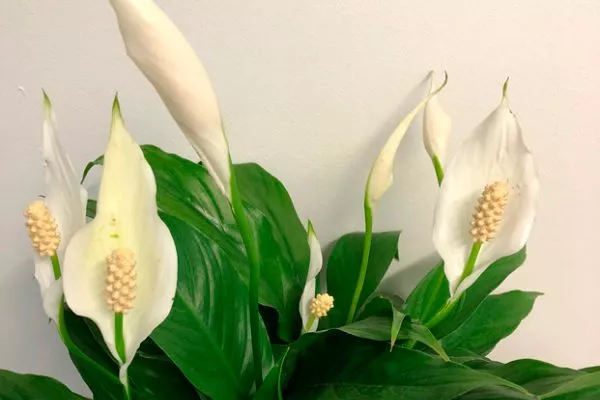
Interesting facts:
- In the European country, the crop is grown on an industrial scale in orchard plantations. For example, until 2008, the Domino variety was regularly supplied in large quantities and was always available for sale in our country.
Recently, acquiring it has become somewhat challenging, as this variety has become difficult to find. There are reports that, for some reason, this variety is no longer grown in the Netherlands. - Spathiphyllum is considered native to the tropical forests of the Americas, Venezuela, Colombia, Brazil, and the Philippines. Species are widespread in humid and swampy forests along rivers and other bodies of water throughout the world. They belong to the tropical evergreen representatives of the Araceae family.
This exotic plant was introduced to the world thanks to the efforts of Gustav Wallis, a German botanist who discovered the flower in the jungles of Colombia and Ecuador during a scientific trip and described it in detail in 1870. One of the species, most suitable for home cultivation, was named in his honor.
A review of the most popular large-leaved giants
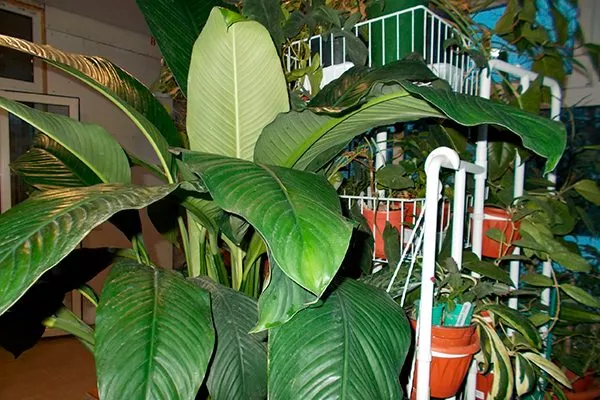
Among the large varieties of spathiphyllum, there are four popular ones. They are characterized by excellent characteristics and perform well at all stages of cultivation.
| Name | Plant height | Leaf color | Flowering period |
|---|---|---|---|
| Sensation | 90-150 cm | deep green | 8-10 weeks |
| Royal | 1 m | light green | not specified |
| Heliconia-leaved | 1-1.20 m | dark green | not specified |
| Spoon-shaped | 1 m | deep green | not specified |
Sensation
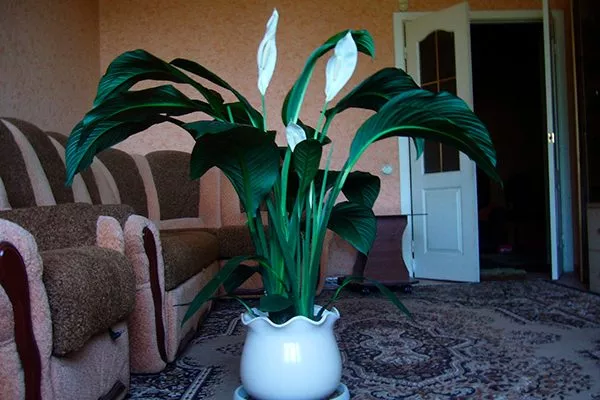
The Sensation variety grows as a lush, bushy mass rising from the soil. This variety averages 90 cm in height, but with careful care it can reach an impressive 150 cm, making it the largest of its kind.
Other characteristics of the variety:
- The basal leaves have a rich green hue, elongated shape and well-defined ribbing.
- The flowering period of Sensation begins in mid-spring and continues until autumn (8-10 weeks).
- The flower's traditional color is a milky white, almost as large as its leaves. Its lushness and splendor immediately attract attention.
With proper care, flowering will occur again during the winter, taking a similar amount of time—8 to 10 weeks. During this season, the plant requires supplemental lighting using a phytolamp.
The Spathiphyllum Sensation isn't just a beautiful specimen; it's also a flower with health benefits. Its large, ribbed leaves effectively purify the atmosphere of carbon dioxide and bacteria, absorbing benzene and formaldehyde particles.
Royal
The Royal Spathiphyllum variety grows to at least 1 m in height and is characterized by light green, succulent leaves that reach 70-75 cm in diameter. At the beginning of the flowering period, the flowers of this variety are white, which turns creamy as they mature. They measure 50 cm in height and 30 cm in width.
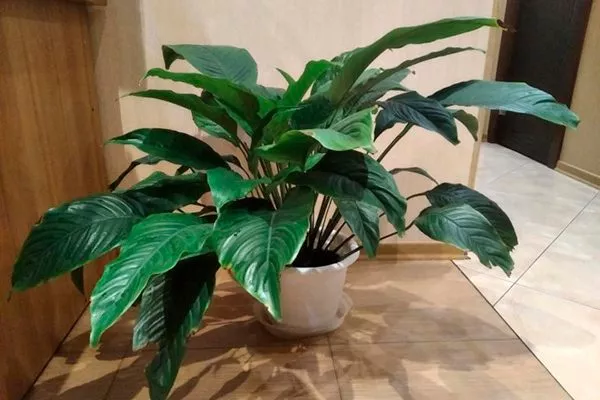
Compared to the Sensation variety, the Royal Spathiphyllum stands out not only for its different flower color but also for its foliage color.
Heliconia-leaved
Spathiphyllum heliconialis was brought from the tropical forests of Brazil and has become popular in indoor gardening due to its attractive appearance and friendly nature. This variety reaches a height of 1-1.20 m.
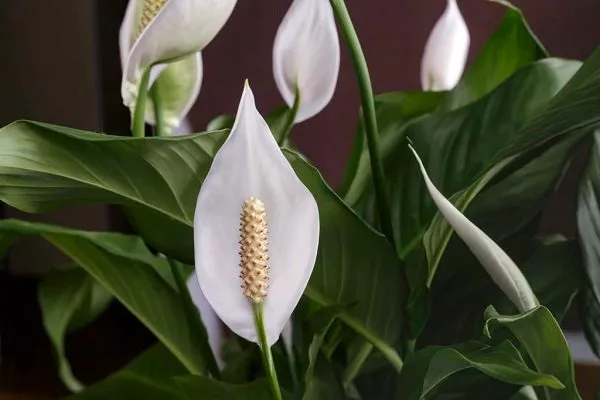
Its leaves are oblong-elliptical in shape, reaching a height of up to 50 cm and a width of 25 cm. They have a dark green hue, a glossy surface, wavy edges, and pointed tips.
Spoon-shaped
Another fascinating species of peace lily, Spathiphyllum Cochlearispathum, has been discovered in Brazil. This plant, which can reach a height of up to a meter, attracts attention with its exquisite, glossy, elliptical leaves.
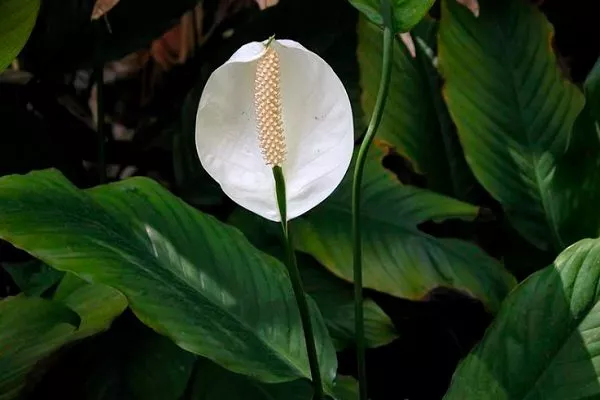
Approximately 12-15 cm wide, each rich green leaf reaches an impressive 30-40 cm in length. The petioles are also quite long, reaching up to 70 cm.
Features of caring for large varieties of "women's happiness"
Caring for large specimens of "women's happiness" requires special attention and care. Care considerations include:
- It is advisable to place a large spathiphyllum on the floor, under a window, and it is important to avoid direct sunlight so that the flowers do not turn yellow and the leaves do not wilt.
- Store-bought spathiphyllums should acclimatize for two weeks before repotting them into a spacious pot with a diameter of 18-20 cm. When repotting, do not plant the plant above the plant's neck. Use a soil mixture consisting of garden soil, peat, humus, and sand in a ratio of 4:2:2:1.
- Monitor the room temperature. The optimal range is 18-25°C, with a minimum of 16°C during the dormant period.
- It's important to provide the giant peace lily with adequate moisture. Spray it regularly, especially during flowering, and wipe each leaf with a damp cloth, without using chemicals.
Water thoroughly, but avoid standing water. Use settled, room-temperature water, paying attention to the condition of the top layer of soil before watering—it should be dry. - Fertilize every 14 days from March to August using a solution of bird droppings or lime-free mineral fertilizers. No fertilizing is required during the dormant period from September to February, but it is important to protect the plant from sudden temperature changes, drafts, and excess moisture.
Large varieties of spathiphyllum are an impressive addition to indoor gardening. Not only do they boast a refined, decorative appearance with large, glossy leaves, but they are also easy to care for, making them an excellent choice for those looking to add beauty and natural harmony to their interiors.