
The Royal Spathiphyllum got its name for a reason; it truly looks regal. This variety belongs to the giant spathiphyllums, which reach a height of 1-1.5 meters and are widely used for landscaping buildings.
Description
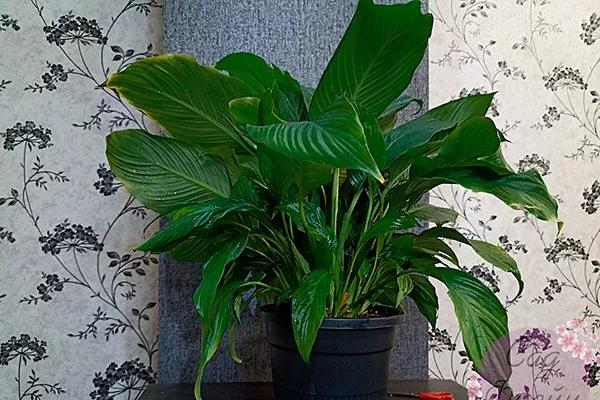
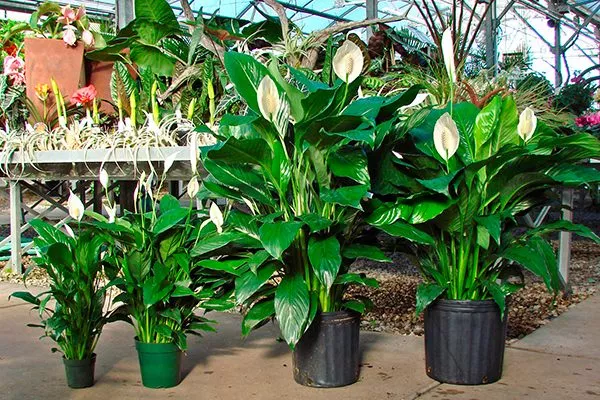
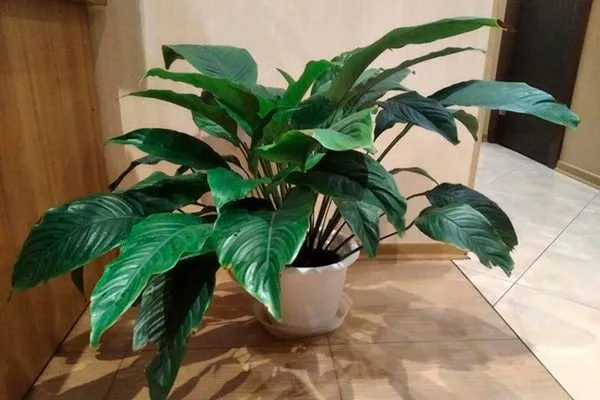
The royal peace lily grows up to 1 m in height. It has large, succulent leaves, reaching 75 cm in length. The leaf edges can be wavy. The flowers, 50 x 30 cm, are white at first, turning creamy toward the end of flowering. The plant has no stem.
- ✓ Leaves can reach up to 75 cm in length, which requires more space around the plant.
- ✓ Flowers change color from white to cream during the flowering process, which is a unique feature of the variety.
What to do after purchase?
Plants in flower shops are sold in pots filled with low-nutrient substrates, so they need to be repotted into new pots pre-filled with nutritious substrates designed specifically for growing flowers.
Before replanting a flower, you need to wait two weeks for it to adapt to the new location, otherwise the plant will experience severe stress.
Requirements of the Royal Spathiphyllum
Spathiphyllum reginae requires specific growing conditions. All large varieties are quite demanding, and the beauty of the plant and the duration of its flowering largely depend on their quality of life.
Growing rules:
- Pot. For store-bought spathiphyllum, you'll need a container with a diameter of 20 cm. Repotting should be done after two weeks of adaptation and acclimatization to the new conditions.
- SoilYou can use a ready-made substrate from a flower shop or a homemade potting mix. This can be made by mixing soil (turf and leaf mold), humus, peat, and sand in a ratio of 4:2:2:1.
- Temperature. Temperature is crucial for large spathiphyllums. The recommended range is between 18°C and 25°C. Heat is undesirable for the plant, as it negatively impacts the immune system and can lead to various diseases. During the dormant period, the temperature should drop to 16°C. Temperatures should not fall below 13°C, as this can be detrimental to the heat-loving plant.
- Humidity. Giant peace lilies thrive in moisture and don't tolerate dry air well. To create optimal humidity conditions, misting with water from a spray bottle is recommended. During the flowering period, repeat the procedure twice a day.
It is also recommended to wipe the leaves with wet wipes (without using chemicals).
To maintain humidity at the appropriate level, it is recommended to use trays filled with moisture-retaining material, such as moss or expanded clay. - Lighting. The plant prefers soft, diffused light. Direct sunlight is contraindicated, as it can cause leaf burn. If the plant experiences insufficient light, the leaves will turn pale and fade, and the spathiphyllum will lose its attractive appearance.
Transfer rules
Spathiphyllums are repotted not only after purchase but also as they grow. Young plants should be repotted once a year, and mature plants should be repotted once every three years.
Pot
When repotting, choose a pot that's no larger than the previous one by 1-2 cm. If you plant a spathiphyllum in a container that's too large, it won't bloom until its roots have filled the entire space, which can take quite a while.
Spathiphyllums can be planted in any pot—plastic or ceramic. The key is to have drainage holes in the bottom. The ideal pot for spathiphyllums is a wide, shallow one.
Soil preparation
Spathiphyllum reginae thrives in well-drained, slightly acidic soil. It's best to choose substrates for aroids. The best options are "Seliger-Agro" or "Vermion."
It is recommended to add to regular soil:
- wood ash;
- sand;
- crushed bark;
- perlite.
Any mixture prepared at home must be baked in the oven or disinfected with potassium permanganate and Fitosporin.
The landing process
A 2 cm thick layer of drainage material is poured into the planting pot. Prepared soil or substrate is poured on top, filling the pot 2/3 full.
Boarding/transplanting procedure:
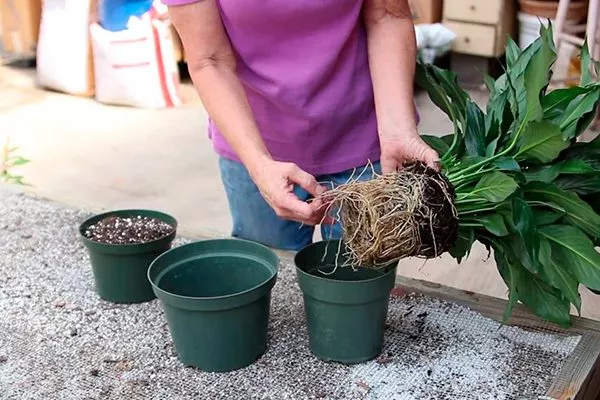
- Water the plant or grown seedling in advance so that it can be easily removed from the soil.
- Carefully remove the flower from the pot, being careful not to damage the roots.
- Inspect the root system; if you find any damaged shoots, trim them with a disinfected and sharpened tool. Sprinkle the cut areas with sharpened charcoal or activated charcoal.
- Repot the plant in a new pot. Cover the roots with soil and gently firm it down. Be careful not to cover the plant above the crown with soil.
- Water the plant generously. When the water has been absorbed, add a little more soil.
After planting, mist the plant daily. Water for the first time after 3 days.
How to grow royal peace lily?
The peace lily is a vigorous plant with large leaves and flowers. It requires plenty of water and nutrition for healthy growth and development. It's important to maintain a consistent watering and fertilizing schedule to avoid harming the plant.
Watering
The plant requires moderate watering, maintaining the optimal soil moisture level in the pots. It shouldn't dry out, but there shouldn't be any stagnant water either.
Rules for watering the royal spathiphyllum:
- For irrigation, use settled, non-cold water.
- In summer, the plant should be watered more frequently than during the dormant period. In winter, frequent watering is not necessary; furthermore, excessive moisture can lead to hypothermia.
- Before watering the flower, it is important to ensure that the top layer of soil has dried out - this rule will help avoid overwatering.
Top dressing
Spathiphyllum is fertilized every two weeks from March to September. When it enters dormancy, from September to February, no additional fertilizer is applied. Diluted bird droppings (20 g per 1 liter of water) are added to the roots. Mineral fertilizers, but lime-free, can also be used.
Diseases and pests
With proper care, the risk of disease and pest infestation is minimized. However, if cultivation guidelines are not followed and growing conditions are unfavorable, the likelihood of problems increases. The gardener's job is to detect signs of disease or insect infestation early and take appropriate action.
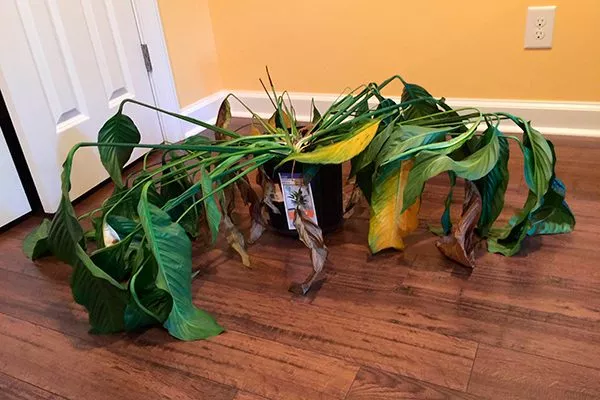
The most common pests are:
- mealybugs (hairy lice);
- aphid;
- spider mite;
- thrips;
- scale insect.
Regularly removing dead leaves, dusting the plant regularly, and inspecting the plant for insects will help minimize the risk of insect infestation. In case of severe infestation, spray the plant with an insecticide, such as Fufanon or Actellic.
Most often, spathiphyllum gets sick:
- Black rotThis is accompanied by wilting of the flower. The leaves become pale and dull. The disease is fungal and is transmitted through the soil or from other plants. A black coating appears on the outside of the plant, disrupting photosynthesis. It is recommended to remove the coating with a cloth dampened with soapy water.
- Phytosporosis. This occurs due to using dirty water for irrigation. It is recommended to stop watering until the soil dries and treat the plant with a fungicide.
- Gummosis. This is accompanied by blackening of the leaves and wilting at the edges. The cause is insects. Treatment involves removing the leaves and washing the plants with a warm solution of laundry soap.
Reproduction
Regal spathiphyllum is usually propagated vegetatively. It can also be planted from seeds, but this is a rather time-consuming and labor-intensive method.
Seeds
The seed method is commonly used in breeding. It takes at least two years for a flowering plant to grow from seed.
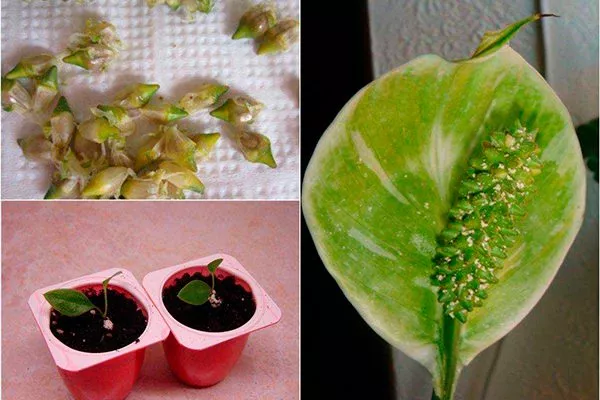
How to grow spathiphyllum from seeds:
- Fill the container with substrate.
- Spread the seeds over the surface at intervals of 3-4 cm.
- Cover the crops with transparent material to create greenhouse conditions.
- Place the container in a room with an air temperature of about +25°C.
- Ventilate the plantings regularly to prevent condensation from forming inside. Keep the soil moist by misting it with a spray bottle.
- When the seedlings emerge, remove the covering. And when the leaves appear, transplant the seedlings.
Spathiphyllum seeds quickly lose their germination capacity, so they should not be stored for long; it is better to plant them soon after collection.
By dividing the rhizome
This option is suitable for a mature plant that is removed from its pot and divided into several clumps. You'll need a sharp, disinfected tool for cutting the rhizome.
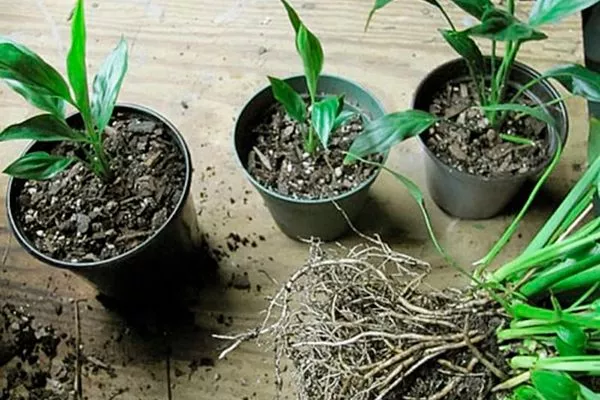
The order of reproduction by division:
- Remove the bush from the pot.
- Remove soil from the roots and rinse them under warm running water. Remove any dried shoots where the leaves were previously trimmed.
- Carefully untangle the roots and separate the plant into sections. If you can't do this by hand, use a sharp knife or pruning shears. Sprinkle the cut areas with charcoal.
- Plant the cuttings in separate pots.
Cuttings
Spathiphyllum cuttings are rosettes of leaves detached from the growing plant. Individual rosettes may even have their own roots. These can be planted directly in soil, while rootless cuttings are placed in water to develop roots.
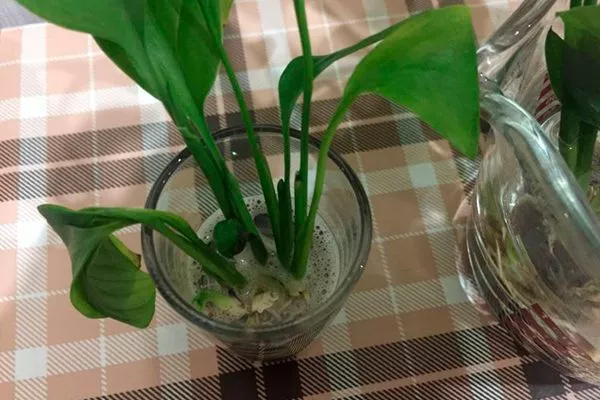
How to root a rootless cutting:
- Soak the end of the spathiphyllum cutting in Kornevin. Leave for 20 minutes to dry.
- Place the cutting in settled water. The water should only cover the base of the cutting, not rise above the leaves. You can add a couple of activated charcoal tablets to the glass of water.
- Spray the cutting with a spray bottle and cover with a transparent bag.
- Every day, lift the film to spray the cutting and ventilate the mini-greenhouse.
Roots should appear on the cuttings in about 3 weeks.
The royal spathiphyllum is a large and beautiful flower that can enhance any modern interior. It's not particularly fussy, but it does require some care to maintain its presentable appearance.