
Spathiphyllum is a perennial herbaceous plant popular for growing indoors. It has a refined appearance and is prized for its ease of care. Gardeners often encounter a situation where the spathiphyllum shows no inclination to bloom. There are several ways to ensure year-round blooms.
How does spathiphyllum begin to bloom?
Spathiphyllum typically blooms in the spring. From late March, the plant begins to awaken and its growth processes become active. Some hybrid varieties, such as Strauss, Chopin, and Variegated, can bloom twice a season under special conditions and additional light stimulation:
- Spring natural flowering. Usually in May or late April, when the natural flowering cycle begins.
- After a short period of rest in late November-early December. With adequate lighting and growth stimulants, spathiphyllum can produce flowers during this short dormant period in late November and early December.
- ✓ The air temperature should be maintained within the range of +22-27°C without sudden changes.
- ✓ Lighting should be diffused, lasting 10-12 hours a day.
- ✓ Air humidity must be maintained at a high level, avoiding drying out.
How does it bloom at home?
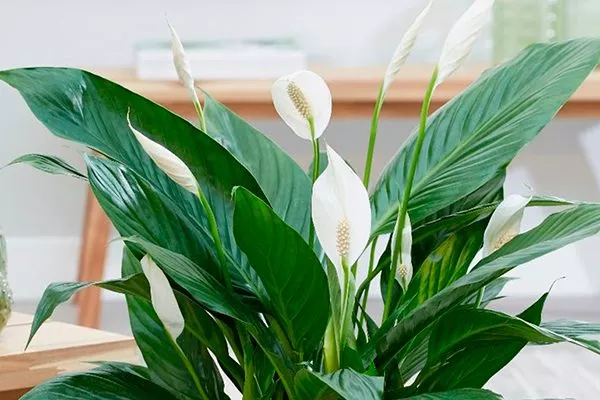
Spathiphyllum gets its name from the distinctive features of its wide, blanket-like, curved, and elegantly pointed snow-white flowers. The decorative spike-shaped inflorescence, covered in soft pubescence, can have shades of yellow, pale pink, and cream.
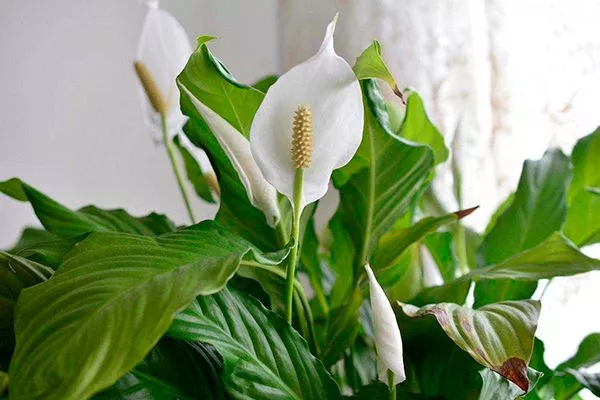
From the root rosette, a cluster of leaves, grows a peduncle, 1.5-2 times longer than the leaves themselves. The peduncle may bear flowers arranged sessile or on a stalk, surrounded at the base by a spacious spathe.
A unique feature of the spathiphyllum is the simultaneous blooming of two to three flowers on each bush. Gradually, the spathes open, revealing several more blooms. Throughout the season, a mature, healthy plant will produce eight to ten buds, creating a magnificent display.
- ✓ The leaves are bright green, without spots or yellowing.
- ✓ Peduncles are strong, 1.5-2 times longer than the leaves.
- ✓ 2-3 flowers bloom at the same time, the covers are snow-white or with a slight greenish tint.
What colors are bedspreads available in: descriptions and photos of the varieties
According to encyclopedic data, there are up to 50 different species in the genus Spathiphyllum, which are further divided into five subgroups. In the wild and in standard hybrids of this genus, two main colors predominate: pure white and greenish.
| Name | Color of the bedspread | Aroma | Flower size |
|---|---|---|---|
| Charming | Snow-white | Subtle aroma | Average |
| Dominoes | Snow-white with green spots | Absent | Average |
| Picasso | White with green spots | Absent | Large |
| Cupido | Sour cream white | Absent | Large |
| Cannolistny | White with a greenish tint | Fragrant | Average |
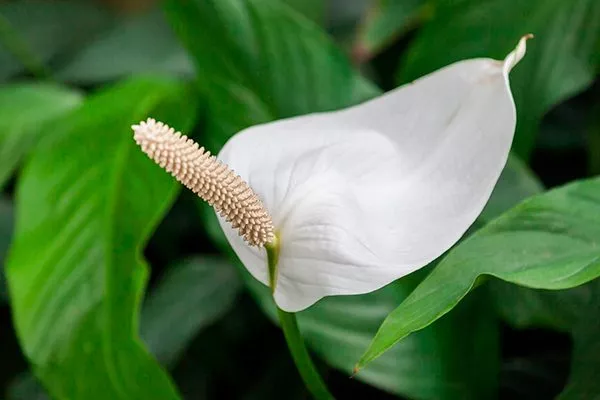
Charming
Known for its rich white flowers, the inflorescence has a soft yellow or creamy hue. One of its characteristic features is its delicate fragrance, especially pronounced in the early morning hours.
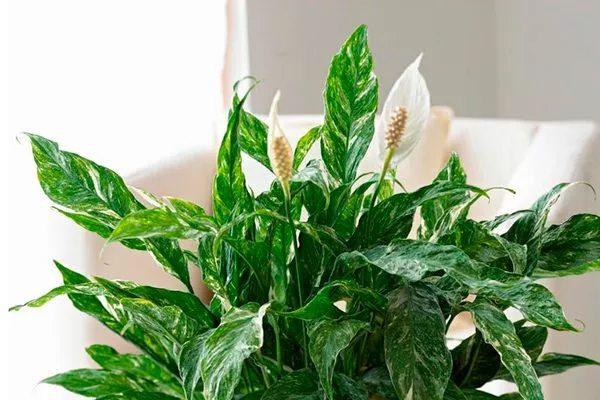
Dominoes
An unusual hybrid called Domino attracts attention with its extravagant leaf coloring. The green background is adorned with white spots and streaks, giving this plant a particularly decorative effect. The snow-white leaves blend harmoniously with the picturesque leaf pattern, creating an attractive and unique plant.
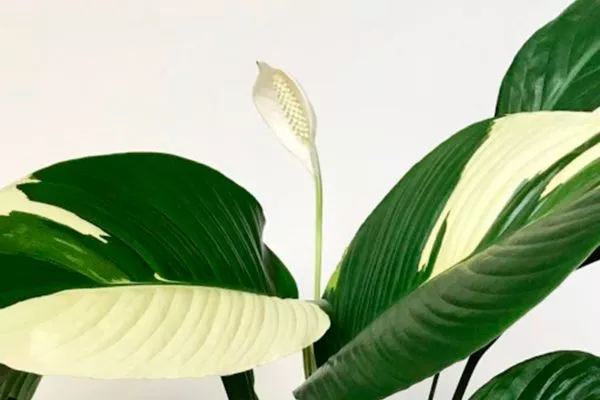
Picasso
A magnificent hybrid named Picasso, which can be called an Impressionist masterpiece, emerged from the Netherlands. The stunning leaf pattern is created by interspersed sections of white and green, giving it a unique character.
The delicate white bedspread's surface is accented by a scattering of greenish decorative spots, creating a striking artificial look.
Cupido
The Cupido variety attracts attention with its exquisite creamy-white flowers, which feature large, pointed tips. The plant itself is compact and low-growing, making it a convenient and aesthetically pleasing addition to any garden.
Cannolistny
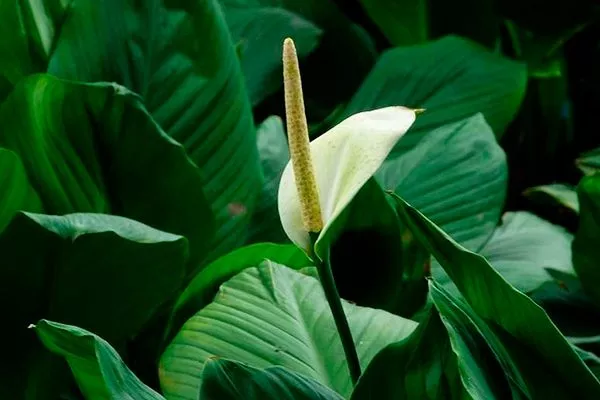
This species has fragrant flowers whose petals are white with a slight greenish tint, while the spadix has a yellow-green color.
How does the plant bloom?
The active flowering phase of this plant lasts for 3-4 weeks. After this, the snow-white leaf gradually fades, acquiring a greenish tint and blending in with the rest of the foliage. This natural process represents the leaf's death stage.
Reasons for the lack of flowering
Sometimes gardeners encounter spathiphyllums that stop blooming. There can be many reasons for this, so it's important to closely monitor the plant and provide it with proper care.
Incorrectly selected pot
A possible reason for a spathiphyllum's lack of flowering, despite proper care at home, could be a pot size mismatch. Before forming a flower stalk, the plant tends to completely fill the available space in its current pot.
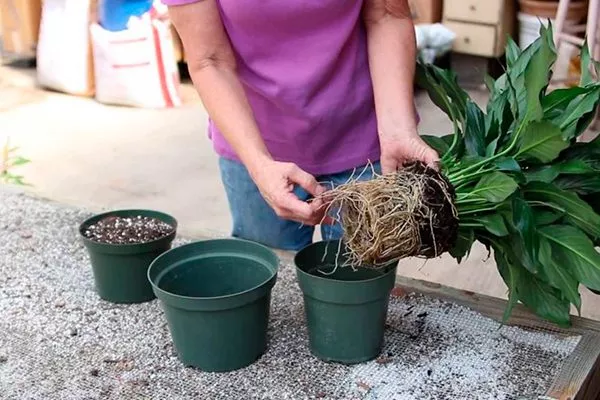
If you don't want to wait too long, repot the plant into a more compact pot. Avoid frequent repotting, as this can cause significant stress to the plant.
Incorrect transplant
The plant grows vigorously, and its roots quickly fill the pot. Regular repotting is essential for its care. Spathiphyllum reproduces by so-called "pups," but prefers to avoid forced division.
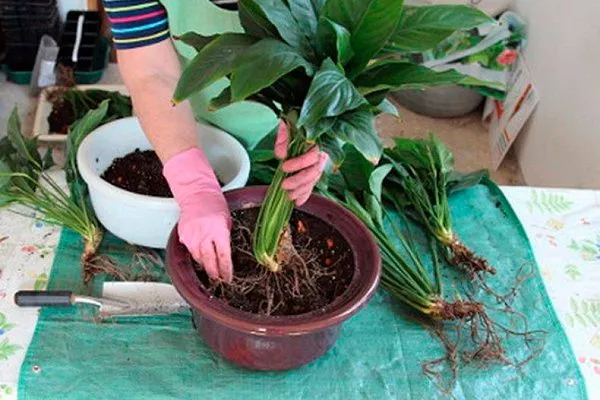
Wait until the "baby" is fully mature and becomes an independent plant before repotting. After this, it's advisable to transfer the newly formed bush to a separate pot.
Problems with the soil
When planting or repotting spathiphyllum, choose soil with a slightly acidic pH, which promotes its health and development. Use the following mixture: humus, leaf mold, peat, and woody soil in a 1:1:1:2 ratio. Adding charcoal is a useful amendment.
Ensure good drainage to avoid moisture retention. To improve soil aeration, add rotted wood or pine soil. A dense substrate can result in insufficient aeration of the roots, which can slow plant growth.
Incorrect lighting
Although spathiphyllum is considered a shade-adapted plant, it requires sufficient filtered light to achieve abundant flowering. A bush growing in deep shade can quickly lose its ability to produce flower stalks.
The lack of flowering in the "women's happiness" plant may be caused by the opposite problem. If the plant is exposed to direct sunlight, it may become ill. Provide the spathiphyllum with indirect light for 10-12 hours a day.
Inappropriate fertilizers
One of the reasons why a peace lily fails to bloom indoors may be inadequate nutrition. The plant requires a constant supply of nutrients at all stages of its development.
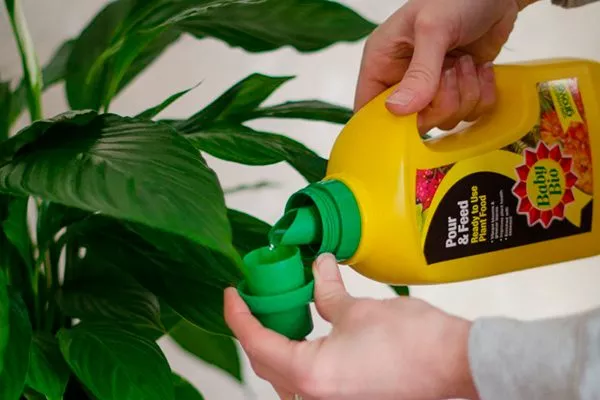
In spring and summer, feed it at least once a week. During cold weather, reduce the frequency to once a month. It's best to use specialized fertilizers available in stores. Fertilizers containing nitrogen and a moderate amount of potassium are especially beneficial for spathiphyllum.
Insufficient watering and humidity
Improper care of spathiphyllum, especially regarding humidity, can result in a lack of flowering and even death. Use settled, room-temperature water for watering.
Helpful tips:
- During the warmer months and during flowering, provide the plant with ample moisture. In winter, reduce watering, avoiding placing the pot near heating vents to prevent the soil from drying out.
- Too much water can cause leaves to drop, while too little moisture will make them look wilted.
- Adjust watering depending on the soil condition, water the plant when the soil dries out.
- Spraying with room temperature water twice a week helps maintain leaf elasticity.
If overwatering occurs, allow the water to drain and wait until the soil has dried out before watering again. Plants with large leaves require more frequent watering due to increased evaporation.
Drafts, unsuitable temperature
Spathiphyllum does not tolerate cold air currents. Regular air conditioning or ventilation can prevent bud formation. To encourage blooming, maintain temperatures between 22-27°C (72-80°F) and avoid sudden changes.
In a cool room, the plant may not form buds, but in a warmer environment, flower stalks will appear, but the inflorescences will quickly acquire a green tint.
Bay
Although peace lilies prefer high humidity, they can be overwatered, especially if watered daily. Overwatering can lead to stagnant soil and root rot.
The first sign of this disease is a change in the color of the peace lily leaves. They turn yellow and develop black spots along the edges. When the roots are severely affected by rot, the peace lily loses its ability to adequately absorb nutrients, leading to a stop in flowering.
In this situation, it's necessary not only to ensure bud formation but also to save the plant. In this case, repot the plant, clean out the root system, and replace the soil:
- Remove the plant from the pot, breaking up the root ball.
- Remove all rotted roots and treat the cut areas with crushed charcoal. If the rot is severe, soak the roots in a fungicide solution.
- Place the plant in fresh soil, disinfecting the old pot if necessary.
- Water thoroughly, adding fungicide to the water if necessary.
- Spray the plant with Epin solution and cover with film.
Ventilate and mist the plant daily. Water only after the soil has dried out.
Untimely pruning
Spathiphyllum may stop blooming if old flower stalks are not removed promptly. As soon as the spathe begins to turn green, it is recommended to prune them. This stimulates the growth of new blooms.
It's crucial to prevent the plant from pollinating. If this does occur, the spathiphyllum may not bloom for many months.
Diseases and pests
If your spathiphyllum is experiencing slow growth, the problem may be caused by pests attacking the plant. Common pests include mealybugs, spider mites, and thrips.
Natural causes
Spathiphyllum typically blooms from spring to late summer, and under favorable conditions, it can produce buds a second time a year. Between blooms, the plant requires at least two months of rest. The absence of buds during this period is natural and should not be a cause for concern.
The absence of flowering is considered natural in the following cases:
- The bush has become too old and outgrown, not having enough space in the pot.
- The plant was recently divided and needs time to recover from damaged roots, preventing it from producing flower stalks.
- The spathiphyllum grew from seeds and is not yet 3 years old (if propagated from seeds, it may take some time for buds to form).
Store-bought peace lilies may be overexposed to slow-release stimulants in the soil. This can lead to excessive bud production over a prolonged period, which can deplete the plant.
How to make spathiphyllum bloom?
The most straightforward way to tame your "female happiness" into blooming is to eliminate the factor that's causing the lack of buds. Sometimes, simply waiting is enough. If the methods described in the relevant sections fail, you can use two tricks.
Forced rest period
If the spathiphyllum is kept in constant conditions all year round, it may not have enough time to fully rest, as it constantly strives to bloom.
In such cases, the plant often forms only 1-2 buds, does not accumulate enough energy and does not achieve the maximum decorative effect.
To break this cycle, which is similar to a complete lack of flowering, a forced dormancy period can be helpful. Follow these recommendations in late fall:
- If there are flower stalks, cut them off.
- Move the plant from a brightly lit location to partial shade, and reduce the temperature to +16°C.
- Drastically reduce the length of daylight hours (to 6 hours instead of the usual 12).
- Stop fertilizing.
- Increase the intervals between waterings to the maximum possible, avoiding drooping of the leaves.
- After a month, return the plant to its normal conditions—room temperature and diffused light. Resume the normal watering schedule—2-3 times a week.
The first feeding after the dormant period should contain nitrogen. Then move on to phosphorus-potassium fertilizers. Spathiphyllum will begin to bloom approximately four weeks after the dormant period ends.
Use of stimulants
To quickly stimulate spathiphyllum flowering, use special stimulators available at flower shops. This is only suitable for healthy plants in optimal conditions. Examples of budding stimulators available for purchase include:
- Bud;
- TopMax;
- Bio Bloom;
- Houseplant;
- Flora Kleen.
Use them according to the instructions, as overdosing can harm the plant.
There are folk remedies that are successfully used to stimulate the flowering of spathiphyllum:
- Watering the plant with diluted vodka. Add 20 ml of alcoholic beverage to 200 ml of water. Ethanol acts as a stress hormone, signaling the plant to begin flowering.
- "Bathing" under a hot shower. Wrap the plant in plastic wrap so that the stream of water only hits the leaves, and then leave it in a closed bathroom until the leaves dry.
- Watering with hydrogen peroxide solution. Dissolve 20 ml of hydrogen peroxide in 500 ml of water. This method is effective when oxygen deficiency is the cause of a lack of flowering due to soil compaction or clogged drainage holes.
Excessive use of stimulants, both purchased and home-made, can weaken the plant if it is not ready to bloom.
What to do when an exotic plant stops blooming?
Experienced gardeners recommend pruning the inflorescence as soon as it begins to fade. This prevents the plant from wasting energy and nutrients on the already faded flower stalk. Prune as close to the base of the stem as possible to stimulate new growth.
What are the ways to extend?
Prolonging the blooming period of your spathiphyllum requires careful care according to certain guidelines. Only then will the plant delight you with its blooms for a longer period:
- Pay attention to the air temperature, maintaining it within the range of +22-25°C.
- Avoid sudden temperature changes and drafts.
- Provide bright light. Spathiphyllum prefers full sun, but protect it from direct sunlight.
- Adjust the watering schedule. Don't allow the soil to dry out completely, as the plant prefers a moist environment. If you want to increase the number of blooms, reduce watering and place the plant in a cool place for a few weeks. Fertilize regularly during this period.
Use a suitable soil containing humus, pine bark, ash and brick chips.
What care and growing conditions should be provided if the plant does not produce shoots?
The main rule is to review and improve the tropical plant's living conditions. Follow these recommendations:
- Provide the spathiphyllum with bright but soft lighting, since inflorescences will not form with a constant lack of heat and light.
- Perform timely sanitary pruning of old leaves and faded flowers.
- Use suitable pots – in larger containers, the plant expends energy on expanding its root system. The optimal pot size is 2-3 cm larger than the roots.
In spring, include irrigation and warm showers for refreshment, and increase watering. Dry soil does not provide sufficient nutrition to the root system and can delay flowering.
Why do spathiphyllum buds turn black, yellow, or dry out?
Spathiphyllum buds may turn black, yellow, or dry out. This can occur for several reasons, especially during the flowering period:
- Lack of moisture. Insufficient moisture can cause the bud to wilt and its edges to turn black. Spathiphyllum prefers a humid environment, especially during flowering.
- Excess water. Overwatering can cause yellowing of the buds and root rot. Provide moderate watering, avoiding overwatering.
- Low air humidity. Spathiphyllum requires high humidity. In a dry environment, the buds may dry out and turn black. Use humidifiers, such as misters or placing containers of water near the plant.
- Lack of light. Insufficient light can lead to slow bud formation and subsequent wilting. Provide sufficient, bright, but varied lighting.
- Top dressing. Nutrient deficiencies can affect the health of the bud. Fertilize the plant regularly during active growth and flowering.
- Temperature extremes. Sudden temperature changes, especially cold drafts or contrasts between day and night temperatures, can stress the plant and affect the health of the bud.
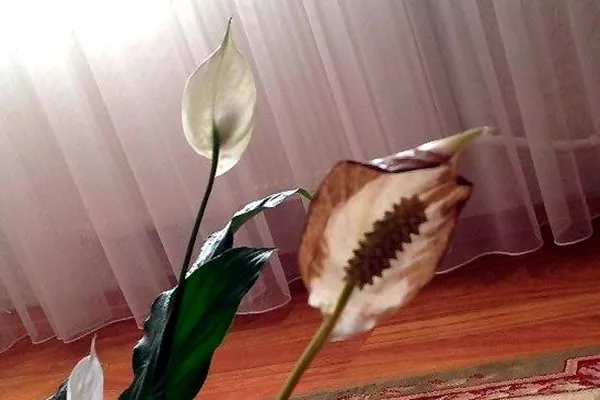
Caring for your spathiphyllum is key to ensuring its health and beauty. The key to successful flowering is creating optimal conditions, such as maintaining warmth, light, humidity, and proper watering. Spathiphyllum's flowering period is not only a joy to behold but also a sign of successful care.