
Spathiphyllum, known as the "women's happiness" flower, is ideal for beginning gardeners due to its ease of care. This plant can sometimes encounter diseases and various root problems, causing concern among owners. To restore its health, we'll look at detailed recommendations for restoring the plant.
Can you cut off the root of a spathiphyllum?
It's generally not recommended to trim the roots of peace lilies or other plants unless there's a compelling reason. Roots play an important role in water and nutrient absorption, as well as the overall health of the plant. Removing roots can weaken the plant and create stress.
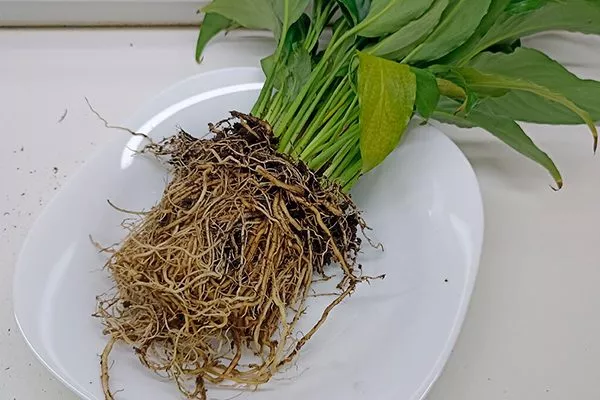
However, there are several cases where root cutting may be justified:
- Damaged or rotten roots. If you notice damaged or rotten roots on your peace lily, remove them. This will help prevent the rot from spreading.
- Plant transplantation. When replanting a spathiphyllum into a new pot or substrate, remove some of the old roots to make room for new growth and ensure better adaptation.
- Dividing the plant. If you have a mature peace lily, divide it into several pieces. To do this, cut off a portion of the root system. Perform this procedure while the plant is actively growing, and exercise caution.
First aid for spathiphyllum
After removing the plant from the pot, carefully inspect the extent of the problem. The roots may appear healthy at first glance, but upon closer inspection, they become slippery and soapy. This could indicate a problem.
To restore, follow the instructions:
- Wash the roots from the soured soil.
- Remove any visibly rotten areas.
- Immerse the roots in a fungicide solution—an agent that kills fungi. Use Fundazol or any other solution. A solution of potassium permanganate is also suitable. Follow the instructions when using a fungicide.
- Dry the roots for about 30 minutes.
Next, proceed with the restorative transplant.
How to plant a spathiphyllum if there are no roots?
If your peace lily doesn't have roots and you want to try propagating it from cuttings, follow these guidelines. Prepare the cuttings and soil, then proceed with planting.
Preparing cuttings
Preparing spathiphyllum cuttings for rooting can help ensure successful propagation. Here are the steps you can take:
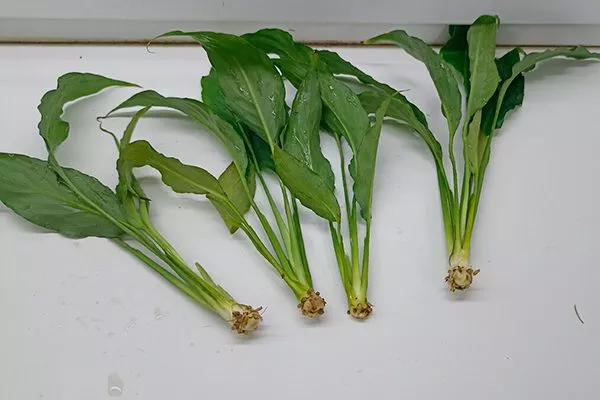
- Select healthy plant stems for cuttings. They should be free of visible damage and disease.
- Cut off the top portion of the stem, about 10-15 cm long. Make sure each cutting has at least one node, as this is where the roots will develop.
- Leave only the top leaves and remove the rest. This will help reduce moisture evaporation and focus the plant's energy on root formation.
- ✓ Cuttings must have at least one node for root development.
- ✓ Use a growth stimulator according to the instructions to speed up rooting.
Soil preparation
Preparing the right soil is crucial for successful rooting of cuttings. For this procedure, use perlite, peat with perlite, and live sphagnum moss:
- Soil using perlite. Use a general-purpose planting substrate. Add perlite to the soil at a 1:1 ratio. Perlite will ensure good aeration and looseness of the soil, which is favorable for rooting.
- Soil made of peat with perlite. Mix equal parts peat and general-purpose potting soil. Add perlite to the peat in a 1:1 ratio. This will create a light, permeable, and well-drained soil.
- Soil using live sphagnum moss. Prepare the sphagnum moss by first washing it to remove excess acidity. Soaking the moss in water will help remove excess acidity. Mix the sphagnum moss with a universal substrate in a 1:1 ratio. This soil will have excellent water-retention capacity.
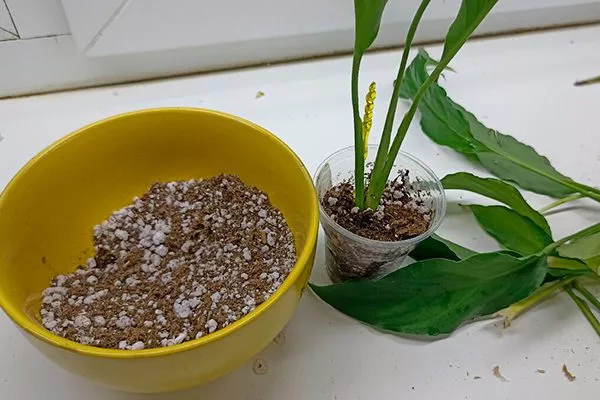
Be sure to allow the soil to dry out before planting the cuttings. Ensure the soil mixture provides adequate ventilation to prevent root rot. After preparing the soil, distribute it evenly in the cutting containers.
Greenhouse
A greenhouse is key to successful rooting. If peace lily roots can't absorb moisture from the soil, they'll extract it from the air. Use a five-liter bottle for this process. Cut off the top and make a slit.
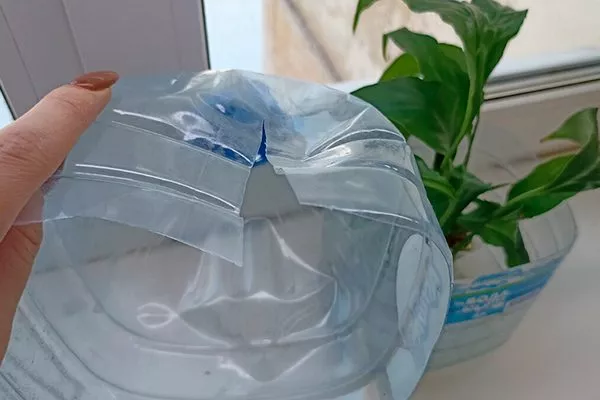
By cutting a notch into the top of the bottle, it becomes not only flexible but also compressible. Insert this element into the bottom of the bottle, creating a sort of greenhouse. While its functionality isn't ideal, this option is cost-effective and doesn't require any special skills or experience.
What to do next?
Check the soil moisture regularly and maintain it at a level that promotes rooting. Once roots appear (usually within a few weeks), transplant the cuttings into individual pots filled with potting soil for mature plants.
Continue to care for them, providing light, moderate watering, and optimal growing conditions. Remember that rooting of cuttings can be variable, and not all plants will survive. However, with proper care, the chances of successful propagation increase.
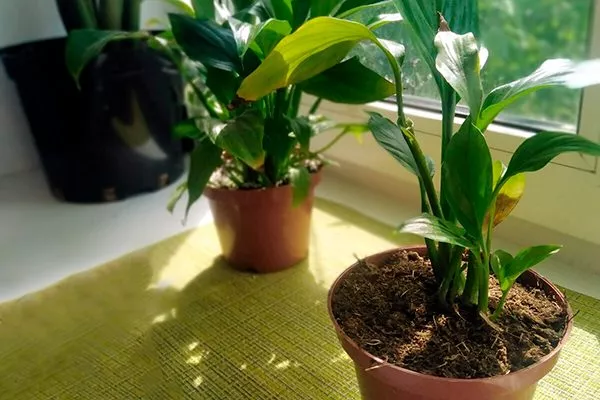
How should I treat the roots before replanting to prevent them from rotting?
Treating the roots before repotting can help prevent rot and ensure a healthy start for the plant. Here are some steps to treating the roots:
- Carefully remove the plant from the pot, avoiding damage to the roots.
- Thoroughly remove old soil and dirt from the roots. This can be done by rinsing the roots under a gentle stream of water.
- Inspect the roots for damaged or rotten areas. Trim them off with clean, sharp pruning shears. The trimmed areas should be healthy and white.
- Treat the roots with an antiseptic or fungicide to prevent possible fungal infections. Allow the roots to dry slightly before proceeding with repotting.
- To stimulate new root formation, use a growth stimulator. Follow the instructions on the package.
- Use fresh, well-drained soil when repotting. This will help prevent water retention and improve root conditions.
- Place the plant in the new soil so that the roots are evenly distributed and covered with a 2-3 cm thick layer. Compact the soil around the roots, avoiding damage.
- After repotting, water the plant moderately. Avoid overwatering to avoid creating excess moisture, which can promote rot.
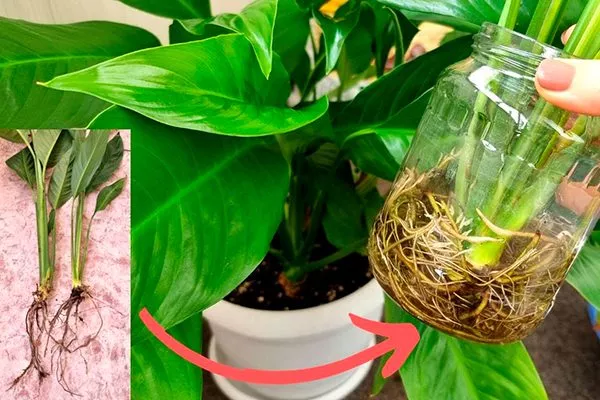
Creating favorable conditions for spathiphyllum cuttings to root plays a key role in successful propagation. Selecting the right soil ensures favorable conditions and the successful recovery of plants with root problems.