
The spathiphyllum's magnificent appearance has won the hearts of many gardeners, but its outstanding decorative qualities come with a peculiarity that can present some challenges for indoor plant enthusiasts. To preserve the beauty of its leaves and flowers, it's important to carefully consider the watering requirements of this plant.
Rules for watering spathiphyllum
In addition to determining watering frequency, it's important to follow a few additional rules for successfully growing a beautiful peace lily. Here are the main ones:
- Water with warm water, avoiding cold water to prevent possible root rot.
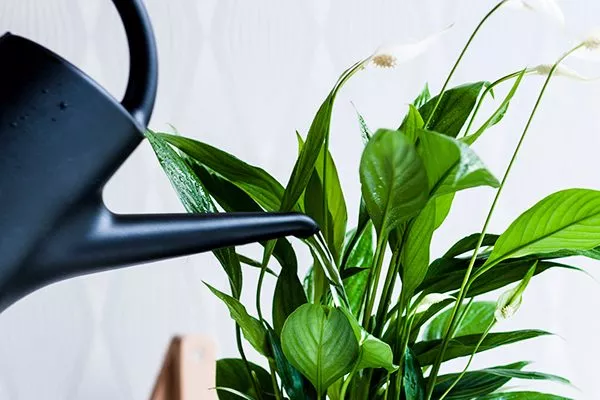
- To avoid negative consequences, water should not flow directly into the center of the rosette. Water the flower with a thin stream directed along the edge of the pot, distributing it around the entire perimeter rather than concentrating it in one spot.
How often should I water my spathiphyllum?
There's no universal guideline for the optimal watering frequency for peace lilies. However, there are general recommendations depending on the time of year. If you notice that the plant requires watering significantly more frequently or, conversely, much less frequently, this may be a sign that it's time to repot.
In spring and summer
During the active growing and flowering period of spathiphyllum, which is characterized by the fact that its leaves do not store water due to the plant's origin and habit of high soil moisture, it is recommended to water it approximately every 3 days in the summer.
Follow the recommendations:
- Make sure the top layer of soil is dry before watering, avoiding applying water to a damp soil surface.
- If the spathiphyllum is planted in a poor-quality substrate with low air permeability or a hard crust has formed on the soil surface, reduce the frequency of watering to once every 4-5 days.
In this case, wait until the soil inside the pot dries out to a depth of 2 cm, preventing water from standing at the roots. - If you're unsure whether watering is necessary, wait another day. Overwatering is more dangerous for peace lilies than short-term drought. Frequent watering, especially every 1-2 days, can lead to root rot, and if the plant quickly dries out, a larger pot may be needed.
- Don't wait for the peace lily leaves to droop, as this is a clear sign that the soil is too dry. If the drought is short-lived, the leaves will quickly regain their shape after watering.
In autumn and winter
During these periods, the frequency of watering your peace lily depends on its current state: whether it's dormant or still blooming. If the plant has only 1-2 buds or no buds at all, reduce the amount and frequency of watering. Water your peace lily about once a week.
Allow the soil to dry out to half the pot's depth between waterings. It's especially important to reduce the frequency of watering if the plant is in cold temperatures to prevent the risk of root rot.
How much water does a woman's happiness need?
The amount of water needed for spathiphyllum depends directly on the size of the pot and the soil's moisture capacity. Continue watering until water begins to flow out of the pot's drainage holes.
After watering, watch for the following signs:
- If after 30 minutes of watering there is still water remaining in the tray, drain it, avoiding excess moisture.
- If the water is absorbed quickly and the soil feels dry, you may need to water again to ensure the plant's root system is adequately hydrated.
Pay attention to other recommendations for spathiphyllum care to provide it with optimal growing conditions.
Watering methods
There are several ways to water a peace lily. You can water this "woman's happiness" plant with a wick, a neck-high watering method, or by top or bottom watering.
Top or bottom watering
Both methods have received positive reviews from gardeners, but root watering has several advantages over pan watering. Let's take a closer look:
- Determining the volume and frequency of watering is easier for a gardener when using the root watering method.
- Watering the roots regularly flushes the soil, which reduces the risk of salt deposits forming due to excess fertilizer.
- This method of watering is simpler and faster, since it does not require constant topping up of water into the tray and the need to monitor the condition of the soil.
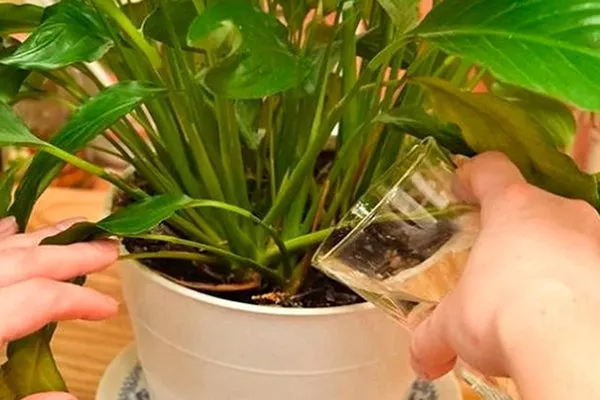
Root watering is typically used when a plant has become overly dry. Furthermore, a substrate with a high peat content can form lumps when overdried, and in such situations, root watering is the only way to moisten the soil.
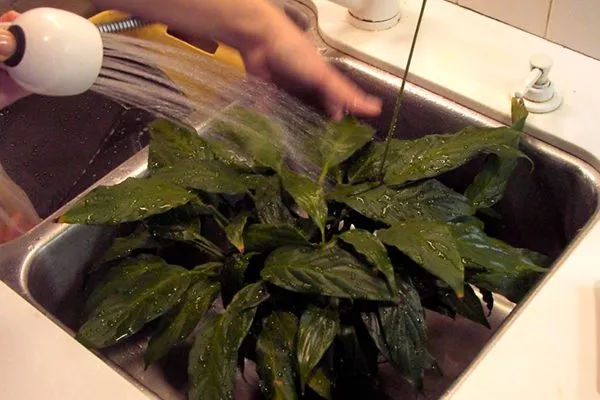
Watering "Women's Happiness" using the "Neck-Up" method in a closed system
The "neck-to-neck" watering method for "women's happiness" in a closed system is an effective way to provide the plant with the necessary moisture. In this case, water is applied directly to the plant's root collar, avoiding excess moisture on the leaves and soil surface.
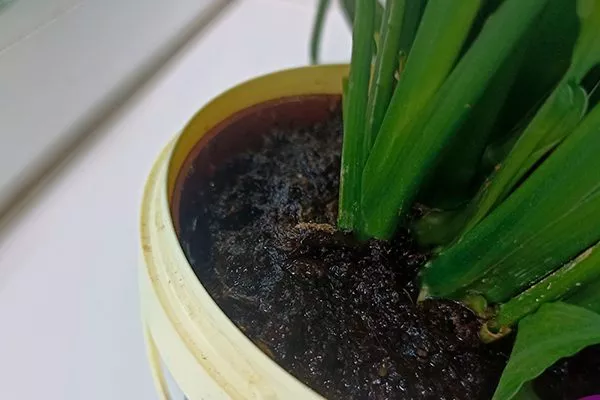
Please keep some key points in mind when using this watering method:
- Ensure precise and even water delivery to the plant's root collar. This can be achieved using a drip irrigation system, drainage tubes, or other specialized tools.
- Use trays or containers to collect excess moisture to avoid overwatering the soil. Moisture control helps prevent root rot and other problems associated with excess moisture.
- The amount of water should be adjusted according to the needs of the individual plant and environmental conditions. This is especially important in closed systems where natural drainage is absent.
- Maintain a regular watering schedule, especially if the plant is in a closed system and does not have access to natural moisture sources. Regular watering promotes healthy growth and development.
The "Neck-deep" watering method in a closed system allows for optimal watering of the "female happiness" plant, providing it with the right conditions for prosperity.
Wick watering for spathiphyllum
Wick watering is an effective method of maintaining optimal humidity levels for plants, including peace lilies. This method is especially useful when a stable and constant supply of water is needed.
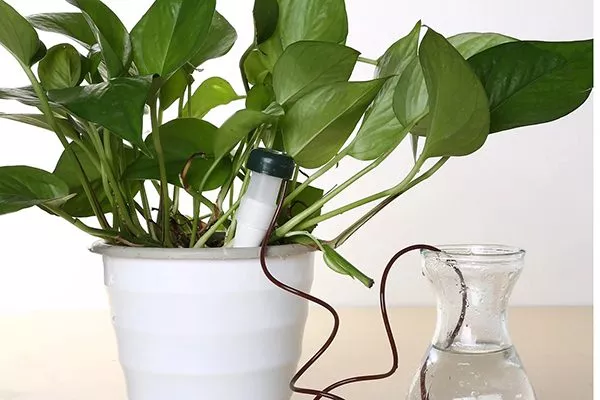
Some key aspects of wick watering:
- The method involves using a moisture-absorbing material, such as a wick (cord or fiber), which penetrates the soil from a reservoir of water. Moisture is gradually transferred to the wick and evenly distributed around the plant's roots.
- By choosing the thickness or number of wicks, you can regulate the rate of water penetration into the soil. This allows you to precisely maintain the humidity level that best suits the spathiphyllum's needs.
- Wick watering is especially convenient for those who can't always keep track of watering regularly. This method ensures a steady supply of water for the plant over a long period of time.
- The wick allows you to avoid excess moisture, since water is transferred as needed, and excess water in the reservoir will not lead to waterlogging of the soil.
- Depending on your needs and growing conditions, you can choose from different types of wicks, including those with added fertilizers.
Wick watering is an effective and reliable way to ensure a constant supply of moisture for spathiphyllum, maintaining its health and decorative appearance.
How to prepare water?
Before watering your peace lily, let the water sit in the uncovered container for at least 12 hours. Then, carefully pour it into a watering can, being careful not to disturb any sediment at the bottom. Allowing the water to settle removes chlorine compounds.
In regions with hard water, it is recommended to soften the water before watering. This can be done using citric acid (1 g per 2.5-3 liters of water), freezing, or soaking in peat (10 g of peat per 1 liter of water, soak for at least 12 hours).
Water the plant with acidified water every 1.5 to 2 weeks. Avoid constant use to avoid lowering the soil pH. Do not water the plants with boiled water. Occasionally, once every few weeks, you can use aquarium water, provided the fish are healthy.
Signs of overwatering
Overwatering of peace lilies can cause root rot, which can lead to fungal diseases affecting the leaves and flowers. A characteristic sign of overwatering is dark spots on the tips and edges of the leaves, surrounded by a yellow halo.
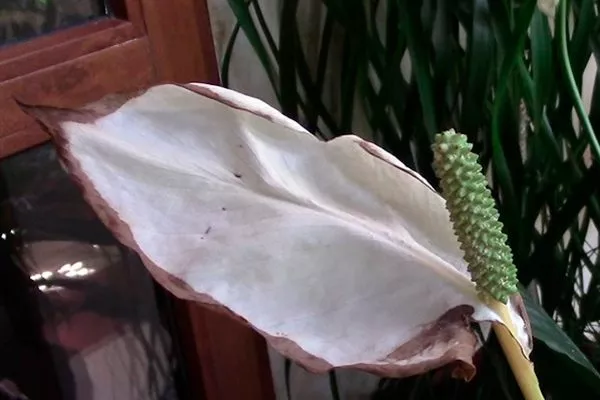
A similar situation can arise not only due to excessive watering, but also under the following conditions:
- Watering with cold and hard water.
- Clogged drainage holes.
- Planting in too dense soil with poor permeability.
Follow the recommendations:
- If leaves or flowers are rotting due to waterlogging, remove all completely blackened or yellowed leaves, as well as flower stalks. If only the leaf edges are damaged, leave them, trimming off the yellowed areas.
- If your peace lily has been overwatered for a short time, you can try drying out the soil. To do this, remove it from the pot, wrap it in newspaper, and change it regularly. When the paper stops absorbing moisture, return the plant to the pot, loosen the soil surface, and wait until the middle of the pot dries out.
- If the soil has acquired an unpleasant odor and the roots have become rotten, repot the plant by completely replacing the soil. Remove any rotten parts of the roots, treat them with charcoal, and water with water containing fungicides.
- If the root system is severely damaged, soak the roots in a fungicide solution and stimulate growth using Kornevin or a similar stimulator.
When the root system is almost destroyed, transplant the flower into water or perlite for re-rooting.
Signs of underwatering of spathiphyllum
Lack of watering of spathiphyllum for a long period of time affects its general condition:
- At first, the leaves lose turgor, become flat and begin to droop.
- They then wilt, dropping to the edges of the pot, showing obvious signs of wilting.
- If the water supply is not restored, the roots begin to dry out, which leads to serious damage to the root system.
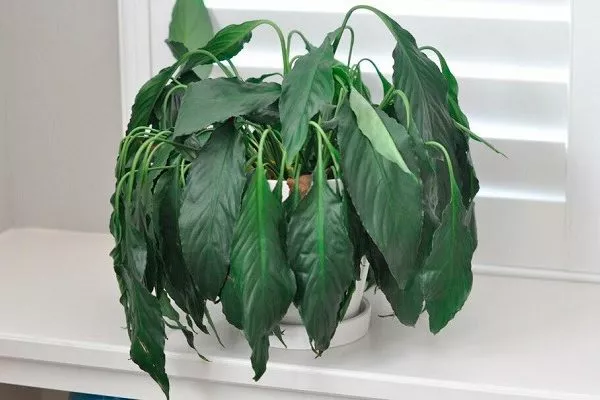
If the roots have already dried out, restoring the plant's health can be extremely difficult or even impossible. Regular and careful care, including timely watering, is essential to maintaining the plant's health and beauty.
Why doesn't the spathiphyllum raise its leaves after watering?
Sometimes, a spathiphyllum won't raise its leaves after watering. This can occur for several reasons:
- The potting soil has become clumped and can't be moistened with regular overhead watering. In this case, use the bottom watering method.
- If the spathiphyllum was recently repotted and the damaged roots have not yet recovered, cover the plant with plastic wrap and mist it daily. Add Epin to the water at a rate of 1 ampoule per 5 liters.
How to combine feeding of female happiness with watering?
Water the spathiphyllum 30 minutes before applying root fertilizer. Reduce the amount of water, keeping in mind that the plant will receive additional fertilizer. It's important to ensure the root ball is completely wet, and only apply fertilizer to your "woman's joy" plant when the soil is moist.
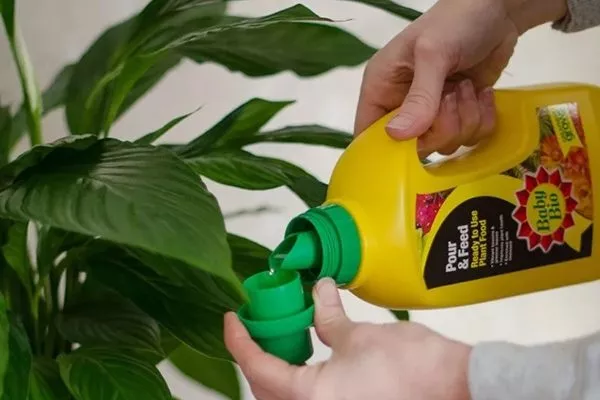
If you plan to foliar feed your peace lily, water it first. To maintain a beautiful bush, mist the plant daily, and in hot weather, repeat this process up to five times a day. Failure to do so can result in dry leaves, even if the soil is sufficiently moist.
Proper care of the peace lily, including proper watering, plays a key role in maintaining the health and beauty of this beautiful plant. Following specific watering guidelines, depending on the season, growth stage, and environmental conditions, helps avoid problems such as over-drying or over-watering.