
Repotting a peace lily is necessary in many cases, including for planned events and when problems arise. This will provide the plant with fresh, high-quality soil, ensuring a comfortable environment for the houseplant. Choosing the right container is also important to prevent damage to the roots.
When is a transplant necessary?
Don't think about repotting your spathiphyllum immediately after purchasing it, as the plant needs to acclimate to the new microclimate and conditions. This takes several weeks. Some experts recommend repotting it even after 10-12 months.
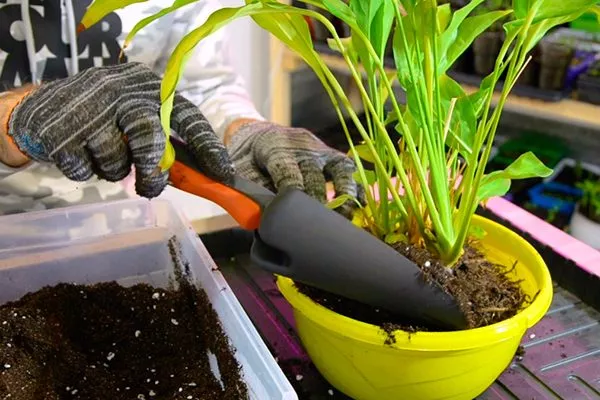
Despite this, the soil in a purchased flower does not always meet the requirements, so it is sometimes advisable to replace the substrate after a couple of weeks.
A planned transplant is required in the following cases:
- Annually until adulthood (5 years). In its youth, spathiphyllum rapidly grows not only foliage but also root mass, causing it to become overcrowded in its pot. This causes the plant to become diseased and wither.
Furthermore, a young plant needs a full range of nutrients in the most favorable soil possible. While you can add fertilizer, the minerals won't be able to penetrate all layers of the pot, which can result in insufficient nutrients for some root shoots. - Every 3-5 years if the plant is already mature. This is necessary because over 3-4 years, salts accumulate in the substrate, which harm the plant and make the soil mixture too dense. Additionally, the soil requires disinfection, which can only be done during repotting.
Spring is considered the most favorable time for replanting—the plant is entering its growing season, so it will recover quickly after the work. However, if you urgently need to save a bush, the season isn't important—emergency replanting is performed even in winter, during the dormant period.
Signs that a spathiphyllum needs repotting
Spathiphyllum has a shallow root system, so the grower should always monitor the condition of the roots in the pot. If they are too tightly packed, they are already overcrowded and need a new container, 2-3 cm wider than the previous one. Sometimes the roots begin to push through the drainage holes or water immediately spills out, which also indicates overcrowding.
Other signs for transplantation:
- the occurrence of root rot, which is indicated by blackening of the roots, yellowing and drooping of the leaves;
- formation of brown spots on the green mass - water does not come out of the pot, but stagnates;
- yellowing of foliage – more nutritious soil is needed;
- the presence of dry tips on the leaves or their wilting - the soil lump is not uniform;
- pests and other fungal diseases – the soil mixture requires disinfection.
How to choose a pot for replanting?
The container for spathiphyllum shouldn't be too deep, as the roots grow wider rather than deeper. When repotting, it's important to select a pot that's 2 or 3 cm wider. Excessively wide containers are unsuitable, as this plant only grows and develops when the pot is completely filled.
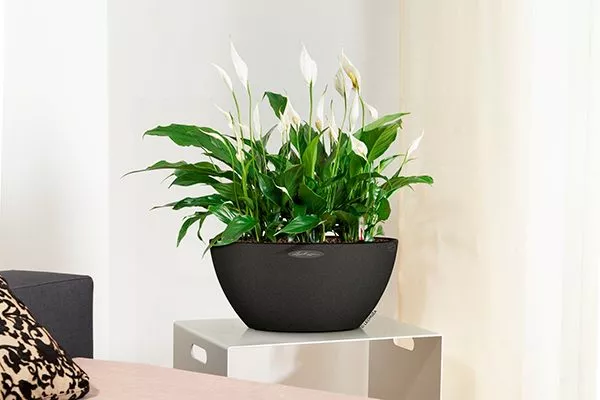
The material the container is made of isn't particularly important, but it's important to keep in mind that clay will cause the substrate to clog up several times faster. Furthermore, the material's fragility leads to wear and tear and the risk of cracking.
What kind of soil is best for replanting?
Spathiphyllum does not tolerate high acidity, so the pH should be slightly acidic or neutral. Optimal pH values are 5.8-6.5. Other substrate requirements for spathiphyllum:
- Looseness and lightness. This is essential for air and water permeability. First, the roots need to receive sufficient oxygen, and second, water needs to drain quickly through the drainage holes, eliminating the risk of water stagnation and root rot.
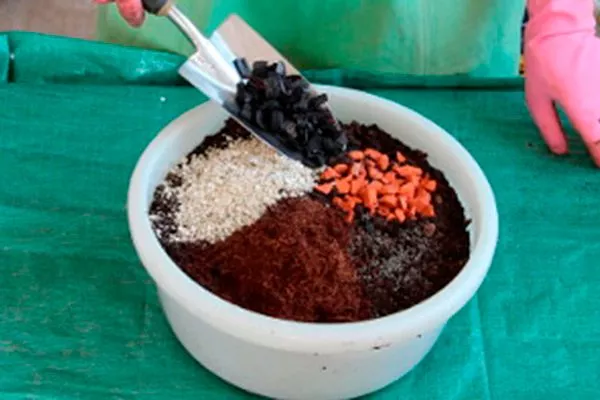
To achieve the desired structure, so-called disintegrating agents are used. These can include perlite, vermiculite, expanded clay, peat, coarse river sand, charcoal, crushed conifer bark, and similar materials. The maximum percentage of disintegrating materials used should be 12%. - Fertility. This is an important factor, as without nutrients, the plant stops developing. Mineral complexes and organic fertilizers are used for this purpose.
- ✓ Make sure the substrate does not contain fresh manure or immature compost to avoid burning the roots.
- ✓ Make sure that the pH of the substrate meets the requirements of Spathiphyllum (5.8-6.5) using a pH meter or litmus paper.
You can buy potting soil in stores—specifically, for spathiphyllums, palms, or aroids. Anthurium mixes should not be used, as they are too acidic. The most popular store-bought substrates include Auriki Gardens, Sila Suzdalya, Purshat, BioMaster, Zeleny Gorod, and others.
If you can't or don't want to buy a ready-made substrate, you can make your own. There are many options, but here are some universal ones:
- For young bushes, take 2 parts of turf and leaf soil, 1 part of peat and sand, and 0.5 parts of pine bark, charcoal, and brick chips:
- For adult spathiphyllums you need 2 parts turf, 1 part each of leaf soil, peat and sand, 0.5 parts of any baking powder.
Step by step process
Before replanting spathiphyllum, prepare all the necessary tools and materials:
- new capacity;
- substrate;
- shovel for indoor flowers;
- a sharp knife or pruning shears;
- watering can or spray bottle;
- drainage material;
- substrate.
The algorithm of actions is as follows:
- Disinfect the new pot, its tray and tools.
- Water the plant with warm water 4-5 hours before repotting. This will allow for easier removal of the flower with less trauma to the root system.
- Remove dried or damaged foliage from the bush if necessary. If repotting is necessary and flower stalks are present, trim them off.
- Place a 2-3 cm layer of drainage material—expanded clay, pebbles, or similar—in the new container.

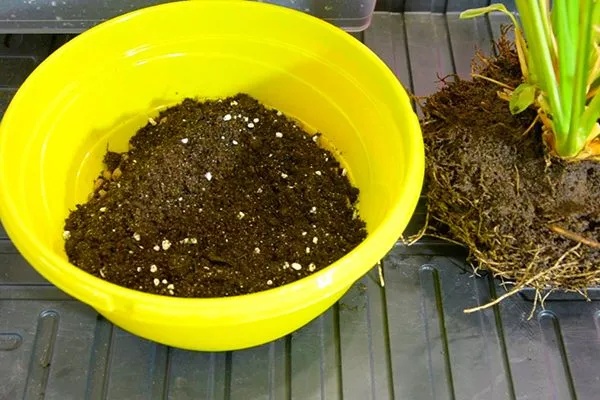
- Pour in the substrate and form a small mound.
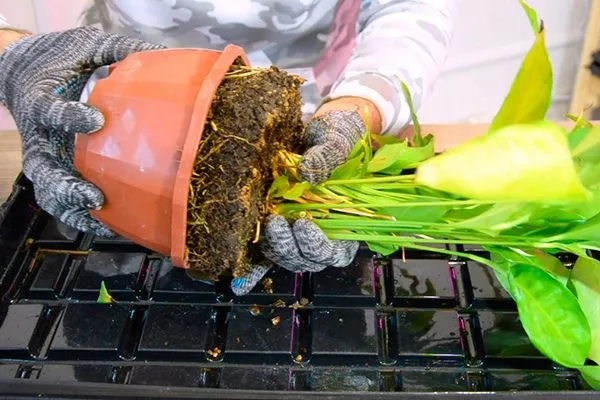
- Tilt the plant pot to the side and use a trowel to gently loosen the soil on the sides.
- Remove the bush.
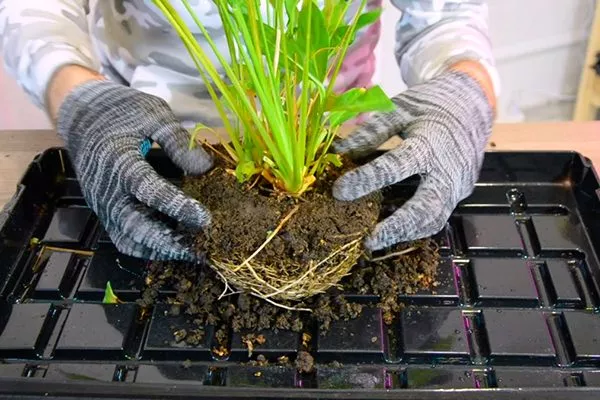
- Clean the root system from old soil mixture.
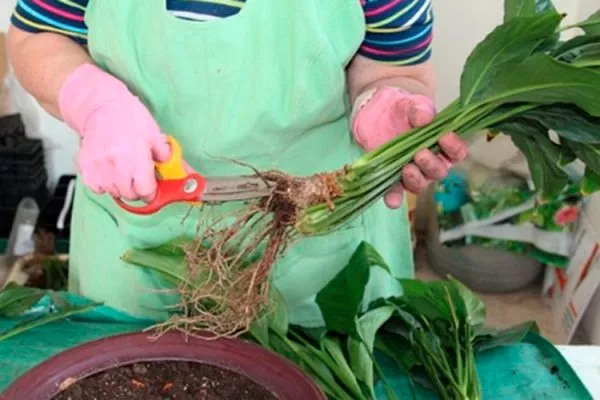
- Trim off unsuitable roots if necessary.
- Place the flower on the mound and sprinkle with the remaining substrate.
- Lightly compact the soil with your hands.
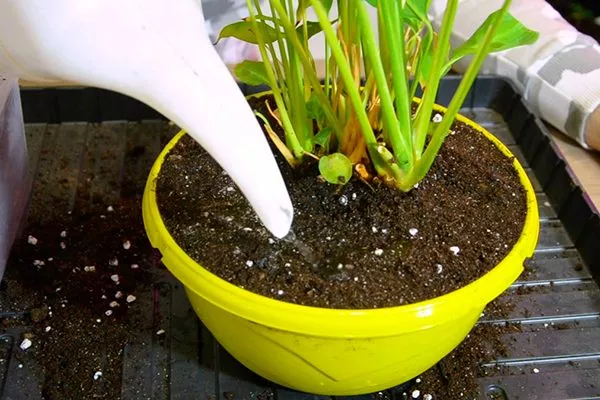
- Water the bush and after 30 minutes drain the remaining liquid from the tray.
- Place the houseplant back in its old place.
How to properly care for a transplanted plant?
Immediately after repotting, the plant needs to be provided with the necessary conditions to help it adapt more easily to its new pot and substrate. To do this, follow these guidelines:
- Lighting. The light should be diffused, not bright. Avoid placing the pot in direct sunlight. If the location doesn't allow this, shade the plant around midday with a light curtain.
- Temperature. Optimal temperatures range from 18 to 25 degrees Celsius, which is especially important immediately after repotting. Avoid freezing, as this will cause root rot. Higher temperatures are also unacceptable, as the plant will begin to wilt.
- Air humidity. Overwatering is dangerous for peace lilies, so don't mist them too often—only when the room temperature reaches 23-25 degrees Celsius. Mist them approximately every three days.
- Watering. Water the next time after repotting when the top layer of the substrate has dried out. Be sure to drain any remaining liquid from the tray. Monitor the plant's condition during the first few weeks after repotting. If dark spots appear on the leaves, reduce the amount of water and the frequency of watering.
- Top dressing. There's no need to apply fertilizer immediately after repotting, as the soil you used is fertile. The next feeding should be done at least a month later.
To ensure a successful spathiphyllum repotting, carefully familiarize yourself with all the intricacies and nuances of the process and strictly follow all recommendations and step-by-step instructions. Don't forget to disinfect the substrate, tools, and containers to prevent infection. And remember that spathiphyllums transplant most easily at the beginning of the growing season.