
Spathiphyllum Gemini, with its variegated and elegant leaves, is a plant that can brighten any home, adding a fresh and stylish touch. In this article, we'll cover the basics of growing and caring for this popular plant indoors.
Description of Gemini
Spathiphyllum Gemini is popular with both novice and experienced gardeners. Many choose this variety for its unique decorative qualities and ease of maintenance.
| Name | Plant height | Leaf color | Flowering period |
|---|---|---|---|
| Spathiphyllum Gemini | 30-60 cm | Variegated | May-September |
| Spathiphyllum Domino | 40-70 cm | Green with white spots | April-October |
What does spathiphyllum look like?
A compact indoor plant with multicolored leaves, Spathiphyllum Gemini stands out for its unique variegated foliage. It is sometimes confused with the Domino variety, as they are very similar. However, there are differences, particularly in the shape of the flower bracts.
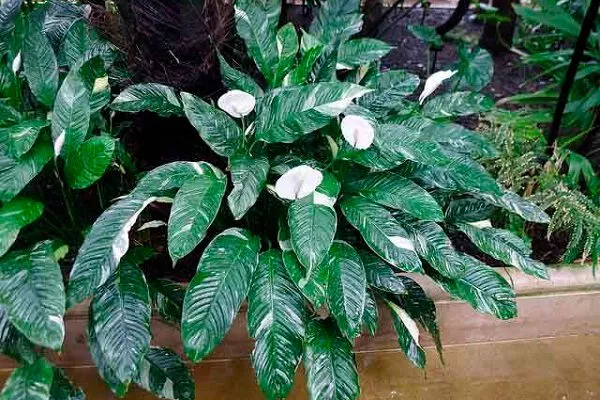
Gemini has a unique appearance. The flowers have rounded (oval) bracts with pointed tips. The plant's leaves are characterized by a twisted structure and an elliptical shape, although in some cases it can combine features of the Domino variety and mutant leaves of its own cultivar.
- ✓ Oval bracts with pointed ends.
- ✓ Twisted structure of elliptical leaves.
Medicinal properties
Spathiphyllum, known as "women's happiness," is attractive due to its aesthetic appeal, but it has no medicinal properties. This ornamental plant is not used for medicinal purposes.
Some researchers claim that peace lilies improve indoor air quality by absorbing certain harmful substances and adding moisture to the environment. Overall, its benefits are more decorative and aesthetic than medicinal.
Is the plant poisonous or not?
Spathiphyllum sap is toxic, so before adding this flower to your home, make sure your children or pets cannot access it.
Bloom
Gemini flowers are shaped like elegant white cones, creating a visual impact against the elongated, multicolored leaves. The plant typically blooms from May to September.
Careful watering before bud formation is an important aspect of care, preventing the soil from drying out. When fertilizing, ensure sufficient phosphorus and potassium levels.
Care
Spathiphyllum care doesn't require much effort or experience, but it does require following certain maintenance guidelines. It's important to give the plant a little attention to ensure it doesn't rot and maintains its beautiful appearance.
Lighting
Experienced gardeners disagree about the spathiphyllum's light requirements. Some consider it shade-tolerant, while others claim it prefers bright but diffused light.
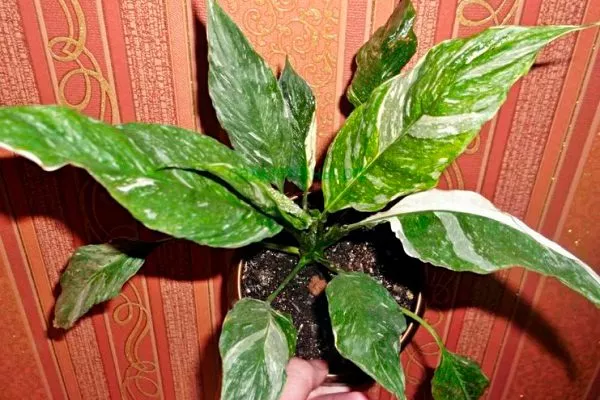
The ideal placement for spathiphyllum is on east- or west-facing windowsills, with shade during peak sun hours. The plant also thrives under artificial light.
Air temperature and humidity
To achieve optimal growth and maintain the decorative appearance of the Gemini Spathiphyllum, certain temperature conditions must be observed. Helpful tips:
- Maintain the air temperature within +18-25°C throughout the year.
- In winter, avoid lowering the room temperature below +14°C, since at lower temperatures the plant may stop growing and die.
- A tropical plant that prefers warmth and does not tolerate drafts and sudden temperature fluctuations.
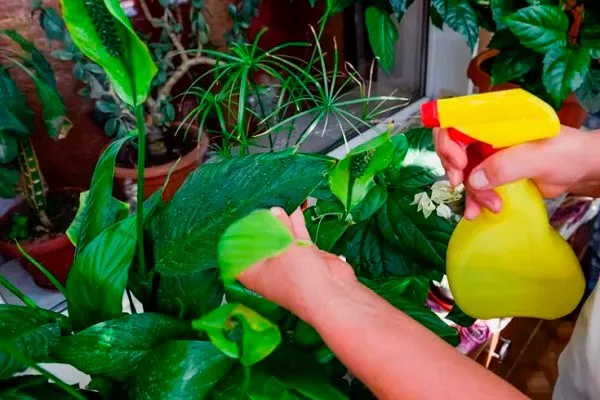
- A key condition for the spathiphyllum's well-being is high air humidity, which should not fall below 40%. Regularly spray the plant with warm water from a spray bottle, especially on hot days – 2-3 times a day, morning and evening.
Choosing soil and pot
Spathiphyllum Gemini prefers light, loose, and nutritious soil with sufficient organic matter. The soil should be well-drained and allow free air access to the plant's roots.
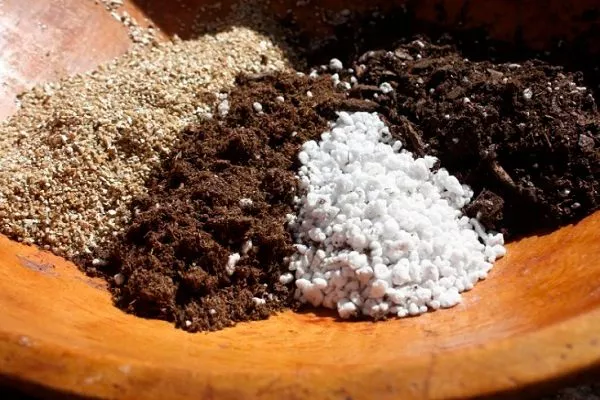
To prepare a suitable substrate for Spathiphyllum Gemini, use the following recipes:
- Mix peat, leaf soil, coarse river sand and humus in equal proportions.
- Combine garden and turf soil, peat, humus and coarse river sand in equal proportions.
- Add a small amount of perlite, vermiculite, charcoal, or crushed sphagnum moss to the potting mix.
The choice of pot is crucial for the successful development of variegated peace lilies. The container can be either plastic or ceramic, but it should be wide and shallow, with drainage holes.
Watering rules
The plant reacts immediately to soil moisture deficiency, exhibiting drooping leaves, but turgor quickly returns after watering. Spathiphyllum does not tolerate dry soil, which can lead to the death of part of the root system.
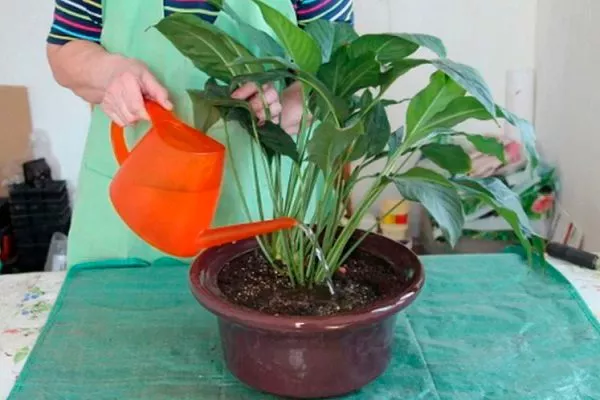
Even after the leaves regain their elasticity, they often turn yellow and dry out. In summer, it's recommended to water the plant 2-3 times a week using soft, settled water. In winter, reduce watering to once a week, and try to avoid stagnant water in the pan by removing excess liquid.
Feeding regime
Spathiphyllum Gemini requires regular feeding throughout the year, as it requires sufficient nutrients to maintain vigorous growth and abundant flowering. From March to September, fertilize every 7-10 days. In winter, reduce the amount of fertilizer to once a month.
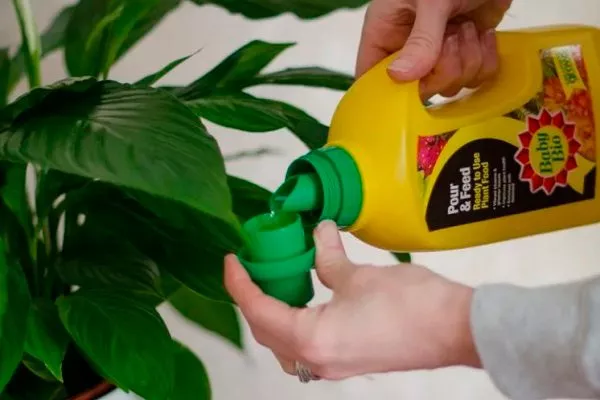
To feed this tropical plant, use a complete mineral fertilizer specifically designed for spathiphyllums or other plants in the Araceae family. Prepare the nutrient solution according to the manufacturer's instructions.
Fertilizers should be applied exclusively in liquid form after pre-watering the soil. Otherwise, the fertilizer may burn the spathiphyllum's sensitive root system.
Transfer
Repot young Spathiphyllum Gemini annually in early spring before the active growth period. Mature plants only require repotting every 3-4 years to refresh and enrich depleted soil and rejuvenate the plant.
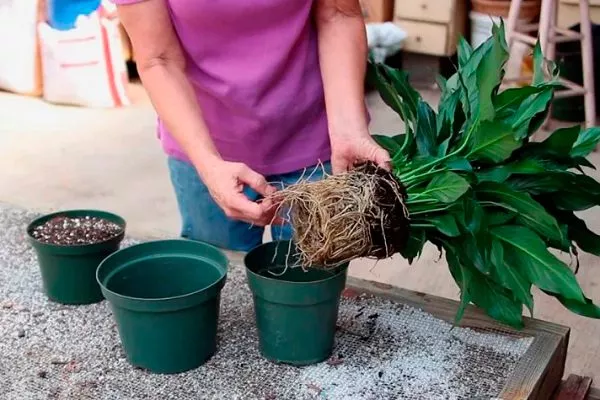
Step-by-step instructions:
- Place a 2-3 cm thick drainage layer at the bottom of the flower pot, using fine gravel, pebbles, crushed stone, vermiculite or ceramic chips.
- Pour nutrient soil onto the drainage and distribute it evenly.
- Before replanting, water the plant thoroughly, then carefully remove it from the flower pot.
- Inspect the root system. If necessary, remove damaged and rotted areas, then treat with crushed charcoal.
- Place the bush in a new container, fill it with soil and compact it lightly to eliminate voids.
- When planting, ensure that the root collar is not deepened, which may lead to temporary loss of flowering.
After replanting, water the plant generously with warm, settled water and, if necessary, add soil to eliminate any settled levels.
Methods of reproduction
Spathiphyllum Gemini offers several propagation methods, including division, cuttings, and seed sowing. Each method has its own unique characteristics, as well as advantages and disadvantages.
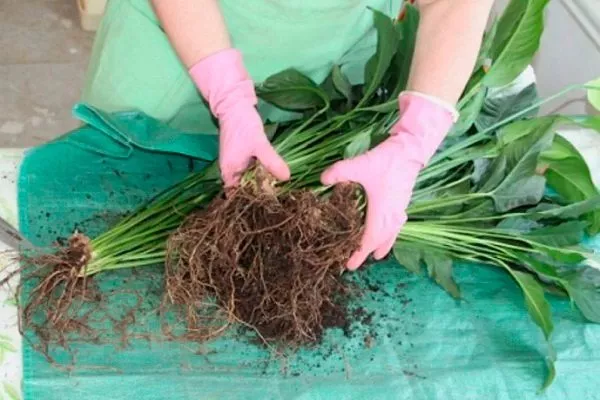
Recommendations for increasing seedlings:
- Dividing the bush. Remove the mature plant from the pot and divide its main root into several pieces with a sharp knife. Each piece should have well-developed roots and buds. Immediately plant the resulting divisions in separate containers.
- Cuttings. In early spring, separate young root shoots from an adult plant. Place them in a container with warm water or damp sand to root and cover with plastic wrap.
- Sowing seeds. Sow fresh seeds in a nutritious substrate made of moist sand and peat. Cover the seeds with plastic or glass to create a greenhouse effect. After the first shoots emerge, remove the covering, and transplant the seedlings into small containers once they reach a height of 6-7 cm.
Diseases and pests
Serious deficiencies in the care of Spathiphyllum Gemini and growing it in unsuitable conditions can lead to the emergence of diseases and pest attacks.
Among the main diseases of spathiphyllum:
- Root rot. A fungal disease caused by moisture retention in the soil. It is accompanied by root rot and wilting of the leaves. Saving the plant requires repotting it in new soil, pruning off rotted roots, and treating it with fungicides.
- Late blight. A fungal disease that most often occurs due to overwatering, cold, and temperature fluctuations. Treatment involves the use of copper-containing fungicides.
- Gummosis. A bacterial disease characterized by blackening of the leaf margins and wilting. Remove affected leaves and treat the peace lily with antibacterial agents.
- Chlorosis. A chlorophyll deficiency caused by iron deficiency in the soil. Treatment involves iron chelate and other iron-containing supplements.
Spathiphyllum Gemini attracts attention with its unique leaf coloring and its ability to attract attention even without flowers, making it a popular indoor plant. Proper planting and subsequent care guarantee long-lasting blooms without problems or diseases.