
Spathiphyllum, or "women's happiness," is one of the most popular houseplants. It boasts not only an attractive appearance but also a number of beneficial properties. This flower is credited with many unusual qualities, and many superstitions and beliefs are associated with it.
Description and Features
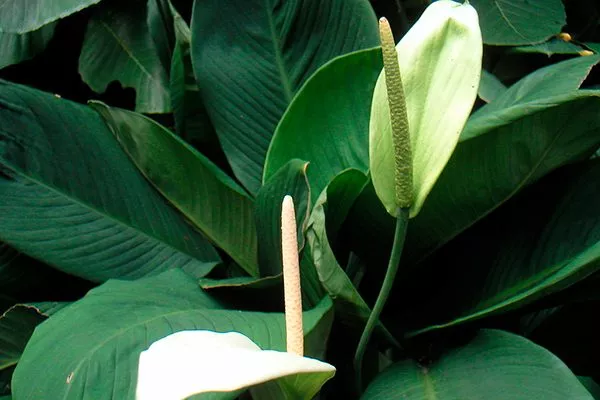
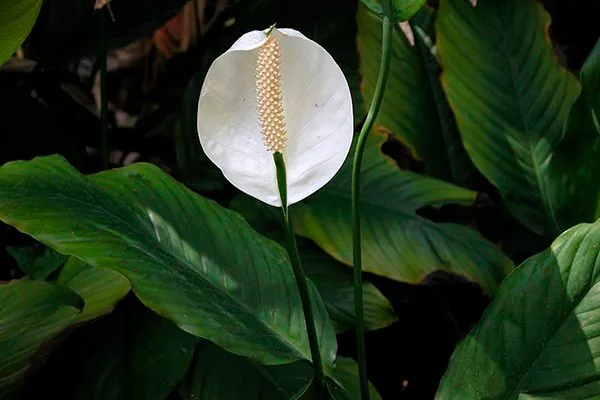
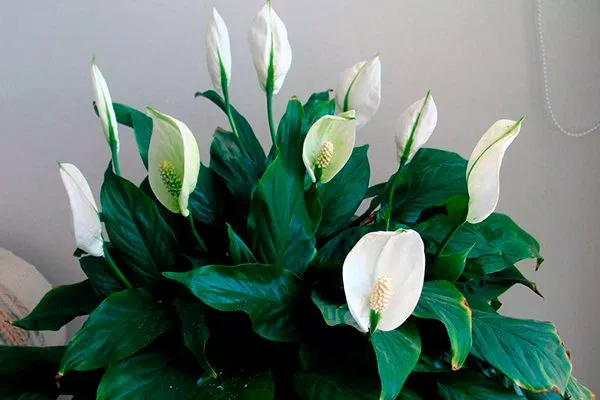
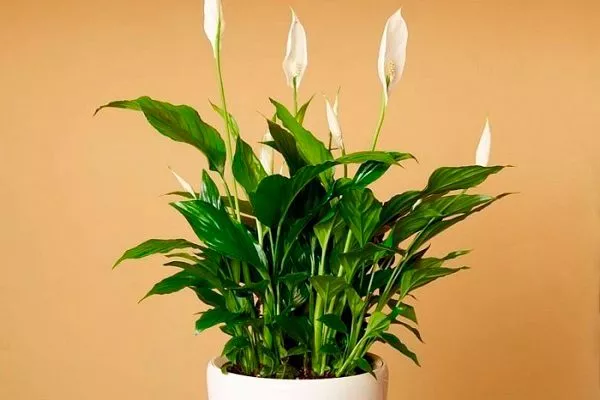
Spathiphyllum is a tropical perennial plant belonging to the Araceae family. Its inflorescence is a long-stemmed spadix with a spathe at the base. After flowering, the spathe changes color from white to green.
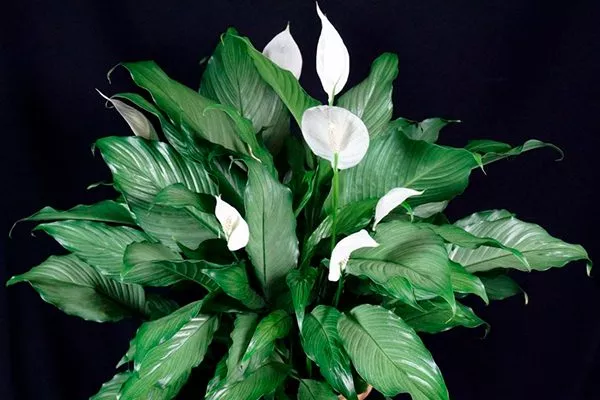
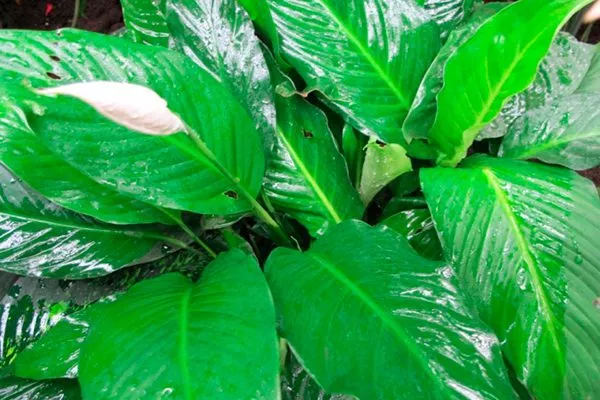
Spathiphyllum has no stem; its basal leaves grow directly from the soil. The flower has a short rhizome and elongated leaves, oval and lanceolate. The midrib is clearly visible, while the lateral veins are slightly indented.
Where does it grow?
Spathiphyllum grows in South America and East Asia, this plant is also found in Polynesia, Malaysia, the Solomon Islands, and the Amazon River basin.
In the wild, Spathiphyllum is most often found in tropical forests. Its habitats also include coastal areas, marshy areas, river valleys, and the shores of lakes and ponds.
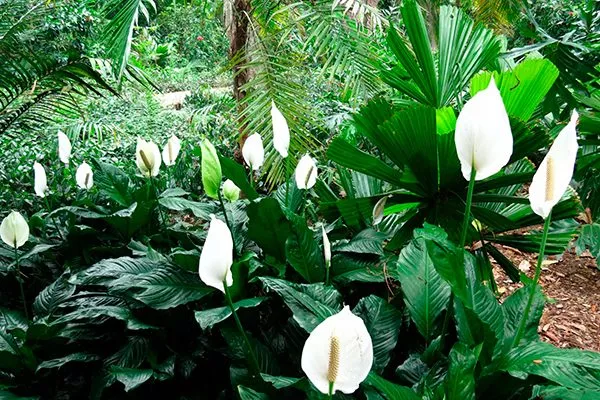
The name Spathiphyllum literally translates as "blanket plant." Along with the popular name "Women's Happiness," the evergreen plant is also known as White Leaf, White Sail, and Sailboat of Happiness.
Beneficial properties
"Women's happiness" is attributed with many unusual qualities, and it is associated with a wide variety of signs concerning human life and relationships.
The validity of the properties attributed to the flower may be questionable, but it is known for certain that spathiphyllum is an excellent “vacuum cleaner,” and this feature alone is enough to make it a must-have in your home or office.
Useful properties of spathiphyllum:
- removes dust from the air;
- clears the space of various types of fumes, including kitchen fumes;
- neutralizes radiation and minimizes harm emanating from office equipment;
- absorbs formaldehyde.
Signs and beliefs
The plant is attributed with various mystical properties and is often used to predict and foretell the fate of its owners.
Popular beliefs say that:
- If an unmarried woman or a widow gets a spathiphyllum, it will soon find its soulmate, hence the name - "women's happiness".
- Having a spathiphyllum in your home helps cleanse it of negativity; the flower has a positive effect on the energy of the entire home, bringing goodness and happiness to it.
- A flower can act as a life or family "barometer" - if there are frequent quarrels and scandals in the house, the plant begins to dry out, does not bloom, and may even die.
- Spathiphyllum blooms indicate the imminent arrival of offspring. Moreover, it is believed that this flower helps even women who have given up on becoming pregnant and having a child become mothers.
Types and varieties
In nature, there are up to fifty varieties of spathiphyllum, differing from each other in the color of leaves and flowers, their shape, size, and other characteristics.
Thanks to breeders, numerous hybrids are now available for cultivation, which are very beautiful and ideal for home conditions.
Popular types of spathiphyllum:
- Wallis (Spathiphyllum wallisii). This species is native to Colombia and is ideal for indoor cultivation. It features robust rosettes of leaves and small, lanceolate leaves that are rich green and wavy at the edges.

The leaves have long petioles—about 20 cm—and narrow flower cobs—up to 3 cm long, with a white spathe—9-10 cm. The flowers remain snow-white for half a moon, turning green as they fade. - Heliconiifolium (Spathiphyllum heliconiifolium). This species is native to the tropical rainforests of Brazil. Plants grow up to 1 m tall. Its oblong leaves, up to half a meter long and up to 25 cm wide, are glossy and pointed. The oval spathe is twice as long as the cobs.
- Cannolistny (Spathiphyllum cannifolium). This flower is native to Venezuela, Guiana, and Thailand. It has large, bright green, ovate leaves. The spathe is white-green, and the spadix is yellowish-green. The flowers are very fragrant.
- Spoon-shaped (Spathiphyllum cochlearispathum). This species grows in the Brazilian rainforest. The plant grows up to 1 m tall. The leaves are dark green, glossy, wavy at the edges, and have long petioles. The cobs are white, and the spathes are long and oval.
- Abundant flowering (Spathiphyllum floribundum). A plant native to Colombia. Height: up to 0.5 m. Oval leaves reach 25 cm in length, with up to 40 leaves in a single flower. The spathe is white, and the plant is characterized by long and abundant flowering.
- Lovely (Spathiphyllum blandum). This tropical American species has elongated-lanceolate leaves with strong petioles. The cobs are surrounded by greenish-white spathes, shaped like a small flag. This peace lily is commonly known as flagolith. It is distinguished by its abundant flowering.
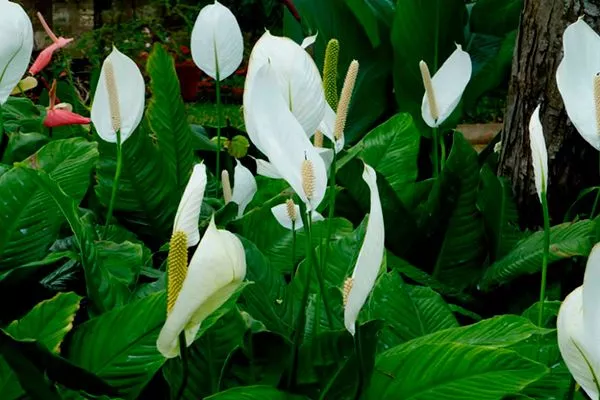
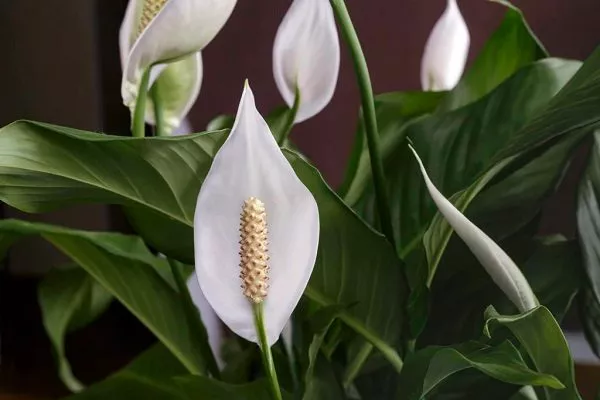
Based on existing species of spathiphyllum, breeders have developed many original varieties and hybrids that are distinguished by their increased decorative properties, endurance, ability to bloom, and ability to grow indoors.
Popular varieties of spathiphyllum:
- Picasso. This dwarf hybrid with variegated leaves was bred in Holland and attracts gardeners with its unique coloring. Its leaves are white and green, glossy, and streaked. The plant grows up to 0.5 m tall. The spathe is soft white with a green speckled pattern. The leaves are approximately 20 cm long.
- Domino. An easy-to-grow dwarf hybrid with variegated leaves. It has green leaves with white spots and streaks randomly distributed across the entire blade. Maximum height: 0.4 m. The leaf edges are wavy, and the tips are pointed. The flowers are white, slightly curved, and the cobs are light yellow.
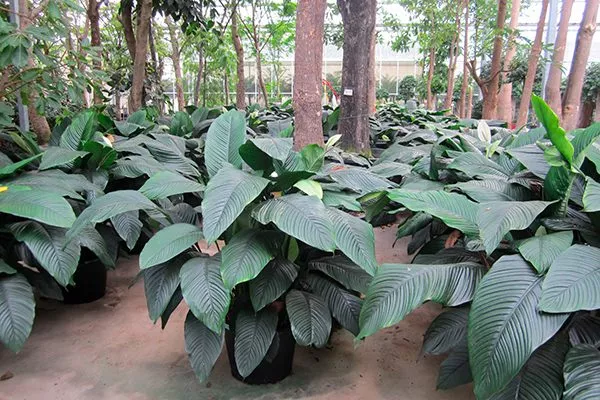
- Sensation. A giant Dutch hybrid, up to 1.5 m tall. It thrives in partial shade, unlike other species of peace lily. The plant is distinguished by its particularly large inflorescences and leaves. The latter are ribbed and elongated, reaching 85 cm in length and a rich green color. The spathe is white and extensive, and the cobs are slightly pubescent and yellowish in color.
- Cupido. A Dutch variety with variegated leaves that are bright, glossy, large, and veined. It has a white spathe, slightly arched and pointed. The cobs are soft yellow. The bushes grow up to 0.5 m tall. This variety is distinguished by its abundant and long flowering period. A single plant can produce up to ten flower stalks.
- Chopin. A low-growing plant up to 40 cm tall. The leaves are bright, oblong, and glossy, with well-defined, slightly indented veins. The spathe is white, and the spadix is bright yellow and covered with hairs. The flowers are very fragrant.
- Alana. Height: Up to 0.5 m. The leaves are not prone to lodging due to their age. They are oblong, glossy, rich green, with wavy edges. The underside of the white leaf has a greenish vein. The flowers fade to a light green hue.
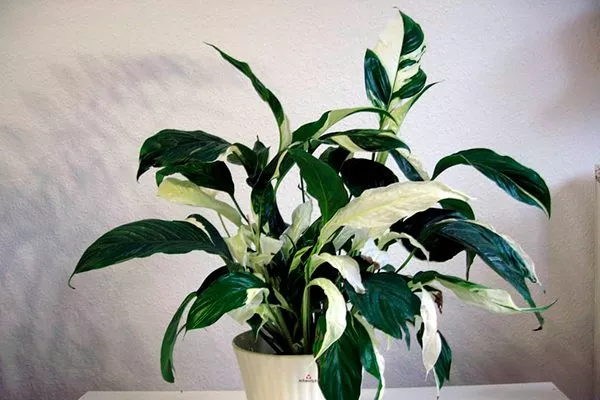
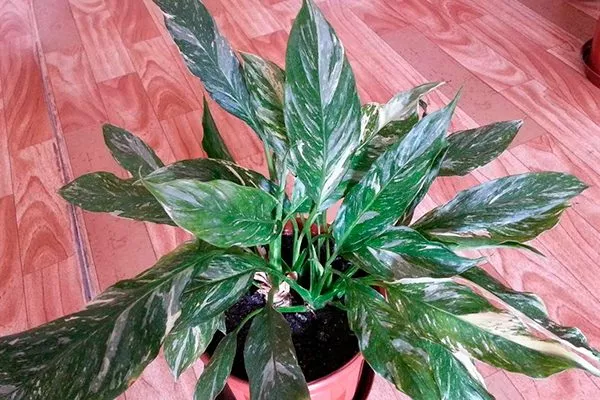
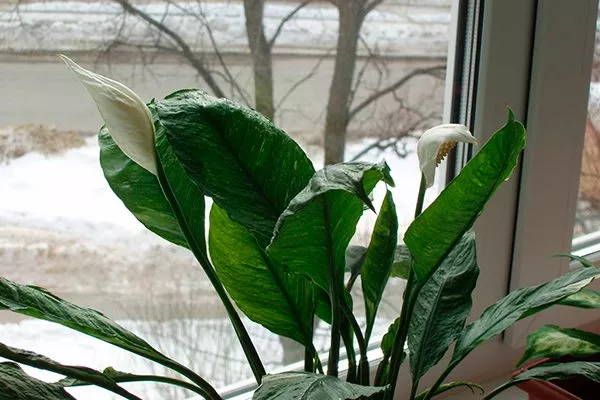
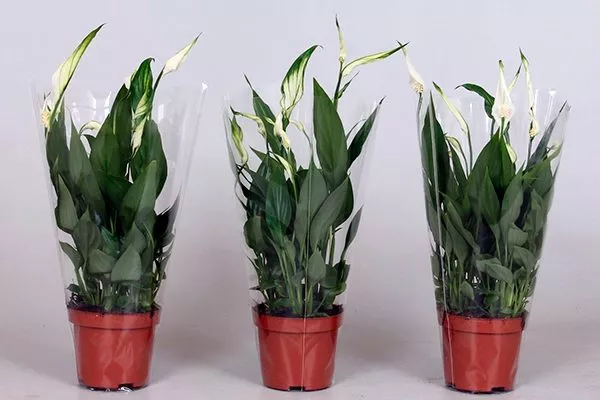
- ✓ The 'Picasso' variety has variegated leaves with white and green streaks and requires brighter lighting.
- ✓ 'Sensation' is a giant hybrid, resistant to partial shade, which is unique for spathiphyllums.
Growing conditions
Spathiphyllum is a versatile plant that fits easily into any interior style. It's suitable for spaces of any size and purpose. The key is to provide it with the appropriate growing conditions. While the flower isn't particularly fussy, it does have some requirements.
Temperature conditions
Spathiphyllum is native to warm climates, so it doesn't tolerate cold well. The optimal temperature for this flower is between 18°C and 25°C. Lower temperatures can cause the plant to become ill. Drafts are strictly contraindicated for spathiphyllum.
Lighting and placement
Spathiphyllums adapt well to a wide range of lighting conditions. Only Sansevierias are second in this respect. The plant thrives in both bright light and partial shade. Even in the shade, spathiphyllums thrive quite well, but direct sunlight, typical of south-facing windows and the scorching rays that can burn the leaves of houseplants, is not recommended.
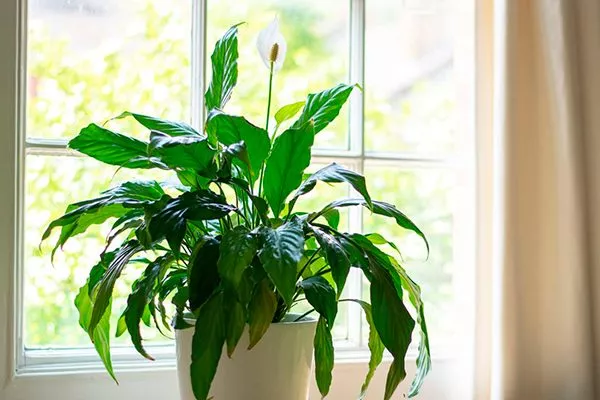
Pots should be placed 1.5-3 meters away from a south-facing window. Prolonged lack of light can negatively impact the plant, causing its leaves to lose their color and become smaller. The best option for spathiphyllum is an east-facing windowsill.
Spathiphyllums grow beautifully both singly and in groups. They can be placed quite closely together, and at any height—on the floor, on a countertop, or on a windowsill.
- ✓ The optimal air humidity should be 60-70% to prevent the leaf tips from drying out.
- ✓ The water temperature for watering and spraying should not be lower than +20°C to avoid stress on the plant.
Humidity
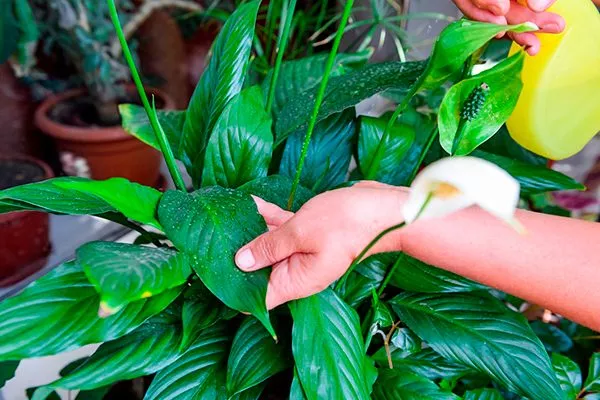
Spathiphyllum is native to tropical rainforests, so it prefers moderately moist soil. The plant responds well to surface misting. This can be done daily; misting will help the leaves acquire a vibrant, rich color.
Priming
Like all plants in the Araceae family, Spathiphyllum prefers loose soil. The substrate can vary, but it should be light and fluffy. It can include crushed charcoal, dried sphagnum moss, perlite, or peat. The soil should be slightly acidic (pH 5-6.5).
You can buy soil for spathiphyllum or prepare it yourself. It costs between 80 and 350 rubles per kilogram, depending on the composition. To prepare a homemade soil mix, you can use a mixture of leaf mold, turf, peat, humus, and river sand, taken in equal parts.
Home care
Spathiphyllum is an easy-to-care-for plant that doesn't require any special care. The main thing is to water and feed it regularly.
Watering
Spathiphyllum needs to be watered year-round. Watering is especially important during the flowering period, summer, and spring. Watering from the plant's tray is permitted. The main rule is to allow the top layer of soil to dry out between waterings. In winter, watering should be moderate.
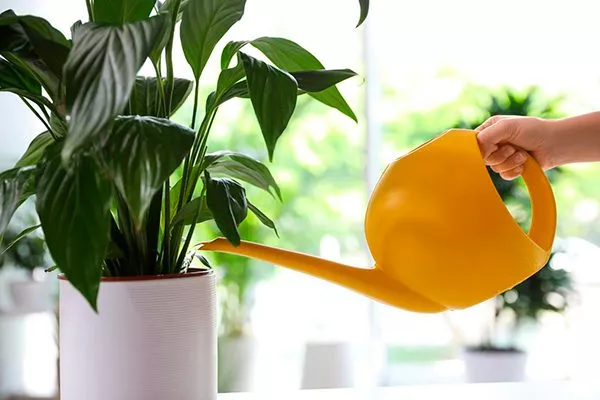
Avoid allowing the soil to dry out or allowing water to stagnate—both options can be detrimental to the plant.
For watering, use only settled water (at least 12 hours old). If the spathiphyllum leaves droop, it is experiencing a water deficiency; if there is too much moisture, dark spots will appear on the plant.
Top dressing
It is recommended to fertilize spathiphyllums with liquid organic matter and complex compositions with micro- and macroelements.
How to properly fertilize spathiphyllum:
- The optimal frequency of feeding is once every two weeks.
- Feed the plant from April to September.
- Fertilizing is not necessary during winter and fall. It can be fed, but much less frequently than in spring and summer.
- Apply mineral fertilizers in low concentrations – only 1-1.5 g per 1 liter of water.
- It is recommended to use mullein diluted with water in a ratio of 1:20 for feeding.
- Water the plant generously before and after fertilizing.
- Use water at room temperature.
To feed spathiphyllum, it is recommended to use special lime-free fertilizers intended for indoor flowers - "Flower", "Azalea", and others.
Trimming
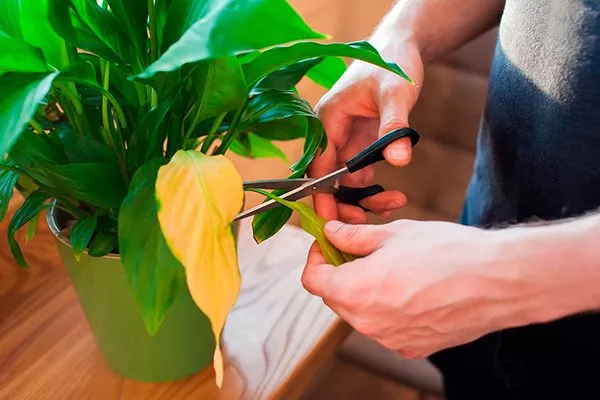
Spathiphyllum doesn't require formative pruning. You only need to periodically remove dry, diseased, and yellowed leaves if they appear. Stems with faded flowers should also be trimmed.
Diseases and pests
Spathiphyllum diseases are usually functional in nature. They are usually caused by improper care or poor growing conditions.
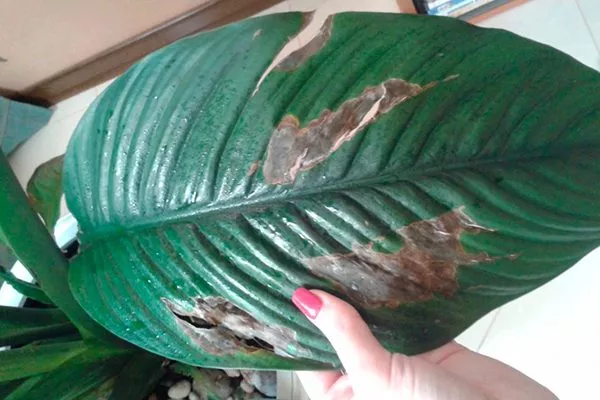
Common problems and diseases of spathiphyllum:
- Chlorosis. The disease disrupts chlorophyll production and photosynthesis. Leaves turn yellow, either partially or completely, and if left untreated, they fall off. Nutrient deficiency, acidic soil, overwatering, and poor drainage can trigger the problem. Treatment involves applying mineral fertilizers to the roots and foliage.
- Functional rot. This is a whole group of fungal diseases associated with overwatering. They are caused by spraying with cold water, frequent watering, lack of drainage holes, and water getting into the center of the rosette. Proper care and repotting can help solve this problem.
- Black leaves. If the disease is non-infectious, the leaves are removed, the flower is taken out of the pot, replanted, and, if necessary, damaged areas of the rhizome are removed.
- Burns. These can be caused by direct sunlight or leaves coming into contact with ice-covered glass. Relocating the plant to a more suitable location can help solve the problem.
- Fusarium. An infectious disease transmitted through contaminated soil. Treatment is possible, but only in the early stages, using fungicides.
- Sooty mold. It can appear when the plant is moved outdoors in summer. Infection occurs from garden plants. It is especially common under walnut trees. The disease is treated by washing the plant with laundry soap.
Usually insects appear on the plant due to insufficient watering and dry air.
Most often, spathiphyllum is affected by:
- Aphids. These small insects can be gray, green, or black. They settle on the underside of leaves, sucking their juices. To get rid of aphids, use commercially available products or a solution of nicotine sulfate in soapy water. After 24 hours, thoroughly rinse the plant, covering the soil with plastic wrap.
- Scale insect. The adult pest has a waxy shield covering its body. The pest reproduces rapidly, causing dark spots to appear on the plant. The larvae quickly spread across the plant's leaves, so spraying should be done as soon as possible.
To combat scale insects, use a soap-tobacco solution with kerosene or denatured alcohol added. Adult insects are removed manually with damp swabs. For severe infestations, spray the plant with a powerful insecticide. - Spider mite. These tiny red insects congregate on the undersides of leaves, entangling them in a fine white web. To control them, spray with a soap-tobacco infusion, dust with crushed sulfur, or treat with insecticides. Two to three hours after applying the poison, rinse the leaves with warm water.
Transfer
When the spathiphyllum roots take up the entire pot, it needs to be repotted into a larger container—one 2-3 cm larger than the previous one. A pot that's too large isn't suitable, as it will inhibit flowering.
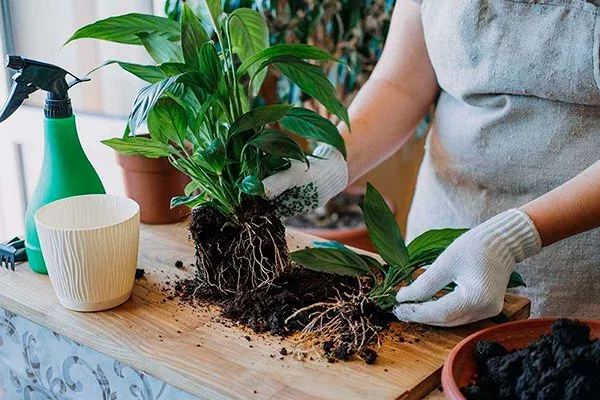
The best time for this procedure is spring. The plant is extremely sensitive to root damage, so moving it from pot to pot should be done with extreme caution.
Transplantation procedure:
- Place a 2-3 cm thick layer of drainage material on the bottom of the pot.
- Fill the pot with soil—either store-bought or homemade—and water it with a hot, dark-pink solution of potassium permanganate.
- Carefully remove the pre-watered flower from the old pot and move it to a new location, being careful not to damage the roots.
- Cover the roots with soil, compact it and water with warm, settled water.
Keep the transplanted plant in a warm room, water it moderately, and mist it frequently—this will promote rapid rooting. You can also cover the transplanted plant with plastic or other transparent material, creating a greenhouse-like environment, and ventilate it periodically.
How to choose the right potty?
Spathiphyllums tend to grow wide. However, despite this, pots are not suitable for them; they require deep containers that accommodate the size of their root system.
The pot can be made of any material; clay, concrete, plastic, or any natural material, such as coconut shell, are all suitable for spathiphyllum.
The pot should have drainage holes at the bottom. Spathiphyllum can also be planted in pots with built-in trays. These are filled with water, which slowly soaks into the soil.
Features of spathiphyllum care in winter
The optimal temperature for overwintering is +17…+18°C. Moderate light is recommended. Watering and fertilizing are very infrequent—2-3 times less frequently than in spring and summer. The plant should not be repotted in winter.
The most dangerous thing for spathiphyllum in winter is dry air. Keep the pot away from heating appliances and radiators. Don't let the leaves dry out at the edges; if this happens, the plant isn't getting enough moisture.
Reproduction
Spathiphyllums are most often propagated by cuttings or division. Seeds are rarely used for propagation, as this method is time-consuming and labor-intensive.
By dividing the bush
This is the easiest way to obtain new plants. This method is suitable for mature flowers that can be divided into two or more parts. This is done only in early spring, before the growing season begins.
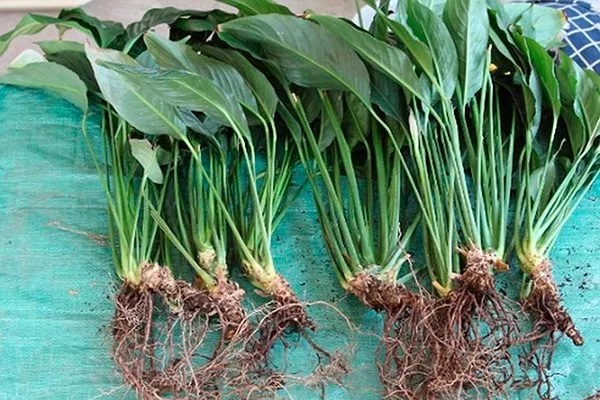
Spathiphyllum division procedure:
- Water the flower generously to make it easier to remove it from the soil.
- Separate a small part of the extracted plant by dividing the root.
- Sprinkle the cut areas with crushed charcoal. Let them dry before replanting.
- Plant the cuttings directly into individual pots. When planting, carefully spread the roots out, being careful not to damage any. Fill the empty space with soil and water the plant.
By cuttings
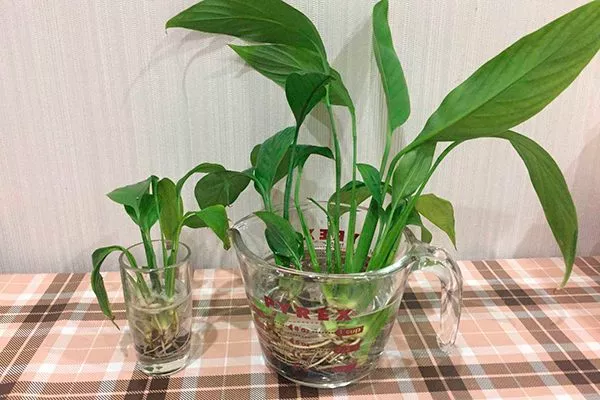
Cuttings are leaf rosettes separated from a mature plant. If they don't yet have roots, they are placed in a shallow container of water with activated charcoal dissolved in it. Once roots appear, the plant is ready for planting. Planting is done in 9-cm diameter pots.
Seeds
To get seeds from a spathiphyllum, it needs to be pollinated. This is quite difficult, so it's easier to buy planting material from a flower shop. However, purchased seeds may be expired, and planting them will have negative results.
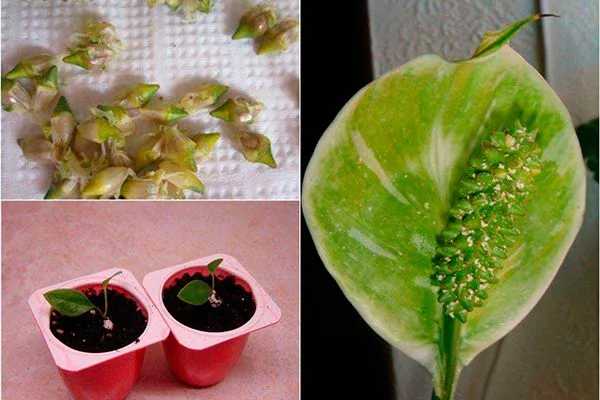
Spathiphyllum seeds cannot be stored for long; they should be planted as soon as possible after harvesting. To obtain seedlings, careful care is required.
Answers to frequently asked questions
When growing peace lilies, a variety of problems can arise, and it's best to learn about them in advance. This will allow you to not only quickly address them but also prevent them from occurring.
Spathiphyllum is a truly versatile plant that will easily complement any interior. It may not bring you "women's happiness," but it will certainly add freshness, greenery, and beauty to your home or office.