
Before replanting peonies, you should familiarize yourself with the basic rules and requirements, consider the best timing for the procedure, and strictly follow the instructions. Otherwise, the bushes may take a long time to adapt to their new location or fail to establish at all.
Why replant peonies?
Peonies aren't known for their relocation, but sometimes repotting them isn't just necessary, it's essential. Keep in mind that disturbing peonies during their first five years is strictly avoided, as the bushes may become infected and die afterward.
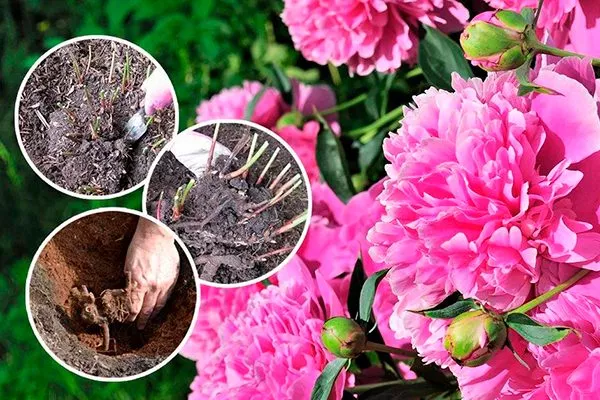
However, there are compelling reasons:
- The quality of the soil has deteriorated. Throughout its life, a plant consumes a large amount of nutrients, enabling it to thrive and bloom profusely. Even if the grower regularly fertilizes, the soil quality doesn't improve much.
It's important to remember that over time, pathogenic microorganisms accumulate in the soil, and various insects appear, leaving behind waste products. Such soil should be left to rest for 2-3 years and then treated. - The bush has become too big. Even if you prune regularly, the number of shoots only increases with age. This leads to dense growth, preventing air and sunlight from penetrating between the branches. This leads to disease.
There is only one solution to the problem: replant and divide the bush into several parts. - Flowerbed transfer. This reason concerns exclusively the wishes of the florist.
- Plant aging. As the bush ages, it stops blooming and its immunity weakens, so it needs to be rejuvenated by division.
- Diseases of the root system. In this case, the roots rot and die. To save the bush, dig it up and remove the necrotic root shoots. To prevent re-infection, replant it.
- Poorly chosen location. In this case, the bush's growth slows and it becomes diseased. The best solution is to move it to a site more suitable for the particular variety.
When is the best time to transplant peonies?
Repotting peonies at the wrong time can cause a variety of problems. Carefully familiarize yourself with the nuances of each growing season.
Planting in spring
Although spring is the preferred time for planting, repotting peonies is not always advisable. There are several reasons for this: they won't bloom during this season, they don't always adapt successfully, and you'll need to pay close attention to care (in autumn, care is minimal).
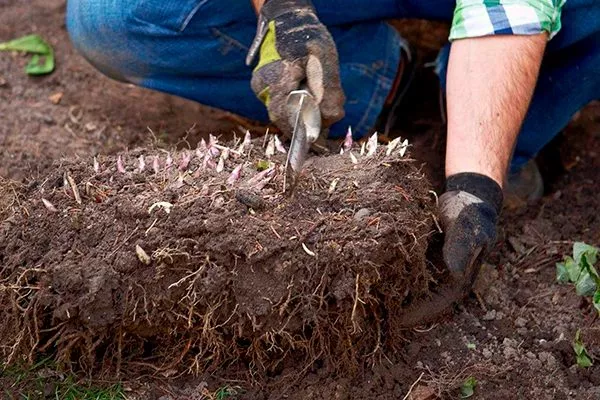
To minimize risks, consider the following:
- the sooner you start acting, the better;
- the air temperature should stabilize to a maximum of +12 degrees, but not be lower than 0 (during this period the buds will not yet open);
- in spring, the bushes are transferred to a new location only with a lump of earth;
- work is carried out in the evening or in cloudy weather;
- Planting holes need to be prepared in the fall.
Transplantation in summer
During the summer, only one month is suitable for repotting: August, and even then, only in late August. Here, too, you need to follow a few rules:
- flowering should end;
- faded buds are cut off;
- the air temperature should not be above +22-23 degrees;
- transplants are carried out only in the evening;
- Plants must be shaded and watered frequently.
Planting in autumn
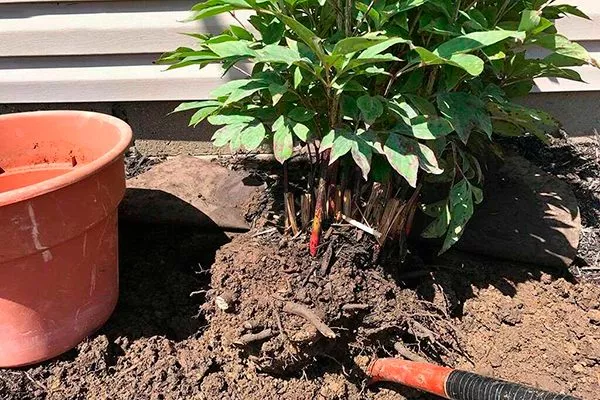
This is the most favorable time for replanting peonies. The best month is September, and no later, so the plants have time to adapt and prepare for winter. But even then, pay attention to the following:
- the air temperature should be at least +15 degrees, and the soil temperature should be +10-12;
- there should be no frost;
- There should be 1-1.5 months left before the frost sets in.
There will no longer be a need to frequently water and feed the seedlings.
Boarding at an inappropriate time
There are several reasons for an emergency transplant: the plant cannot be saved from disease by other means, or the seedling was delivered too late. When planting in the fall, simply transplanting the bush into a greenhouse is sufficient.
Do peonies need to be replanted during flowering?
Peonies should not be replanted during budding and active flowering, but if there is an urgent need to do so, be sure to trim all the flowers, and when moving them to a new location, do not get rid of the root ball.

When should peonies not be replanted?
Plants will die if repotted in October, November, or winter. These periods are completely avoided, as the bushes are already dormant, and low temperatures will kill them.
Choosing a location
Another important aspect of replanting is choosing the right location and soil, which improves the plants' adaptability. Key points:
- Illumination. The amount of light for transplanted plants is crucial – choose open areas. However, keep in mind that the bushes should not be exposed to direct sunlight after midday.
- Space. Peonies are relatively large and spreading bushes. When dividing and replanting, leave 1.5 to 2 meters between each planting. Do the same when planting near fences or buildings.
- Moisture. Peonies tolerate drought better than high humidity. Groundwater should be at least 1.5 meters above the soil surface. A slight slope in the flowerbed is desirable to allow water to drain naturally during snowmelt and heavy rains.
- Soil. Pay special attention to acidity – it should range from 6.2 to 7.0 pH. In acidic soils, add dolomite flour or lime. The soil structure should be loose (loamy or sandy loam). Never transplant peonies into clay soils, as the bushes will not thrive.
- The best plant neighbors for peonies. In the flowerbed, next to peonies, you can plant tulips, daffodils, lilies, phlox, fritillaries, geraniums, irises, alchemilla, delphiniums, and clematis.
How to dig up peonies?
Peonies must be removed from their old location with extreme care. If you've never done this before, follow these step-by-step instructions:
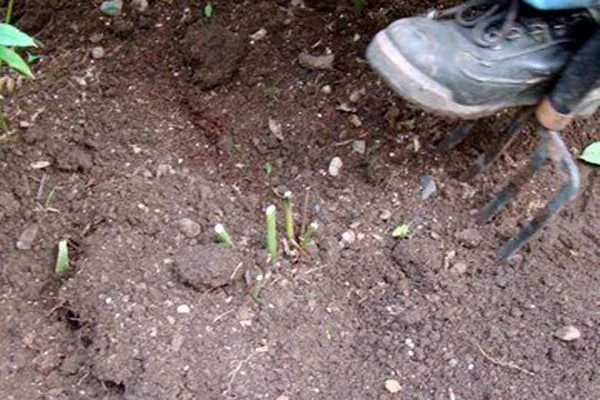
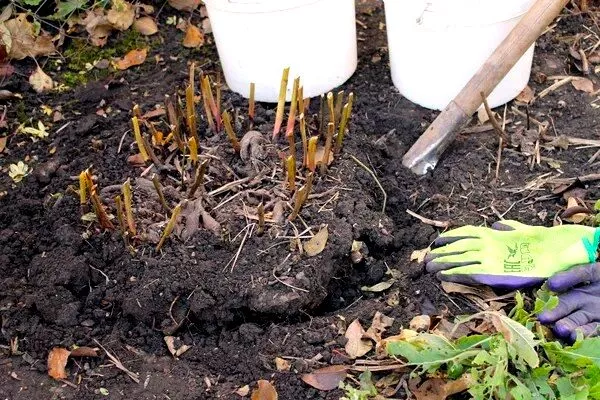
- Take a spade or garden fork. Place the tool 40 cm from the center of the bush, keeping it vertical. Avoid placing it at an angle, as this can damage the roots.

- Dig around the bush in a circle, then carefully remove it. To make this easier, place a stone or something similar under the shovel for support.
Peculiarities:
- Do not pull by the stems or leaves;
- to make the digging process easier, shorten the shoots to stumps 10 cm high;
- If you have a pitchfork, give preference to them - there is less risk of damaging the root system;
- in case of compacted soil, thorough loosening is carried out first;
- You shouldn't water the soil before the procedure, as the soil will be very heavy and sticky, but if you decide to do this, then moisten it a little 1-2 days before transplanting.
Dividing a peony bush
If you plan to divide your plant during replanting, be sure to read this section and consider the following points:
- use a sharp knife and pruning shears;
- The roots need to be cut after the dug up bush has dried out and the roots have begun to wither;
- carefully inspect the root system - if there are any damaged elements, cut them off;
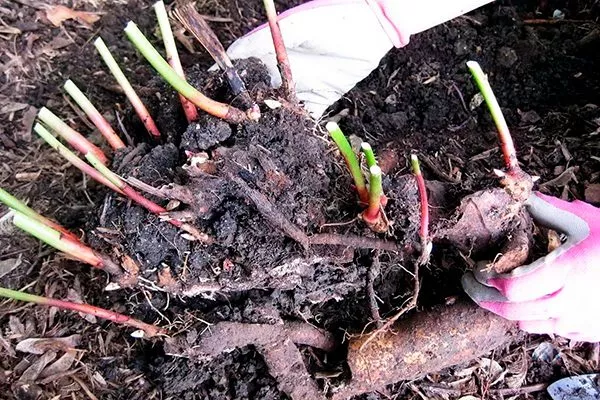
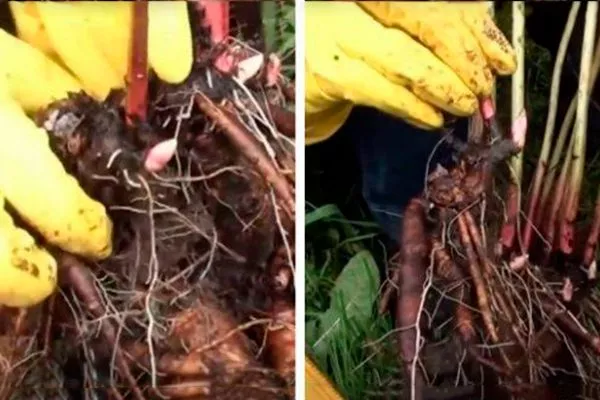
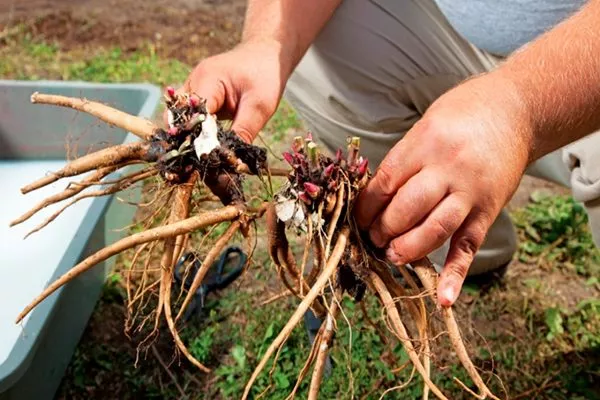
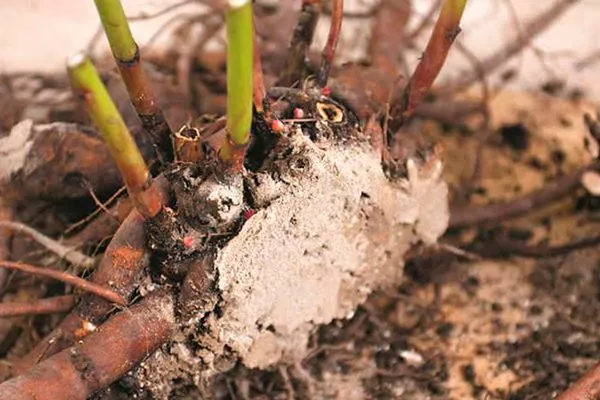
- Each proposed division must have 2 or 3 renewal buds and root shoots – without this, the bush will not take root.
The separation process is as follows:
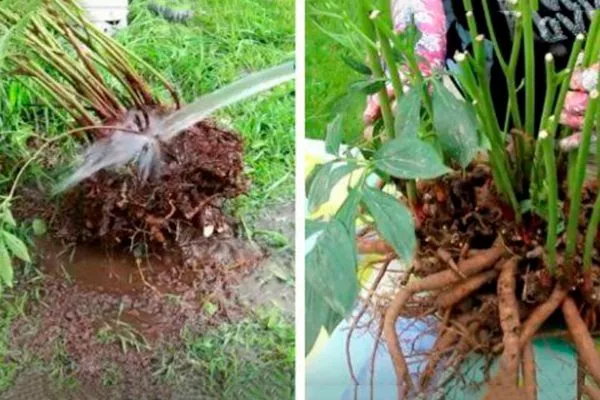
- Immediately after digging, thoroughly rinse the root system to remove any remaining soil. This can be easily done with a hose or by immersing the plant in a container of warm water. Afterward, lay the plant on a cloth and let it dry thoroughly, which takes about 20-25 hours.
- Now cut off the parts with only one bud. These can also be used.
- Next, separate the roots with a large number of buds and roots.
- Immediately treat all cut areas with wood ash powder.
Preparing the site and planting hole
To ensure transplanted peonies adapt and take root quickly, it's important to pay attention to preparatory measures. Here's what you'll need to do:
- Clear the area of all unnecessary debris so that the surface of the ground is clean.
- Dig up the beds.
- Mark the locations for the planting holes.
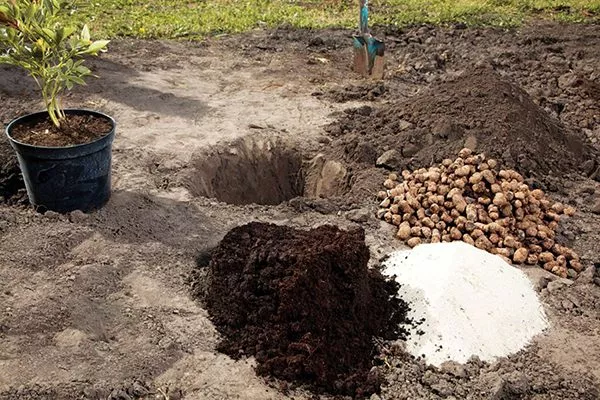
- Dig holes measuring 60x60 cm. Sometimes the dimensions vary depending on the specific peony variety.
- Prepare a nutrient mixture. To do this, combine equal parts of deoxidized lowland peat, excavated topsoil, and compost (can be replaced with well-rotted manure or humus).
- Leave this soil mixture for a couple of weeks.
- On the day of replanting, add mineral fertilizer. You can use Bona Forte or a mixture of 80 g of superphosphate, 50 g of potassium sulfate, and 400 g of wood ash. If replanting in the spring, add 40 g of urea.
- Mix everything thoroughly.
- Pour drainage material into the bottom of the hole, and a small layer of prepared substrate on top (approximately 1/3 of the hole’s volume).
Step-by-step guide to relocating to a new location
Once the hole is ready, you can proceed directly to the transplant:
- Dip the bush's root system in any fungicide. You can soak it in a growth stimulator for several hours beforehand.
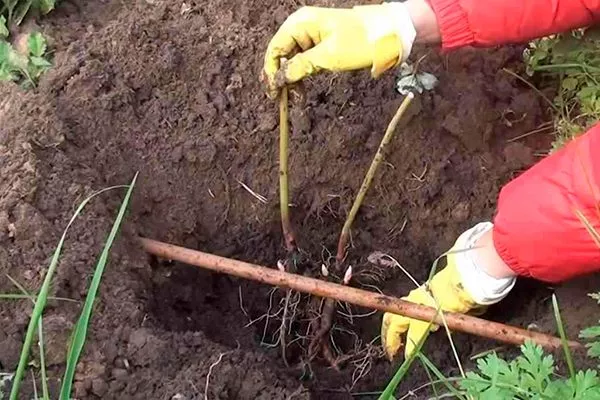
- Form a mound in the central part of the planting hole.
- Place a bush on it and straighten the roots if you have not divided the plant.
- Fill with the remaining soil mixture so that the root collar is located 5-6 cm below the surface of the ground.
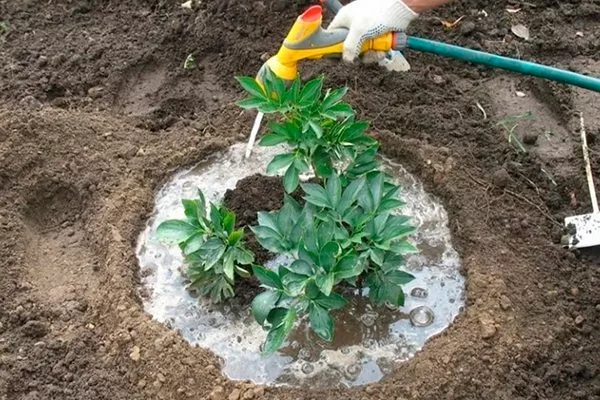
- Press lightly with your palm and moisten generously.
- Mulch the tree trunk area with natural ingredients. Humus mixed with sawdust works well for this purpose.
Post-transplant care
Care procedures are almost identical regardless of replanting time: periodically moisten the soil and protect the fragile bushes from strong sunlight. When replanting in spring, fertilize every 2-3 weeks and water more frequently. All these procedures are no different from those used for traditional planting of peony seedlings.
- ✓ Keep the soil moist, but not waterlogged, for the first 4 weeks after transplanting.
- ✓ Use pine needle or bark mulch to maintain optimal soil temperature and reduce moisture evaporation.
Repotting peonies is straightforward—even novice gardeners can handle the process. The key is to strictly follow the instructions, disinfect all tools and cutting areas, and adhere to the optimal timing. If you're repotting for the first time, try moving one bush first, and only after it's successfully adapted should you move on to other peonies.