
The Cytheria peony is a double-flowered hybrid variety that has remained popular with gardeners and amateur horticulturists for over half a century. This flower attracts attention with its vibrant hue and amazing fragrance.
Botanical description of the variety
Cytherea grows vigorously, herbaceous, and compact, reaching a height of 65-70 cm. The stems are strong and thick, and the shoots are upright and light-colored. They can support large flowers without support. The leaves are light green and medium-sized.
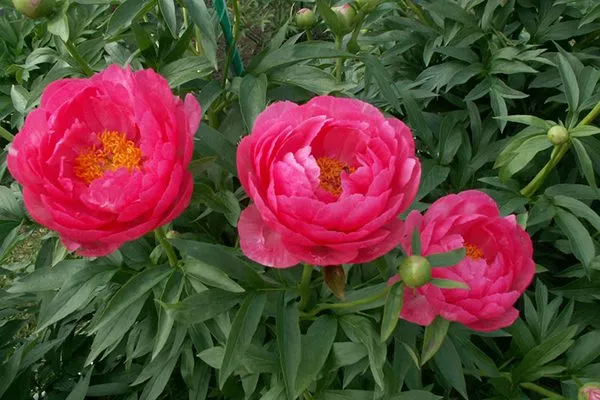
The bushes grow vigorously, reaching 80-100 cm in diameter.
Description of flowers:
- semi-double;
- large, up to 16 cm in diameter;
- three-five rows;
- cup-shaped;
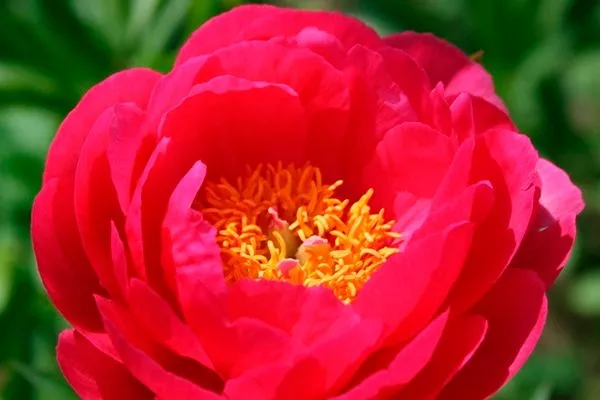
- from coral to crimson;
- in the center there is a bunch of bright yellow stamens and a green pistil;
- the outer petals are smooth and large, with a lotus-shaped arrangement;
- The aroma is pleasant and rich, with notes of honey, fruit and citrus.
Who brought it out?
The Cytherea peony was bred in 1953 by American breeders. This hybrid combines beautiful appearance with excellent characteristics, and it deservedly received a gold medal. It was awarded the prize by the Peony Society Association in 1980.
Where can it be grown?
This variety has remarkable adaptability and survivability. The Cytheria peony can grow throughout almost all of Russia, with the possible exception of the Arctic. Its frost resistance allows it to be grown in USDA Zone 3 (-40°C to -34°C).
Pros and cons
Before planting the Cytheria peony in your garden, it's helpful to familiarize yourself with all its advantages and disadvantages. This will help you determine whether this variety is suitable for your climate and needs.
No flaws have been found in this wonderful variety. It's worth noting that Cytherea's first buds appear only in the second or even third year after planting, but this is typical of all peonies.
How does it bloom?
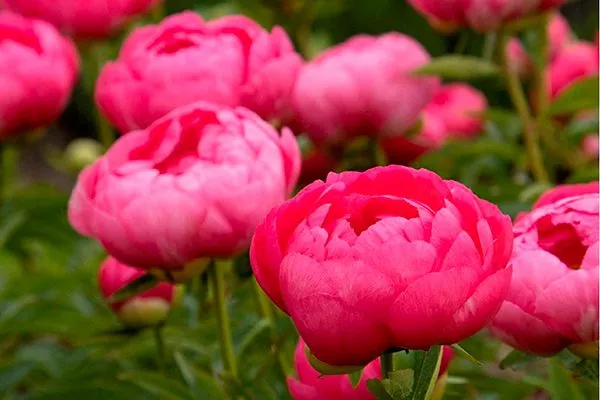
The Cytheria peony belongs to the early-ripening group. Its buds are spherical and begin to open in late May or early June. The average bloom time is a month or a little longer. The flowers remain on the bush for over a week.
How do they use it?
The Cytheria peony is versatile and looks beautiful in group and single plantings. It can be planted in the center of flowerbeds, flower gardens, and front gardens. This variety is suitable for mixed borders and is also often planted along curbs and park alleys, along fences, and along hedges.
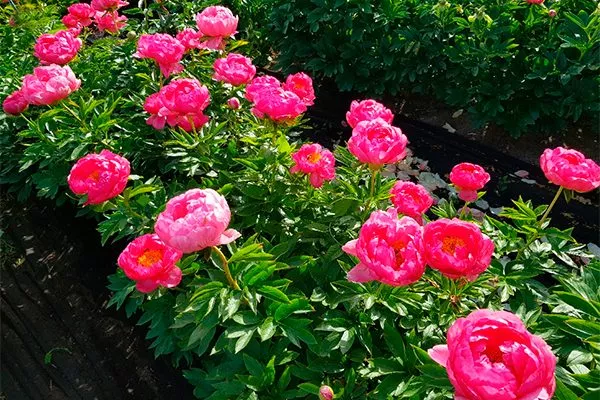
Coral peonies look best against a backdrop of emerald lawns and low-growing conifers such as thuja, juniper, etc.
Correct planting of Cytheria
The Cytheria peony thrives in open, well-lit areas. However, this variety also thrives in partial shade. The site should be well protected from cold winds and drafts.
- ✓ The area should be protected from northern winds and drafts that can damage the flowers.
- ✓ The soil must be well drained to avoid water stagnation and root rot.

Recommendations for planting Cytheria peony:
- the optimal time for planting is April or May, when the soil is warm enough;
- the best soils are loamy, slightly acidic and fertile, they have good moisture capacity, air permeability and drainage;
- the optimal interval between adjacent bushes is 0.7-1 m;
- distance - 1-1.5 m.
When choosing a planting site, keep in mind that the Cytheria peony does not tolerate stagnant water, high groundwater levels, or marshy lowlands. It also should not be planted in deep shade.
Care activities
Growing the Cytheria peony is not particularly difficult; the main thing is to provide regular care and carry out preventative measures in a timely manner.
Features of caring for the Cytheria peony:
- It is important to promptly remove fallen leaves from the tree trunk circle to prevent the proliferation of insect pests.
- After planting, it's recommended to sprinkle the root zone with humus, which will warm the roots during cold weather. Sawdust or leaf mold can also be used as mulch. These materials retain moisture well, allowing you to extend the intervals between waterings.
- Water the flower based on the weather. In hot weather, water every 10-14 days. Water the peony sparingly and generously. Summer watering promotes the formation of renewal buds, while autumn watering encourages the development of lateral roots, which help the plant survive frosts. Watering the flower during and after flowering can promote more intense budding the following year.
- The Cytheria peony is fertilized four times per season. A nitrogen-containing fertilizer is applied in early spring, followed by a complex fertilizer at the end of May, followed by a potassium-phosphorus fertilizer after flowering, and finally, compost or humus at the end of autumn.
- In summer, it is recommended to spray the flower once a month with growth-regulating compounds - this has a positive effect on the plant's development and budding.
Preparing for winter
Extreme frosts can damage the flower. In the south, there's no need to insulate this plant, as it can withstand temperatures ranging from -34 to -40°C. In regions with harsh winters, insulating the peony is recommended.
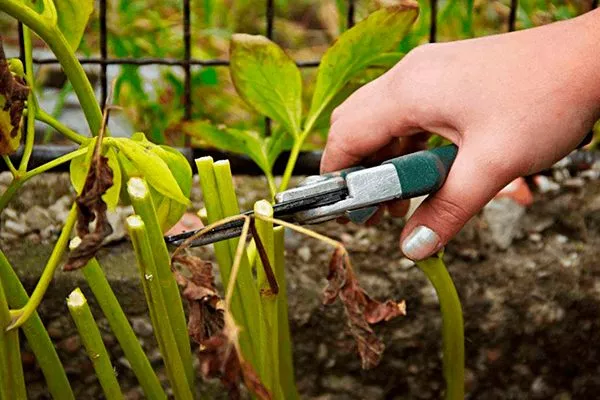
Before winter approaches, the flower is pruned and covered with peat or spruce branches. This is sufficient to protect the plant from freezing; it does not require additional shelter.
Flower propagation options
The Cytheria peony is a hybrid variety, so it is propagated exclusively vegetatively—by cuttings and division. After flowering, the flower produces seeds—these are contained in capsules that form in the place of the buds. The seeds are viable, but they lose some of their parent's characteristics.
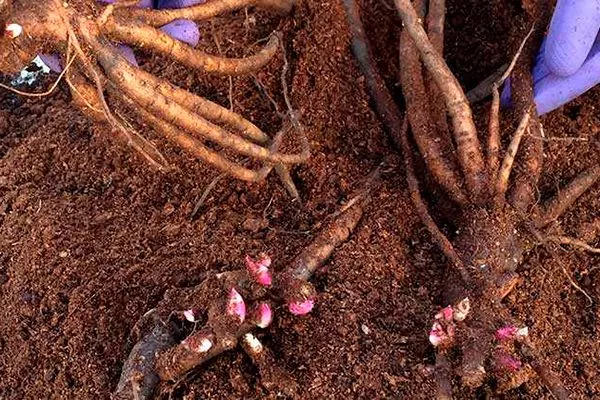
Bushes that have reached 50 years of age can be propagated by division:
- In September, cut the stems completely, then remove the root system.
- Rinse the roots with warm water and dry thoroughly. Then separate the roots. Using a disinfected knife, separate a bunch of roots with three healthy buds—this is the optimal number for the plant to successfully adapt.
- Sprinkle the cuts with crushed charcoal.
- The cuttings are planted in pre-prepared holes, and the mother bush is returned to its original location.
The Cytheria peony can also be propagated by cuttings taken from the stems. In July, the planting material is cut, giving preference to shoots that have not yet opened.
The top of the cutting is sealed with garden pitch or sprinkled with charcoal, and the bottom end is dipped in Kornevin (a growth stimulant). The treated shoots are placed in the growing medium at an angle. The plantings are covered with a plastic bottle. When the first two leaves appear, the cover can be removed. Subsequent care consists of regular watering.
Peony immunity
The Cytheria peony has a strong immune system and is resistant to most fungal and bacterial infections, so it rarely gets sick. However, as a preventative measure, the plant should be treated with fungicides in the spring, as high humidity can cause powdery mildew.
Among pests, ants and aphids pose the greatest threat to the Cytheria peony, as they feed on the sweet juices. The former seek them out in the buds, while the latter suck them out of the leaves. Aphids and ants are controlled with appropriate insecticides, but other pests are not interested in the flower.
The Cytheria peony's main advantage is its frost resistance, making its coral-colored buds a delight in almost every region of the country. Furthermore, this variety successfully combines springtime appeal with ease and hardiness, making it an ideal flower for front gardens, cottages, and parks.