
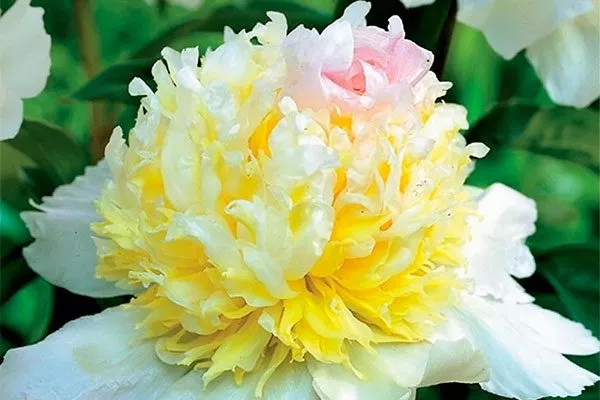
The Top Brass peony stands out for its unique flower color, combining soft pink petals with a bright yellow "crown" in the center. This variety is attractive for its disease resistance, compact yet vigorous growth, and long flowering period. Its low maintenance and distinctive fragrance make it an excellent choice for gardeners who value beauty and reliability.
Characteristics of the Top Brass peony
The peony was developed by Charles Clem in the United States in 1968 by crossing various peonies with the Charlie White variety. It was only added to the Russian state register in 2001. Since then, it has become quite popular among Russian gardeners.
In Russia, the Russian name is usually used to designate the variety, and the English version, Top Brass, serves as a synonym.
Description of the plant and flowers
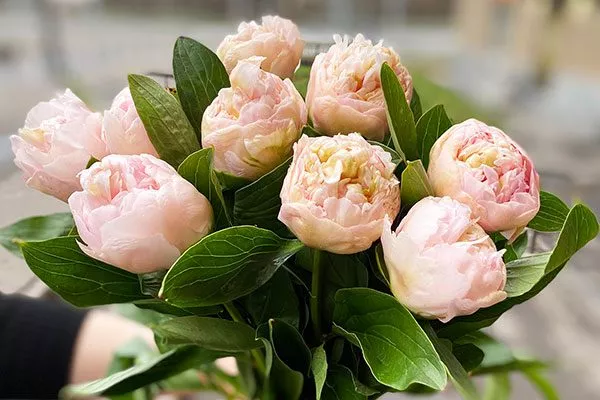
This milky-flowered herbaceous peony is often planted in flowerbeds alongside flowers of contrasting shades. It is also grown for cut flowers, as the flowers look beautiful in bouquets and, with proper care, retain their freshness for a long time.
Distinguishing characteristics:
- bushes – compact but powerful, reaching a medium height of about 80-90 cm;
- shoots – erect;
- stems – strong, elastic and densely foliated;
- leaves - dark green, pinnately divided with wide lobes;
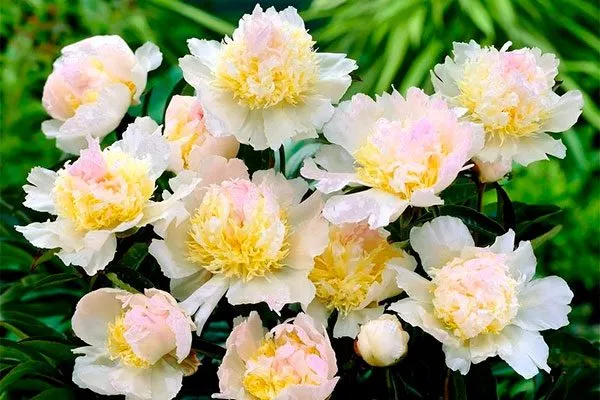
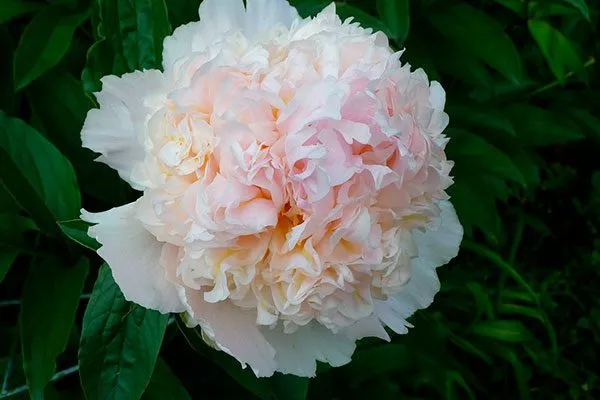
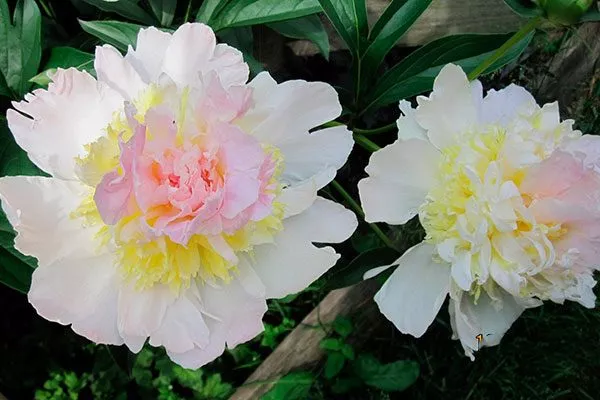
- flowers – terry, crown-shaped, large – up to 16-18 cm in diameter;
- coloring – the outer petals are light pink, in the center there is a bright yellow “crown” of petals, and in the middle an original pink ball is formed;
- petals – tender, stamens are light yellow.
Features of flowering
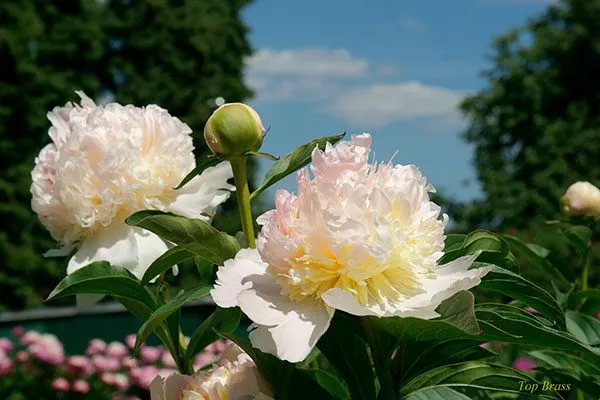
Top Brass blooms once, but very profusely, for 2-3 weeks in the second half of June. The flowers last a long time and do not fall off. Their fragrance is light and barely noticeable.
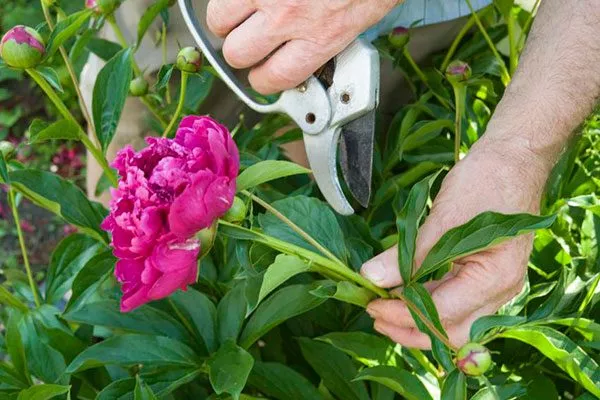
After flowering has finished and the petals have fallen, it is recommended to remove faded inflorescences to help the plant maintain its strength and reduce the risk of disease.
Application in design
Top Brass peonies are often planted alongside brightly colored flowers, as well as near fences and arbors covered with greenery. They look beautiful both as standalone plants and as an accent in landscape compositions.
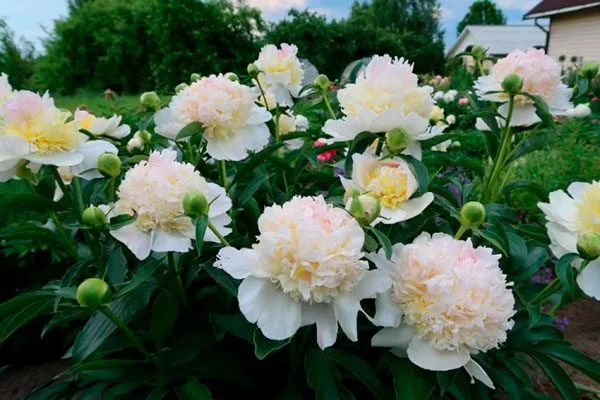
This variety is often used in rock gardens and rockeries, planted along garden paths and near ponds. The bushes remain decorative until late autumn and provide an excellent backdrop for other plants.
Good neighbors for Top Brass are:
- miniature conifers (dwarf pines, spruces, firs);
- roses;
- mallow;
- tulips;
- nasturtium;
- phloxes;
- perennials with decorative foliage: hosta, barberry, thyme.
Methods of reproduction
Top Brass can produce seeds, but it is more often propagated vegetatively, as the seeds don't always retain their varietal qualities and only bloom 4-5 years after planting. The most popular method is division. For this, use a mature plant at least 4 years old, or better yet, 5-6-year-old plants.
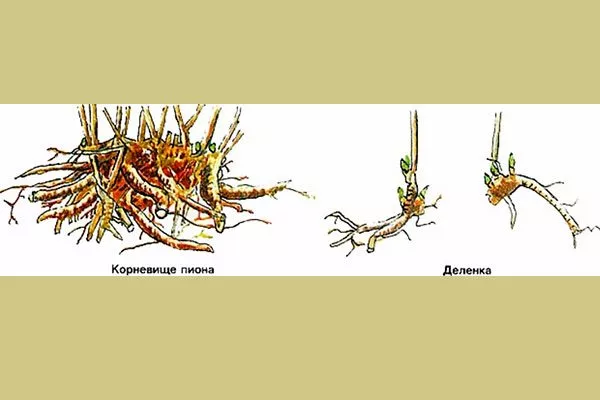
Stages of division:
- Carefully dig around the peony and remove it from the soil, being careful not to damage the roots, then shake off the soil.
- Using a sharp knife, divide the rhizome into pieces with several buds and young roots at least 10-15 cm long.
- Remove damaged and old fragments.
- Immerse the cuttings in a solution of potassium permanganate for 30 minutes, and treat the cuts with fungicides.
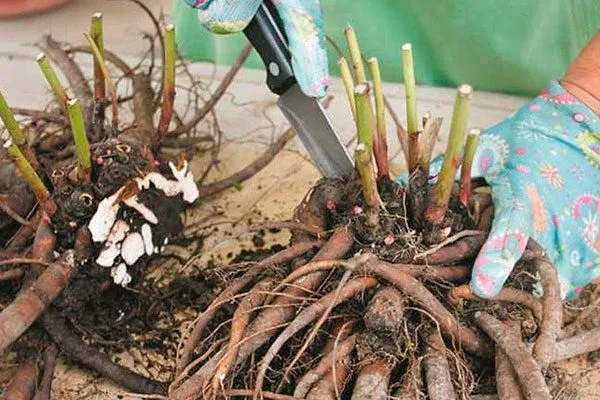
The best time to divide Top Brass is from late August to mid-September. Less common propagation methods include stem cuttings and layering.
Growing rules
Peonies are planted from August to October, and in colder regions until the end of September. At least six weeks should pass between planting and the first frost.
Preparing the soil and choosing a planting site
To successfully grow Top Brass peonies, it's important to carefully prepare the soil. The plants prefer loose, nutritious, and well-drained soil. It's recommended to add compost or humus before planting to improve fertility.
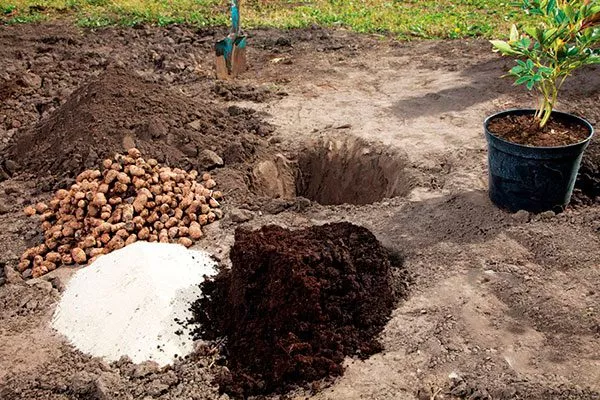
The plant does not tolerate close groundwater levels or low-lying areas, as its rhizome is sensitive to waterlogging and can easily rot. It prefers sunny locations with bright midday light.
Landing
When purchasing a cutting from a nursery, look for the absence of rot and nodular thickenings. The rhizome should have several adventitious shoots and buds to ensure successful restoration.
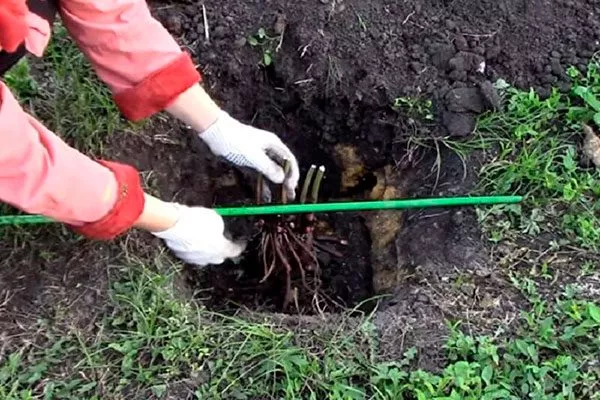
Step-by-step landing algorithm:
- Prepare the planting hole in advance. Its depth and diameter should be at least 50 cm, or about 60 cm for larger divisions.
- Place a drainage layer of expanded clay, pebbles, broken brick, crushed rock, or gravel at the bottom. Then add a nutrient layer—a mixture of garden soil, compost, sand, and fertilizer, such as superphosphate or wood ash.
- The crop does not like deep planting – plant the division no more than 7 cm deep.
- Fill the hole with a mixture of soil and compost, moisten it well and compact it carefully with your hands.
- When planting in hot weather, mulch the surface with a thin layer of compost or rotted manure to prevent the roots from drying out.
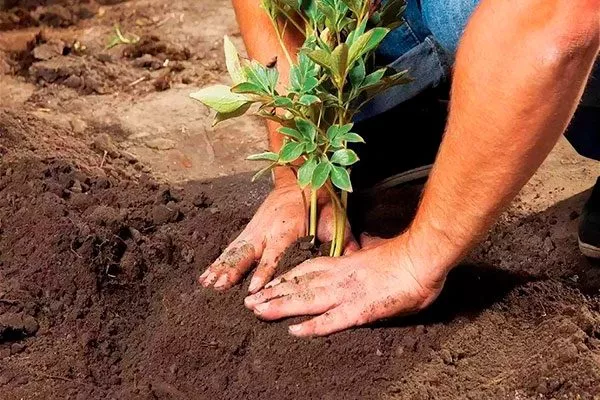
A week after planting, you can add Kornevin to the water to stimulate root formation. When planting in groups, keep in mind that the bushes will spread out, so leave about 1.5 meters between plants.
Aftercare
For the successful development of the Top Brass peony, comprehensive care is essential, including a number of important agricultural practices. Following these recommendations will strengthen the plant's immunity and ensure lush flowering.
Watering
When caring for peonies, it's important to consider several key points. The main requirements are:
- the plant needs regular watering, but stagnant water is unacceptable;
- It is especially important to irrigate during the period of spring growth, flowering, bud formation and in dry weather;
- In summer, water the bushes generously – approximately 20 liters of water per bush every week;
- Avoid getting water on leaves, stems and flowers;
- The roots penetrate deep into the soil, so surface watering is ineffective.
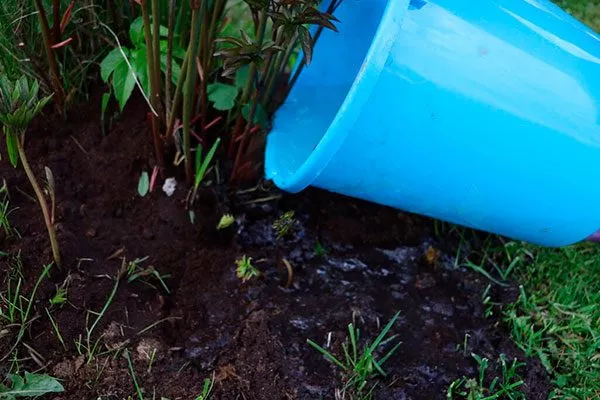
As autumn approaches and the leaves begin to yellow, reduce the frequency of watering. After watering, gently loosen the soil to retain moisture and remove weeds without damaging the root collar. Use rotted manure, bark, or gravel for mulch.
Top dressing
Among perennial herbaceous flowers, peonies are highly resilient and require minimal care. The Top Brass variety, planted in fertile soil, requires no fertilizing for the first 2-3 years.
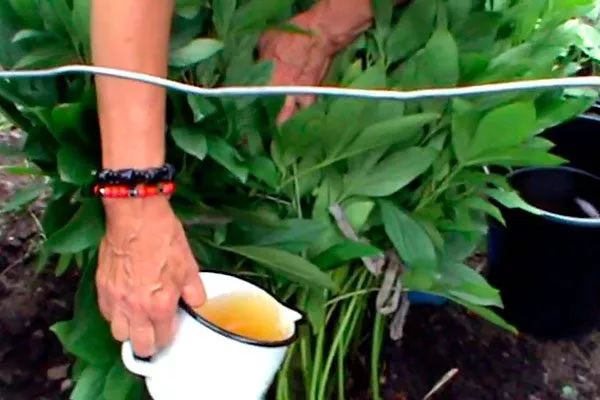
Follow these recommendations:
- Mature plants require nitrogen and potassium at the beginning of growth, and potassium and phosphorus during bud formation and throughout the growing season. Excess nitrogen is undesirable, as it increases the risk of gray mold.
- Apply fertilizer in the evening or on cloudy days to avoid drying out.
- Foliar feeding – spraying the leaves with a solution of boric acid (1 g per 1 liter of water) – gives good results.
Formation
During the peony's first year of growth, experts recommend removing all buds. In subsequent years, to ensure large blooms, leave one bud on each shoot.
Preparing for winter
In the fall, trim the peony stems at the ground level with pruning shears or leave small stumps. To prevent fungal diseases, treat the soil with a fungicide, such as Fitosporin. Then, sprinkle the soil with bone meal and ash (approximately 10 kg per plant), and then bury it.
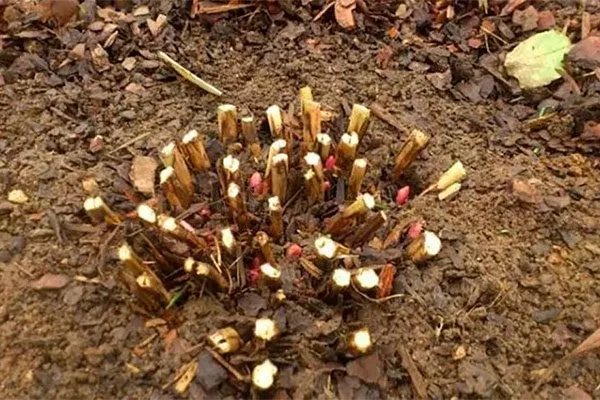
After the soil freezes, add rotted horse manure to the top. This nourishes the roots and stimulates the formation of large buds and abundant flowering. The plant tolerates winter well under snow, but in cold regions or when there is no snow cover, it is recommended to cover the plant with special materials.
Pests and diseases
The Top Brass variety has good immunity and is resistant to many diseases. The main threats to peonies are fungal infections and insect pests, which thrive in stagnant water, excessively wet soil, and sudden temperature fluctuations.
Most often, peonies are affected by the following diseases:
- Gray mold (Botrytis paeonia). It causes bud rot, darkening and the appearance of brown spots on leaves and stems, and quickly leads to the plant wilting and falling off.

- Rust (Cronartium flaccidum). Forms brown spots on leaves, causing them to dry out.
- Powdery mildew (Erysiphales). Covers leaves with a white coating, reducing photosynthesis and weakening the plant.
- Septoria leaf spot (Septoria macrospora). Causes spotting and dropping of leaves and shoots.
- Ring mosaic (Peony ringspot virus). It appears as light spots with a characteristic pattern. It is an incurable virus; infected plants must be destroyed.
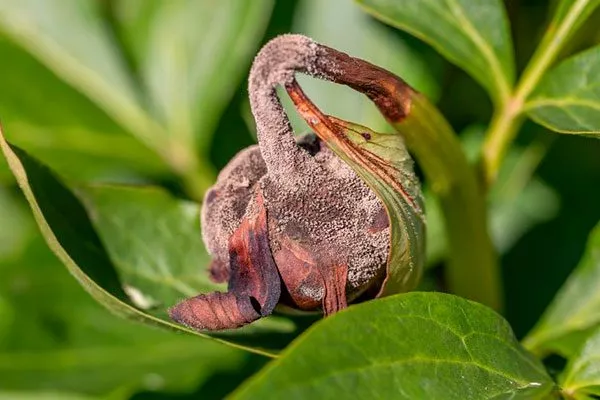
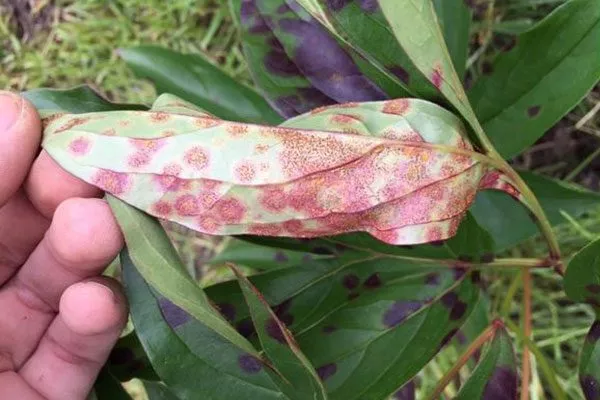
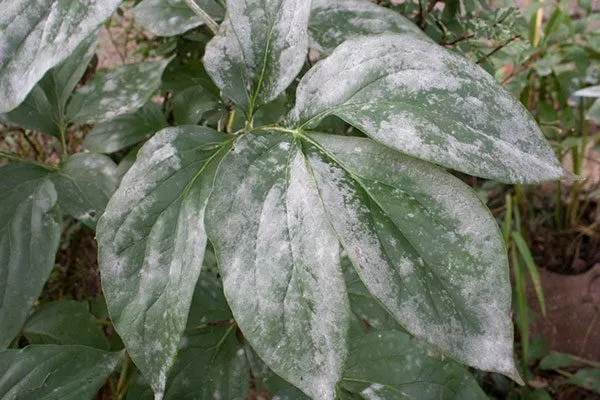
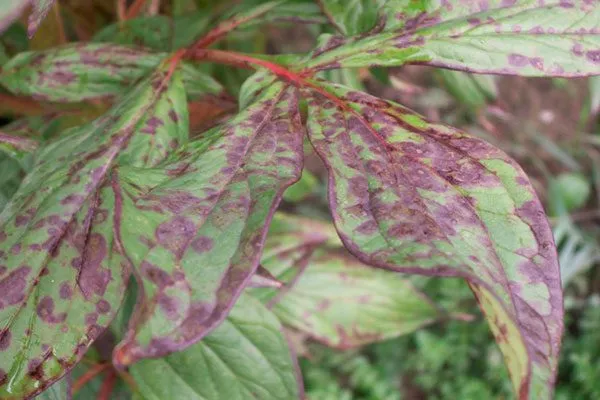
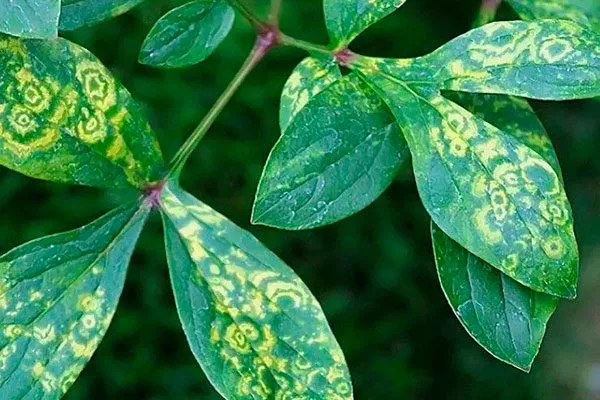
To prevent fungal diseases, treat the plant with a copper sulfate solution (50 g per 10 liters of water), irrigating the plant and the soil around the roots. Other care measures are equally important: timely pruning, moderate watering, and limiting nitrogen fertilizer use.
The most dangerous pests are ants, whiteflies, and aphids—use insecticides to control them. Nematodes, small worms that cause compaction and weaken the plant, can damage peony roots. To control them, use pesticides such as phosphamide.
Pros and cons
Reviews
The Top Brass peony is resilient and blooms reliably, even in challenging conditions. Its large, double flowers remain fresh for a long time, both on the bush and when cut. It's easy to care for, making it an ideal choice for both experienced and novice gardeners. Its graceful appearance and delicate fragrance create a cozy atmosphere.