
The Sonoma Halo peony is a double Itoh hybrid of American selection. This variety with large yellow flowers is well known in many countries and is prized by Russian gardeners for its beauty, long blooming period, and ease of care.
The history of the Sanoma Halo variety
Sonoma Halo was bred in the USA in 2006. Author: Tolomeo. It is an Itoh hybrid—a variety created by crossing herbaceous and tree peonies. These peonies were first bred in 1948 by Japanese breeder Toichi Ito.
The peony gets its name from the Californian city of Sonoma. "Halo" or "halo"—the second part of the name—denotes the halo-like glow around the moon or sun.
Description of the variety
Peony Sonoma Halo is a representative of Itoh hybrids, which have a number of common features.
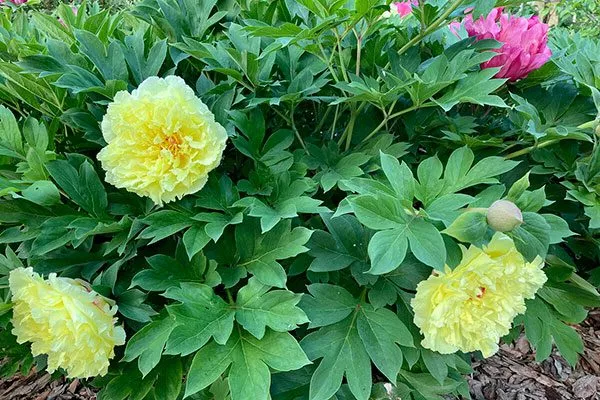
Itoh peonies have the following characteristics:
- Their bushes are spreading, well-foliated, and reach a height of 0.5-0.9 m.
- The stems are often arching or deviating.
- The leaves are like those of tree peonies. They don't fade until the frost.
- The roots are woody and spread outward. They are more superficial than those of herbaceous peonies.
- The buds look like chestnuts, especially when they are brown.
Sonoma Halo is a perennial, leafy shrub with sturdy stems. It is low-growing and robust, reaching a height of 0.8-0.9 m. The leaves are dark green, and the flower stalks are strong, not too spreading, and can withstand even strong winds.
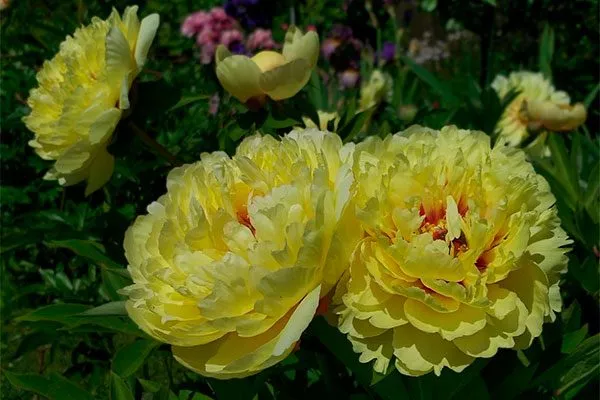
The Sonoma Halo peony's flowers are very large, beautiful, vibrant, and single-colored. They create an airy yet densely packed impression.
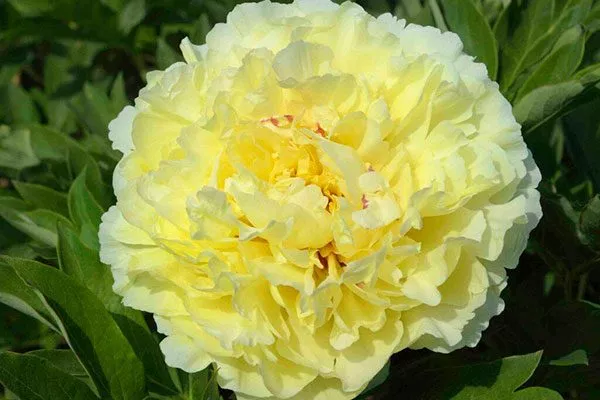
Description of colors:
- Flower type: terry.
- Coloring: Yellow. Sometimes with sparse red strokes in the center and a light edging on the petals.
- Diameter: 22 cm.
- Petals: wavy.
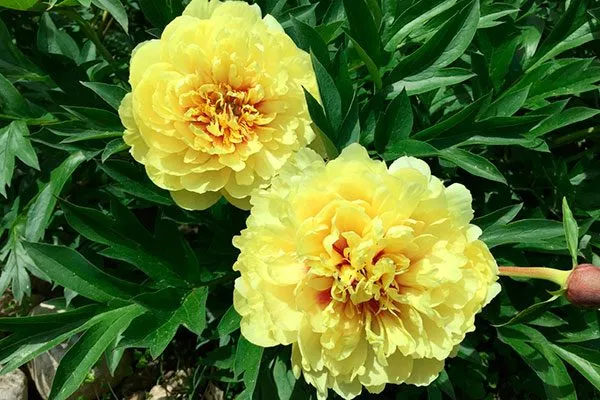
The Sonoma Halo peony has a rich, floral, soft, and pleasant fragrance. The yellow flowers mature to a creamy white.
Characteristics
The Sonoma Halo peony begins blooming in June, typically in the second ten days. It blooms until early July—a total of 2-3 weeks. This perennial requires no cover, as it can withstand temperatures as low as –40°C.
Use in landscape design
The Itoh peony Sonoma Halo is widely used in landscape design. It is suitable for cut flowers, group plantings, and single plantings, and looks beautiful in flower beds, lawns, and mixed plantings. This variety can be used to decorate a wide variety of areas.
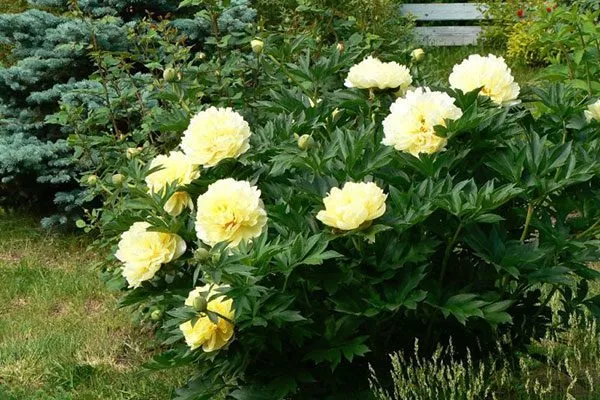
Peony Sonoma Halo is best combined with:
- Flowering shrubs. Jasmine, mock orange, honeysuckle, etc. can be planted next to yellow peonies.
- Coniferous plants. The Sonoma Halo peony combines beautifully with a wide range of foliage shades, from yellow-green to dark emerald.
- Decorative vines, for example, with clematis. Against their emerald background, the yellow flowers look especially impressive.
Pros and cons
Sonoma Halo is very beautiful, and that's its main advantage. But it's not its only one. This Itoh peony has many advantages and almost no disadvantages. In any case, it's best to learn about them all in advance, before planting.
Landing
The Sonoma Halo peony only begins to form buds several years after planting. Since all planting errors don't become immediately apparent, it's crucial to get everything right at the planting stage.
Selecting a site
Choose a sunny or semi-shaded site, protected from strong winds. Some shade is acceptable. The Sonoma Halo peony grows best in fertile soils, free from stagnant rainwater and meltwater.
It's recommended to choose a level, slightly sloping site for planting peonies. The soil should be well-drained and have a neutral pH. The maximum groundwater depth is 1.5 meters above ground level. If the water level rises above this level, there's a risk of root rot. In this case, peonies are planted on artificial mounds.
Selection of planting material
For planting, it's recommended to use seedlings with closed root systems—that is, plants in containers. These can be purchased at nurseries, agricultural stores, and specialized online platforms.
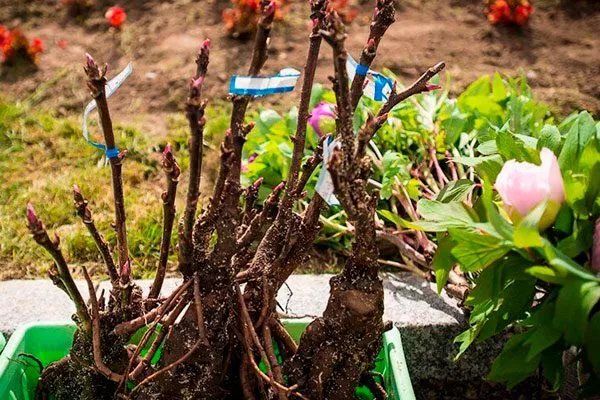
A peony seedling should have at least two to three buds and several stems. This will ensure it takes root easily and will bloom within a few years of planting. Nurseries may offer collector's items and premium seedlings. It's important to pay attention to their condition—the plants should be absolutely healthy, with no signs of disease or damage.
You can also buy a rhizome for planting. It should have approximately the same number of roots as the number of buds. There should be no signs of rot on the rhizome.
Planting dates
The Sonoma Halo peony is planted in the spring and summer (March to June), or in the summer and fall (July to November). In spring, don't plant the flowers until the soil has warmed and the risk of frost has passed.
wSite preparation
The area where the peonies are to be planted is dug to the depth of a spade, adding organic fertilizer such as compost or humus. Coarse river sand, sawdust, and vermiculite are added to overly compacted soil. Highly acidic soils are deacidified with dolomite flour—300 g per square meter is sufficient.
Features of preparing the landing site:
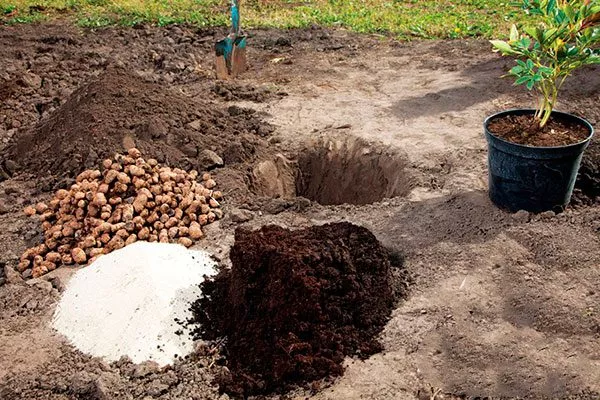
- Planting holes are prepared 2-3 weeks in advance. Hole size: 70x70 cm.
- Place a drainage layer, such as broken brick, crushed stone, or expanded clay, at the bottom of the hole. Top it with 10 liters of compost, 200 g of wood ash, and 100-150 g of superphosphate.
- Water the hole generously and leave it there. Within 2-3 weeks, the soil will settle and the fertilizer will dissolve.
Landing
Planting is best done on a cloudy day or in the evening. The scorching sun can have a negative effect on young plants.
Features of planting the Sonoma Halo peony:
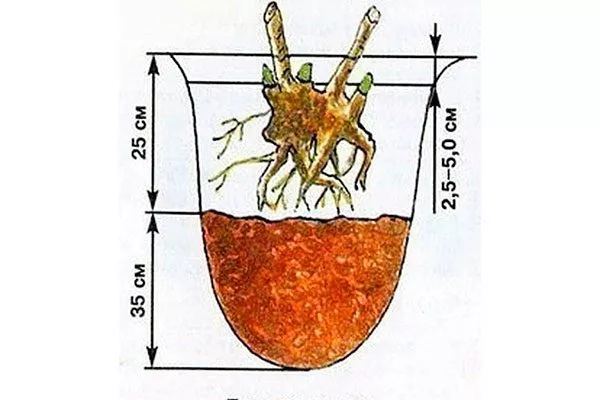
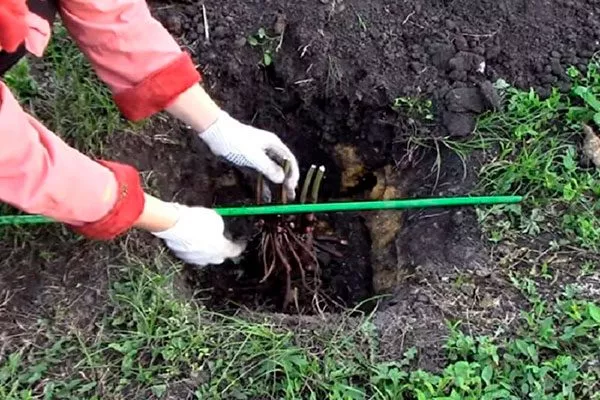
- Place the seedling in the center of the hole and spread out the roots. After planting, the renewal buds should be buried 3-4 cm below ground level.
- The roots are covered with fertile soil and compacted with hands so that there are no voids left.
- The planted plant is watered with warm, settled water. Once the water has been absorbed, the root zone is mulched with sawdust, wood chips, or fallen leaves.
Care
The Sonoma Halo variety requires little care. This peony is easy to grow and hardy, but the better you care for it, the more profuse and long-lasting its blooms will be.
Watering
The Sonoma Halo peony requires regular but moderate watering. These flowers do not tolerate overwatering or stagnant water. In normal weather, the plant should be watered 1-2 times a week. During drought, watering should be more frequent, with peonies watered approximately twice a week, but the amount of water poured under the plant at any one time should be reduced.
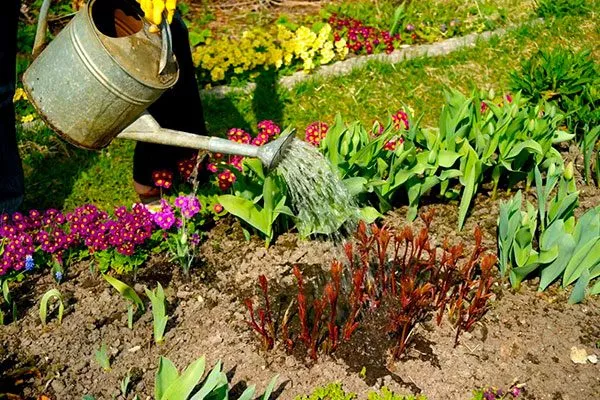
If it rains, there's no need to water the flowers. The best time to water is in the evening or on a cloudy day. Use only warm, settled water.
Loosening
After each watering or rain, it's best to loosen the soil to ensure the roots get enough air. Weed any growing weeds at this time. After the water has soaked in, sprinkle the soil with peat moss, humus, sawdust, etc.
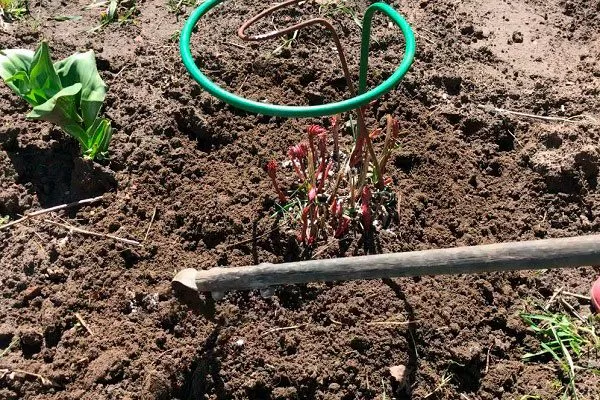
Loosen and weed the soil within a radius of 0.5 m. Loosening depth is 5-7 cm.
Top dressing
To ensure the Sonoma Halo peony grows and blooms well, it needs to be fertilized in spring, summer, and fall. Fertilizer is applied around the perimeter of the trunk.
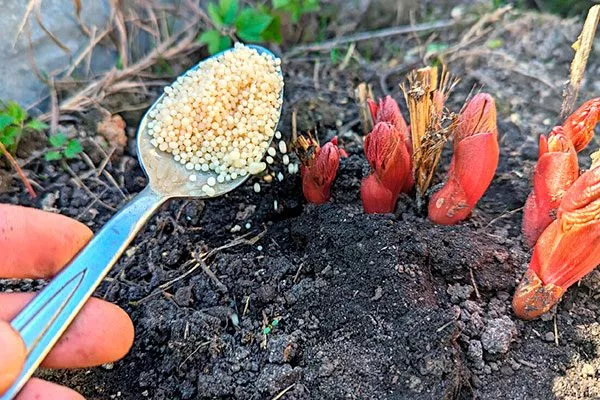
Approximate feeding regime:
- When the first shoots appear, nitrogen fertilizers are added, for example, urea - 1 tbsp. per 10 liters of water.
- During the bud formation stage, peonies require phosphorus-potassium fertilizers. You can apply a mixture of superphosphate, potassium sulfate, and urea—20, 15, and 10 g each, respectively. Or you can apply a double superphosphate solution (2 tablespoons per 10 liters of water).
- Around the beginning of August, another feeding is done. Again, use a phosphorus-potassium fertilizer. It shouldn't contain nitrogen. Monopotassium phosphate, for example, is suitable.
- In the fall, peonies are fed again, before pruning their leaves, around the first half of September, using a mineral fertilizer labeled "fall." After pruning, you can apply monopotassium phosphate again, as well as potassium magnesium sulfate or potassium sulfate.
The timing of autumn fertilizing shifts depending on climatic conditions and current weather.
Reproduction
Peony Sonoma Halo can be propagated vegetatively, in particular by dividing the rhizome.
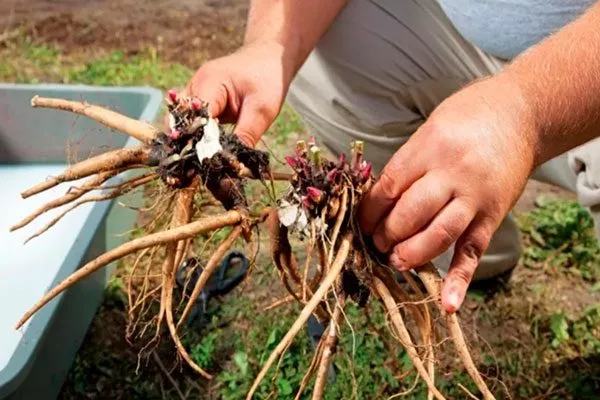
How to propagate Sonoma Halo peony:
- The bushes are dug up with extreme care to avoid damaging the rhizomes. The root system is rinsed with running water and dried in the shade for 2-3 hours.
- The rhizomes are divided into sections using a sharp shovel or hacksaw. Each section should contain renewal buds.
- All cuts are dusted with wood ash, after which the cuttings are planted in pre-prepared holes.
Fighting diseases
The Sonoma Halo peony has good immunity, but under unfavorable conditions it can be affected by various diseases, mainly fungal ones.
Sonoma Halo peony is most often affected by:
- Gray rot. It can spread to all above-ground parts—buds, leaves, and stems. Affected parts are pruned and burned, and all peony bushes and the soil are treated with a fungicide. For example, you can use "Fundazol" (20 g per 10 liters of water).

- Powdery mildew. Accompanied by the appearance of a grayish coating. Treatment involves using a 0.5% solution of soda ash mixed with laundry soap. Repeat the procedure after a week. Fungicides such as "Rakurs," "Fundazol," and "Baktofit" can also be used.
- Cladosporiosis (brown spot)It causes brown spots on leaves, which eventually dry out and die. To combat this disease, use HOM, Abiga-Peak, Ordan, and a 1% copper sulfate solution (100 g per 10 liters of water).
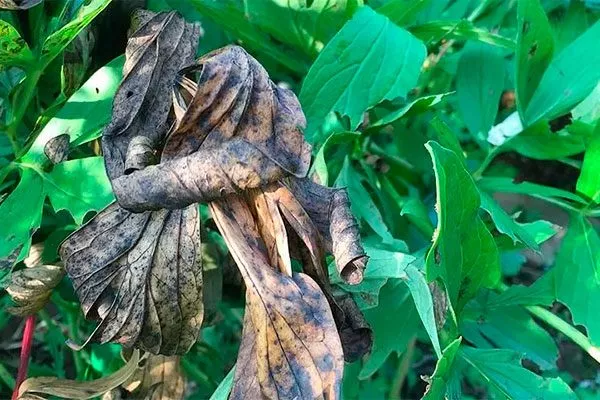
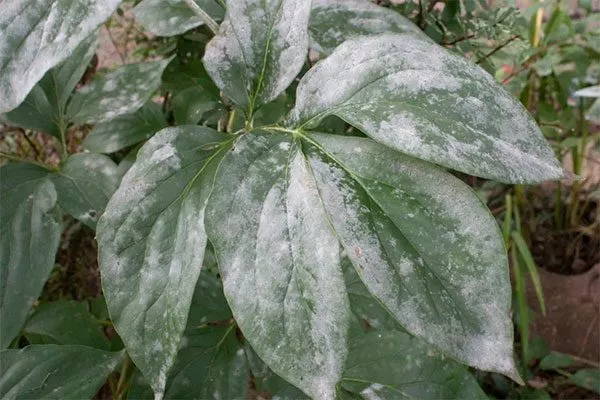
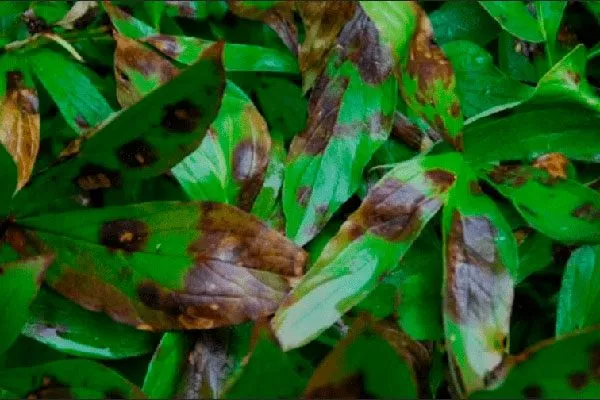
Pest control
If insects appear on your peonies, insecticides are recommended—they act quickly and reliably. For minor infestations, you can use folk remedies.
Peony Sonoma Halo is most often affected by:
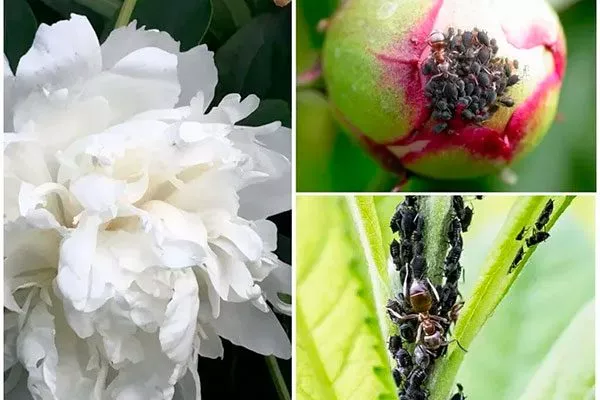
- Aphids. If there are only a few insects, they can be washed off with a stream of water from a hose or sprayed with biological preparations, for example, Fitoverm.
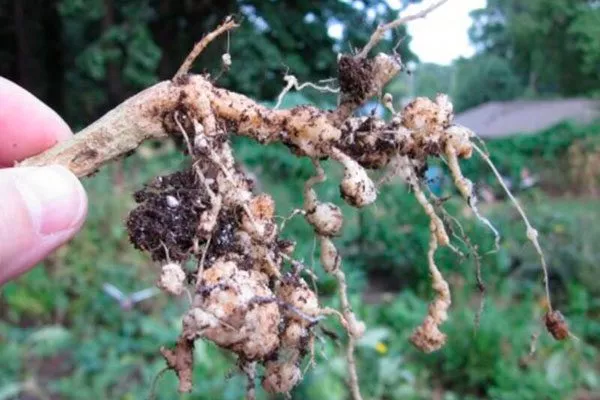
- Root-knot nematodes. Infected plants must be uprooted and destroyed (burned) to prevent the pest from spreading to neighboring plants. The soil where the diseased bush grew is disinfected with formalin.
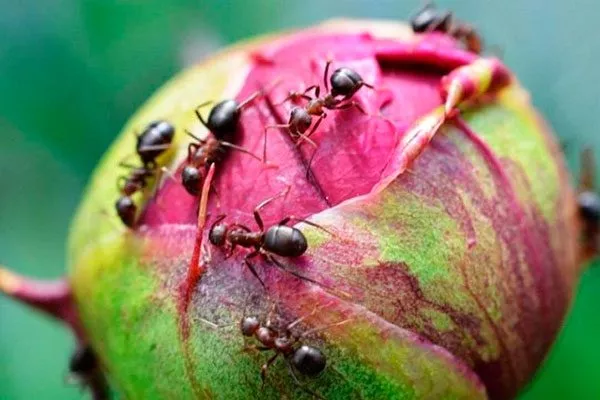
- Ants. Special insecticides are used against them, which are applied to the soil and plants, for example, “Muravin”, “Muravyed”, “Muracid” and others.
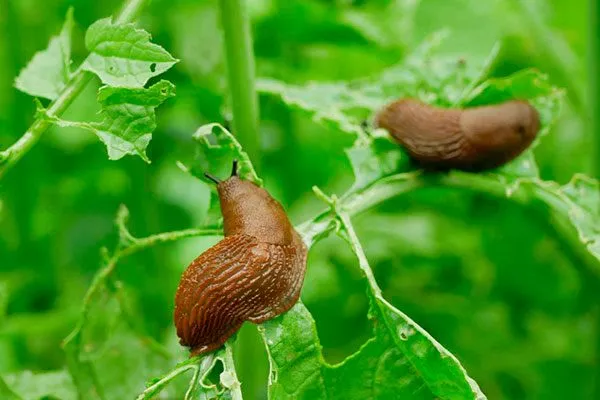
- Snails and slugs. To combat them, barriers, traps, crushed eggshells, wood ash, and special preparations such as "Slizneed," "Ulicid," and others are used.
Reviews
The Sonoma Halo peony is an excellent choice for lovers of unusual peony varieties. This double peony blooms profusely and for a long time, easily becoming a true highlight of a park, garden, or cottage. Its voluminous blooms look beautiful not only in the garden but also in bouquets, and growing it requires little effort or knowledge; even a novice gardener can handle it.