
The Chiffon Parfait peony attracts attention with its beautiful flower color and double petals. This variety has been cultivated by gardeners in our country for many years. It is easy to care for and requires little effort, but basic agricultural practices are necessary for abundant blooms.
Description of the Chiffon Parfait peony
Planting a crop in your garden is a simple task that even a novice gardener can handle. It's crucial to first research the plant's characteristics, history, botanical description, and potential uses in the landscape.
History of creation
This is a hybrid created in Holland by crossing different species. It is a combination of two varieties: President Taft and Jules Elie. It was first introduced to the United States in 1981 by breeder Klehm.
Description of the appearance of the plant and flowers
This variety is a perennial herbaceous species. It forms dense bushes with robust root tubers that accumulate nutrients during the summer season. It has numerous characteristics:
- Erect, strong shoots reach a height of 90-100 cm.
- The sturdy stems support large flowers well and usually don't require support. During prolonged rainfall, the shoots may bend slightly toward the ground.
- The bush has a lush crown, densely covered with cut, lacy leaves, painted in a rich green color.
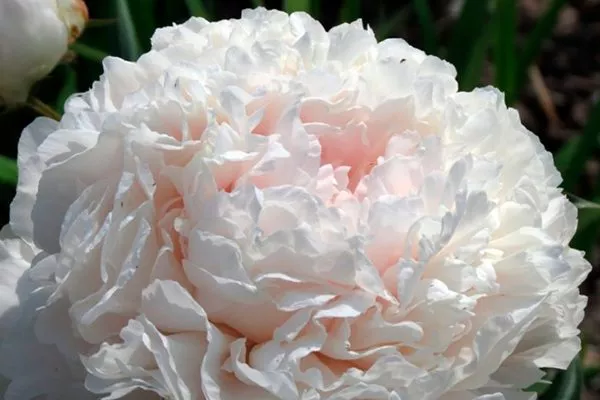
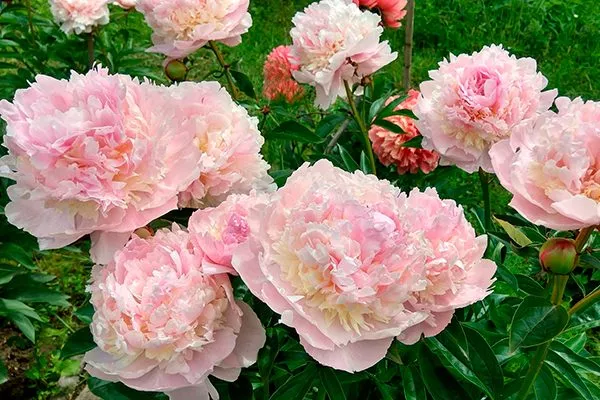
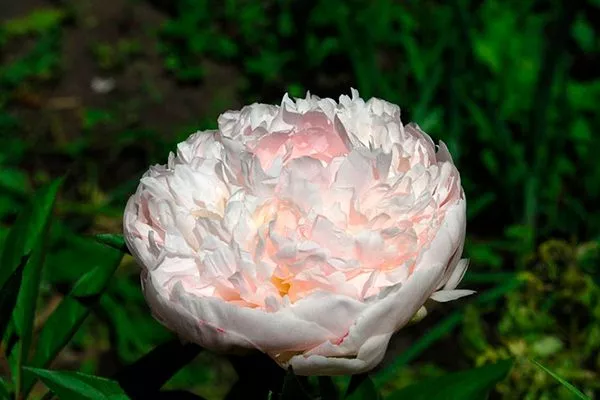
- The buds are lush, double flowers without pistils or stamens. The diameter can reach 19 cm. Their color range includes light pink shades with a slight salmon tone.
- Once the petals are fully opened, a silvery edge is visible.
- The inflorescences have a spherical configuration with a rose-shaped center.
- ✓ Flowers without pistils and stamens, which makes them especially decorative.
- ✓ Silvery edging of petals after full opening.
Features of flowering
It usually begins blooming late, in late May or early June. If planted specimens fail to form buds, there may be several possible causes:
- They are still young and need time to fully develop.
- The soil contains excess nitrogen, which may prevent future flowers from appearing.
- When planting, the buds were planted too deep, which can lead to difficulties in flowering.
- The growing area is in the shade, which stops the formation.
All these factors should be taken into account to ensure optimal conditions for flowering.
Application in design
The Chiffon Parfait peony is highly praised by landscape designers and gardeners for its beauty and versatility. These beautiful flowers are often used not only as stand-alone plants but also in combination with other plants, including trees and shrubs.
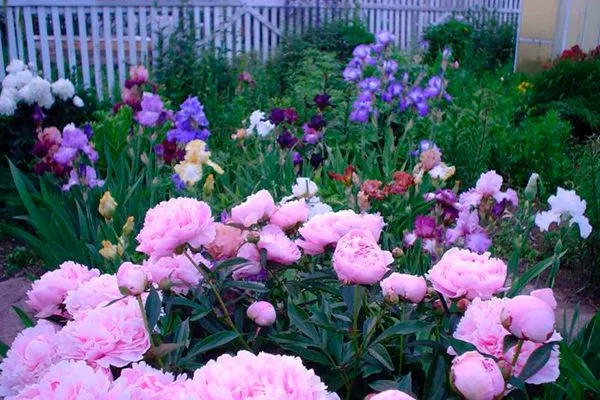
This plant looks beautiful in the center of or along lawns, pairing well with delphiniums, irises, and foxgloves, and pairing well with phlox and bellflowers. This perennial is planted next to plants with flowers in shades of white, lilac, blue, red, or purple.
It looks beautiful against a backdrop of irises and blue or silver spruce, juniper, or arborvitaes. Maintain a distance of at least 1.5 m to avoid the bushes being shaded by tall trees.
Methods of reproduction
Gardeners use several methods to increase the number of bushes at home. Choose one of the methods:
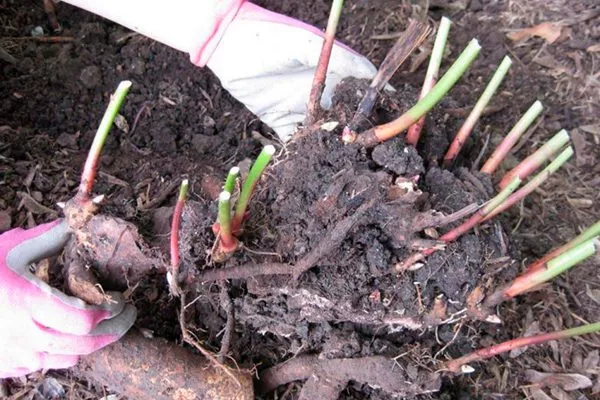
- Division of rhizome. The preferred and easiest method for obtaining new divisions, guaranteeing the preservation of the plant's varietal characteristics, is to remove a healthy plant that is at least 4 years old. Clean the roots of any dirt and trim off any damaged areas.
By dividing the root into pieces, each containing living buds, you'll obtain cuttings. Place them in a special solution and replant them. If done correctly, the hybrid will bloom the following year. - Cuttings. After the flowers open, select a shoot with an undeveloped bud in the middle of the bush and cut it off. Remove leaves from two-thirds of the shoot's length, make an oblique cut at the bottom, and treat it with a growth stimulant. Place the cutting in fertile soil and cover it with a plastic bottle to create a greenhouse effect.
A young seedling can be planted in open ground after a year, and flowering will begin in 4-5 years. - Seeds. Soak the seeds in a potassium permanganate solution for 1-2 days. Sow them in containers with damp sand and cover with plastic wrap, maintaining a daytime temperature of 25-28°C and a nighttime temperature of up to 15°C. Once the sprouts emerge, remove the cover, transplant the seedlings into fertile soil, and keep them at a temperature of 6-8°C.
When the first leaves appear (in 3-4 months), transfer the seedlings to a warm room with a temperature of 22-23°C and keep them there until planting outdoors. Plant the seedlings in the first ten days of August.
Planting Guidelines for Chiffon Parfite Peony
When planting, follow certain recommendations, otherwise you may not achieve lush blooms. Helpful tips:
- Selecting a location. Choose well-lit areas protected from strong winds. The plant does not tolerate heavily shaded areas. If you plan to plant multiple plants, leave at least 1.5 meters between them to prevent them from interfering with each other once they mature.
- Soil. Chiffon Parfait can grow in any soil, but to ensure abundant blooms and large buds, use fertile, slightly acidic soil that drains well and is permeable. If your soil is heavy, improve it by adding sand, compost, or humus.
- Preparing seedlings. Dig up the plant, being careful not to damage the root system. Divide the roots into sections, ensuring each section has 3-5 buds. After shortening the roots to 10 cm, place them in a growth stimulator before planting.
- ✓ Optimal planting depth for buds: 3-4 cm. Deep planting results in a lack of flowering.
- ✓ Distance between bushes: at least 1.5 m to provide sufficient space and light.
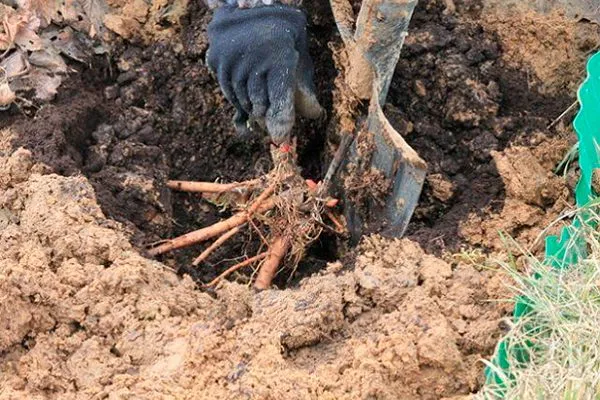
Step-by-step algorithm:
- Dig a planting hole measuring 70x70x70 cm to allow the roots to grow comfortably.
- Ensure there is good drainage at the bottom of the hole.
- Prepare nutritious soil by mixing garden soil with fertilizers.
- Place the planting material into the hole, lining up the roots and tilting them slightly. Do not bury the buds deeper than 3-4 cm.
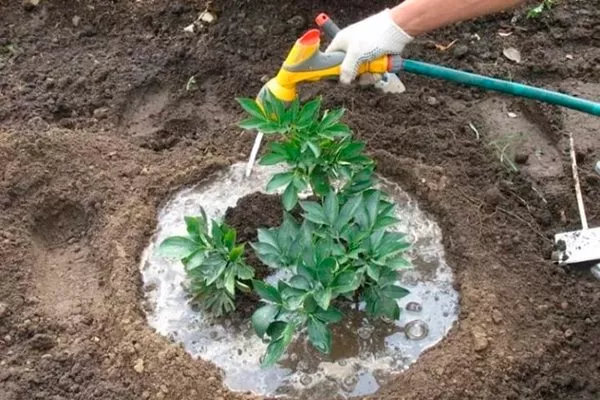
Water generously, adding about 30-40 liters of water to the tree trunk circle.
Aftercare
Caring for this plant isn't particularly difficult. All maintenance is standard and includes:
- Watering. During bud formation and blossom opening, provide ample water. Apply water to the roots once a week. One mature plant requires approximately 40 liters of water. During dry periods, water more frequently, but avoid overwatering, as this can lead to fungal diseases.
- Top dressing. Fertilizers play an important role in ensuring healthy growth and abundant flowering. Feed it with moderate doses of nitrogen fertilizer at the beginning of the growing season to stimulate foliage growth and bud formation.
During the mid-growing season, use fertilizers with higher phosphorus and potassium levels to promote bud formation and strengthen the root system. Follow the recommended dosages to avoid potential problems with nutrient overload.
Preparing for winter
It has good frost resistance, so it doesn't require much shelter. Prune the shoots, leaving stumps no more than 10 cm high, then apply fertilizer. Cover the root system with humus, especially in regions where snowfall is rare.
Pests and diseases
It is characterized by strong immunity, but if not properly cared for, it can become a victim of various diseases and insect attacks.
Among the most common diseases are the following:
- Gray rot. It manifests itself as yellowing and curling of leaves, and the formation of a marbled pattern on the leaves. To control it, use fungicides, such as Bordeaux mixture.
- Mosaic. The leaves turn yellow, forming a mosaic pattern. This disease is incurable, so remove and destroy infected plants.
- Rust. The leaves take on a reddish-brown tint. To combat the disease, use fungicides such as Fitosporin-M.
- Powdery mildew. The leaves become covered with a white coating. This disease can be controlled with Figon's solution.
Among insects:
- Ants. They can feed on flower buds and are a source of aphids. You can get rid of ants using folk remedies or chemicals, such as Anteater.
- Aphid. Pests feed on the plant's sap and can cause serious damage. To control aphids, use insecticides such as Aktara or Actellic.
Proper care, regular treatment with chemicals, and insect control will help prevent diseases and protect against pests.
Helpful tips
If planted in a bright, sunny spot, provide the hybrid with ample water. If you plan to plant the seedling in the spring, be aware that the bush may lag in growth. To avoid this, postpone the rooting process until the fall. If planted too deeply, the plant may not bloom.
Reviews of the Chiffon Parfait peony
The Chiffon Parfait peony was bred relatively recently, but has already gained popularity among gardeners. This frost-hardy plant tolerates cold periods, is rarely susceptible to disease, and thrives in fertile soil. For strong immunity and abundant blooms, it requires thorough care.