
The Sarah Bernhardt peony is a late-blooming herbaceous perennial—after most peonies have finished blooming, this hybrid is just beginning to bud. It is characterized by its strong, firm buds, preventing them from falling off in adverse weather. This variety is known for its ability to prolong its blooming period.
History of creation
Sarah Bernhardt is considered an ancient variety, as it was bred at the beginning of the last century – in 1906. Pierre Louis Victor Lemoine worked on creating the variety.
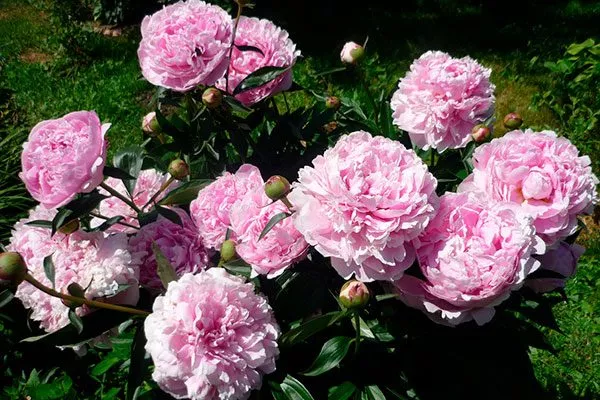
The flower was brought to Russia four years later, but at the time it was called something else—Miss Eckhart or Alexander Fleming. However, the error was later discovered, so the peony became known as Sarah Bernhardt.
Today, there are other names – Sarah Bernard, Sara Bernardt. A French breeder assigned the "name" in honor of the famous actress.
Description of the peony variety Sarah Bernhardt
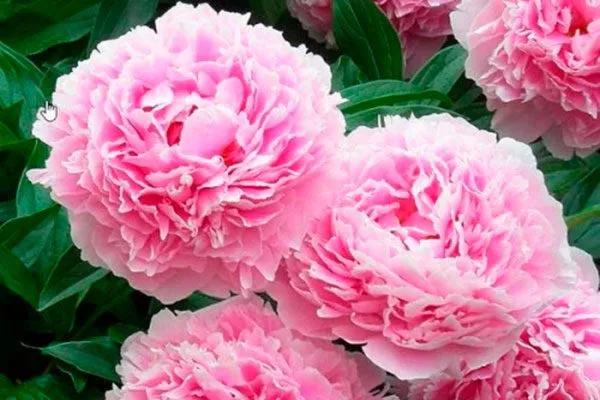
Peonies are a soft pink, yet richly colored, with a huge number of petals per bud. These densely double flowers and bushes have the following characteristics:
- petals - have a light silvery border;
- inflorescence diameter – about 20 cm;
- the main color is pink, but depending on growing conditions it can also be lilac;
- aroma – very rich;
- the leaves are green, lacy, and even in autumn they do not turn yellow, but acquire a purple tint;
- the shape of the bush is round, as it reaches up to 100 cm in both height and width;
- stem type – erect;
- shoots are very strong, pale green;
- the number of buds on one plant is about 50 pieces;
- bud height – from 15 to 25 cm.
Main characteristics
Distinctive features and properties of the plant:
- Frost resistance of peony. It belongs to frost hardiness zone 3, so it can withstand temperatures down to -34 to -40 degrees Celsius. This allows it to be grown even in Siberia and the Urals. Even if the shoots freeze, they will recover on their own in the spring.
- Timing and characteristics of flowering. The flowering season is mid-late, as budding in the south begins after June 15th, and in cooler climates in early July. The flowering period lasts 1.5 months.
The first buds form in the year of planting or the following season (also depending on the climate and the quality of the planting material), but at this time there are few flowers and they are small in size. - Purpose. Can be used for landscaping and cutting.
- Drought resistance. Excellent, the bush can go for some time without watering, but then it is impossible to achieve an abundance of buds.
- Resistance to precipitation. Not bad, since the flowers aren't harmed by rain. However, the root system can be susceptible to fungus and rot due to stagnant water.
- Lifespan. The lifespan is 50-60 years. The originators claim that the plant doesn't need repotting, but it's important to do so every 10-15 years to renew its roots.
Application in design
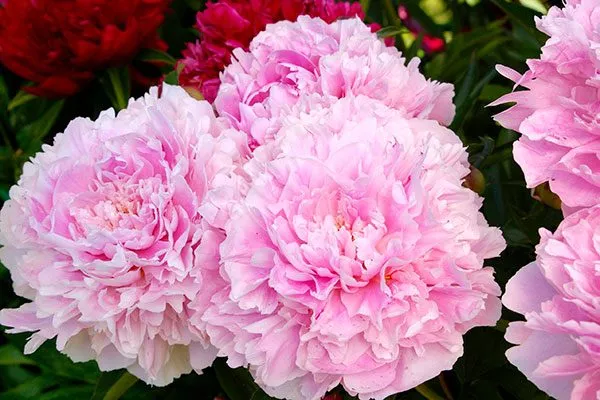
Sarah Bernhardt is a very spectacular peony that has universal application in landscaping a garden plot or park area:
- single and group plantings;
- lawn decoration;
- decoration of walls and fences, gazebos and fountains;
- creation of an alpine slide;
- planting near the porch and along garden paths;
- mixborders and flower beds;
- monoklumba and modular flowerbed.
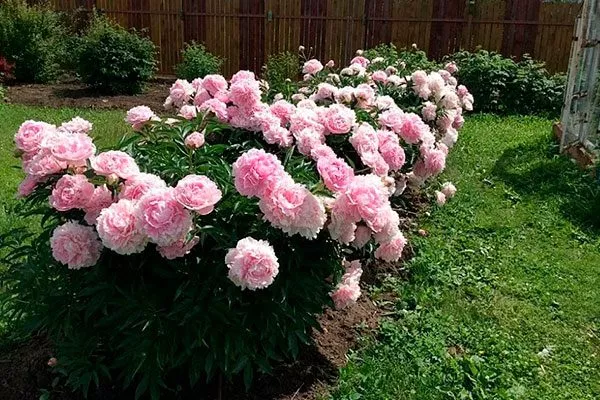
Pink peonies pair well with roses, poppies, lavender, geraniums, irises, hostas, lilies, and foxgloves. Avoid placing them near conifers, as they can infect the hybrid with rust. Avoid placing them close to strawberries, which attract pests.
But peonies' uses don't stop there—they last a long time in vases of water and cling to their stems after being cut, making them ideal for bridal bouquets, other special occasion bouquets, flower box arrangements, and more.
Varieties
Based on the ancient Sarah Bernhardt variety, other sub-varieties were created that differ in characteristics, shades and external indicators.
| Name | Petal color | Inflorescence diameter | Bush height |
|---|---|---|---|
| Sarah Bernhardt White | White with silver trim | 15 cm | 90 cm |
| Red Sarah Bernhardt | Red, purple, dark pink | 15 cm | 80 cm |
| Sarah Bernhardt Unique | Pink, lilac | 25 cm | 100 cm |
| Sarah Bernhardt Select | Lilac-pink | 15-20 cm | 100 cm |
Sarah Bernhardt White
Characterized by snow-white petals edged with silver, a delicate lemon hue is also common. The buds are rounded, and the leaves are rich green. The flowers are no more than 15 cm in diameter, making them small, unlike the standard Sarah.
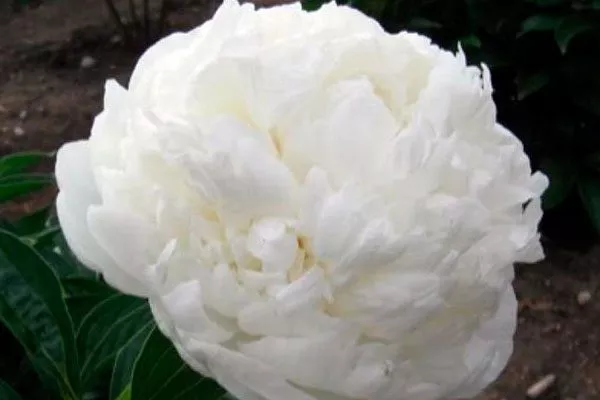
The petals are densely arranged, giving the buds a lush appearance. The bushes grow to a maximum height of 90 cm. This variety is characterized by its resistance to frost and disease.
Red Sarah Bernhardt
This group includes several subvarieties, some of which are not only red, but also purple and dark pink. The height of the bush is 80 cm, and the diameter of the buds is 15 cm. The leaves are dark green.
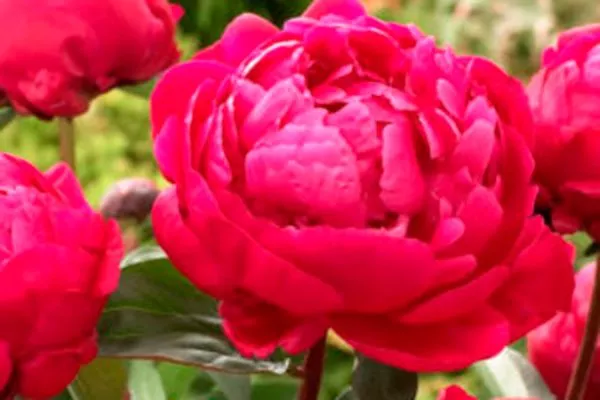
This variety was developed in the Netherlands, but Russian breeders refined it to suit northern regions. Its distinctive feature is its very persistent and rich aroma.
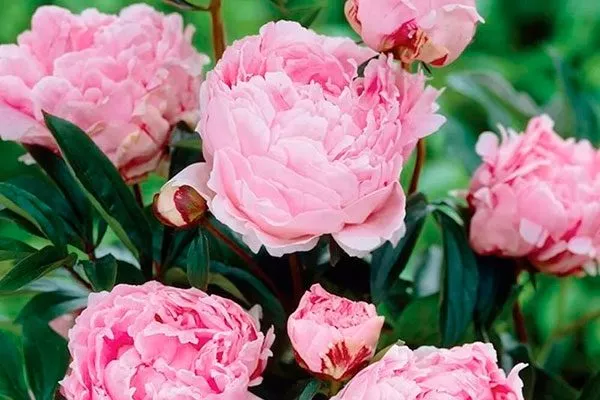
Sarah Bernhardt Unique
Unlike other Sarah Bernhardt varieties, these peonies bloom early—in early June. They are characterized by varying shades of pink and lilac, but their distinctive feature is that the petals shimmer in the sun. Fine streaks of purple or red may appear across the petals. The buds reach approximately 25 cm in diameter.
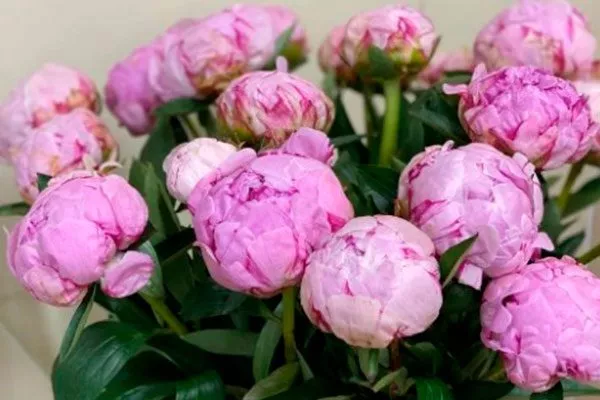
Sarah Bernhardt Select
This species is virtually unknown because it is new. The petals are lilac-pink, range in diameter from 15 to 20 cm, and feature a silvery edge.
Landing
The Sarah Bernhardt peony requires an individual approach, so when planting a seedling, consider a few points:
- The optimal time is from August 20 to the end of September, but if planting is carried out in the northern regions, the best period will be spring, when the air temperature stabilizes at +15-16 degrees.
- This variety requires sandy and clayey soil with a slightly acidic pH; loam and sandy loam are suitable. Avoid marshy areas and drafty areas. Lighting should be diffused, with partial shade in the afternoon.
- The minimum distance between plantings is 90-100 cm, the planting hole size is 70x70 cm.
- ✓ The planting depth of the rhizome should be at least 5 cm, but not more than 7 cm, to avoid freezing or overheating.
- ✓ The soil should be pre-enriched with compost and ash to improve structure and nutritional value.
Sarah Bernhardt's peony care instructions
Care procedures are classic, but there are some peculiarities concerning this variety:
- Watering. The soil should be moistened no more than once a week, but about 30 liters of settled, warm water should be added. This should be done in the evening.
- Loosening the soil. Perform this after watering, removing weeds at the same time. Avoid burying garden tools too deeply to avoid damaging the root system.
- Fertilizer. Fertilizing is not necessary during the first two years if mineral fertilizers and organic matter were added at planting. In subsequent years, apply fertilizer three times: in the spring, during flowering, and after flowering. Use mullein, manure, and superphosphate.
- Pruning and preparation for winter. Immediately after the flowering period ends, cut off all flower stalks. When preparing for winter, shorten the shoots so that no more than 5-7 cm remain above ground. After this, hill up the bush and mulch. Cover if necessary.

Possible diseases of peony
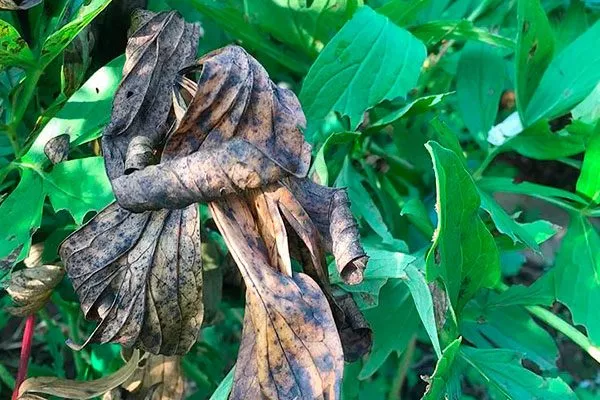
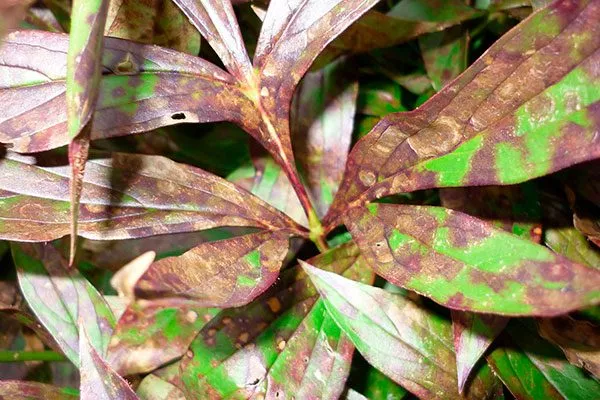
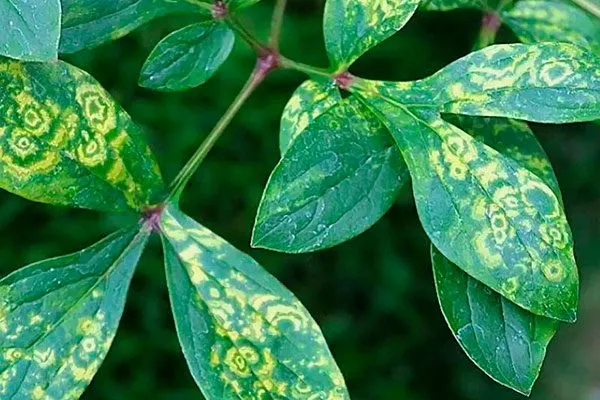
Sarah Bernhardt is considered disease-resistant, but under unfavorable weather conditions and violations of agricultural practices, the risk of developing the following problems increases:
- Gray rot. Occurs when the soil is overwatered and manifests itself as a coating on the green foliage.

- Rust. The causes are identical, with dense plantings also a negative factor. Signs include rust-colored spots on the leaves.
- Mosaic. Yellowish-green streaks appear on the leaves. There is no treatment for this condition.
Methods of reproduction
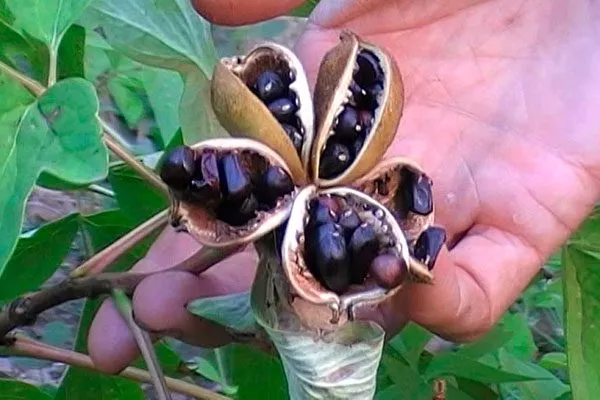
Sarah Bernhardt reproduces in only three ways:
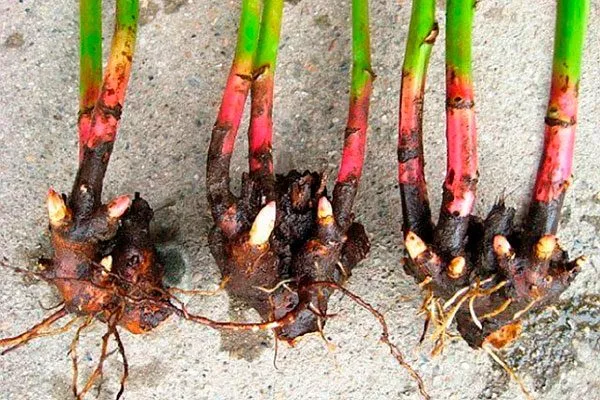
- dividing the bush is the best option, allowing you to immediately obtain mature bushes;
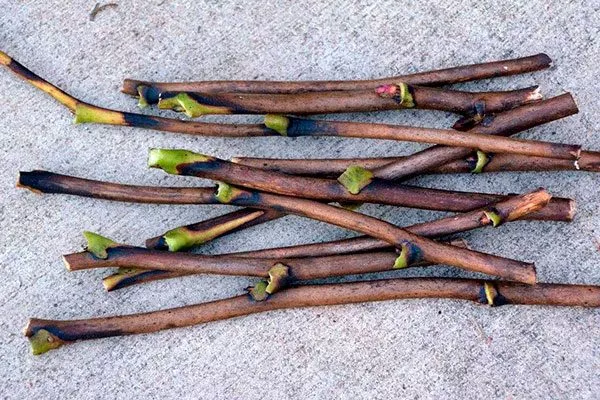
- stem cuttings - a longer process;
- root cuttings - you need to extract the root and cut it into pieces, and then root it.
| Method | Time to first flowering | Complexity |
|---|---|---|
| By dividing the bush | 1-2 years | Low |
| Stem cuttings | 3-4 years | Average |
| Root cuttings | 2-3 years | High |
Reviews
The Sarah Bernhardt peony is a timeless and sought-after classic, characterized by high frost hardiness and disease/pest resistance. It quickly takes root and establishes in a new location, shoots grow rapidly, and buds form in mid-summer. It's an excellent choice for both experienced peony growers and novice gardeners.