
The Sunny Girl peony is an American hybrid belonging to the herbaceous group. It is characterized by increased frost resistance, large buds, ease of cultivation, and beautiful blooms. The English name is Sunny Girl, which translates as "sunny girl."
How did the variety appear?
Work on developing the hybrid began in the 1950s and 1960s, but the peony was introduced to the world only in 1985. Chris Lanning (USA) is considered the originator.
Description of the peony Sunny Girl
Yellow peonies are considered a rarity, but this variety also surprises with its very intense floral aroma, which can spread for several meters.
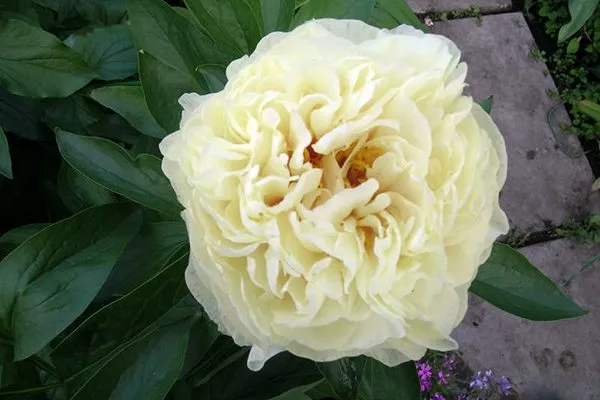
Flower size and shape
The buds are spherical and semi-double. They reach 17-19 cm in diameter. The color is pale but beautiful—the base color is yellow-green, but there are also creamy notes. The stamens are exclusively yellow. A distinctive feature is the petals' unique and beautifully folded arrangement.
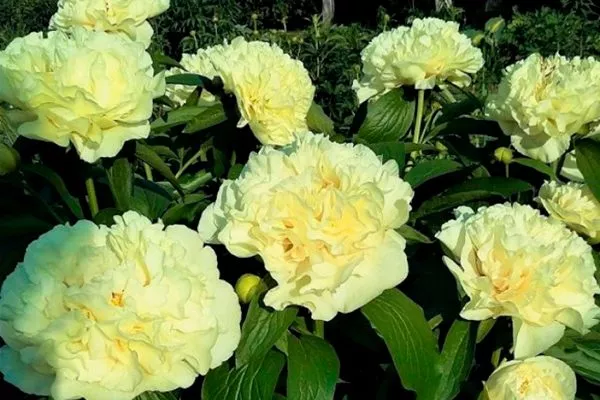
Leaves, stems and root system
Sunny Girl is compact in size – its height ranges from 80 to 90 cm, and its width is approximately 50-60 cm. Other characteristic features:
- shoot type – erect, strengthened;
- the root system is branched and powerful, has a dense and fibrous structure;
- The leaves are dark green, oval-shaped.
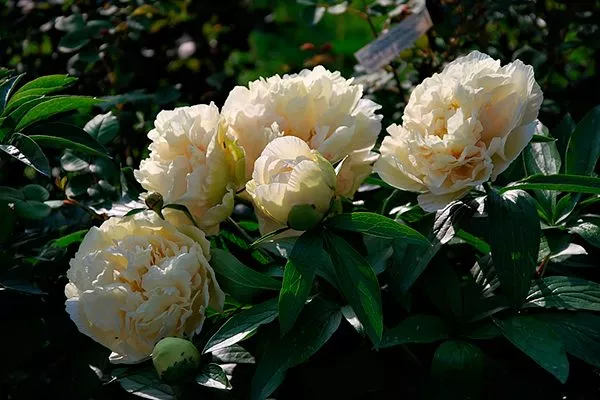
Characteristics
Sunny Girl, a high-quality hybrid, has excellent characteristics, but it also has its own peculiarities. It is a eukaryote of the dicotyledonous class and the Saxifragales order, requiring support during flowering, as the shoots will bend due to the weight of the buds.
Flowering and lifespan
A bush can bloom successfully in one location for about eight years, but after that, it needs to be replanted. This will extend its decorative appearance and lifespan to 12-15 years.
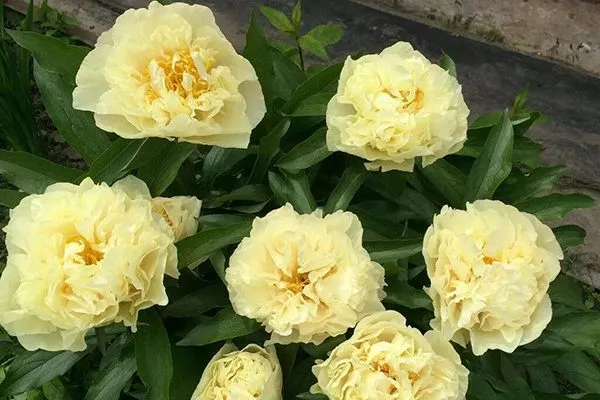
The first budding occurs the following year after planting, and the peak of flowering occurs in the third year in the southern region and in the fourth year in cooler climates.
Frost resistance
It belongs to frost hardiness zone 3, so the maximum air temperature at which shoots won't freeze is -40 degrees Celsius. It also easily tolerates hot weather, and grows in a wide range of regions, from south to north. In central Russia, the Urals, and Siberia, shelter is required. In other regions, preparing the bushes for winter is sufficient.
Beneficial properties
Sunny Girl is not only a beautiful flower but also beneficial—its petals are used in perfumes and pharmaceuticals. At home, parts of the flower can be brewed and consumed as a tea.
What kind of soil does it prefer?
The soil should be well-drained and permeable, as this peony does not tolerate stagnant water in the root system. However, the soil should be moderately fertile, which is why gardeners love Sunny Girl. The soil pH should be neutral or slightly alkaline.
Where is the best place to plant?
Best grown in full sun, this hybrid can also thrive in partial shade. However, in this case, the blooms will not be as lush and abundant. Consider other factors as well:
- the area is elevated, where there are no drafts and high soil moisture;
- distance from buildings and fences – minimum 1.5-2 m;
- the depth of groundwater is 2 m or more.
How to tie to a support?
Despite the strength of the shoots, they can bend due to the abundance and weight of large flowers. Therefore, before the buds open, experts recommend installing support posts near the bushes and tying the stems to them.
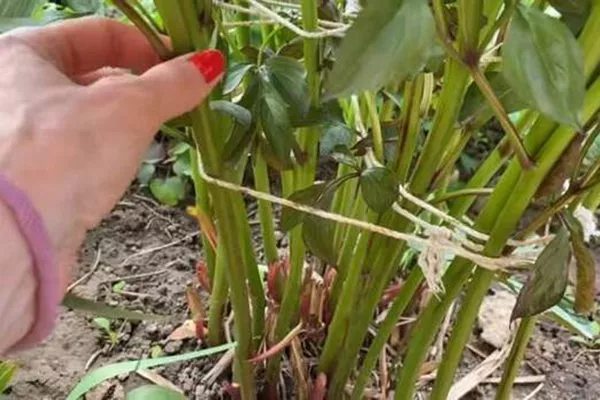
Garter features:
- To make the bush look beautiful, its shoots are tied together using twine;
- the height of the garter is about 25 cm from the ground surface;
- It is forbidden to pull the stems too tightly.
Application in design
Sunny Girl peonies are always a focal point in flower gardens, as their unusual hue and lush blooms stand out from other flowers. Landscape designers recommend planting them in both group and individual plantings.
The most optimal options:
- mixborders;
- against the background of green lawns, alone;
- near gazebos and benches;
- near the entrance;
- along garden paths;
- as a small hedge for zoning the territory;
- near the facades;
- for rockeries and alpine gardens;
- multi-tiered flower beds.
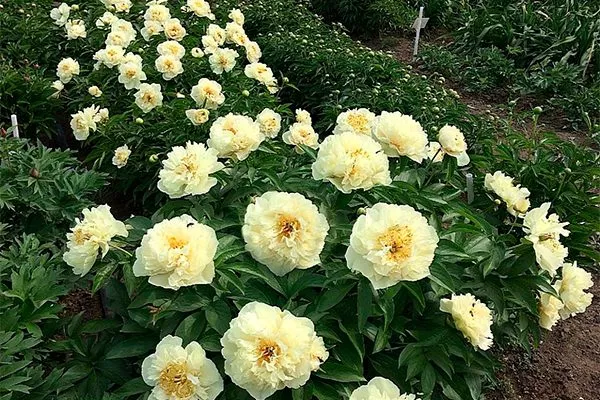
What shades go with yellow peony:
- blue;
- white;
- cream;
- bright red;
- violet;
- green;
- blue.
Combines harmoniously with roses, phlox, centranthus, lilies, daylilies, poppies, sedums, hostas, sage, daffodils, dahlias, catnip, and tulips.
The yellow flowers stand out especially against the backdrop of low-growing conifers—juniper, arborvitaes, spruce, and fir. However, keep in mind that conifers can acidify the soil, which is not recommended for this variety. Periodic liming will be necessary.
If planting is carried out in a flower bed with peonies, then give preference to the following varieties:
- Albert Cruz;
- Lois Choice;
- Nick Shaylor;
- Mathers Choice.
This hybrid is also used for cut flowers, but it's not as popular in floristry as other varieties. This is because it retains its decorative qualities for up to a week.
Do not plant next to buttercup crops, which have an excessively creeping root system - it will take away moisture and nutrients from the peony.
Advantages and disadvantages
Sunny Girl has no critical negative characteristics. The only notable ones are its need for specific soil and its short lifespan when cut. However, the hybrid has many advantages:
Planting the Sunny Girl peony
The most important thing for this peony is to properly prepare the site. This involves removing all debris, leaves, and branches, and then digging in the compost along with some humus—7-8 kg per square meter is sufficient, as the bush doesn't require much fertility. This should be done approximately six weeks before planting.
- ✓ The planting depth of the cuttings should be no more than 3-5 cm from the soil surface to avoid rotting of the root collar.
- ✓ The distance between bushes should be at least 1 m to ensure sufficient air circulation and prevent diseases.
There are also other varietal subtleties:
- It is better to plant in the fall so that the buds appear in the spring;
- the optimal months are from the end of August to mid-September, but in the south work is also carried out in October;
- soil composition – softened peat, garden soil (already containing organic matter);
- To speed up the rooting process, you can add 100 g of potassium, nitrogen and phosphorus, and about 400-500 g of wood ash to each planting hole.
Care instructions
Sunny Girl is considered undemanding in cultivation, but there are some peculiarities:
- How to water. The peony's main enemy is high humidity; overwatering is unacceptable. In normal weather, add 20 liters of water at a time, and in hot weather, 30 liters. Frequency: once a week.
- How and what to feed. Fertilize three times: in early spring and in June, mineral complexes for peonies (seasonal), and in September, organic fertilizer is required.
- Pruning. Only necessary in spring and fall. Pruning stimulates shoot growth and development, while pruning is used to shorten shoots for winter.
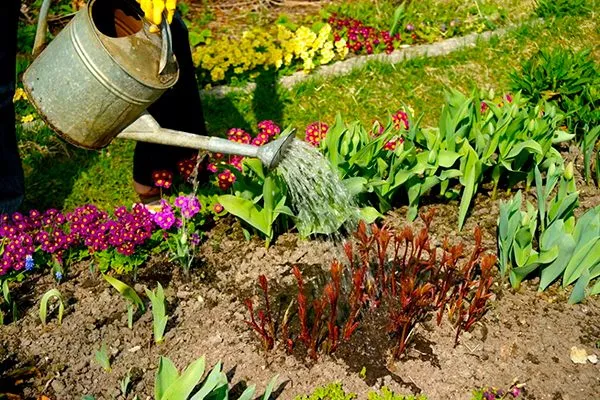
A must for Sunny Girl is rejuvenation. To do this, trim all side shoots down to the ground every six years, but leave the central shoot.
What to do after flowering?
Immediately after the flowering period ends, reduce the frequency and amount of watering, but do so gradually to avoid stressing the plant. All faded buds should be cut off, along with a small amount of stem, and the top two tiers of leaves should also be removed. Fertilizer should then be applied.
Preparing for winter
Preparatory work begins a couple of weeks before frost. What to do:
- Shorten the bush so that the shoots remaining are about 5 cm long and no more.
- Mulch the soil with peat and cover the tree trunk with spruce branches. If you don't have spruce branches, use dried leaves. Keep in mind that the peat must be deoxidized.
If the winter is very frosty, additionally cover the bushes with agrofibre and secure the material to the ground.
Reproduction methods
In terms of propagation, this variety cannot be called universal, because the seed method is absolutely not suitable – hybrids never retain the characteristics of the parent bush.
Only two methods are used:
- By dividing the bush. Propagation requires 5-6 years of age. The optimal time is, as for planting, August-September or October in the south. The first flowering is expected in the spring.
- Cuttings. This is a good option, as you can get many seedlings at once. Cuttings are taken in the fall or late summer, and transplanted to a permanent location in the spring, when the air temperature stabilizes at 15 degrees Celsius. The bush should be at least 5 years old. The first flowering occurs 3-4 years after planting.
Pest and disease control
When grown correctly, the hybrid is resistant to diseases and pests, as it has a very strong immune system. If care is not provided correctly or weather conditions are unfavorable, the following may occur:
- Mosaic. This disease manifests itself as yellowing of the leaves, forming streaks and streaks. Flowering becomes weak, and after a while, the plant dies. A 3% Bordeaux mixture can be used for treatment.
- Verticillium wilt. It can be recognized by the drying of the above-ground parts and darkening of the leaves. The plant cannot be cured.
- Rust. Leaves take on a rusty tint. Treatment is with a 3% copper sulfate solution.
- Root rot. First, shoot growth stops, then the leaves turn yellow and the stem softens, leading to death. Most often, no treatments are effective.
- Botrytis. This is a gray mold that causes dark spots and a moldy growth on the leaf blades. Bordeaux mixture is used to treat it.
- Cladosporiosis. Dark brown or black spots form on the leaves, surrounded by a purple border. The best treatment is Fitosporin.
- Powdery mildew. It appears on the foliage as a light, powdery coating. Copper sulfate is an effective solution.
- Ants. They infest buds and eat away all the sap, ruining their beauty. You can set sticky traps or spray the bushes with Anteater or Anteater.
- A nematode. It feeds exclusively on root shoots. It's impossible to eradicate the pest; the bush is dug up, the affected areas (with nodular growths) are cut off, and the soil is doused with formalin.
- Aphids attack green foliage, sucking its sap. Bushes are sprayed with a soap solution.
- Bronze beetle. The beetle lives on flowers and eats the petals. If the pest is young, use Diazin; if it is mature, use Aktara.
- ✓ The appearance of spots on the leaves may indicate the onset of a fungal disease.
- ✓ Wilting of buds before opening may be a sign of nutrient deficiency or pest infestation.
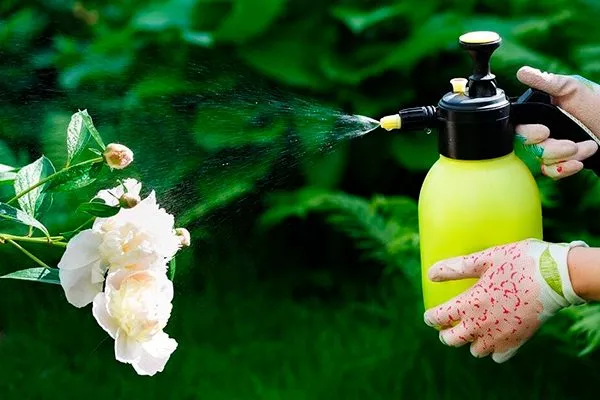
Sunny Girl is rarely attacked by thrips and spider mites. However, prevention is always best, so carry out preventative spraying in the spring with fungicides, insecticides, copper sulfate, and Bordeaux mixture.
Gardeners' reviews of the Sunny Girl peony
The Sunny Girl peony belongs to a group of profusely blooming hybrids that are easy to grow and plant. It is used by landscape designers, planting it not only in garden beds but also in large pots and containers to frame terraces and balconies. It is distinguished by its strong immunity and rapid growth.