
The Salmon Glory peony is renowned for its striking appearance and the rich color of its numerous petals. It's a great choice for landscape decoration and requires little attention from the grower. With proper care, you'll be able to enjoy abundant, vibrant blooms and robust health.
History of creation
This perennial plant with a herbaceous stem was developed by American breeders and first introduced in 1947. It delights with its blooms for over 10 years, growing in one place.
Description of the Salmon Glory peony
Before planting, it's important to familiarize yourself with the characteristics and botanical description of the crop. Below are the characteristic features of the variety.
Features of flowering
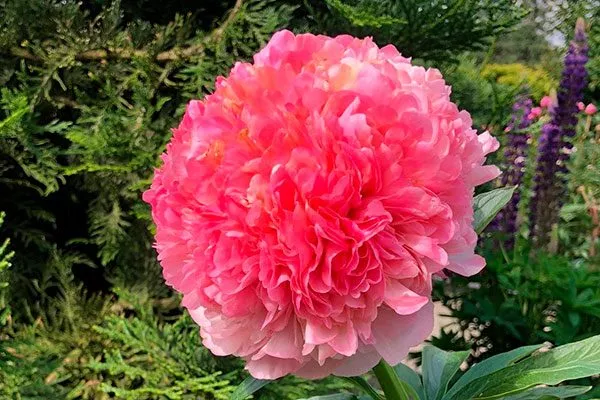
It belongs to the category of large-flowered species with exquisite double buds reaching a diameter of about 20 cm. A mature bush can produce up to 20 inflorescences.
Other signs:
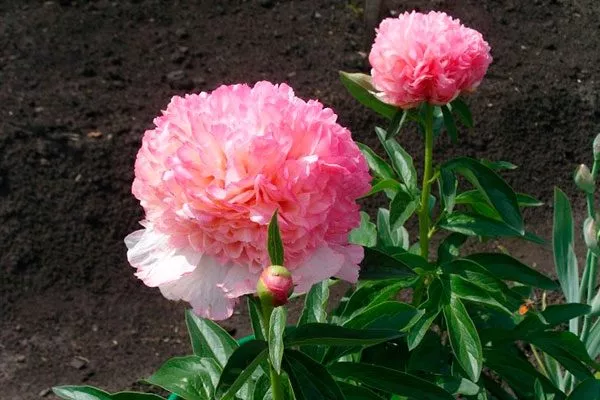
- The petals have a pink-coral hue and are closely adjacent to each other, creating a dense covering that does not reveal the central part of the bud.
- The size of the petals gradually decreases from the edge to the center, with the outer specimens being significantly larger than those in the middle of the flower.
- As the flowering period increases, the outer petals become paler.
Flowering occurs early, but the splendor of the buds depends on several factors: the correct planting location, soil composition, timely fertilizing, and protection from diseases and pests.
- ✓ The optimal soil pH for the Salmon Glory peony should be between 6.0 and 7.0. Deviations from this range may result in poor nutrient absorption.
- ✓ To prevent gray mold, it is necessary to ensure good air circulation around the bush, avoiding dense plantings.
Description of the appearance of the plant and flowers
This tall plant reaches 75 to 85 cm in height. Strong, thick stems provide stability, but the abundance of large, heavy buds requires support.
Application in design
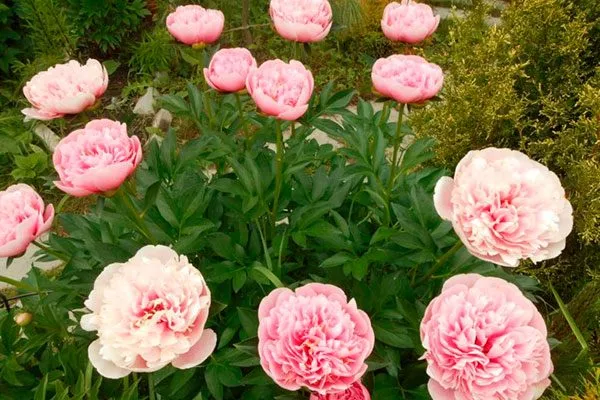
It integrates well into landscape design, creating a beautiful appearance. Its characteristics make it a popular choice for decorating gardens and homesteads. Landscape applications:
- Single landing. Tall and beautiful flowers make a great accent in the garden when planted alone. Place them in the center of a flowerbed or against a backdrop of green trees to make them stand out.
- Mixed flower beds. Combine with other flowers and plants. Their pink-coral blooms complement various shades of greenery and other flowers.
- Color compositions. Combine with irises, lilies, delphiniums, and clematis. This will create a variety of shapes and textures and enrich the color palette.
- Hedges and alleys. Use to create hedges or border walkways. Their dense growth habit and beautiful flowers make them an excellent choice for creating green dividers or decorative lines.
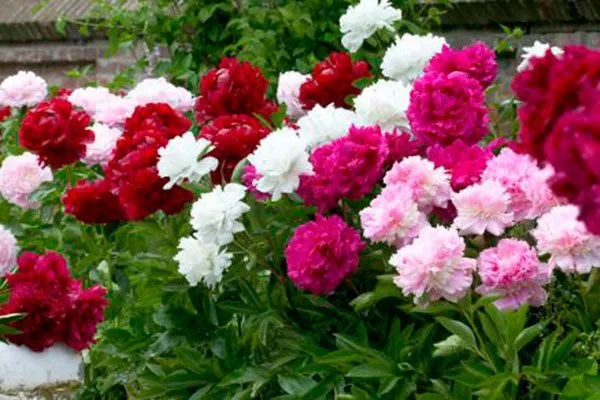
Salmon Glory peonies can be successfully grown in containers. Place them on terraces or balconies to create elegant and colorful arrangements. They also look great in cut bouquets.
Other characteristics
Long periods of damp weather, strong winds, and insect infestations can trigger the development of gray mold. Proper care and regular spraying with specialized products are effective preventative measures. Apply ash to the underside of the bush.
When choosing a planting site, choose sunny areas protected from drafts. This variety is highly frost-resistant and is recommended for cultivation in almost all regions of Russia. To maintain its health and beauty, pay attention to environmental conditions.
Methods of reproduction
The Ito hybrid can be successfully propagated in several ways. Choose the most suitable option:
- Rooting stem cuttings. Cut back strong stems after flowering, preferably in summer. Shorten the shoots to 12-15 cm, leaving a couple of leaves. Make a diagonal cut at the bottom of each cutting and treat with Kornevin.
Plant the cuttings at an angle in pots filled with loose soil and cover with plastic film to create a greenhouse effect. Remove the covering when the cuttings begin to actively grow and develop new leaves. - Rooting of cuttings. In early spring, bend the lower shoot down to the ground, make a shallow cut, and treat it with a rooting hormone. Secure the shoot with a pin and cover with soil. In September, carefully dig around the shoot, and if roots have formed, transplant it into a nursery for further cultivation.
- Dividing the rhizome of the mother bush. Dig around the bush on all sides and carefully remove it from the ground. Rinse the roots and separate the rhizome into sections with a sharp knife. Soak in a potassium permanganate solution and plant in separate holes, following the planting instructions.
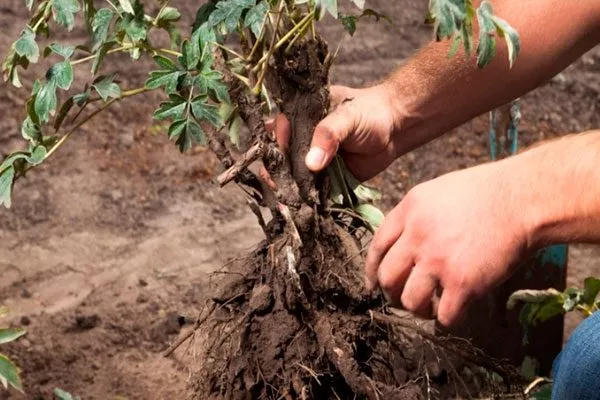
Propagating itoh hybrids from seed is very difficult, as it's a lengthy process, and the results may not match the characteristics of the parent plants. Proper care and protection from harmful environmental factors are essential.
Landing rules
You can plant the seedling in spring or fall. In colder regions, spring is preferable to allow the plants to establish themselves well before winter. Salmon Glory prefers slightly acidic, moisture-retentive, and well-drained soil. Enrich the soil with mineral or organic fertilizers.
- Test your soil for pH and nutrient content 30 days before planting.
- Add corrective amendments (lime to raise pH or sulfur to lower it) according to the test results.
- Two weeks before planting, add organic fertilizers (compost or humus) and dig up the area.

Helpful tips:
- Select cuttings from 3-4-year-old bushes with three to five buds. For two-year-old seedlings, choose rhizomes with at least two buds. Avoid specimens with damage, blackening, or insufficient root length (less than 20 cm). Discard plants that smell rotten or show signs of mold.
- Trim the green mass of the divisions by a third. Remove damaged root sections and treat them with ash, a potassium permanganate solution, or Maxim. Mix two Heteroauxin tablets, 50 g of copper sulfate, and clay in 10 liters of water. Soak the roots in the solution and dry them in the shade for 24 hours.
If you plan to plant several specimens in a plot, place the holes at least 1 m apart and prepare them 30 days in advance to allow the soil to settle.
Step-by-step instructions:
- Dig over the soil and remove weed roots.
- Water the soil generously beforehand.
- Dig a hole about 80 cm deep and about 70 cm wide.
- Fill the bottom of the hole with a drainage layer of broken brick, gravel, or coarse sand. The drainage layer should be 15-20 cm thick, especially in low-lying areas.
- Mix the top layer of soil with compost or humus (10 kg), wood ash (300 g) and superphosphate (100 g), then pour it into the hole.
- Fill the hole with soil, leaving about 10 cm of free space at the top.
- Form a mound of soil in the center of the hole and place the plant.
- Gently compact the soil and water generously.
Mulch the soil after additional watering. In the spring, the area will sprout evenly.
Aftercare
To maintain the health and beauty of peonies, it is recommended to follow traditional care methods. Take care of the plant:
- Watering. Moderate watering is essential, as their roots do not tolerate standing water. Increase the frequency of watering during dry weather, stopping when rain arrives. Each bush requires approximately 10 liters of water. Avoid eroding the soil around the shoots.
- Mulching. This procedure helps maintain cleanliness and order in the tree trunk area. Mulch protects the soil from overheating, retains moisture, and prevents weed growth.
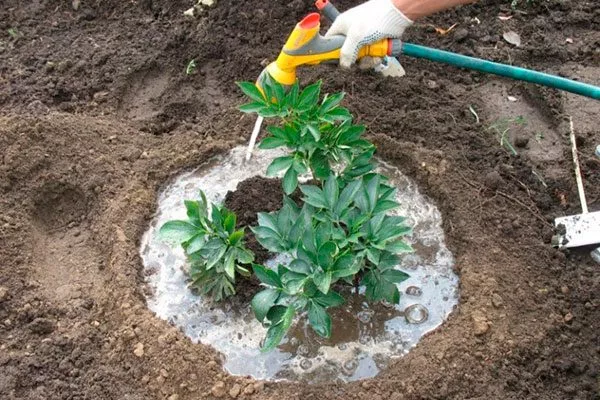
Fertilize peonies several times during the growing season:
- In early spring, water with a solution of potassium permanganate, then ammonium nitrate (15 g per 10 liters of water). Use mineral fertilizers for foliar feeding.
- When buds are forming, water the stems with a solution containing superphosphate (10 g), ammonium nitrate (7.5 g), and potassium salt (5 g) per 10 liters of water. Sprinkle the bushes with wood ash.
- After flowering, add organic fertilizers such as compost or humus.
Preparing for winter
Autumn care includes important steps to prepare for the winter. In late autumn, when temperatures steadily drop below freezing, perform the following:
- Cut back shoots, leaving just 1-2 cm above the soil surface. This helps conserve energy and prepare for winter dormancy.
- Burn cut leaves and shoots, even if the plants show no signs of disease. This procedure helps prevent the possible spread of infections and parasites. After burning, generously sprinkle the shoots with wood ash.
- Sprinkle the root zone with humus or compost to retain heat and prevent the root system from becoming too cold during the cold winter months.
Carry out the work in late autumn, when the threat of frost becomes real.
Pests and diseases
The hybrid is highly resistant to common diseases and rarely suffers from pest attacks. If not cared for properly, there is a risk of problems:
- Gray mold (botrytis). It appears as a gray coating on stems, leaves, and buds. For treatment, use copper sulfate or Bordeaux mixture.
- Rust. This disease manifests as orange pads on the underside of leaves. Treatment involves treatment with Fitosporin.
- Mosaic. Light-colored patterns on the leaves indicate a viral disease that is untreatable. The plant will have to be destroyed.
- Aphid. Small insects suck the juices from the green parts of the plant. Aktara is an effective remedy against them.
- Ants. They eat flower petals and spread aphids. Anteater is an effective insect control product.
With proper care and preventative measures, you can preserve the beauty and health of the crop.
Advantages and disadvantages
Before planting seedlings in your garden, study their positive and negative qualities to avoid unwanted problems. Advantages of the hybrid:
Reviews of the Salmon Glory peony
The Salmon Glory peony is the perfect choice for beginning gardeners. It's very easy to care for, requiring no special skills or knowledge. With proper planting and minimal attention, the flowers will be large and vibrant.