
Thanks to the productive work of breeders, a wide variety of species is now available, among which the highly sought-after Salmon Dream stands out. To ensure it enjoys abundant and long-lasting blooms, proper care is essential.
History of creation
It was developed in the USA. Breeders from the Reath nursery contributed to its development back in 1979. Since then, it has become famous not only in its native country but also in various European countries.
Description of the appearance of the plant and flowers
The bush doesn't exceed 80 cm in height, and its stems are quite sturdy. The green part is represented by dark-hued, dissected leaves, and the shoots grow straight upward. Despite the large buds, the stems are stable and don't bend toward the ground, thanks to their strong structure, eliminating the need for staking.
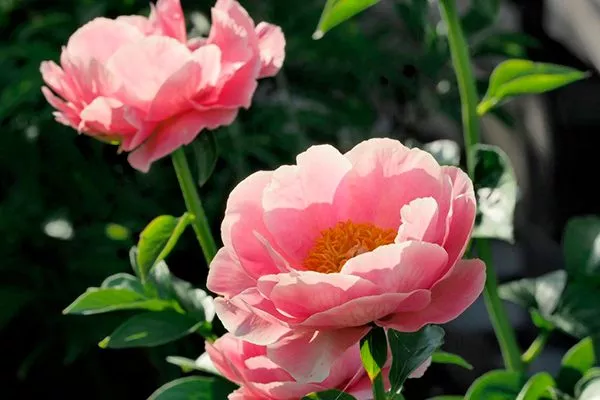
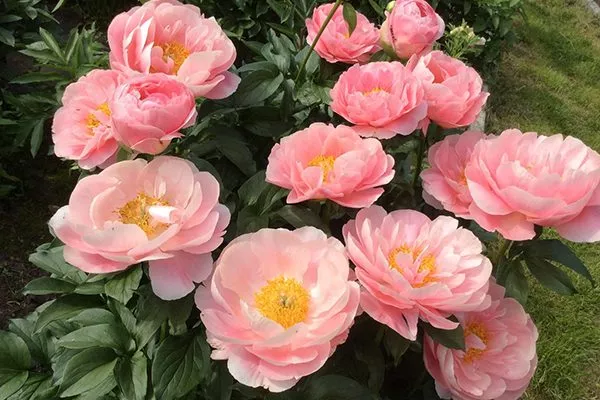
The flowers are luxuriously double and can reach up to 17 cm in diameter. The petals stand out with a vibrant salmon-pink hue, creating an inner glow. The wide petals fold into an exquisite cup with a waxy texture.
The central part features slightly pubescent pistils with salmon-pink stigmas. Numerous prominent yellow pistils are present. It is characterized by a light aroma.
Characteristics of the variety
It has excellent winter hardiness, making it an ideal choice for growing in cold climates. It thrives in regions such as Moscow, St. Petersburg and its surrounding areas, Vladivostok, and central Russia.
It is suitable for cultivation in the Baltics, including Minsk and most of Belarus, in regions such as Kyiv and central Ukraine.
Timing and characteristics of flowering
A notable advantage is the early flowering period, which begins as early as June and continues until the first frosts in September.
Application in design
It's often used in garden landscaping, but is also occasionally grown for cut flowers. Its medium-sized bushes make it versatile. Some gardeners prefer to plant them in single groups to prevent the vibrant colors from clashing with other crops.
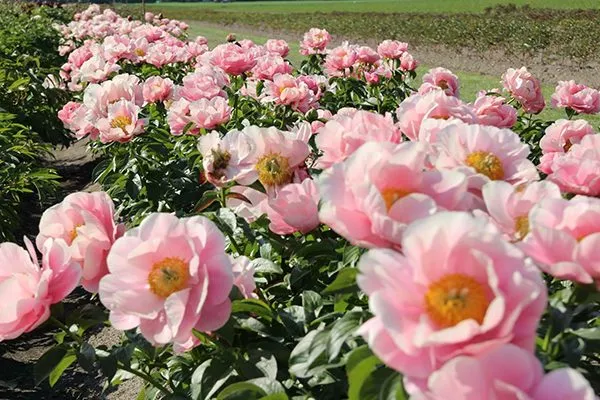
They reveal their decorative potential when combined with various flowers, not necessarily peonies. Although relatively rare, Salmon Dream is sometimes included in certain arrangements. This is a successful option for creating interesting and harmonious ensembles.
Landing
This perennial plant prefers well-lit areas. For vigorous growth and bud formation, it requires at least 5 hours of daily light. Planting in the shade can lead to disease and stunted growth.
Plant seedlings from March to May. The crop isn't picky about soil type, but fertile soil is preferable. The planting process should be carried out as follows.
Step-by-step algorithm:
- Two weeks before planting, dig a hole 50 cm deep and at least 40 cm in diameter.
- Place a drainage layer at the bottom of the hole and allow it to settle. Leave at least 1.5 m between the holes.
- Prepare a nutritious soil from humus, peat, sand and 350 g of bone meal.
- Prepare the seedling, remove any damaged root parts, and trim off any formed buds.
- Place the seedling in the hole and fill it with soil. Carefully straighten the roots.
- Finish planting by watering each plant with 5 liters of water.
- ✓ The optimal soil acidity for Salmon Dream should be within the pH range of 6.0-7.0.
- ✓ To prevent fungal diseases, ensure good air circulation around the bushes.
Methods of reproduction
Propagation is possible using vegetative methods, including rhizome division, root cuttings, and layering. Let's take a closer look:
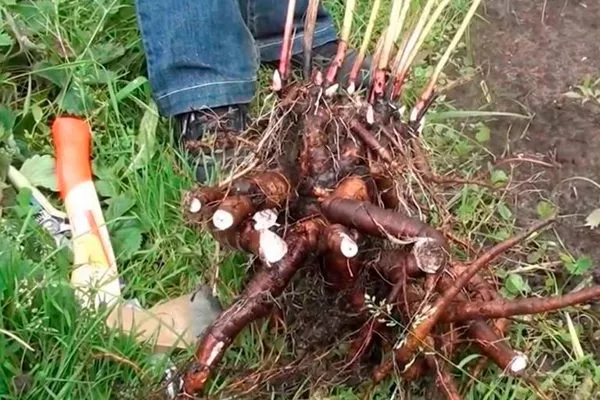
- Dividing the rhizome of the mother bush. This is an effective and simple method recommended for beginning gardeners. Perform the process in late August or early September. Cut the shoots at ground level and dig up the rhizome. Rinse the roots with clean water and let them dry in the shade.
Divide the rhizome into sections, ensuring each section has 2-3 buds and shoots at least 15 cm long. Remove any damaged parts and treat the cuts with charcoal. Plant the resulting seedlings in prepared holes filled with nutritious soil. - By root cuttings. Planting material can be obtained simultaneously with dividing the rhizome, which allows for increasing the number of new plants. The process involves cutting the rhizome into pieces, treating them with solutions, and then planting them in the ground.
- By layering. Propagation by layering is carried out in the spring. This involves bending the stem down to the soil, watering regularly, and separating the stem from the mother plant for subsequent replanting.
| Method | Time of the event | Efficiency |
|---|---|---|
| Rhizome division | Late August – early September | High |
| Root cuttings | Simultaneously with the division of the rhizome | Average |
| Layers | Spring | Low |
Stem cuttings are considered the least effective and rarely used propagation method, as the seedlings are poorly rooted. Given the long period of bud opening, this procedure can be difficult to perform in summer.
Aftercare
To maintain health and abundant flowering, it's necessary to water and fertilize regularly, loosen the soil, and remove weeds. This easy-to-grow hybrid doesn't require much care. Consider the following recommendations:
- Moisturizing. Water thoroughly but infrequently, avoiding standing water to prevent root rot. During drought conditions, water more frequently, maintaining moisture 1-2 times per month.
Use settled and warmed water, pouring it into a ditch that you dig at a distance of 15-20 cm from the stems. - Loosening. After watering, loosen the soil to a depth of 5 cm and remove weeds if there is no mulch layer.
- Fertilizers. Feed the plant both foliarly and root. Use urea at the beginning of the growing season. During bud formation, apply superphosphate and potassium sulfate. Apply a general-purpose mineral flower fertilizer 14 days after flowering.

Apply fertilizer to the roots after watering, and apply foliar feeding at dawn or after sunset to avoid burning the roots and leaves.
What to do after flowering?
After flowering, it is recommended to carry out a number of agricultural procedures. Follow these steps:
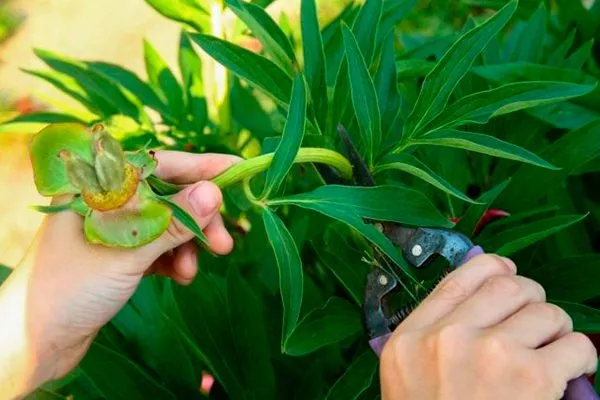
- Trim bare inflorescences immediately after flowering. Remove damaged stems and leaves.
- It's advisable to repot the bushes every 6-7 years to maintain their decorative appearance and refresh the soil around the root system. Repotting involves dividing the rhizome to rejuvenate the perennial.
- In October, trim all stems to a length of 5 cm. As a preventative measure, sprinkle the remaining stumps with wood ash.
- In September, pour 20 liters of water at room temperature under each plant to provide the plant with the necessary moisture before winter.
Preparing for winter
Salmon Dream peonies are highly cold-hardy, but before frost, it is recommended to renew the mulch layer and raise it to 15 cm for additional protection.

Pests and diseases
The crop requires preventative treatments against diseases and pests. Given its weak resistance to fungi and viruses, the following diseases are possible:
- Rust. The leaves turn red, and yellowish-orange growths appear on their surface. To combat the fungal infection, use Bordeaux mixture.
- Powdery mildew. A silvery coating is forming on the leaf blades. Treat with copper sulfate.
- Gray rot. Poor growth and deformation of stems and leaves are observed. Apply HOM treatment.
- Septoria. Leaves become covered with brown and russet spots. Preventative control involves applying Previcur or Vitaros in the early stages of the disease.
- Ring mosaic. Yellow spots in the form of rings or semicircles on leaf blades. Previkur and Vitaros are effective in the early stages of control.
- Verticillium wilt. The leaves curl, and the plant wilts. Treatment begins with Previcur or Vitaros.
- Root rot. The hybrid is withering, and the shoots at the base are covered with mold. Spray the infected bush with Fitosporin.
- Viral diseases. There is no cure. Dig up and dispose of infected plants.
During the growing season of peonies, the following pests may be encountered:
- Garden ants. They're eating away at the plant's buds. Spray with garlic infusion and place boric acid pellets around the bush.
- Bronze beetles. Beetles are eating the petals. Collect them by hand and treat the surrounding soil with a Bazudin solution.
- Aphid. They feed on the sap of leaves and stems. Effective insecticides for aphid control include Actellic, Tiara, and Iskra.
Reviews
The Salmon Dream peony has gained popularity thanks to its beautiful flowers and pleasant fragrance. It boasts numerous characteristics, making it a popular choice for gardens. With proper care, this hybrid boasts strong immunity and abundant blooms.