
Peonies are among the most popular and beloved plants due to their resilience and magnificent blooms. This variety, recognized for its ease of care and attractive appearance, has captured the attention of gardeners. Raspberry Sunday will make a beautiful addition to any garden.
History of creation
Created in the USA in 1968 and introduced by Klehm Nursery, it quickly gained popularity due to its high ornamental value and tolerance to various conditions. Initially popular in the USA, it has since been cultivated in many European countries and Russia.
Description
Reaches a height of 85 cm, with erect, slightly branched stems. It forms a large, lacy bush with bright green, glossy leaves and large flowers. The roots are strong and well-developed. The large leaf blades have a glossy surface and a rich green hue.
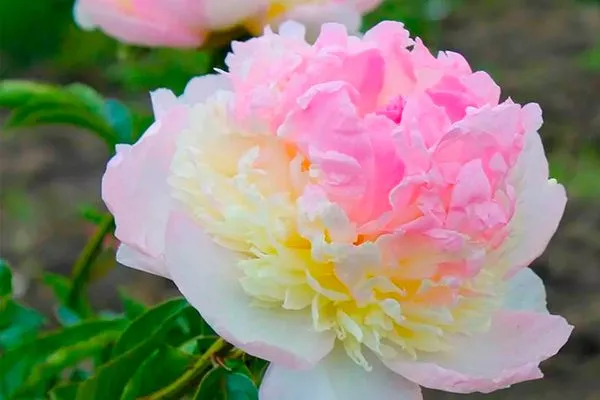
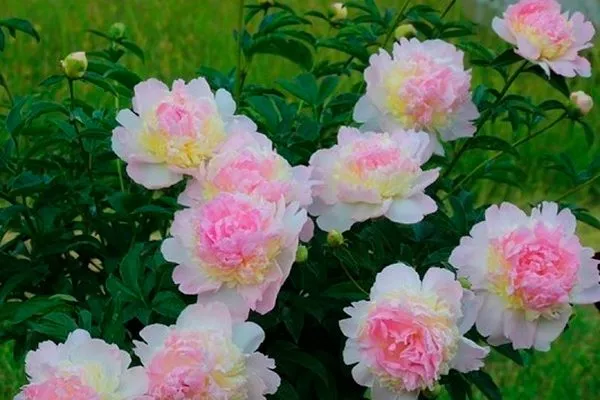
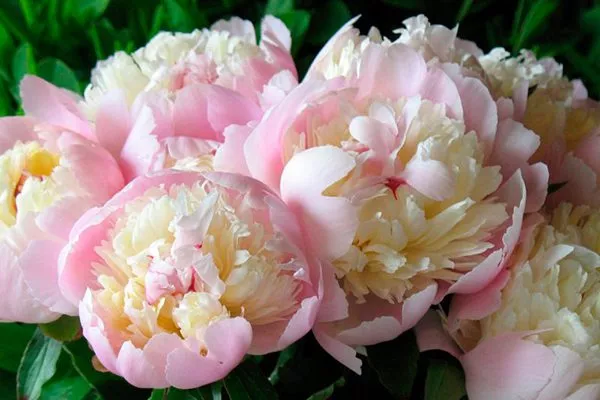
The structure is arranged alternately. The flowers are large (up to 25 cm in diameter), spherical, and double. The petals are primarily a soft pink, with hints of yellow or white, while the edges and center of the flower become more saturated, taking on a raspberry hue. The fragrance is subtle and pleasant.
Features of flowering
This is an early-ripening variety. It is recommended to prune and replant the bush only after flowering, which lasts approximately 2-2.5 weeks. Each flower opens over the course of 2-7 days, and the exact flowering time is difficult to predict in advance, as it depends on weather conditions.
Rain and moisture can prolong the flowering period, while hot and dry climates, on the contrary, can shorten it. Paying attention to weather conditions is an important aspect of crop care.
Frost resistance
It can be successfully grown both in the south of the country, in the central and central regions, and in more northern parts, including the Urals, Siberia, and the Far East. In colder regions, careful winter insulation is recommended.
Cold hardiness is rated at zone 4, meaning it can withstand temperatures ranging from -29 to -34°C. This makes the variety quite resilient to harsh winter conditions and allows it to be grown in a variety of climates, provided it receives adequate frost protection in colder regions.
Where is the best place to plant?
It performs best when grown in areas with good light and a warm microclimate. Shaded areas are best avoided, as the peony will not bloom profusely and will develop less successfully.
Do you need support?
Thanks to its strong stems and powerful roots, it is sufficiently stable and does not require staking. When growing in areas exposed to strong winds, it is best to tie the shoots together for additional support and prevent damage.
Application in design
To create a harmonious floral arrangement with Raspberry Sunday, it's important to know which flowers pair best with the peony. The following plants pair well with the peony most often:
- clematis;
- daffodils;
- irises;
- geranium;
- phloxes;
- tulips;
- lilies.
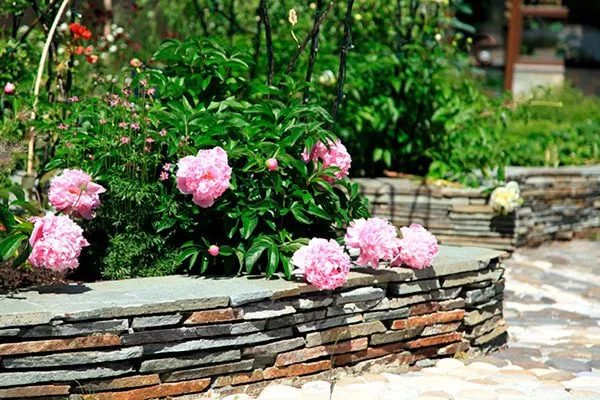
They combine with low-growing flowers, creating a second layer in the landscape. They are sometimes used to conceal less attractive areas in the garden thanks to their abundant foliage. They look extremely impressive lining garden paths and are suitable for mixed borders and cut flower pots.
Reproduction
Propagation is done vegetatively, using rhizome division and cuttings. Increasing the number of seedlings doesn't require much time or effort:
- Cuttings. Stem cuttings are suitable for plants older than 3-5 years. In July, cut a strong shoot with an unopened bud. Trim the upper leaves and the two lower leaves, leaving only the stumps.
Place the cutting in loose soil, after immersing it in a growth stimulant. Allow it to root for 2-3 weeks under a cut bottle. Successful rooting is confirmed by new buds appearing in the forks of the removed leaves. After a year, it can be transplanted to its permanent location in August. - By division. This is the simplest propagation method, but is only suitable for plants older than 5-8 years. In early September or late August, trim the shoots and leaves to 10 cm. Dig up the bush and remove soil from the roots.
Remove any diseased or dead shoots, then cut the roots with a sharp tool and replant the cuttings into individual holes. When dividing the rhizome, it's important to retain 5-6 buds on each section.
- ✓ Use only healthy shoots without signs of disease for cuttings.
- ✓ The optimal length of the cutting should be 15-20 cm with at least two buds.
If the procedure is carried out correctly and in a timely manner before the onset of cold weather, the perennial will successfully take root.
Landing
Planting Raspberry Sunday isn't a complicated process, but it's important to follow certain guidelines. Helpful tips:
- Selecting a location. These peonies prefer sunny, draft-free locations. Avoid low-lying areas, as excess moisture is undesirable for the flowers.
- Preparing the soil. Loam is preferred. If the soil is clayey, add sand, peat, and humus. For sandy soil, use clay, peat, humus, ash, and sand in excess.
- Pit and drainage. A week before planting, dig a hole and line the bottom with drainage materials: brick fragments, crushed stone, or sand. Add compost, humus, superphosphate, wood ash, and lime.
- Landing. After the soil has settled, about a week later, place the root ball in the hole and gradually compact it, adding soil. Make sure the top bud is 3-4 cm below the soil. Planting too deep can result in foliage dominating the plant and detrimental to flowering.
- ✓ Provide the plant with at least 6 hours of direct sunlight daily.
- ✓ Maintain soil pH in the range of 6.0-7.0 for better nutrient absorption.
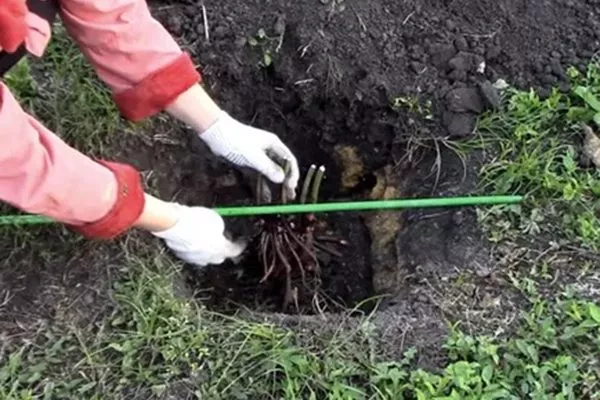
After planting, provide ample watering to promote successful establishment.
Aftercare
To ensure vigorous growth, health, and vibrant blooms, various agricultural practices are important. In the spring, after the snow melts, perform pruning to rejuvenate the plant. First, remove all dead branches, then shorten the remaining branches by 10 cm.
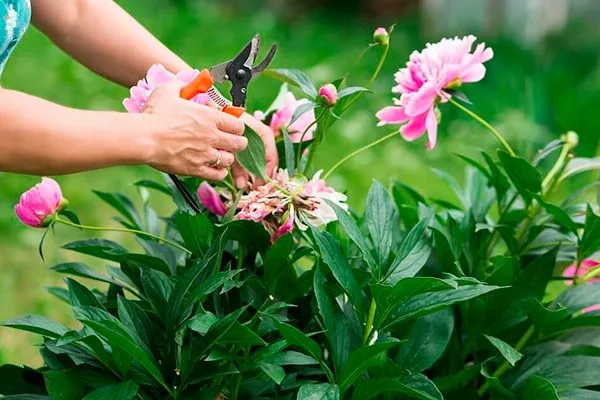
Follow other recommendations:
- Watering. Water as the soil dries out, before the plant begins to open its buds. During the flowering period, water generously – approximately twice a week. To improve water absorption, create a small furrow around the trunk.
- Top dressing. Apply three times per season: in early spring and throughout the summer. Spread granular fertilizer evenly over the soil and water generously with warm water. For foliar feeding, spray special solutions evenly onto the leaves in the morning.
- Mulching and loosening. Use sawdust, straw, or wood chips for this procedure. This helps slow down the evaporation of moisture from the soil. Regular loosening improves air access and prevents pests.
To prevent fungal diseases, spray with 1% copper sulfate every two weeks. Do this in the morning or after sunset to avoid possible plant burns.
What to do after flowering?
After the decorative period ends and the buds fade, the dormant phase begins. Prune the flower stalks immediately after they fade. In August, apply fertilizer with 20 g of superphosphate. After this, water the bushes moderately, maintaining the required moisture level.
Preparing for winter
Raspberry Sunday successfully withstands the winter frosts typical of central Russia. Covering young bushes is recommended. This involves carefully bending and securing the stems.
Pests and diseases
A disadvantage of this crop is its vulnerability to fungal infections and insect attacks. The following factors can cause harm:
- Ants. Insects can appear during bud formation, destroying them from the inside. This damage causes yellowing and reddening of the leaves, along with the appearance of raised, reddish spots. Use Grom or Aktara to control pests.
- Rust. Brown and black spots appear on the leaves, their surface becomes covered with a dry coating, and then the leaves darken and fall off. To control the disease, use Bordeaux mixture.
- Powdery mildew. A grayish-white, dry coating forms on the stem, after which the leaf blades darken and begin to fall off. At the first signs of powdery mildew, treat with copper-containing products.
- Nematodes. Insects damage the roots, causing the formation of spherical galls. If nematode infestation occurs, it is recommended to destroy the affected plants.
- Root rot. The peony's roots become soft, causing the plant to wilt and die. If the roots are severely damaged, complete destruction is recommended.
- Septoria. Brown and black spots appear on the leaves; at the first stages of the disease, spray with Fitosporin.
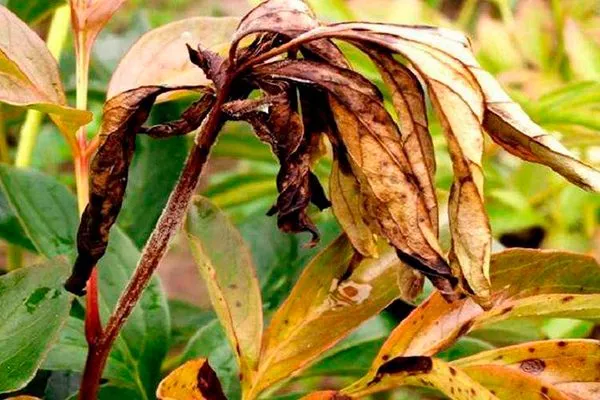
The crop can be affected by diseases such as verticillium wilt, botrytis, and mosaic. These diseases are characterized by leaf curling, wilting, and ultimately plant death. In the case of verticillium wilt, destruction of the plant is inevitable.
Reviews
The Raspberry Sunday peony has many positive qualities. Its low maintenance and resistance to weather changes make it an ideal choice for those who value functionality in their garden landscape. It requires minimal time and effort to care for, simply following basic guidelines.