
It's generally accepted that peonies need to be watered once a week, but in reality, the frequency and amount of watering depend largely on various factors, such as climate and weather conditions, the specific variety, soil structure, time of year, etc. Therefore, it's important to know how to properly water peonies in summer, spring, and fall.
When should peonies be watered?
Peonies require watering at all stages of the growing season, even after they've finished blooming. This is especially important during dry periods, otherwise the plant will wilt and drop its buds.
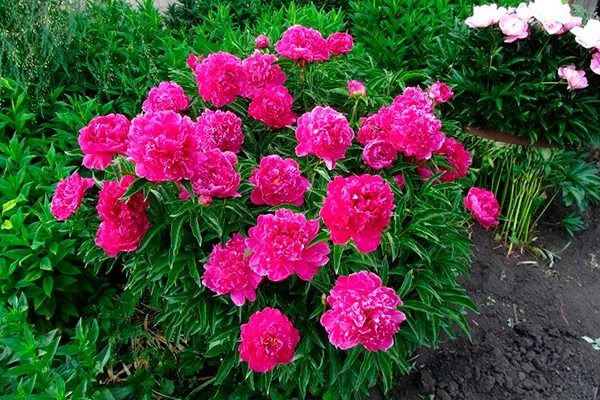
Frequency and norm at different stages
Weather conditions and the time of year influence the amount and frequency of watering. During rainy periods, watering levels drop significantly, and sometimes it's necessary to avoid watering altogether. Considering seasonality is also important, as this ensures lush and long-lasting flowering, proper preparation for winter, and rapid shoot growth.
Spring
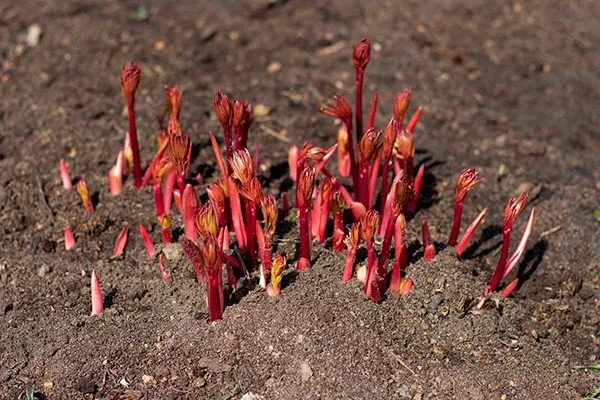
Before winter, peony shoots are always pruned—some species slightly, others almost to the ground. Therefore, in the spring, when the plant begins to awaken, it's important to grow stems and leaves. Moreover, the sooner this happens, the sooner budding will begin. Particular attention should be paid to the first watering, which is done immediately after the snow melts:
- Adding potassium permanganate to the water will disinfect it. Even in winter, many pests and their larvae, fungi, and other bacteria remain viable in the soil. This also stimulates the growth of not only shoots but also buds and buds.
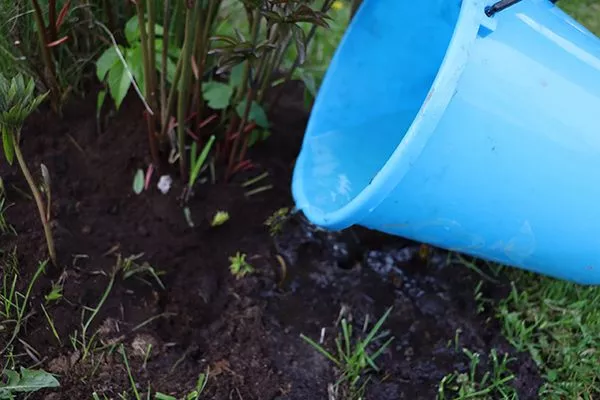
- The recommended dose is about 2 grams of potassium permanganate per 10 liters of water. 25-30 liters is added per mature plant. Adding more liquid is strictly prohibited, as the soil still contains meltwater in the spring. Furthermore, too much will wash away the soil and expose the root system, which is dangerous at the beginning of the growing season.
Summer
During this period, active flowering occurs—plants expend a lot of energy, so they require more frequent watering than in spring. This is especially important during budding, that is, in the first half of June. Instructions:
- in hot weather, water the bushes 1-3 times a week, adding about 30 liters of water;
- on cloudy days, water no more than once every 10 days, using only 15-20 liters of liquid;
- During rainy season, avoid irrigation completely – natural precipitation will be sufficient for the bushes.
Autumn
At the end of the growing season, peonies need to be prepared for winter. To stop shoot growth and development, watering is stopped completely. This should be done approximately 1.5 months before the bush enters dormancy.
Water for irrigation
Proper watering requires choosing the right liquid that won't harm the plant, but will actually benefit it. The water should be at room temperature—ideally, leaving it outside to warm up in the sun.
- ✓ Use water with a pH of 6.0-7.0 for optimal nutrient absorption.
- ✓ Avoid water with high salt content (more than 500 ppm) to prevent soil salinization.
The second important aspect is the chemical composition. Tap water is absolutely unsuitable, as it contains chlorine and other impurities. You can use one of the following options:
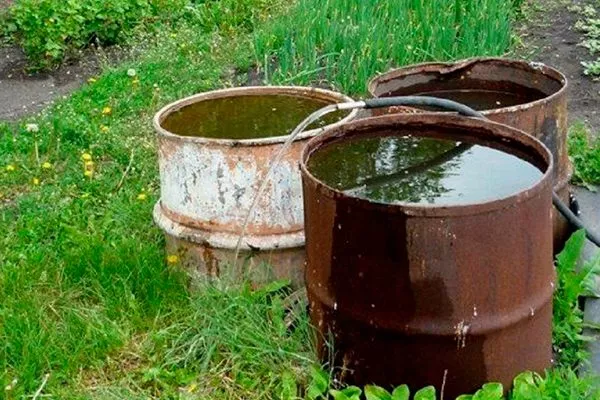
- Settled. Allow the water to settle for at least three days. During this time, the chlorine will evaporate and other harmful substances will settle to the bottom. Therefore, it's important to carefully remove the liquid from the common container to prevent sediment from rising to the top and ending up in the watering bucket.
- Rainy. An optimal option, but not for regions with many hazardous industrial enterprises.
- From a well/borehole. This is the best method because the liquid from deep layers of the earth contains all the necessary chemical components.
How to water correctly?
To moisturize peonies, you need to follow some rules:
- strictly adhere to the watering guidelines for a particular type of peony;
- do not allow liquid to stagnate in the trunk area, otherwise the root system will begin to rot;
- try to mulch the soil after each watering so that the moisture does not evaporate quickly;
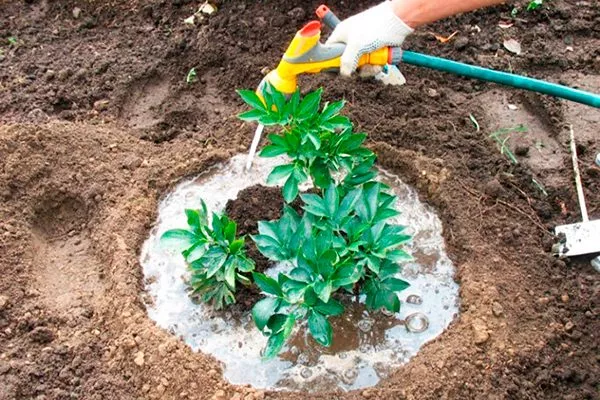
- You cannot pour water directly “into the stem”, it is better to step back from it 20-40 cm, because near the trunk there are large roots that do not absorb moisture, but at the specified distance there are small shoots, the purpose of which is to absorb water and nutrients;
- form a ditch or earthen embankment around the bush - this will prevent water from spreading between the rows;
- soil moisture depth – at least 30 cm;
- Use a watering can with a spray nozzle to water the plant so that the water is distributed evenly over the entire surface;
- Do not allow liquid to drip onto leaves, buds or stems.
- ✓ The soil is moist at a depth of 30 cm 2 hours after watering.
- ✓ No puddles on the soil surface 30 minutes after watering.
What time to water?
The optimal time for peonies of all types is evening, just as the sun begins to set. Avoid watering in the morning, as the heat prevents the water from fully absorbing into the soil.
How to stop watering?
The main rule is not to stop watering abruptly. Do this gradually, starting at the end of flowering, when you cut off the last faded blooms. Initially, reduce the amount of water by 3-5 liters each time, until the required amount reaches 10 liters, then reduce the frequency.
Consequences of under- and over-watering
Peonies prefer moderately moist soil, so any overwatering or underwatering will negatively impact the plant's health. What are the consequences of overwatering and how does it manifest itself?
- rotting of the root system and the development of fungal diseases - this is facilitated by stagnation of liquid;
- wilting of the aboveground part, since the roots do not receive oxygen, they become unable to absorb moisture;
- yellowing and softening of leaves – the balance of nutrients is disturbed;
- Delay in development and growth of the peony - there is a lack of some nutrients.
Insufficient watering also causes harm and manifests itself as follows:
- wilting of the root system and green mass, as a result of loss of elasticity and drying out;
- crispness of the leaves and yellowing - due to dry soil, oxygen is not supplied;
- leaf fall – the plant is trying to save moisture;
- delay in development or complete cessation of growth - the roots do not receive nutrients.
The symptoms are roughly the same, but when the soil is overwatered, an unpleasant musty smell is always felt, as putrefactive processes begin.
Learn how to water peonies properly, and they'll reward you with lush, long-lasting blooms and a healthy, beautiful appearance. Be sure to consider the specific varietal needs, as some varieties require more water than others. This isn't always dependent on the size of the shrub alone.